Major factor in the electricity production, the number of hydropower plants is still steadily growing worldwide. Besides, such facilities entail a whole range of effects. A sound and in-depth assessment of all the impacts arising from each new project is required. While sustainability assessment tools provide relevant instruments in this aim, as they enable the evaluation of aspects from various kinds, interrelations between the latter are frequently overlooked. Based on the available literature, we use the concept of the causal diagram to structure and represent hydropower impacts in a generic form through causal networks. We develop and present a series of ten causal diagrams, each focusing on one specific topic. Strongly interrelated, the diagrams highlight the close ties existing between the multiple aspects of hydropower and enable a clear understanding of such links. A plain grasp of the impact pathways is essential to gain a holistic and comprehensive perspective of the consequences ensuing from the implementation of hydropower facilities. This step is also crucial in identifying relevant and concrete measures to mitigate undesirable impacts. All in all, such causal diagrams are meant to be used as guidance and supportive tools by decision makers and concerned stakeholders.
The NRP70 project ‘The Future of Swiss Hydropower: An Integrated Economic Assessment of Chances, Threats and Solutions’ (HP Future) addresses the challenges Swiss Hydropower faces in the changing electricity market environment. In particular it aims to answer four main research questions:1. What are short-term operational options for Swiss HP to cope with the volatile market situation?2. What are long-term investment options for Swiss HP and how can uncertainty be accounted?3. What are the regional impacts from a comprehensive sustainability perspective?4. What are the effects of different water fee reform options?The project started in fall 2014 and lasted until December 2018. This final report provides a summary on the main findings and recommendations for decision makers.
Hydropower activities must increasingly be evaluated from a sustainable development perspective. Corporate social responsibility (CSR) is the principle frequently applied to evaluate corporate contributions in this regard, though there exists no conceptual and theoretical basis that is common to the various approaches. With the present work, we fill this gap and provide a generic model that formally integrates the corporate and societal perspectives of hydropower activities within a welfare-economic framework that encompasses both externalities and distributional concerns. Building on this background and focusing on the current situation in Switzerland, the water tower of Western Europe, we particularly address the issues of water rights, resource rents and governance. This is crucial when analyzing investment projects of hydropower companies with shared private and public ownership; i.e., if external stakeholders are also sensitive shareholders who grant, at the same time, the company the right to operate. Altogether, this contribution shall support better informed decision making on both corporate and policy levels, especially regarding new and retrofitting investments in hydropower when social concerns are at stake.
The NRP70 project ‘The Future of Swiss Hydropower: An Integrated Economic Assessment of Chances, Threats and Solutions’ (HP Future) addresses the challenges Swiss Hydropower faces in the changing electricity market environment. In particular it aims to answer three main research questions: 1. What are short-term operational options for Swiss HP to cope with the volatile market situation? 2. What are long-term investment options for Swiss HP and how can uncertainty be accounted? 3. What are the regional impacts from a comprehensive sustainability perspective? The project started in fall 2014. During the project the discussion on adjustments of the Swiss water fee framework emerged, leading to an extension of the project: 4. What are the distributional effects of different water fee reform options? 5. What are regional, fiscal and economic feedback effects of those changes? This interim report provides a summary on the main findings to question 4, so far.
The European electricity landscape is facing an ambivalent situation between: (1) common market platforms; and (2) national and subnational jurisdictions, which impose their specific rules on energy sectors. This particularly affects hydropower, as the latter faces inequalities in the procedures needed for the attribution of water rights. Besides jurisdictional disparities, the European Union requires this attribution to follow competitive processes and the integration of sustainable development goals for energy projects, while other countries connected to the European grid such as Switzerland and Norway still know different procedures and requirements. Therefore, this article addresses concerns regarding the lack of harmonization of water regimes in Europe. Imposing a common jurisdiction to countries connected to the European grid would be politically very challenging. Our approach overcomes this challenge by proposing a process adaptable to specific local rules and allows a comparison of water rights attribution procedures. In this frame, we propose a nine-step process, based on three goals: (1) to enhance competitive access by ensuring the highest rent transfer related to water rights; (2) to prioritize projects closer to sustainability goals; and (3) to ensure the efficiency of the process itself.
The NRP70 project ‘The Future of Swiss Hydropower: An Integrated Economic Assessment of Chances, Threats and Solutions’ (HP Future) addresses the challenges Swiss Hydropower faces in the changing electricity market environment. In particular it aims to answer three main research questions: 1. What are short-term operational options for Swiss HP to cope with the volatile market situation? 2. What are long-term investment options for Swiss HP and how can uncertainty be accounted? 3. What are the regional impacts from a comprehensive sustainability perspective? The project started in fall 2015 and is projected to be finished early 2018. This interim project report aims to provide a short summary on the main findings so far.
Hydropower (HP) activities must increasingly be evaluated from a sustainable development (SD) perspective. Corporate social responsibility (CSR) is the principle frequently applied to evaluate corporate contributions in this regard, though there exists no conceptual and theoretical basis that is common to the various approaches. With the present work, we fill into this gap and provide a formal model that integrates the corporate and societal perspectives of HP activities with a welfare-economic and capital theoretic approach. We particularly address the issues of water rights, resource rents and governance, which is particularly important to analyse projects of HP companies with shared private and public ownership; i.e., if external stakeholders are also sensitive shareholders who grant, at the same time, the company the right to operate. Altogether, this shall support better informed decision making on both corporate and policy levels.
The future of Swiss hydropower is a major challenge for sustainable development and decision making about the operation of and investments in hydropower plants. To address these challenges an integrated approach of sustainability assessment is required that matches the various social, economic and ecological goals of sustainability and development with stakeholder concerns in a coherent fashion and that provides better grounds for decision making. Such comprehensive assessment must also include a regional and value chain perspective. Regional impact analysis and SA as well as its translation to the corporate level (CSR assessment) are important tools in this respect.
Swiss Hydropower (HP) is currently facing a wide range of challenges that have initiated a debate about future prospects and its role within the envisioned energy transition. Building on this debate, this paper provides an overview of the status and prospects of Swiss HP by identifying and evaluating the different drivers and uncertainties that Swiss HP faces. Based on a review and the perceptions held by some of the main Swiss HP stakeholders the two main topics that need to be addressed are the market driven impacts and the political, legal and social aspects. While the market dynamics cannot directly be influenced by Swiss companies or authorities, the regulatory framework can and needs to be adjusted. However, this requires a comprehensive stakeholder process and is at least a medium-term process.
This paper investigates price transmission in beef and veal markets in Switzerland. We extend earlier research by analyzing both prices in one system and considering two different marketing channels for meat. VAR and VEC models are estimated using monthly up- and downstream prices collected at the processors’ level for 2004-2013. Tests on Granger causality for these markets suggest that a) multiple product investigation should be preferred over beef (or veal) only analysis and b) the results for the same product can differ across marketing channels. In both channels, veal (and not beef) prices adjust significantly if deviations from the long-run price equilibrium occur. Nonetheless, no empirical evidence can be found that downstream industries exercise market power over producers. In all marketing channels, no significant asymmetry in price transmission is found.
Corporate social responsibility (CSR) and corporate sustainability (CS) are variously defined in the literature. Providing formal definitions for the two concepts, we show in this article that CS and CSR are distinct but interrelated concepts that can be usefully formalized with capital-theoretic and welfare economic approaches. CSR can particularly constitute a strategy to cope with externalities and serve as insurance against reputational risks that harm profit prospects and corporate value. Moreover, we present a formal approach for integrating the societal perspective of sustainable development with the corporate perspective of CSR and CS. This approach is complementary to a company's internal CSR and CS evaluation.
The impact of climate change on Swiss maize production is assessed using an approach that integrates a biophysical and an economic model. Simple adaptation options such as shifts in sowing dates and adjustments of production intensity are considered. In addition, irrigation is evaluated as an adaptation strategy. It shows that the impact of climate change on yield levels is small but yield variability increases in rainfed production. Even though the adoption of irrigation leads to higher and less variable maize yields in the future, economic benefits of this adoption decision are expected to be rather small. Thus, no shift from the currently used rainfed system to irrigated production is expected in the future. Moreover, we find that changes in institutional and market conditions rather than changes in climatic conditions will influence the development of the Swiss maize production and the adoption of irrigation in the future.
Despite accord about the existence of multiple benefits of agriculture to society, there is a diversity of views when it comes to actual policy implications. This can be explained by differences in agricultural and rural economic structures, different positions in agricultural trade and different stages of societal and socio-economic development. In addition, it can be attributed to differences in epistemological foundations in libertarian and utilitarian moral philosophy. Differences in the interpretation of the roles and functions of agriculture in society between OECD, WTO and FAO also reflect the fact that these organizations have different objectives and value positions. Common to all three is recognition of the fact that a sustainable development of agriculture must reflect the ethical principle of integrating multiple societal objectives and system requirements. From a welfare economics perspective, this results in a more comprehensive approach than the traditional Paretean one, which is exclusively based on individual value judgements. In the central part of the paper, we elaborate a welfare economic approach that is based on a differentiated concept of economic, natural and social capital and that integrates a set of minimum system requirements of sustainability into a 'sustainability-based social value function'. In the concluding section, we argue that the welfare economics perspective presented in this paper allows us to integrate the concepts of multifunctionality and sustainability. The integration of the two concepts in turn implies a paradigm shift from sectoral policy and agricultural support to a more integrated approach of territorial development. In line with that we stipulate that the elimination of market failures is necessary but not sufficient, and that an adequate compensation of the non-market benefits of a multifunctional agriculture and promotion of efficient resource allocation is a prerequisite for sustainable development.
Abstract: Carbon sequestration in agricultural soils is considered as an,option of greenhouse,gas mitigation in many countries. But, the economic potential is limited by the dynamic process of saturation and the opportunity cost of land use change. In addition, this article shows that permanence cannot, in general, be achieved in the strict sense of maintaining the soil carbon stock on an increased equilibrium level. Rather, a cyclical pattern with periodical release of sequestered carbon can beeconomically,optimal from both the farmers’ and societal point of view. Keywords: Agriculture, Climate policy, Carbon sequestration, Land use change, Economic analysis. JEL classification: Q15, Q24, Q54.
A recent study conducted by the Swiss Federal Institute of Technology Zurich (ETHZ) shows that the development of agricultural greenhouse gas (GHG) emissions in Switzerland will, also in the near future, mainly depend on the development of livestock populations. Current GHG reduction measures may only play a marginal role, given their relatively high cost. Furthermore, the results indicate that the target of reducing agricultural GHGs by 20% below the 1990 level could be achieved with a GHG charge of 50 CHF/t CO(2)eq only if at the same time the agricultural price level Would be lowered. Yet, this would entail substantial income losses for the farmers.
 Henk Oostindie合作论文数6
 anna hadynska合作论文数6Guillaume Voegeli合作论文数6
 Bernard Lehmann合作论文数6
 Ernest Reig-Martinez合作论文数1;Instituto Valenciano de Investigaciones Economicas;Instituto Valenciano de Investigaciones Economicas6
 Dirk Roep合作论文数6
 Eric Pierre Sabourin合作论文数6Michael Hartmann合作论文数6
 Robert Finger合作论文数Department of Environmental Systems Science, ETH Zürich5
 Franco Romerio合作论文数5jakub hadynski合作论文数4anthony aumand合作论文数4Moritz Schillinger合作论文数4Simon Peter合作论文数4Gaudard Ludovic合作论文数Institute for Environmental Sciences, University of Geneva4
 Tristan Le Cotty合作论文数4
 Hannes Weigt合作论文数Faculty of Business and Economics, Dresden University of Technology4Patrick Caron合作论文数CHUL Research Center and Faculty of Pharmacy, Laval University4Gianluca Giuliani合作论文数3Michael Barry合作论文数3Denis Barthélemy合作论文数3
 Rene Schumann合作论文数Institute of Computer Science3Christoph Schuler合作论文数2Martijn Sonnevelt合作论文数2elisabeth burgi合作论文数2t le cotty合作论文数2michael weber合作论文数2marc herter合作论文数2Lutz Schlange合作论文数2magali esteve合作论文数2
 Thomas Brunner合作论文数2
 Sonja Schoenberg合作论文数2
 Lukas Paul Fesenfeld合作论文数Swiss Fed Inst Technol2
 Theresa Tribaldos合作论文数2pierre caron合作论文数2Thomas Geissmann合作论文数2Ilaria Espa合作论文数2Patrick Baur合作论文数2
 Sandra Contzen合作论文数2
 Janina Grabs合作论文数Dept Humanities Social & Polit Sci, Swiss Fed Inst Technol2
 Julie G. Zaehringer合作论文数Ctr Dev & Environm, Univ Bern2
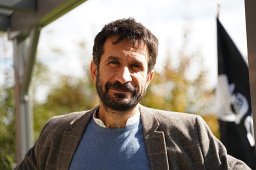 Jérémie Forney合作论文数Corresponding author.2
 Basil Bornemann合作论文数Dept Social Sci, Univ Basel2
 Christine Brombach合作论文数2
 Christian Schader合作论文数FiBL - Research Institute of Organic Agriculture2
 Sabine Rohrmann合作论文数Division of Cancer Epidemiology, German Cancer Research Center2
 Stefan Mann合作论文数2




