The reaction of aliphatic aldehydes with the tautomers 6,6-dimethyl-4-hydroxy-2H-thiopyrane-2-thione and 6,6-dimethyl-2-mercapto-4H-thiopyrane-4-one is reported to yield spiro compounds. However, the spiro compound of the reaction with formaldehyde is postulated, but has not been isolated to date. Due to a change in reaction conditions, we managed to isolate (RS)-6,6,7′,7′-Tetramethyl-2-sulfanylidene-5,6,6′,7′-tetrahydro-2H,2′H,4H,4′H,5′H-spiro[thiopyran-3,3′-thiopyrano [2,3-b]thiopyran]-4,5′-dione for the first time. The structure was proven with the help of a single X-ray crystal analysis. Furthermore, the new compound was fully characterized using one- and two- dimensional NMR techniques such as 1H, 13C, DEPT, COSY, HSQC and HMBC spectra, as well as IR and HRMS measurements.
Various 4-aminotetrahydropyridinylidene salts were treated with aldehydes in an alkaline medium. Their conversion to 5-substituted β-hydroxyketones in a one-step reaction succeeded only with an aliphatic aldehyde. Instead, aromatic aldehydes gave 5-substituted β-aminoketones or a single δ-diketone. The new compounds were characterized using spectroscopic methods and a single crystal structure analysis. Some of them showed anticancer and antibacterial properties.
The 4-substituted 3-amino-1,2,5-oxadiazole 1 from the Malaria Box Project of the Medicines for Malaria Venture foundation shows very promising selectivity and in vitro activity against Plasmodium falciparum. Within the first series of new compounds, various 3-acylamino analogs were prepared. This paper now focuses on the investigation of the importance of the aromatic substituent in ring position 4. A number of new structure–activity relationships were elaborated, showing that antiplasmodial activity and selectivity strongly depend on the substitution pattern of the 4-phenyl moiety. In addition, physicochemical parameters relevant for drug development were calculated (logP and ligand efficiency) or determined experimentally (CYP3A4-inhibition and aqueous solubility). N-[4-(3-ethoxy-4-methoxyphenyl)-1,2,5-oxadiazol-3-yl]-3-methylbenzamide 51 showed high in vitro activity against the chloroquine-sensitive strain NF54 of P. falciparum (PfNF54 IC50 = 0.034 µM), resulting in a very promising selectivity index of 1526.
Tetrahydropyridin-4-ylidene salts with benzyl and dibenzyl substitution showed good antiprotozoal activity. This paper reports the synthesis of analogues with longer side chains. They were investigated for their antiprotozoal activities as well as for their cytotoxicity using microplate assays. The most active compounds showed activity against Trypanosoma brucei rhodesiense in concentrations < 0.06 µM. A series of compounds was active against Plasmodium falciparum NF54 in low nanomolar concentration and exhibited outstanding selectivity. The influence of substitution pattern and chain length on the antiprotozoal potencies were analyzed and structure–activity relationships were given. New compounds were characterized by FT-IR, HRMS, and NMR spectroscopy. Graphical abstract
An entry from the Cambridge Structural Database, the world’s repository for small molecule crystal structures. The entry contains experimental data from a crystal diffraction study. The deposited dataset for this entry is freely available from the CCDC and typically includes 3D coordinates, cell parameters, space group, experimental conditions and quality measures.
2,4-Diaminopyrimidines and (dialkylamino)azabicyclo-nonanes possess activity against protozoan parasites. A series of fused hybrids were synthesized and tested in vitro against pathogens of malaria tropica and sleeping sickness. The activities and selectivities of compounds strongly depended on the substitution pattern of both ring systems as well as on the position of the nitrogen atom in the bicycles. The most promising hybrids of 3-azabicyclo-nonane with 2-aminopyrimidine showed activity against P. falciparum NF54 in submicromolar concentration and high selectivity. A hybrid with pyrrolidino substitution of the 2-azabicyclo-nonane as well as of the pyrimidine moiety exhibited promising activity against the multiresistant K1 strain of P. falciparum. A couple of hybrids of 2-azabicyclo-nonanes with 2-(dialkylamino)pyrimidines possessed high activity against Trypanosoma brucei rhodesiense STIB900 and good selectivity.
N-(Aminoalkyl)azabicyclo[3.2.2]nonanes possess antiplasmodial and antitrypanosomal activity. A series with terminal tetrazole or sulfonamido partial structure was prepared. The structures of all new compounds were confirmed by NMR and IR spectroscopy and by mass spectral data. A single crystal structure analysis enabled the distinction between isomers. The antiprotozoal activities were examined in vitro against strains of Plasmodium falciparum and Trypanosoma brucei rhodesiense (STIB 900). The most active sulfonamide and tetrazole derivates showed activities in the submicromolar range.
Several 1-benzyl and 1,3-dibenzyl derivatives of tetrahydropyridinylidene salts with differing electron withdrawing substituents at the aromatic residues have been prepared. In addition, the amine moiety in position 4 was varied. The new compounds were investigated for their antiplasmodial and antitrypanosomal activities as well as for their cytotoxicity. They were characterized using FT-IR, HRMS and NMR spectroscopy. Structure–activity relationships including reported compounds are discussed. Graphical abstract
MMV's Malaria Box compound MMV030666 shows multi-stage activity against various strains of Plasmodium falciparum and lacks resistance development. To evaluate the importance of its diarylether partial structure, diarylthioethers and diphenylamines with varying substitution patterns were prepared. A number of evident structure-activity relationships were revealed. Physicochemical and pharmacokinetic parameters were determined experimentally (passive permeability) or calculated. Compared to the lead compound a diarylthioether was more active and less cytotoxic resulting in an excellent selectivity index of 850. In addition, pharmacokinetic and physicochemical parameters were improved.
We describe a new reduction process for the efficient preparation of various, especially 2-substituted, piperidin-4-ones which are not accessible by other reaction pathways until now. Tetrahydropyridinylidene salts (THPS) with differing substitution pattern are the educts of this reaction. These compounds are available by mainly two different reaction sequences and they can be further modified by insertion of various substituents before the targeted piperidin-4-ones are obtained.
The antiprotozoal activity of 1-benzyltetrahydropyridin-4-yliden iminium salts is reported. This paper describes the preparation of a series of analogs from dihydropyridines or dihydrothiopyrans as educts. The new compounds were investigated for their activity against Plasmodium falciparum NF54, a causative organism of Malaria tropica and Trypanosoma brucei rhodesiense, the causative organism of Human African Trypanosomiasis (sleeping sickness). Several structure–activity relationships were detected. Both the substituents in ring positions 1 and 4 of the tetrahydropyridinium moiety had a strong impact on the antiprotozoal activities as well as on the cytotoxicity of compounds against L-6 cells (rat skeletal myoblasts). All new compounds were characterized using FT-IR spectroscopy, HRMS, and NMR spectroscopy.
The reaction of 2,3-dihydropyridines with sulfonyl halides surprisingly yielded open chain dienes with sulfonylimine structure. The products were specific out of several possible isomers and, therefore, a separation of isomers was not necessary. All new compounds were characterized using FT-IR spectroscopy, HRMS, and NMR spectroscopy. A bicyclic by-product from the reaction of a 2,3-dihydropyridine with mesyl chloride was isolated and its structure elucidated using a single X-ray crystal analysis. Some biological activities, like antimicrobial and cytotoxic properties were investigated.
The 2-phenoxybenzamide 1 from the Medicines for Malaria Venture Malaria Box Project has shown promising multi-stage activity against different strains of P. falciparum. It was successfully synthesized via a retrosynthetic approach. Subsequently, twenty-one new derivatives were prepared and tested for their in vitro activity against blood stages of the NF54 strain of P. falciparum. Several insights into structure-activity relationships were revealed. The antiplasmodial activity and cytotoxicity of compounds strongly depended on the substitution pattern of the anilino partial structure as well as on the size of substituents. The diaryl ether partial structure had further impacts on the activity. Additionally, several physicochemical and pharmacokinetic parameters were calculated (log P, log D7.4 and ligand efficiency) or determined experimentally (passive permeability and CYP3A4 inhibition). The tert-butyl-4-{4-[2-(4-fluorophenoxy)-3-(trifluoromethyl)benzamido]phenyl}piperazine-1-carboxylate possesses high antiplasmodial activity against P. falciparum NF54 (PfNF54 IC50 = 0.2690 µM) and very low cytotoxicity (L-6 cells IC50 = 124.0 µM) resulting in an excellent selectivity index of 460. Compared to the lead structure 1 the antiplasmodial activity was improved as well as the physicochemical and some pharmacokinetic parameters.
A new series of compounds was prepared from 6-methoxyquinolin-8-amine or its N-(2-aminoethyl) analogue via Ugi-azide reaction. Their linkers between the quinoline and the tert-butyltetrazole moieties differ in chain length, basicity and substitution. Compounds were tested for their antiplasmodial activity against Plasmodium falciparum NF54 as well as their cytotoxicity against L-6-cells. The activity and the cytotoxicity were strongly influenced by the linker and its substitution. The most active compounds showed good activity and promising selectivity.
An N-acylated furazan-3-amine of a Medicines for Malaria Venture (MMV) project has shown activity against different strains of Plasmodium falciparum. Seventeen new derivatives were prepared and tested in vitro for their activities against blood stages of two strains of Plasmodium falciparum. Several structure–activity relationships were revealed. The activity strongly depended on the nature of the acyl moiety. Only benzamides showed promising activity. The substitution pattern of their phenyl ring affected the activity and the cytotoxicity of compounds. In addition, physicochemical parameters were calculated (log P, log D, ligand efficiency) or determined experimentally (permeability) via a PAMPA. The N-(4-(3,4-diethoxyphenyl)-1,2,5-oxadiazol-3-yl)-3-(trifluoromethyl)benzamide possessed good physicochemical properties and showed high antiplasmodial activity against a chloroquine-sensitive strain (IC50(NF54) = 0.019 µM) and even higher antiplasmodial activity against a multiresistant strain (IC50(K1) = 0.007 µM). Compared to the MMV compound, the permeability and the activity against the multiresistant strain were improved.
New 1,3 dibenzyl -tetrahydropyridinylidene ammonium salts have been prepared from unsubstituted or N-benzylated tetrahydropyridinylidene ammonium salts. The antiplasmodial and antitrypanosomal activities as well as their cytotoxic effects were determined using microplate assays. In addition, their activities against two gram positive and two gram negative bacteria strains and a yeast strain were examined. Furthermore, anticancer effects against two cell lines were investigated. Physicochemical parameters were calculated and structure-activity-relationships discussed. One compound showed antiplasmodial activity against a multiresistant strain of Plasmodium falciparum in subnanomolar concentration. Antitrypanosomal activities were detected in low nanomolar concentrations. A single compound was active against grampositive and gramnegative bacteria, as well as yeast. One compound inhibited the growth of a HCT cell line in low concentration.
Novel 2-aminopyrimidine derivatives were prepared from acyclic starting materials, benzylidene acetones and ammonium thiocyanates, via 5 steps, including ring closure, aromatization, S -methylation, oxidation to methylsulfonyl compounds, and formation of guanidines with suitable amines. The prepared compounds differ from each other by the substitutions of their amino group and of their phenyl ring. The 2-aminopyrimidines were tested by use of microplate assays for their in vitro activities against a causative organism of sleeping sickness, Trypanosoma brucei rhodesiense , as well as against a causative organism of malaria, Plasmodium falciparum NF54. Their cytotoxic properties were determined with L-6 cells (rat skeletal myoblasts). Some of the compounds exhibited quite good antitrypanosomal activity, and others showed excellent antiplasmodial activity. The influence of the structural modifications on these activities is discussed. Graphic abstract
Background: Human African Trypanosomiasis (HAT, sleeping sickness) and Malaria both are insect vectored tropical diseases. Only a couple of drugs is able to cure HAT, but all of them are toxic, prone to resistance and require parenteral administration. Malaria is responsible for high morbidity and mortality in humans. It is one of the global killers of children. Wide-spread drug resistance against traditional therapeutics which were once highly effective makes them almost useless. Therefore new drugs against both diseases are urgently needed. Objective: Recently, we reported the synthesis and antiprotozoal activities of a number of new 2-substituted 4-carbamoyl- and 4-aminoquinolines. This study focussed on the synthesis of novel tetrazole derivatives which are linked to the quinoline core via a piperidine ring. Methods: Novel compounds exhibiting a 7-chloroquinoline and a tetrazole ring were prepared via Ugi-azide reaction. Modifications were restricted to the orientation and the substitution of the linker. Compounds were tested for their activities against Trypanosoma brucei rhodesiense (STIB 900). Their antiplasmodial activities were determined against a sensitive (NF54) and a multiresistant strain (K-1) of Plasmodium falciparum. Results: Eighteen tetrazole derivatives were prepared. The results of the biological tests were compared with the activities of drugs in use and structure-activity relationships were discussed. Their antitrypanosomal activities were only moderate. In contrast some of the compounds showed promising activity against both strains of Plasmodium falciparum and good to excellent resistance indices. Conclusion: The antiplasmodial activities depended on the orientation of the 4-aminopiperidine linker. Compounds with a tertiary amino group in position 4 of the quinoline ring exhibited equal activity against both strains, whereas those with a secondary amino group were mainly active against the sensitive strain.
The substitution of 6-fluoroquinolines was modified in ring positions 2 and 4. The new compounds were tested in vitro for their activities against a sensitive and a multidrug resistant strain of Plasmodium falciparum. Some physicochemical parametres were calculated (log P, log D, ligand efficiency) or determined experimentally (permeability). The most promising compounds were tested for their in vivo activity against Plasmodium berghei in a mouse model. The 6-fluoro-2-{4-[(4-methylpiperazin-1-yl)methyl]phenyl}-N-[2-(pyrrolidin-1-yl)ethyl]quinoline-4-carboxamide possessed proper physicochemical properties and showed high antiplasmodial activity in vitro (IC50 ≤ 0.0029 µM) and in vivo (99.6% activity).
New derivatives of 3-azabicyclo[3.2.2]nonanes were prepared and characterized using FT-IR spectroscopy, HRMS, and NMR spectroscopy. The new compounds were investigated in vitro for their antiplasmodial activities against the sensitive NF54 strain and the multiresistant K 1 strain of Plasmodium falciparum , and for their antitrypanosomal activity against Trypanosoma brucei rhodesiense . The N -methyl-6,9-diphenyl- N -[(pyridin-4-yl)methyl]-3-azabicyclo[3.2.2]nonan-1-amine possessed high antiplasmodial in vitro activity against both strains of P. falciparum (NF54: IC50 = 0.848 nm; K 1 : IC 50 = 2 nm). The most promising ones were further investigated in a mouse model for their in vivo activity against Plasmodium berghei . Graphic abstract
 Robert Weis合作论文数82Robert Saf合作论文数63Marcel Kaiser合作论文数56
 Reto Brun合作论文数Department Medical Parasitology and Infection Biology, Swiss Tropical and Public Health Institute36Johanna Faist合作论文数30
 Pascal Maser合作论文数24Ferdinand Belaj合作论文数Department of Chemistry, University of Graz17
 Patrick Hochegger合作论文数14Ernst Haslinger合作论文数13Johanna Dolensky合作论文数11Eva-Maria Pferschy-Wenzig合作论文数9
 Bauer, Rudolf合作论文数Institut für Pharmazeutische Wissenschaften, University of Graz9Johann Jurenitsch合作论文数8Michael Hoffelner合作论文数6
 Muaaz Alajlani合作论文数Institute of Pharmacy, University of Halle-Wittenberg6Christian Schlapper合作论文数5
 Ahmad S合作论文数Department of Urology, The Adelaide and Meath Hospital incorporating the National Children's Hospital5
 Armin Presser合作论文数Institute of Pharmaceutical Chemistry, University of Graz5Clemens Hinteregger合作论文数4Volker Wolkinger合作论文数4Noor Ul Amin Mohsin合作论文数4Theresa Hermann合作论文数4Adelheid H. Brantner合作论文数4
 Franz Bucar合作论文数Department of Pharmaceutical Sciences, Faculty of Natural Sciences, University of Graz4
 Nadine Kretschmer合作论文数4
 Heinrich Berger合作论文数Institute of Pharmaceutical Sciences, Karl-Franzens-University4Noor-ul-Amin Mohsin合作论文数3Klaus Schweiger合作论文数3Antje Hüfner合作论文数3Antje Huefner合作论文数2Usama Hassan合作论文数2Andreas Leitner合作论文数2Ivana Turek合作论文数2Markus Petritsch合作论文数2
 Teresa Pirker合作论文数2Wube Abraham合作论文数2Karin Rauchensteiner合作论文数2
 Veronika Temml合作论文数2
 Daniela Schuster合作论文数Institute of Pharmacy, Department of Pharmaceutical and Medicinal Chemistry, Paracelsus Medical University Salzburg2Shaheen Ahmed合作论文数1sabine ortmann合作论文数1Tai Wang合作论文数Mem Sloan Kettering Canc Ctr, Chem Biol Program, New York, NY 10065 USA1Perozzo Remo合作论文数1
 Teresa Kaserer合作论文数1Lauciello Leonardo合作论文数University of Geneva, University of Lausanne1
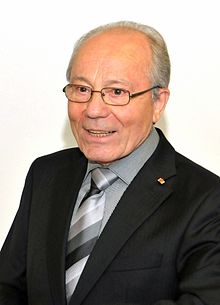 Walter Schunack合作论文数Freie Universität Berlin1
 Leonardo Scapozza合作论文数Department of Pharmaceutical Biochemistry, University of Geneva1
 Walter Fabian合作论文数Institute of Chemistry, Faculty of Natural Sciences, University of Graz1Erich Rajkovic合作论文数1




