In a previous paper, entitled "Structural Highness Notions," we defined several classes of degrees that are high in senses related to computable structure theory. Each class of degrees is characterized by a structural feature (e.g., an isomorphism) that it can compute if such a feature exists. In this paper, we examine each of these classes and characterize them based on what they do if no such object exists. We describe, in particular, reticent, loquacious, and collegiate senses of being high. These, respectively, reflect the case where a computation from the degree can give output only if the desired feature exists, the case where it will give output of some kind whether or not the feature exists, and the case where the degree will either compute the feature or the best available approximation to it.
Normal numbers were introduced by Borel. Normality is certainly a weak notion of randomness; for instance, there are computable numbers which are absolutely normal. In the present paper, we introduce a relativization of normality to a fixed representation system. When we require normality with respect to large sets of such systems, we find variants of normality that imply randomness notions much stronger than absolute normality. The primary classes of numbers investigated in this paper are the supernormal numbers and the highly normal numbers, which we will define. These are relativizations of normality which are robust to all reasonable changes of representation. Among other results, we give a proof that the highly normal numbers are exactly those of computable dimension 1, which we think gives a more natural characterization than was previously known of this interesting class.
In Calvert, Franklin, and Turetsky (2023, J. Symb. Log., 88, 1692-1724), we defined several classes of degrees that are high in senses related to computable structure theory. Each class of degrees is characterized by a structural feature (e.g. an isomorphism) that it can compute if such a feature exists. In this paper, we examine each of these classes and characterize them based on what they do if no such object exists. We describe, in particular, reticent, loquacious and collegiate senses of being high. These, respectively, reflect the case where a computation from the degree will give output only if the desired feature exists, the case where it will give output of some kind whether or not the feature exists, and the case where the degree will compute either the feature or the best available approximation to it.
We study notions of generic and coarse computability in the context of computable structure theory. Our notions are stratified by the Sigma beta hierarchy. We focus on linear orderings. We show that at the Sigma 1 level, all linear orderings have both generically and coarsely computable copies. This behavior changes abruptly at higher levels; we show that at the Sigma alpha+2 level for any alpha is an element of omega 1C K the set of linear orderings with generically or coarsely computable copies is Sigma 11-complete and therefore maximally complicated. This development is new even in the general analysis of generic and coarse computability of countable structures. In the process of proving these results, we introduce new tools for understanding generically and coarsely computable structures. We are able to give a purely structural statement that is equivalent to having a generically computable copy and show that every relational structure with only finitely many relations has coarsely and generically computable copies at the lowest level of the hierarchy. (c) 2025 The Author(s). Published by Elsevier B.V. This is an open access article under the CC BY license (http://creativecommons.org/licenses/by/4.0/).
Approximate computability, in the form of generically computable sets introduced by Jockusch and Schupp, was motivated by asymptotic density problems studied by Gromov in combinatorial group theory. More recently, we have defined notions of generically computable structures, and studied in particular equivalence structures and injection structures. We also introduced a graded family of elementarity conditions for substructures, in which the dense substructures more strongly resemble the original structure by being Sigma(n) elementary substructures for a given n. We now return to group theory, as we explore the generic computability of torsion Abelian groups. We show that any Abelian p-group has a generically computable copy, and that, for an important family of Abelian p-groups, a group G has a Sigma(2)-generically c.e. copy if and only if it has a computable copy. We also give a partial characterization of the Sigma(1)-generically c.e. Abelian p-groups, and give a non-trivial characterization of the generically computable torsion Abelian groups. Coarsely computable and Sigma(n)-coarsely c.e. groups are also studied. It is well known that there are computable Abelian groups that are countable sums of cyclic groups of order p and p(2) that are not computably isomorphic. We present a notion of generically computable isomorphism and give conditions under which two such groups will be generically computably isomorphic.
We study linear orderings expanded by functions for successor and predecessor. The successor and predecessor on linear orderings capture the relatively intrinsically computably enumerable information about orderings in much the same way that dependence captures that for vector spaces. In particular, the sp-homogeneous and weakly sp-homogeneous linear orderings are those which are (ultra-)homogeneous or weakly homogeneous with this additional structure. We demonstrate that these orderings are always relatively Δ_4 categorical and determine exactly which ones are (uniformly) relatively Δ_3 categorical. We also provide a classification for sp-homogeneity and weak sp-homogeneity. We establish that this is the best possible classification by showing that the set of sp-homogeneous linear orderings is Π_5^0 complete, and that the set of weakly sp-homogeneous linear orderings is Σ_6^0 complete. These results are obtained in two different ways, one using a hands-on computability theoretic approach and another using more abstract descriptive set theory.
We introduce a notion of algorithmic randomness for algebraic fields. We prove the existence of a continuum of algebraic extensions of $\mathbb{Q}$ that are random according to our definition. We show that there are noncomputable algebraic fields which are not random. We also partially characterize the index set, relative to an oracle, of the set of random algebraic fields computable relative to that oracle. In order to carry out this investigation of randomness for fields, we develop computability in the context of infinite Galois theory (where the relevant Galois groups are uncountable), including definitions of computable and computably enumerable Galois groups and computability of Haar measure on the Galois groups.
The present paper gives an account for the general mathematical reader of the life and work of Martin Davis. Since two rather comprehensive autobiographical accounts and two long biographical interviews already exist, the present work focusses on Davis's scientific achievements, including work on computably enumerable sets, universal Turing machines, the hyperarithmetical hierarchy, neural networks, Hilbert's Tenth Problem, and automated reasoning.
Generically computable sets, as introduced by Jockusch and Schupp, have been of great interest in recent years. This idea of approximate computability was motivated by asymptotic density problems studied by Gromov in combinatorial group theory. More recently, we have defined notions of generically computable structures, and studied in particular equivalence structures and injection structures. A structure is said to be generically computable if there is a computable substructure defined on an asymptotically dense set, where the functions are computable and the relations are computably enumerable. It turned out that every equivalence structure has a generically computable copy, whereas there is a non-trivial characterization of the injection structures with generically computable copies. In this paper, we return to group theory, as we explore the generic computablity of Abelian groups. We show that any Abelian p-group has a generically computable copy and that such a group has a $$\varSigma _2$$ -generically computably enumerable copy if and only it has a computable copy. We also give a partial characterization of the $$\varSigma _1$$ -generically computably enumerable Abelian p-groups. We also give a non-trivial characterization of the generically computable Abelian groups that are not p-groups.
We introduce several highness notions on degrees related to the problem of computing isomorphisms between structures, provided that isomorphisms exist. We consider variants along axes of uniformity, inclusion of negative information, and several other problems related to computing isomorphisms. These other problems include Scott analysis (in the form of back-and-forth relations), jump hierarchies, and computing descending sequences in linear orders.
AbstractWe improve on and generalize a 1960 result of Maltsev. For a field F, we denote by $H(F)$ the Heisenberg group with entries in F. Maltsev showed that there is a copy of F defined in $H(F)$ , using existential formulas with an arbitrary non-commuting pair of elements as parameters. We show that F is interpreted in $H(F)$ using computable $\Sigma _1$ formulas with no parameters. We give two proofs. The first is an existence proof, relying on a result of Harrison-Trainor, Melnikov, R. Miller, and Montalbán. This proof allows the possibility that the elements of F are represented by tuples in $H(F)$ of no fixed arity. The second proof is direct, giving explicit finitary existential formulas that define the interpretation, with elements of F represented by triples in $H(F)$ . Looking at what was used to arrive at this parameter-free interpretation of F in $H(F)$ , we give general conditions sufficient to eliminate parameters from interpretations.
In recent years, computability theorists have extensively studied generically and coarsely computable sets. This study of approximate computability was originally motivated by asymptotic density problems in combinatorial group theory. We generalize the notions of generic and coarse computability of sets, introduced by Jockusch and Schupp, to arbitrary structures by defining generically and coarsely computable and computably enumerable structures. There are two directions in which these notions could potentially trivialize: either all structures could have a densely computable copy or only those having a computable (or computably enumerable) copy. We show that some particular classes of structures realize each of these extremal conditions, while other classes realize neither of them. To further explore these concepts, we introduce a graded family of elementarity conditions for substructures, in which we require that the dense sets under consideration be ‘strong’ substructures of the original structure. Here, again, for a given class, the notion could trivialize in the same two directions and we show that both are possible. For each class that we investigate, there is some natural number $n$ such that requiring $\varSigma _{n}$ elementarity of substructures is enough to trivialize the class of generically or densely computable structures, witnessing the essentially structural character of these notions.
Inspired by the study of generic and coarse computability in computability theory, we extend such investigation to the context of computable model theory. In this paper, we continue our study initiated in the previous paper (Journal of Logic and Computation 32 (2022) 581–607) , where we introduced and studied the notions of generically and coarsely computable structures and their generalizations. In this paper, we introduce the notions of generically and coarsely computable isomorphisms, and their weaker variants. We sometimes also require that the isomorphisms preserve the density structure. For example, for any coarsely computable structure A, there is a density preserving coarsely computable isomorphism from A to a computable structure. We demonstrate that each notion of generically and coarsely computable isomorphisms, density preserving or not, gives interesting insights into the structures we consider, focusing on various equivalence structures and injection structures.
We define notions of generically and coarsely computable relations and structures and functions between structures. We investigate the existence and uniqueness of equivalence structures in the context of these definitions
We say that a structure $\mathcal{A}$ admits \emph{strong jump inversion} provided that for every oracle $X$, if $X'$ computes $D(\mathcal{C})'$ for some $\mathcal{C}\cong\mathcal{A}$, then $X$ computes $D(\mathcal{B})$ for some $\mathcal{B}\cong\mathcal{A}$. Jockusch and Soare \cite{JS} showed that there are low linear orderings without computable copies, but Downey and Jockusch \cite{DJ} showed that every Boolean algebra admits strong jump inversion. More recently, D.\ Marker and R.\ Miller \cite{MM} have shown that all countable models of $DCF_0$ (the theory of differentially closed fields of characteristic $0$) admit strong jump inversion. We establish a general result with sufficient conditions for a structure $\mathcal{A}$ to admit strong jump inversion. Our conditions involve an enumeration of $B_1$-types, where these are made up of formulas that are Boolean combinations of existential formulas. Our general result applies to some familiar kinds of structures, including some classes of linear orderings and trees. We do not get the result of Downey and Jockusch for arbitrary Boolean algebras, but we do get a result for Boolean algebras with no $1$-atom, with some extra information on the complexity of the isomorphism. Our general result gives the result of Marker and Miller. In order to apply our general result, we produce a computable enumeration of the types realized in models of $DCF_0$. This also yields the fact that the saturated model of $DCF_0$ has a decidable copy.
We compute that the index set of PAC-learnable concept classes is $m$-complete $\Sigma^0_3$ within the set of indices for all concept classes of a reasonable form. All concept classes considered are computable enumerations of computable $\Pi^0_1$ classes, in a sense made precise here. This family of concept classes is sufficient to cover all standard examples, and also has the property that PAC learnability is equivalent to finite VC dimension.
Avigad introduced the notion of UD-randomness based in Weyl's 1916 definition of uniform distribution modulo one. We prove that there exists a weakly 1-random real that is neither UD-random nor weakly 1-generic. We also show that no 2-generic real can Turing compute a UD-random real.
We initiate the computability-theoretic study of ringed spaces and schemes. In particular, we show that any Turing degree may occur as the least degree of an isomorphic copy of a structure of these kinds. We also show that these structures may fail to have a least degree.
 Julia Knight合作论文数Department of Mathematics, College of Science, University of Notre Dame17
 Sergey Goncharov合作论文数9
 Douglas Cenzer合作论文数Department of Mathematics, College of Liberal Arts and Sciences, University of Florida9
 Valentina S. Harizanov合作论文数Department of Mathematics9Russell G. Miller合作论文数The Graduate Center, The City University of New York7
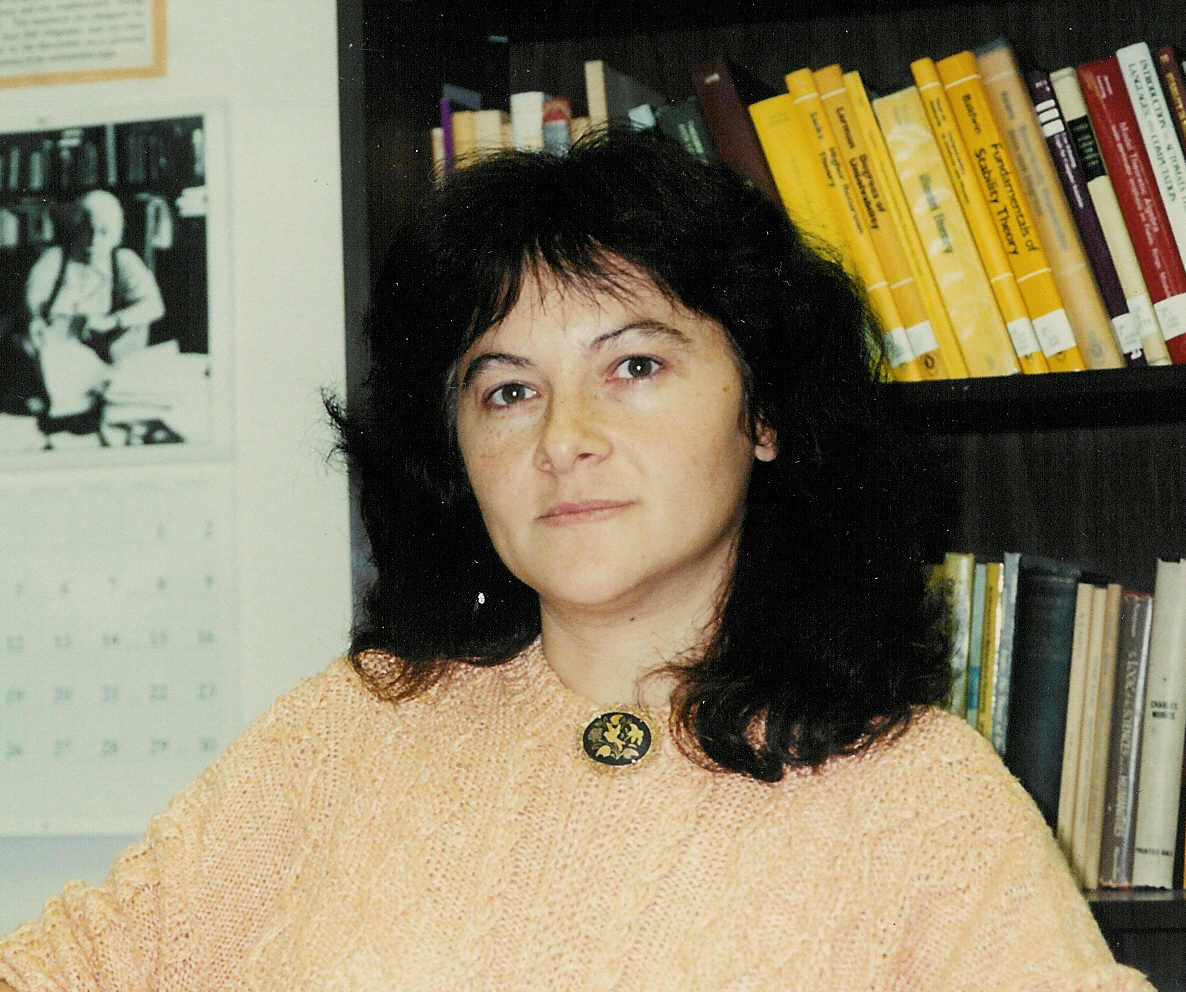 Valentina Harizanov合作论文数Department of Mathematics7Jessica Millar合作论文数5Andrey S Morozov合作论文数5Johanna N. Y. Franklin合作论文数4Dan Turetsky合作论文数3
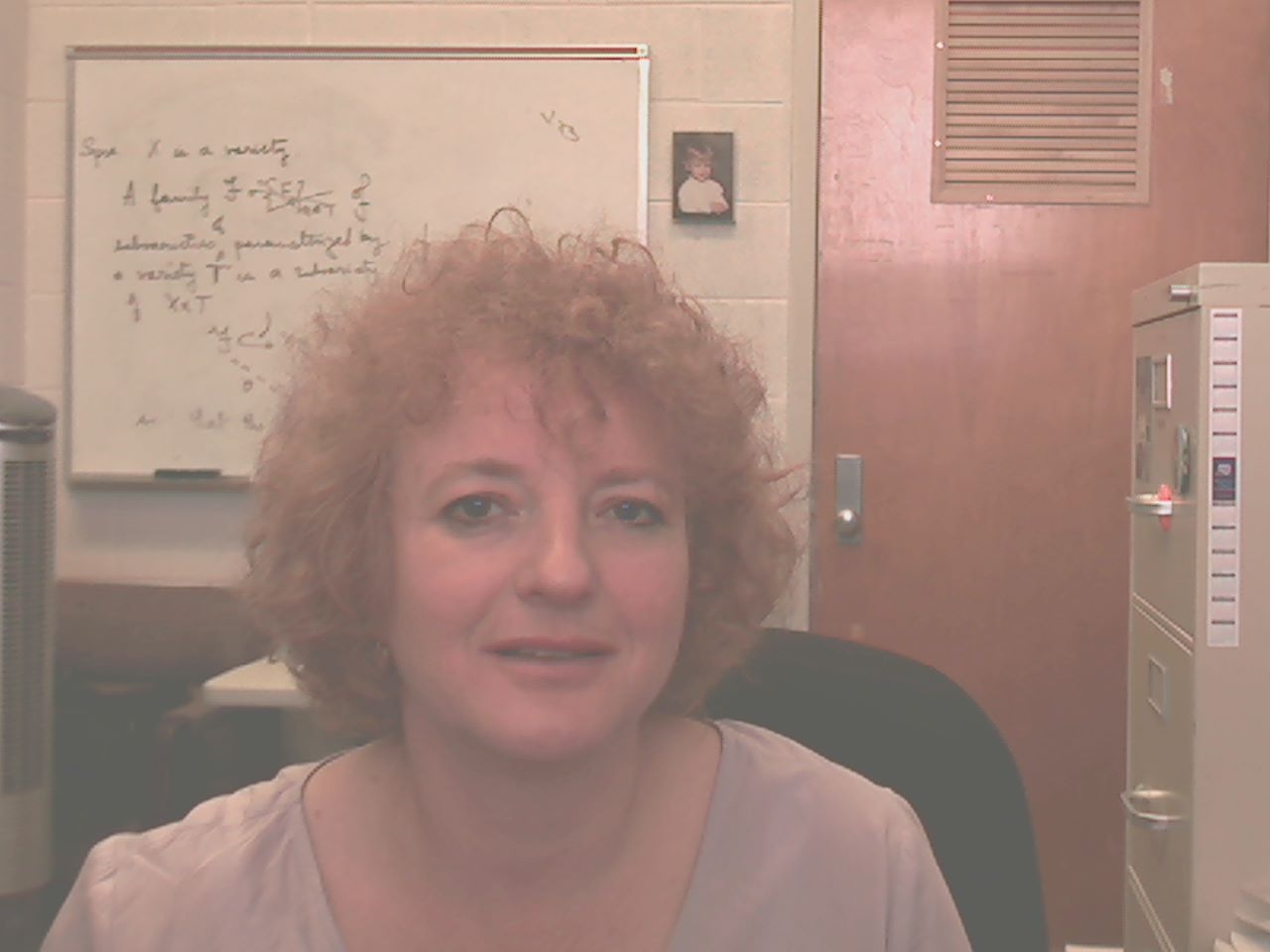 Alexandra Shlapentokh合作论文数East Carolina University3Sara Miller合作论文数2Alexandra A. Soskova合作论文数Faculty of Mathematics and Computer Science, Sofia University2John E. Porter合作论文数2
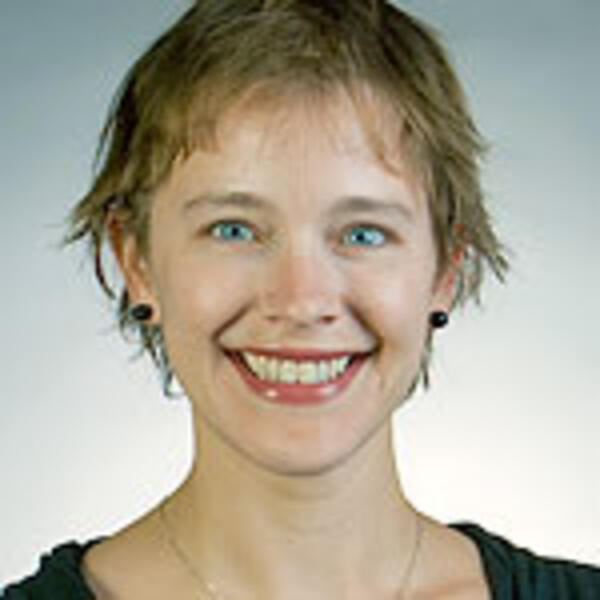 Jennifer Chubb合作论文数Department of Mathematics, University of San Francisco2
 Elham Buxton合作论文数Department of Computer Science, University of Illinois Springfield1Rose Weisshaar合作论文数1Rachael Alvir合作论文数1Daniel D. Turetsky合作论文数1
 Andrey Frolov合作论文数Kazan (Volga Region) Federal University1
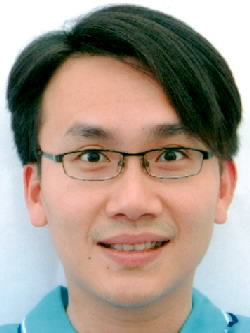 Ng Keng Meng合作论文数Division of Mathematical Sciences, School of Physical and Mathematical Sciences, College of Science, Nanyang Technological University1
 Elvira Mayordomo合作论文数Departamento de Informática e Ingeniería de Sistemas, Universidad de Zaragoza1Julia F. Knight合作论文数1
 Shahram Rahimi合作论文数Southern Illinois University at Carbondale1
 Eugenio G. Omodeo合作论文数Dipartimento di Matematica e Pura ed Applicata, Università di L'Aquila1Ekaterina B. Fokina合作论文数Kurt Gödel Research Center for Mathematical Logic, University of Vienna1Desmond Cummins合作论文数1
 Kunal Dutta合作论文数Faculty of Mathematics, Informatics and Mechanics, University of Warsaw1Charles F. D. Mccoy合作论文数1
 Amritanshu Prasad合作论文数CIT campus Taramani, The Institute of Mathematical Sciences1
 Alberto Policriti合作论文数Dipartimento di Scienze Matematiche, Informatiche e Fisiche, University of Udine1
 V. G. Puzarenko合作论文数1
 Oleg V. Kudinov合作论文数1Stefan Vatev合作论文数Faculty of Mathematics and Informatics, Sofia University1




