We develop a Bayesian hierarchical model for bivariate longitudinal diagnostic outcome data involving testing for the infective agent for Johne‘s disease (JD). We consider the situation where an imperfect binary test (fecal culture, FC) is repeatedly administered to each individual together with a continuous biomarker (serum ELISA measured as optical density (OD)). For infected individuals we assume the existence of a change-point corresponding to time of infection and posit appropriate changes to model the subsequent responses. Our data consist of records from 12 dairy herds known to be infected with JD. Data were collected from 1984–2003, and tests were performed about every six months. Our joint model incorporates latent states for uninfected and infected cows. We model the serology scores in the infected class using a four-parameter sigmoidal function, with parameters for the unknown time to infection, lag time (time for infective response), and the horizontal asymptote and rate of change. Parametric prior distributions are considered for all unknowns, except the asymptote and rate of change of the sigmoidal curves which are modeled with Dirichlet process mixtures and which allows for clustering of shapes of serologic response curves.
Metabolic syndrome (MetS) is defined as the presence of three of five binary traits related to cardiometabolic risk factors. Longitudinal data from the Study of Women's Health Across the Nation are used to explore the development of these traits over time using a Markov model. We study the effect of factors that are associated with prevalent MetS components at baseline, and the effect of fixed and time-dependent factors, including race/ethnicity and menopausal stage, on incidence/presence of MetS components over the menopause transition, as well as on the incidence of particular MetS types over time.
Generalised linear mixed regression models are fundamental in statistics. Modelling random effects that are shared by individuals allows for correlation among those individuals. There are many methods and statistical packages available for analysing data using these models. Most require some form of numerical or analytic approximation because the likelihood function generally involves intractable integrals over the latents. The Bayesian approach avoids this issue by iteratively sampling the full conditional distributions for various blocks of parameters and latent random effects. Depending on the choice of the prior, some full conditionals are recognisable while others are not. In this paper we develop a novel normal approximation for the random effects full conditional, establish its asymptotic correctness and evaluate how well it performs. We make the case for hierarchical binomial and Poisson regression models with canonical link functions, for hierarchical gamma regression models with log link and for other cases. We also develop what we term a sufficient reduction (SR) approach to the Markov Chain Monte Carlo algorithm that allows for making inferences about all model parameters by replacing the full conditional for the latent variables with a considerably reduced dimensional function of the latents. We expect that this approximation could be quite useful in situations where there are a very large number of latent effects, which may be occurring in an increasingly 'Big Data' world. In the sequel, we compare our methods with INLA, which is a particularly popular method and which has been shown to be excellent in terms of speed and accuracy across a variety of settings. Our methods appear to be comparable to theirs in terms of accuracy, while INLA was faster, for the settings we considered. In addition, we note that our methods and those of others that involve Gibbs sampling trivially handle parameters that are functions of multiple parameters, while INLA approximations do not. Our primary illustration is for a three-level hierarchical binomial regression model for data on health outcomes for patients who are clustered within physicians who are clustered within particular hospitals or hospital systems.
Bayesian inference for generalized linear mixed models implemented with Markov chain Monte Carlo (MCMC) sampling methods have been widely used. In this paper, we propose to substitute a large sample normal approxima-tion for the intractable full conditional distribution of the latent effects (of size k) in order to simplify the computation. In addition, we develop a second approxi-mation involving what we term a sufficient reduction (SR). We show that the full conditional distributions for the model parameters only depend on a small, say r << k, dimensional function of the latent effects, and also that this reduction is asymptotically normal under mild conditions. Thus we substitute the sampling of an r dimensional multivariate normal for sampling the k dimensional full con-ditional for the latent effects. Applications to oncology physician data, to cow abortion data and simulation studies confirm the reasonable performance of the proposed approximation method in terms of estimation accuracy and computa-tional speed.
When Bayesian latent class analysis is used for diagnostic test data in the absence of a gold standard test, it is common to assume that any unknown test sensitivities and specificities are constant across different populations. Indeed this assumption is often necessary for model identifiability. However there are a number of practical situations, depending on the type of test and the nature of the disease, where this assumption may not be true. We present a case study of using a microscopic agglutination test to diagnose leptospiroris infection in beef cattle, which strongly suggests that sensitivity in particular varies among herds. We develop and fit an alternative model in which sensitivity is related to within-herd prevalence, and discuss the statistical and epidemiological implications.
OBJECTIVE: To examine whether patterns of sexual intercourse frequency and demographic, menopausal status, genitourinary, health, and psychosocial factors are associated with developing sexual pain across the menopausal transition. METHODS: These were longitudinal analyses of questionnaire data from the multicenter, multiracial and ethnic prospective cohort SWAN (Study of Women's Health Across the Nation) (1995-2008). We used multivariable discrete-time proportional hazards models to examine whether incident sexual pain was associated with preceding long-term (up to 10 visits) or short-term (two and three visits) sexual intercourse frequency patterns or other factors (eg, menopause status, genitourinary symptoms, lifestyle factors, and mental health). RESULTS: Of the 2,247 women with no sexual pain at baseline, 1,087 (48.4%) developed sexual pain at least "sometimes" up to 10 follow-up visits over 13 years. We found no consistent association between prior patterns of sexual intercourse frequency and development of sexual pain. For example, neither decreases in intercourse frequency from baseline (adjusted hazard ratio [aHR] 0.93, 95% CI 0.73-1.19) nor decreases in frequency over three prior visits (aHR 1.00, 95% CI 0.72-1.41) were associated with incident pain. Reasons for interruptions in intercourse activity at the prior visit, including lack of interest (aHR 1.64, 95% CI 0.74-3.65) and relationship issues (aHR 0.36, 95% CI 0.04-2.88), were not associated with developing pain. Being postmenopausal using hormone therapy (aHR 3.16, 95% CI 1.46-6.85), and reported vaginal dryness (aHR 3.73, 95% CI 2.88-4.83) were most strongly associated with incident sexual pain. CONCLUSION: Long-term and short-term declines in sexual intercourse frequency across the menopausal transition were not associated with increased hazard of developing pain with intercourse. This empirical evidence does not support the common belief that a reduction in women's sexual frequency is responsible for their symptoms of sexual pain.
according to the method used to allocate participants into treatment or control groups (non-randomised or randomised controlled trials) according to the awareness of either participants or researchers or both of which group participants are allocated into (single or double-blind studies) according to the magnitude of difference between treatment and control groups that is expected (superiority or non-inferiority trials)
Praise for Bayesian Thinking in Biostatistics: This thoroughly modern Bayesian book …is a 'must have' as a textbook or a reference volume. Rosner, Laud and Johnson make the case for Bayesian approaches by melding clear exposition on methodology with serious attention to a broad array of illuminating applications. These are activated by excellent coverage of computing methods and provision of code. Their content on model assessment, robustness, data-analytic approaches and predictive assessments…are essential to valid practice. The numerous exercises and professional advice make the book ideal as a text for an intermediate-level course… -Thomas Louis, Johns Hopkins University The book introduces all the important topics that one would usually cover in a beginning graduate level class on Bayesian biostatistics. The careful introduction of the Bayesian viewpoint and the mechanics of implementing Bayesian inference in the early chapters makes it a complete self- contained introduction to Bayesian inference for biomedical problems….Another great feature for using this book as a textbook is the inclusion of extensive problem sets, going well beyond construed and simple problems. Many exercises consider real data and studies, providing very useful examples in addition to serving as problems. - Peter Mueller, University of Texas With a focus on incorporating sensible prior distributions and discussions on many recent developments in Bayesian methodologies, Bayesian Thinking in Biostatistics considers statistical issues in biomedical research. The book emphasizes greater collaboration between biostatisticians and biomedical researchers. The text includes an overview of Bayesian statistics, a discussion of many of the methods biostatisticians frequently use, such as rates and proportions, regression models, clinical trial design, and methods for evaluating diagnostic tests. Key Features Applies a Bayesian perspective to applications in biomedical science Highlights advances in clinical trial design Goes beyond standard statistical models in the book by introducing Bayesian nonparametric methods and illustrating their uses in data analysis Emphasizes estimation of biomedically relevant quantities and assessment of the uncertainty in this estimation Provides programs in the BUGS language, with variants for JAGS and Stan, that one can use or adapt for one's own research The intended audience includes graduate students in biostatistics, epidemiology, and biomedical researchers, in general Authors Gary L. Rosner is the Eli Kennerly Marshall, Jr., Professor of Oncology at the Johns Hopkins School of Medicine and Professor of Biostatistics at the Johns Hopkins Bloomberg School of Public Health. Purushottam (Prakash) W. Laud is Professor in the Division of Biostatistics, and Director of the Biostatistics Shared Resource for the Cancer Center, at the Medical College of Wisconsin. Wesley O. Johnson is professor Emeritus in the Department of Statistics as the University of California, Irvine.
 Ian Gardner合作论文数Department of Health Management, University of Prince Edward Island25
 Mark C Thurmond合作论文数School of Veterinary Medicine, University of California, Davis22
 Gary L. Rosner合作论文数Division of Biostatististics and Bioinformatics, Department of Oncology, Johns Hopkins University;Sidney Kimmel Comprehensive Cancer Center, Johns Hopkins University19
 Purushottam Laud合作论文数18
 Jones Geoff合作论文数16
 Ronald Christensen合作论文数Department of Mathematics and Statistics MSC01 1115, 1 University of New Mexico16
 Ellen B. Gold合作论文数Department of Public Health Sciences, School of Medicine, University of California Davis15
 Timothy E. Hanson合作论文数Department of Statistics, University of South Carolina14
 Joseph L Gastwirth合作论文数Department of Statistics, Columbian College of Arts and Sciences, George Washington University11Adam Branscum合作论文数11Seymour Geisser合作论文数Department of Statistics, University of Minnesota System10
 Edward J. Bedrick合作论文数Department of Math and Statistics, University of New Mexico9
 Jessica Utts合作论文数Department of Statistics, Donald Bren School of Information & Computer Sciences, University of California, Irvine.8L. Elaine Waetjen合作论文数7Sk Hietala合作论文数7Larry M. Pearson合作论文数7Mp Georgiadis合作论文数6
 Claudia Munoz-Zanzi合作论文数6MLG LASSAUZET合作论文数5Tim Carpenter合作论文数School of Veterinary Medicine, University of California, Davis5
 Cord Heuer合作论文数MSc (Epidemiology),, DVM5
 Randall Singer合作论文数Department of Veterinary and Biomedical Sciences, College of Veterinary Medicine, University of Minnesota5
 Daan Vink合作论文数4
 William Kenneth Reisen合作论文数Department of Pathology, Microbiology and Immunology, School of Veterinary Medicine, University of California4
 Christopher Barker合作论文数Department of Pathology, Microbiology, & Immunology, School of Veterinary Medicine, University of California, Davis4
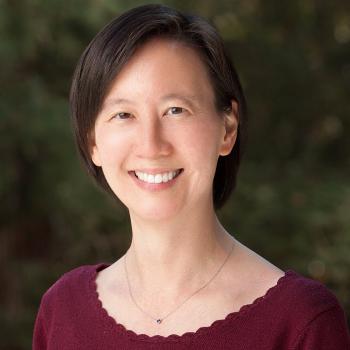 Jennifer Lee合作论文数Department of Anesthesiology, Perioperative and Pain Medicine, School of Medicine, Stanford University4Mitchell Watnik合作论文数4A.J. Branscum合作论文数4
 Andres Perez合作论文数Department of Veterinary Population Medicine, College of Veterinary Medicine, University of Minnesota;Center for Animal Health and Food Safety, University of Minnesota4Guibo Xing合作论文数4Sternfield Barbara合作论文数3DW HIRD合作论文数3Joseph Ryan合作论文数3F STEVENS合作论文数3
 Müller Mueller合作论文数Department of Mathematics, College of Natural Sciences, University of Texas at Austin3Po-Yin Chang合作论文数Office Surveillance & Epidemiol, US FDA3
 Navneet Dhand合作论文数Faculty of Science, The University of Sydney3
 Fosgate Geoffrey T合作论文数Dept Prod Anim Studies, Univ Pretoria3
 Siobán D. Harlow合作论文数Department of Epidemiology, School of Public Health, University of Michigan;Center for Midlife Science, University of Michigan3Tavornpanich Saraya合作论文数3
 Rebecca B Garabed合作论文数Department of Veterinary Preventive Medicine, the Ohio State University3
 Jafarzadeh S Reza合作论文数Department of Medicine and Epidemiology, University of California, Davis3Ronald P Hedrick合作论文数School of Veterinary Medicine, University of California, Davis3Sampselle Carolyn M合作论文数3
 Mithat Gönen合作论文数Memorial Sloan Kettering Cancer Center3
 Nigel French合作论文数School of Veterinary Science, Massey University;University of Otago;New Zealand Food Safety Science and Research Centre;Institute of Veterinary, Animal and Biomedical Sciences, Massey University3
 Gail Greendale合作论文数Department of Medicine, David Geffen School of Medicine, University of California, Los Angeles;Jonsson Comprehensive Cancer Center, University of California, Los Angeles3
 Peter Westfall合作论文数Texas Tech University3
 Edward Robert Atwill (E R Atwill)合作论文数Department of Population Health and Reproduction, School of Veterinary Medicine, University of California, Davis3




