This article records the history of an important era in the life of IISE Transactions: the conceptualization and implementation of the Focused Issue structure. It reviews the 1988-1992 process during which the structure was conceived and approved, as well as the reasons that motivated the effort and some of the main players involved. It then records the early years 1993-1996 during which the structure was implemented, discussing the editorial organization, including its staffing, policies, and practices. Primary milestones achieved during the early years as well as mixed successes are then described. To contribute to the historical record, the article identifies issues facing the journal at the time and the specific steps taken to address each of them. The article ends with an epilogue.
This paper investigates an appointment system with deterministic arrival times and non-identical exponential service times with the objective of minimizing the expected costs of customer-waiting and server-idle times (WIT). For two customers, this paper shows analytically that the smallest-variance-first-rule (SV) and, equivalently, the smallest-mean-first-rule (SM) minimize WIT when the second customer arrives at either optimal or arbitrary arrival time. For three customers, this paper shows analytically that either SV or SM minimize WIT, assuming that each customer arrives at the cumulative sum of expected service times of prior customers. Based on numerical evaluation, this paper recommends that the exponential distribution parameter, which determines either SV or SM sequences, be used for a general number of customers. (C) 2020 Elsevier Ltd. All rights reserved.
This paper presents a study of the polytope defined by the minimizing form of the binary knapsack inequality, which is a greater-than-or-equal-to constraint, augmented by disjoint generalized upper bound constraints. A set of valid inequalities, called α-cover inequalities, is characterized and dominance relationships among them are established. Both sequential and sequence-independent lifting procedures are presented to tighten an α-cover inequality that is not facet defining. Computational results aimed at evaluating the strength of the non-dominated, sequentially, and sequence-independent lifted α-cover inequalities are provided.
We provide an approach to optimize a block surgical schedule (BSS) that adheres to the block scheduling policy, using a new type of newsvendor-based model. We assume that strategic decisions assign a specialty to each Operating Room (OR) day and deal with BSS decisions that assign sub-specialties to time blocks, determining block duration as well as sequence in each OR each day with the objective of minimizing the sum of expected lateness and earliness costs. Our newsvendor approach prescribes the optimal duration of each block and the best permutation, obtained by solving the sequential newsvendor problem, determines the optimal block sequence. We obtain closed-form solutions for the case in which surgery durations follow the normal distribution. Furthermore, we give a closed-form solution for optimal block duration with no-shows. (C) 2013 Elsevier B.V. All rights reserved.
The military uses direction finders to locate enemy forces by detecting the positions of transmitters that emit radio frequencies. This paper studies the deployment of direction finders with the objective of maximizing the effectiveness with which transmitter positions can be estimated in an area of interest. We present three methods to prescribe deployment. The first method uses Stansfield's probability density function to compute objective function coefficients numerically. The second and the third employ surrogate measures of effectiveness as objective functions. The second method, like the first, involves complete enumeration; the third formulates the problem as an integer program and solves it with an efficient network-based label-setting algorithm. We perform computational tests to evaluate the relative speed and position-estimation effectiveness of each method.
This study provides an exact solution method to solve a mixed-integer linear programming model that prescribes an optimal design of a cellulosic biofuel supply chain. An embedded structure can be transformed to a generalized minimum cost flow problem, which is used as a sub-problem in a column generation approach, to solve the linear relaxation of the mixed-integer program. This study proposes a dynamic programming algorithm to solve the sub-problem in O(m) time, generating improving path-flows. It proposes an inequality, called the partial objective constraint, which is based on the portion of the objective function associated with binary variables, to underlie a branch-and-cut approach. Computational tests show that the proposed solution approach solves most instances faster than a state-of-the-art commercial solver (CPLEX).
This paper studies capacity planning decisions that allocate surgical specialties to operating-room (OR) days with the objective of minimizing total expected costs due to penalties for any patients who are not accommodated and for under- (i.e., idleness) and over- (i.e., overtime) usage of OR capacity. It presents a prototypical non-linear, stochastic programming model to structure relevant and practical features of the problem and four adaptations, along with associated solution approaches, with the goal of facilitating solution by overcoming the computational disadvantages of the prototype. Each of these adaptations offers advantages but is also attended by disadvantages. Computational tests compare the four adaptations and solution approaches with respect to solution quality and run time.
The strategic dynamic supply chain reconfiguration (DSCR) problem is to prescribe the location and capacity of each facility, select links used for transportation, and plan material flows through the supply chain, including production, inventory, backorder, and outsourcing levels. The objective is to minimize total cost. The network must be dynamically reconfigured (i.e., by opening facilities, expanding and/or contracting their capacities, and closing facilities) over time to accommodate changing trends in demand and/or costs. The problem involves a multi-period, multi-product, multi-echelon supply chain. Research objectives of this paper are a traditional formulation and a network-based model of the DSCR problem; tests to promote intuitive interpretation of our models; tests to identify computational characteristics of each model to determine if one offers superior solvability; and tests to identify sensitivity of run time relative to primary parameters.
This paper proposes to integrate surveillance and interdiction by minimizing the number of critical decision perimeters at which threats must be identified to allow interdiction before they can inflict damage to intended targets. Such a solution assures security and minimizes the workload required for humans to analyze the sensor-provided information needed to identify threats since decisions would have to be made at the minimal number of perimeters. The research objectives of this paper are to structure this problem, formulate an appropriate model, conduct a sensitivity analysis to understand how the number of critical decision perimeters depends upon key parameters that describe the system, and demonstrate model application to a real-world case.
This chapter, which explores the interplay between three significant factors in global supply chains, holds two research objectives. The first is a model to maximize after tax profit by prescribing facility locations, transportation modes, and material flows in a global supply chain. The second is to demonstrate relationships among these three components through a case study.
The resource-constrained shortest-path problem (RCSP) is often used as a sub-problem in branch-and-price because it can model the complex logic by which many actual systems operate. This paper addresses two special issues that arise in such an application. First, RCSP in this context is dynamic in the sense that arc costs are updated at each column-generation iteration, but constraints are not changed. Often, only a few arc costs are updated at an iteration. Second, RCSP must be solved subject to arcs that are forbidden or prescribed as corresponding binary variables are fixed to 0 or 1 by the branching rule. A reoptimizing algorithm for dealing with a few arc-cost changes and a method for dealing with fixed arcs are proposed and incorporated into a three-stage approach, specializing it for repeatedly solving the dynamic RCSP as a sub-problem in branch-and-price. Computational tests evaluate the effectiveness of the proposed algorithms.
This article proposes two dual‐ascent algorithms and uses each in combination with a primal drop heuristic embedded within a branch and bound framework to solve the uncapacitated production assembly distribution system (i.e., supply chain) design problem, which is formulated as a mixed integer program. Computational results indicate that one approach, which combines primal drop and dual‐ascent heuristics, can solve instances within reasonable time and prescribes solutions with gaps between the primal and dual solution values that are less than 0.15%, an efficacy suiting it for actual large‐scale applications. © 2012 Wiley Periodicals, Inc. Naval Research Logistics, 2013
The smallest-variance-first-rule (SV) is generally accepted as the optimal policy for sequencing two surgeries, although it has been proven formally only for several restricted cases. We extend prior work, studying three distributions as models of surgery duration (the lognormal, gamma, and normal) and including overtime in a total-cost objective function comprising surgeon-and patient-waiting-, operating-room-idle-, and staff overtimes. We specify expected waiting and idle time as functions of the parameters of surgery duration to identify the best rule to sequence two surgeries. We compare the relative values of expected waiting and idle times numerically with that of expected overtime. Results recommend that the SV rule be used to minimize total expected cost of waiting, idle and overtime. We find that gamma and normal distributions with the same mean and variance as the lognormal give nearly the same expected waiting and idle times, observing that the lognormal in combination with either the gamma or normal gives a similar result. We extend to the three-surgery case, showing that sequencing the first surgery is most important. We demonstrate how our results can be applied by using them as a basis for a heuristic that assigns surgeries to multiple operating rooms and then sequences them.
This study formulates a model to maximize the profit of a lignocellulosic biofuel supply chain ranging from feedstock suppliers to biofuel customers. The model deals with a time-staged, multi-commodity, production/distribution system, prescribing facility locations and capacities, technologies, and material flows. A case study based on a region in Central Texas demonstrates application of the proposed model to design the most profitable biofuel supply chain under each of several scenarios. A sensitivity analysis identifies that ethanol (ETOH) price is the most significant factor in the economic viability of a lignocellulosic biofuel supply chain.
Specialty crops (fruits, vegetables, grapes and wine, ornamentals—nursery and floriculture—tree nuts, berries, and dried fruits) comprise a substantial—and growing—portion of agribusiness. Still, the industry is facing a number of severe problems that must be resolved to sustain it and promote its continued growth. This paper is intended to provide growers and distribution managers insights into the variety of decision support possible and benchmarks for improvements they can help to achieve and to provide academic researchers with insights into industry operations and a vision of research needs.
During the last decade, countries around the world - especially the U.S., Brazil, and many in Europe - have worked to accelerate the commercialization of a biofuel industry. As pilot plant studies for the second-generation biofuel (e.g., cellulosic biofuel) currently seek to determine the most viable feedstocks and processing technologies, it is an opportune time to formulate operations research (OR) models of the biofuel supply chain (SC) so they might be used to implement the technologies that prove to be most promising. This paper provides a literature review of research on the biofuel SC. It classifies prior research according to decision time frame (i.e., strategic, tactical, operational, and integrated) as well as level in the supply chain (i.e., upstream, midstream, and downstream). In addition, it reviews related research on agri-products, which have some commonalities relative to harvesting and perishability; petroleum-based fuels, which have some commonalities related to distribution (some biofuels can be mixed with gasoline but others cannot); and generic supply chains, which provide some applicable modeling structures. Finally, this paper emphasizes unique needs to support decisions that integrate the farm with commercial levels (e.g., storage, pre-processing, refining, and distribution) and identifies fertile avenues for future research on the biofuel supply chain. OR models are needed to help assure the economic viability of the biofuel industry. They can be used by growers, processors, and distributors to design and manage an integrated system and by government to inform policies needed to stimulate the growth of the industry and, perhaps, subsidize it.
The rise in demand for specialized medical services in the U.S. has been recognized as one of the contributors to increased health care costs. Nuclear medicine is a specialized service that uses relatively new technologies and radiopharmaceuticals with a short half-life for diagnosis and treatment of diseases. Nuclear medicine procedures are multi-step and have to be performed under restrictive time constraints. Consequently, managing patients in nuclear medicine clinics is a challenging problem that has received little research attention. In this paper, we derive algorithms for scheduling nuclear medicine patients and resources. We validate our algorithms using simulation of an actual nuclear medicine clinic based on historical data and compare the performance of our algorithms with the methods currently used in the clinic. The results we obtain provide useful insights into managing patients and resources in nuclear medicine clinics. For example, results show that patient throughput can be increased when some clinic resources are reserved to exclusively serve specific procedures on those days when higher demand is expected.
This paper proposes a generalization of column generation, reformulating the master problem with fewer variables at the expense of adding more constraints; the sub-problem structure does not change. It shows both analytically and computationally that the reformulation promotes faster convergence to an optimal solution in application to a linear program and to the relaxation of an integer program at each node in the branch-and-bound tree. Further, it shows that this reformulation subsumes and generalizes prior approaches that have been shown to improve the rate of convergence in special cases.
This paper formulates an integer program to design a surveillance system for port and waterway security. The model represents relevant practical considerations and prescribes the types of sensors, the number of each type, and the location of each sensor to meet surveillance requirements while minimizing total cost. A Branch-and-Price decomposition approach is formulated to solve the problem and effective implementation techniques are identified. Data representing the Houston Ship Channel is used as a test bed to benchmark relative to a commercial solver, analyze the influence of parameters on run time, and explore the relevant sensitivity of system cost to parameters.
 Shimon Y. Nof合作论文数School of Industrial Engineering, College of Engineering, Purdue University;Production, Robotics and Integration Software for Manufacturing & Management Center, College of Engineering, Purdue University10
 h j warnecke合作论文数5dr ing dr ing h c hansjurgen warnecke合作论文数4Dong Liang合作论文数Department of Industrial and Systems Engineering, Texas A&M University4Heungjo An合作论文数4Smit Saboo合作论文数4
 Sangdo Choi合作论文数Department of Food Processing, Jinju National University4Anulark Pinnoi合作论文数4P. Damodaran合作论文数3xiaoyan zhu合作论文数3
 Gary L. Hogg合作论文数3
 Bhaba R. Sarker合作论文数Department of Mechanical & Industrial Engineering, College of Engineering, Louisiana State University3
 Ronald F. Follett合作论文数Roman L. Hruska U.S. Meat Animal Research Center, United States Department of Agriculture3
 Stephen W. Searcy合作论文数Texas A&M University, Texas Tech University3J. F. Chen合作论文数3Radu Gadidov合作论文数3
 Hero Gollany合作论文数USDA-ARS Columbia Plateau Conservation Research Center2
 Subhash C. Sarin合作论文数Industrial and Systems Engineering, College of Engineering, Virginia Tech;Virginia Polytechnic Institute and State University2Chaehwa Lee合作论文数2Elif I. Gokce合作论文数2Nilanjan D. Choudhry合作论文数2
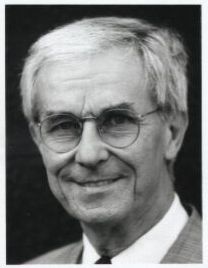 Joachim W. Schmidt合作论文数Sustainable Content Logistics Centre, Hamburg, Germany2Min-Hong Han合作论文数2Brijesh Rao合作论文数2
 Jeffrey M. Novak合作论文数Plant Research Center;Agricultural Research Service, United States Department of Agriculture2
 Mohan Kalkunte合作论文数Broadcom Limited2
 Gyana R. Parija合作论文数1C. C. CHIOU合作论文数1Carla Bailey合作论文数1Xiaoyan Zhu合作论文数1Peter Mccormack合作论文数1
 Wenbo Zhang合作论文数1SL Albrecht合作论文数1Elif Ilke Gokce合作论文数1phinsuda tarmy合作论文数1Venkatesh Ravichandran合作论文数1Suhwan Kim合作论文数1Kaihong Xu合作论文数1
 Eduardo Perez合作论文数Ingram School of Engineering, Texas State University1
 Guenter Schmidt合作论文数1R.A. Johnson合作论文数1James E. Baker合作论文数1C. Hsu合作论文数1
 Jonathan F. Bard合作论文数Walker Department of Mechanical Engineering, The University of Texas at Austin1Li Wang合作论文数Department of Theoretical Physics, Institute of High Energy Physics1L. Bain合作论文数1Craig C. Douglas合作论文数1Charles R. Cash合作论文数1Sharath Bulusu合作论文数1




