Diffusion Transformers (DiTs) deliver state-of-the-art generative performance but their quadratic training cost with sequence length makes large-scale pretraining prohibitively expensive. Token dropping can reduce training cost, yet naïve strategies degrade representations, and existing methods are either parameter-heavy or fail at high drop ratios. We present SPRINT (Sparse--Dense Residual Fusion for Efficient Diffusion Transformers), a simple method that enables aggressive token dropping (up to 75%) while preserving quality. SPRINT leverages the complementary roles of shallow and deep layers: early layers process all tokens to capture local detail, deeper layers operate on a sparse subset to cut computation, and their outputs are fused through residual connections. Training follows a two-stage schedule: long masked pre-training for efficiency followed by short full-token fine-tuning to close the train--inference gap. On ImageNet-1K 256^2, SPRINT achieves 9.8x training savings with comparable FID/FDD, and at inference, its Path-Drop Guidance (PDG) nearly halves FLOPs while improving quality. These results establish SPRINT as a simple, effective, and general solution for efficient DiT training.
Visual concept personalization aims to transfer only specific image attributes, such as identity, expression, lighting, and style, into unseen contexts. However, existing methods rely on holistic embeddings from general-purpose image encoders, which entangle multiple visual factors and make it difficult to isolate a single attribute. This often leads to information leakage and incoherent synthesis. To address this limitation, we introduce Omni-Attribute, the first open-vocabulary image attribute encoder designed to learn high-fidelity, attribute-specific representations. Our approach jointly designs the data and model: (i) we curate semantically linked image pairs annotated with positive and negative attributes to explicitly teach the encoder what to preserve or suppress; and (ii) we adopt a dual-objective training paradigm that balances generative fidelity with contrastive disentanglement. The resulting embeddings prove effective for open-vocabulary attribute retrieval, personalization, and compositional generation, achieving state-of-the-art performance across multiple benchmarks.
We study instruction-guided editing of egocentric videos for interactive AR applications. While recent AI video editors perform well on third-person footage, egocentric views present unique challenges — including rapid egomotion, and frequent hand–object interactions — that create a significant domain gap. Moreover, existing offline editing pipelines suffer from high latency, limiting real-time interaction.To address these issues, we present a complete ecosystem for egocentric video editing. First, we construct EgoEditData, a carefully designed and manually curated dataset specifically designed for egocentric editing scenarios, featuring rich hand-object interactions, while explicitly preserving hands. Second, we develop EgoEdit, an instruction-following egocentric video editor that supports real-time streaming inference on a single GPU. Finally, we introduce EgoEditBench, an evaluation suite targeting instruction faithfulness, hand and interaction preservation, and temporal stability under egomotion.Across both egocentric and general editing tasks, EgoEdit produces temporally stable, instruction-faithful results with interactive latency. It achieves clear gains on egocentric editing benchmarks—where existing methods struggle—while maintaining performance comparable to the strongest baselines on general editing tasks. EgoEditData and EgoEditBench will be made public for the research community.
We introduce EgoPlay, an event-triggered video-to-video editor for egocentric streams, obtained by fine-tuning a pretrained V2V diffusion transformer on event-conditioned data built primarily from Ego4D. Given a monocular video and an event-triggered prompt of the form "when X happens, do Y," EgoPlay infers whether and when event X occurs, preserves pre-event frames, and applies edit Y only to the post-event continuation. Rather than cascading a separate event detector with an editor, EgoPlay learns event recognition, temporal restraint, and pixel-level editing jointly in a single end-to-end model, while also handling negative and multi-event prompts. To support this, we construct a large-scale dataset of 106K event-triggered clip-prompt pairs spanning positive triggers, fabricated-trigger negatives, and multi-event prompts. We then train a bidirectional video diffusion editor with event-triggered supervision and derive a causal variant for chunk-by-chunk streamable inference. We further introduce an event-aware evaluation protocol that separately measures post-trigger editing quality, pre-trigger preservation, and false-trigger robustness. On the Ego4D benchmark, EgoPlay substantially outperforms EgoEdit, the state-of-the-art instruction-based egocentric video editing baseline, with relative gains of 17.7%, 16.9%, and 16.4% in editing quality, visual quality, and background consistency. It also surpasses a VLM-guided detector-editor baseline by 15.7%, 14.5%, and 13.5% on the same metrics, while using less than half the GPU memory.
While image editing has advanced rapidly, video editing remains less explored, facing challenges in consistency, control, and generalization.We study the design space of data, architecture, and control, and introduce EasyV2V, a simple and effective framework for instruction-based video editing. On the data side, we compose existing experts with fast inverses to build diverse video pairs, lift image edit pairs into videos via single-frame supervision and pseudo pairs with shared affine motion, mine dense-captioned clips for video pairs, and add transition supervision to teach how edits unfold.On the model side, we observe that pretrained text-to-video models possess editing capability, motivating a simplified design. Simple sequence concatenation for conditioning with light LoRA fine-tuning suffices to train a strong model.For control, we unify spatiotemporal control via a single mask mechanism and support optional reference images.Overall, EasyV2V works with flexible inputs, e.g., video+text, video+mask+text, video+mask+reference+text, and achieves state-of-the-art video editing results, surpassing concurrent and commercial systems. Code and data will be released upon approval.
Accurate interactive camera control is essential for video-based world models, but most existing approaches learn camera motion implicitly, leading to inaccurate control under out-of-distribution trajectories. Explicit geometric conditioning improves controllability, but existing methods are non-autoregressive and rely on a static 3D cache built from an initial frame, which becomes ineffective once the viewpoint moves beyond the original frustum. We propose GeoStream, a framework that enables precise metric-scale camera control in autoregressive streaming video generation. Our method maintains a self-refreshing 3D cache that is periodically updated online from the model's own outputs: we estimate depth from the most recently generated frame, unproject to 3D, and reproject into the target view to produce point reprojections as geometric conditioning for subsequent synthesis. By the same principle, the conditioning seen during training is also rendered from the student's own generated frames, yielding a fully on-policy distillation that naturally aligns the train and inference conditioning distributions. Unlike prior work that uses off-policy condition noising, our approach trains the model against the exact error distribution it encounters at inference, mitigating both standard autoregressive drift and the second-order geometric feedback loop that arises when the cache itself is derived from generated outputs. Quantitative and qualitative results show that our approach substantially improves camera controllability.
Diffusion transformers (DiTs) achieve high generative quality but lock FLOPs to image resolution, limiting principled latency-quality trade-offs, and allocate computation uniformly across input spatial tokens, wasting resource allocation to unimportant regions. We introduce Elastic Latent Interface Transformer (ELIT), a drop-in, DiT-compatible mechanism that decouples input image size from compute. Our approach inserts a latent interface, a learnable variable-length token sequence on which standard transformer blocks can operate. Lightweight Read and Write cross-attention layers move information between spatial tokens and latents and prioritize important input regions. By training with random dropping of tail latents, ELIT learns to produce importance-ordered representations with earlier latents capturing global structure while later ones contain information to refine details. At inference, the number of latents can be dynamically adjusted to match compute constraints. ELIT is deliberately minimal, adding two cross-attention layers while leaving the rectified flow objective and the DiT stack unchanged. Across datasets and architectures (DiT, U-ViT, HDiT, MM-DiT), ELIT delivers consistent gains. On ImageNet-1K 512px, ELIT delivers an average gain of 35.3% and 39.6% in FID and FDD scores. Project page: https://snap-research.github.io/elit/
The scalability of ambient sound generators is hindered by data scarcity, insufficient caption quality, and limited scalability in model architecture. This work addresses these challenges by advancing both data and model scaling. First, we propose an efficient and scalable dataset collection pipeline tailored for ambient audio generation, resulting in AutoReCap-XL, the largest ambient audio-text dataset with over 47 million clips. To provide high-quality textual annotations, we propose AutoCap, a high-quality automatic audio captioning model. By adopting a Q-Former module and leveraging audio metadata, AutoCap substantially enhances caption quality, reaching a CIDEr score of 83.2, a 3.2% improvement over previous captioning models. Finally, we propose GenAu, a scalable transformer-based audio generation architecture that we scale up to 1.25B parameters. We demonstrate its benefits from data scaling with synthetic captions as well as model size scaling. When compared to baseline audio generators trained at similar size and data scale, GenAu obtains significant improvements of 4.7% in FAD score, 22.65% in IS, and 13.5% in CLAP score. Our code, model checkpoints, and dataset are publicly available.
MeanFlow has recently emerged as a powerful framework for few-step generative modeling trained from scratch, but its success is not yet fully understood. In this work, we show that the MeanFlow objective naturally decomposes into two parts: trajectory flow matching and trajectory consistency. Through gradient analysis, we find that these terms are strongly negatively correlated, causing optimization conflict and slow convergence. Motivated by these insights, we introduce $\alpha$-Flow, a broad family of objectives that unifies trajectory flow matching, Shortcut Model, and MeanFlow under one formulation. By adopting a curriculum strategy that smoothly anneals from trajectory flow matching to MeanFlow, $\alpha$-Flow disentangles the conflicting objectives, and achieves better convergence. When trained from scratch on class-conditional ImageNet-1K 256×256 with vanilla DiT backbones, $\alpha$-Flow consistently outperforms MeanFlow across scales and settings. Our largest $\alpha$-Flow-XL/2+ model achieves new state-of-the-art results using vanilla DiT backbones, with FID scores of 2.58 (1-NFE) and 2.15 (2-NFE). The source code and pre-trained checkpoints will be publicly released.
Direct Preference Optimization (DPO) has recently been applied as a post-training technique for text-to-video diffusion models. To obtain training data, annotators are asked to provide preferences between two videos generated from independent noise. However, this approach prohibits fine-grained comparisons, and we point out that it biases the annotators towards low-motion clips as they often contain fewer visual artifacts. In this work, we introduce DenseDPO, a method that addresses these shortcomings by making three contributions. First, we create each video pair for DPO by denoising corrupted copies of a ground truth video. This results in aligned pairs with similar motion structures while differing in local details, effectively neutralizing the motion bias. Second, we leverage the resulting temporal alignment to label preferences on short segments rather than entire clips, yielding a denser and more precise learning signal. With only one-third of the labeled data, DenseDPO greatly improves motion generation over vanilla DPO, while matching it in text alignment, visual quality, and temporal consistency. Finally, we show that DenseDPO unlocks automatic preference annotation using off-the-shelf Vision Language Models (VLMs): GPT accurately predicts segment-level preferences similar to task-specifically fine-tuned video reward models, and DenseDPO trained on these labels achieves performance close to using human labels.
Latent diffusion models have emerged as the leading approach for generating high-quality images and videos, utilizing compressed latent representations to reduce the computational burden of the diffusion process. While recent advancements have primarily focused on scaling diffusion backbones and improving autoencoder reconstruction quality, the interaction between these components has received comparatively less attention. In this work, we perform a spectral analysis of modern autoencoders and identify inordinate high-frequency components in their latent spaces, which are especially pronounced in the autoencoders with a large bottleneck channel size. We hypothesize that this high-frequency component interferes with the coarse-to-fine nature of the diffusion synthesis process and hinders the generation quality. To mitigate the issue, we propose scale equivariance: a simple regularization strategy that aligns latent and RGB spaces across frequencies by enforcing scale equivariance in the decoder. It requires minimal code changes and only up to 20K autoencoder fine-tuning steps, yet significantly improves generation quality, reducing FID by 19% for image generation on ImageNet1K 2562 and FVD by at least 44% for video generation on Kinetics-700 17 x 2562. The source code is available at https://github.com/ snap- research/diffusability.
Modern text-to-video synthesis models demonstrate coherent, photorealistic generation of complex videos from a text description. However, most existing models lack fine-grained control over camera movement, which is critical for downstream applications related to content creation, visual effects, and 3D vision. Recently, new methods demonstrate the ability to generate videos with controllable camera poses---these techniques leverage pre-trained U-Net-based diffusion models that explicitly disentangle spatial and temporal generation. Still, no existing approach enables camera control for new, transformer-based video diffusion models that process spatial and temporal information jointly. Here, we propose to tame video transformers for 3D camera control using a ControlNet-like conditioning mechanism that incorporates spatiotemporal camera embeddings based on Plucker coordinates. The approach demonstrates state-of-the-art performance for controllable video generation after fine-tuning on the RealEstate10K dataset. To the best of our knowledge, our work is the first to enable camera control for transformer-based video diffusion models.
We propose 4Real-Video, a novel framework for generating 4D videos, organized as a grid of video frames with both time and viewpoint axes. In this grid, each row contains frames sharing the same timestep, while each column contains frames from the same viewpoint. We propose a novel two-stream architecture. One stream performs viewpoint updates on columns, and the other stream performs temporal updates on rows. After each diffusion transformer layer, a synchronization layer exchanges information between the two token streams. We propose two implementations of the synchronization layer, using either hard or soft synchronization. This feedforward architecture improves upon previous work in three ways: higher inference speed, enhanced visual quality (measured by FVD, CLIP, and VideoScore), and improved temporal and viewpoint consistency (measured by VideoScore and Dust3R-Confidence).
Generating high-dimensional visual modalities is a computationally intensive task. A common solution is progressive generation, where the outputs are synthesized in a coarse-to-fine spectral autoregressive manner. While diffusion models benefit from the coarse-to-fine nature of denoising, explicit multi-stage architectures are rarely adopted. These architectures have increased the complexity of the overall approach, introducing the need for a custom diffusion formulation, decomposition-dependent stage transitions, add-hoc samplers, or a model cascade. Our contribution, Decomposable Flow Matching (DFM), is a simple and effective framework for the progressive generation of visual media. DFM applies Flow Matching independently at each level of a user-defined multi-scale representation (such as Laplacian pyramid). As shown by our experiments, our approach improves visual quality for both images and videos, featuring superior results compared to prior multistage frameworks. On Imagenet-1k 512px, DFM achieves 35.2% improvements in FDD scores over the base architecture and 26.4% over the best-performing baseline, under the same training compute. When applied to finetuning of large models, such as FLUX, DFM shows faster convergence speed to the training distribution. Crucially, all these advantages are achieved with a single model, architectural simplicity, and minimal modifications to existing training pipelines.
We propose the first framework capable of computing a 4D spatio-temporal grid of video frames and 3D Gaussian particles for each time step using a feed-forward architecture. Our architecture has two main components, a 4D video model and a 4D reconstruction model. In the first part, we analyze current 4D video diffusion architectures that perform spatial and temporal attention either sequentially or in parallel within a two-stream design. We highlight the limitations of existing approaches and introduce a novel fused architecture that performs spatial and temporal attention within a single layer. The key to our method is a sparse attention pattern, where tokens attend to others in the same frame, at the same timestamp, or from the same viewpoint. In the second part, we extend existing 3D reconstruction algorithms by introducing a Gaussian head, a camera token replacement algorithm, and additional dynamic layers and training. Overall, we establish a new state of the art for 4D generation, improving both visual quality and reconstruction capability.
The process of painting fosters creativity and rational planning. However, existing generative AI mostly focuses on producing visually pleasant artworks, without emphasizing the painting process. We introduce a novel task, Collaborative Neural Painting (CNP), to facilitate collaborative art painting generation between humans and machines. Given any number of user-input brushstrokes as the context or just the desired object class, CNP should produce a sequence of strokes supporting the completion of a coherent painting. Importantly, the process can be gradual and iterative, so allowing users' modifications at any phase until the completion. Moreover, we propose to solve this task using a painting representation based on a sequence of parametrized strokes, which makes it easy both editing and composition operations. These parametrized strokes are processed by a Transformer-based architecture with a novel attention mechanism to model the relationship between the input strokes and the strokes to complete. We also propose a new masking scheme to reflect the interactive nature of CNP and adopt diffusion models as the basic learning process for its effectiveness and diversity in the generative field. Finally, to develop and validate methods on the novel task, we introduce a new dataset of painted objects and an evaluation protocol to benchmark CNP both quantitatively and qualitatively. We demonstrate the effectiveness of our approach and the potential of the CNP task as a promising avenue for future research.
We propose AV-Link, a unified framework for Video-to-Audio and Audio-to-Video generation that leverages the activations of frozen video and audio diffusion models for temporally-aligned cross-modal conditioning. The key to our framework is a Fusion Block that enables bidirectional information exchange between our backbone video and audio diffusion models through a temporally-aligned self attention operation. Unlike prior work that uses feature extractors pretrained for other tasks for the conditioning signal, AV-Link can directly leverage features obtained by the complementary modality in a single framework i.e. video features to generate audio, or audio features to generate video. We extensively evaluate our design choices and demonstrate the ability of our method to achieve synchronized and high-quality audiovisual content, showcasing its potential for applications in immersive media generation. Project Page: snap-research.github.io/AVLink/
Recent video-language alignment models are trained on sets of videos, each with an associated positive caption and a negative caption generated by large language models. A problem with this procedure is that negative captions may introduce linguistic biases, i.e., concepts are seen only as negatives and never associated with a video. While a solution would be to collect videos for the negative captions, existing databases lack the fine-grained variations needed to cover all possible negatives. In this work, we study whether synthetic videos can help to overcome this issue. Our preliminary analysis with multiple generators shows that, while promising on some tasks, synthetic videos harm the performance of the model on others. We hypothesize this issue is linked to noise (semantic and visual) in the generated videos and develop a method, SynViTA, that accounts for those. SynViTA dynamically weights the contribution of each synthetic video based on how similar its target caption is w.r.t. the real counterpart. Moreover, a semantic consistency loss makes the model focus on fine-grained differences across captions, rather than differences in video appearance. Experiments show that, on average, SynViTA improves over existing methods on VideoCon test sets and SSv2-Temporal, SSv2-Events, and ATP-Hard benchmarks, being a first promising step for using synthetic videos when learning video-language models.
Personalizing generative text-to-image models has seen remarkable progress, but extending this personalization to text-to-video models presents unique challenges. Unlike static concepts, personalizing text-to-video models has the potential to capture dynamic concepts, i.e., entities defined not only by their appearance but also by their motion. In this paper, we introduce Set-and-Sequence, a novel framework for personalizing Diffusion Transformers (DiTs)-based generative video models with dynamic concepts. Our approach imposes a spatio-temporal weight space within an architecture that does not explicitly separate spatial and temporal features. This is achieved in two key stages. First, we fine-tune Low-Rank Adaptation (LoRA) layers using an unordered set of frames from the video to learn an identity LoRA basis that represents the appearance, free from temporal interference. In the second stage, with the identity LoRAs frozen, we augment their coefficients with Motion Residuals and fine-tune them on the full video sequence, capturing motion dynamics. Our Set-and-Sequence framework results in a spatio-temporal weight space that effectively embeds dynamic concepts into the video model's output domain, enabling unprecedented editability and compositionality while setting a new benchmark for personalizing dynamic concepts.
 Sergey Tulyakov合作论文数Snap Inc.39
 Aliaksandr Siarohin合作论文数Snap Inc.35
 Ivan Skorokhodov合作论文数Snap Inc.25
 Elisa Ricci合作论文数Deep Visual Learning Group, Fondazione Bruno Kessler;Department of Information Engineering and Computer Science, University of Trento18
 Stéphane Lathuilière合作论文数Telecom Paris9
 Anil Kag合作论文数Snap Inc.9
 Chaoyang Wang合作论文数Snap Inc9
 Vladislav Golyanik合作论文数Max Planck Institute for Informatics7
 Hsin-Ying Lee合作论文数Creative Vision Team, Snap Research6
 Peter Wonka合作论文数Computer, Electrical and Mathematical Science and Engineering Division, King Abdullah University of Science and Technology6
 Yanyu Li合作论文数6
 Tsai-Shien Chen合作论文数Creative Intelligence Lab, Adobe Research5
 Yuwei Fang合作论文数Zoom AI5
 Jian Ren合作论文数Snap Inc5
 Yushu Wu合作论文数College of Engineering, Northeastern University;Snap Inc4
 Rameen Abdal合作论文数Snap Inc4
 Yiming Wang合作论文数4
 Kuan-Chieh (Jackson) Wang (王冠傑)合作论文数Snap Inc.4
 Ashkan Mirzaei合作论文数Toronto Intelligent Systems Lab, University of Toronto;NVIDIA4
 Guocheng Qian (钱国成)合作论文数Snap Inc.4
 Vicente Ordóñez Román合作论文数Vision, Language, and Learning Lab, Department of Computer Science, George R. Brown School of Engineering, Rice University4
 Junli Cao合作论文数Creative Vision Group, Snap Research;UCLA3
 Vidit Goel合作论文数Snap Inc.3
 Luca Zanella合作论文数Department of Information Engineering and Computer Science, University of Trento;Google3
 Moayed Haji Ali合作论文数Vislang Lab, Department of Computer Science, Rice University3
 Panos Achlioptas合作论文数3
 Federica Arrigoni合作论文数Dipartimento di Elettronica, Informazione e Bioingegneria, Politecnico di Milano3
 Ju Hu (胡菊)合作论文数3
 Ming-Hsuan Yang合作论文数Vision and Learning Lab, University of California, Merced;Google DeepMind3Kwot Sin Lee合作论文数2Ekaterina Deyneka合作论文数2Elia Peruzzo合作论文数2
 Jinjie (Wayne) Mai合作论文数King Abdullah University of Science and Technology2
 Dogyun Park合作论文数Machine Learning and Vision Lab, Department of Computer Science and Engineering, Korea University;Snap Inc2
 Sherwin Bahmani合作论文数University of Toronto;NVIDIA Toronto AI Lab2
 Sharath Girish合作论文数Snap Inc.2
 Igor Gilitschenski合作论文数Department of Mathematical & Computational Sciences, University of Toronto Mississauga2
 Kfir Aberman合作论文数Decart2
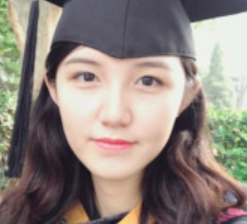 Tia Zhuang (庄佩烨)合作论文数Computer Science Department, University of Illinois at Urbana-Champaign;Stanford University2
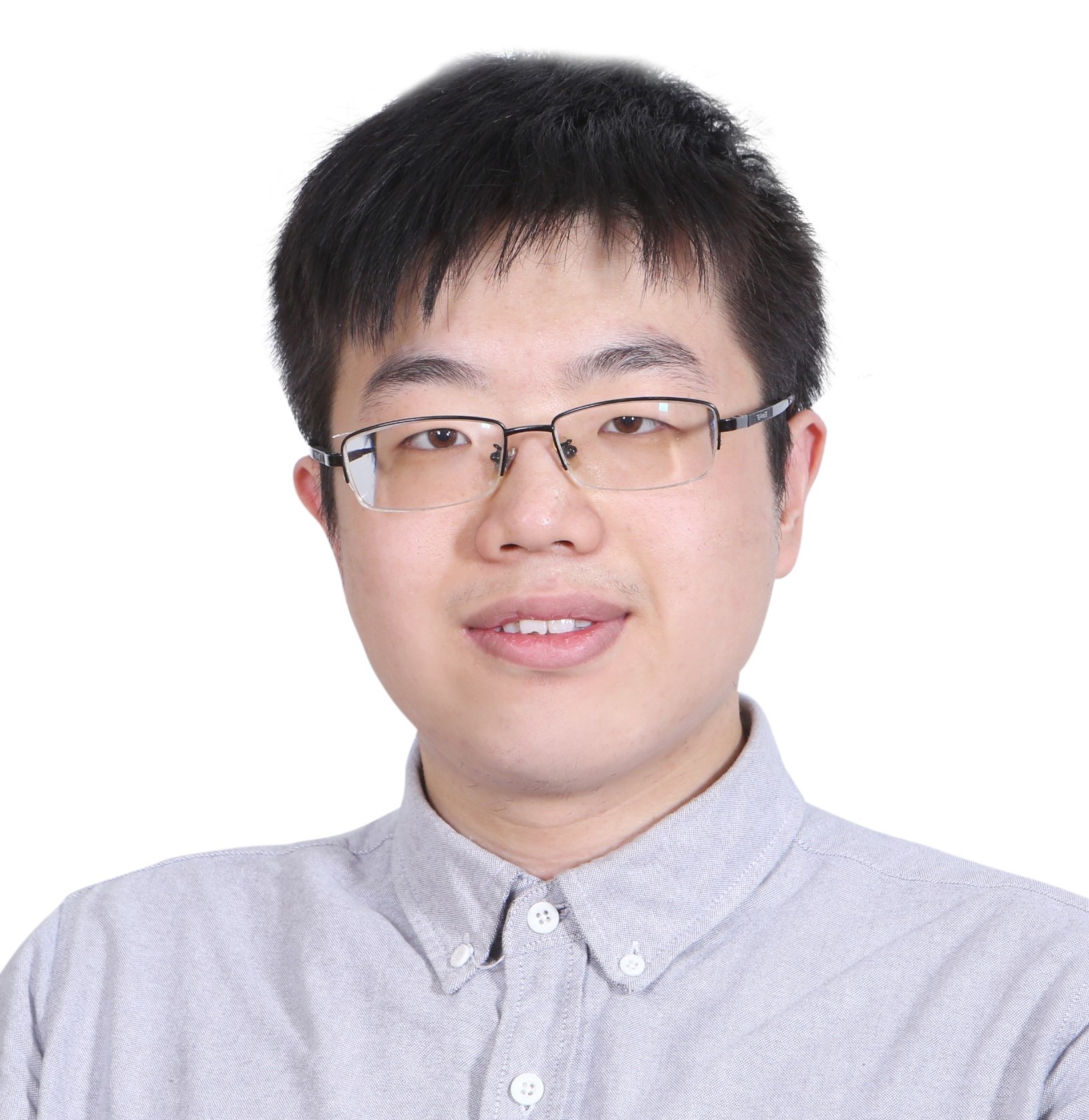 Ziyi Wu (吴紫屹)合作论文数Toronto Intelligent Systems Lab, University of Toronto;Google DeepMind2
 Massimiliano Mancini合作论文数Department of Information Engineering and Computer Science, University of Trento2
 Menglei Chai合作论文数AR Perception, Google Inc.2
 David B. Lindell合作论文数Department of Computer Science, University of Toronto2
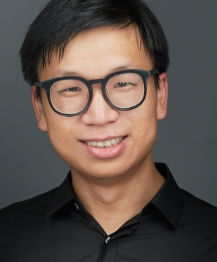 Jun-Yan Zhu合作论文数Robotics Institute, School of Computer Science, Carnegie Mellon University2
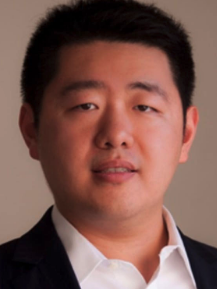 Yanzhi Wang合作论文数Department of Electrical & Computer Engineering, College of Engineering, Northeastern University;Physical AI Research Center, Northeastern University;EmbodyX2
 Andrea Tagliasacchi合作论文数Google Brain;School of Computing Science, Simon Fraser University2
 Bernard Ghanem合作论文数Computer, Electrical and Mathematical Sciences and Engineering Division, King Abdullah University of Science and Technology;Center of Excellence for Generative AI, King Abdullah University of Science and Technology;CAMEL-AI.org;Thya Technology2Alper Canberk合作论文数1Arpit Sahni合作论文数1




