From butterflies to lizards and from sharks to seabirds, wildlife exhibit tactics to survive the impacts of tropical cyclones, also known as hurricanes, cyclones, or typhoons depending on where they occur. Some species seek refuge during the storm by moving, some remain in place and ride it out, and others move longer distances, avoiding the main impacts of the storm altogether. Tropical cyclones can have direct impacts on wildlife (e.g. mortality) but can also have indirect effects by altering resources and habitat, with downstream impacts on abundance and recruitment. Using examples from across taxa and ecosystems, we explore the pathways by which tropical cyclones can influence wildlife populations and communities. We describe tactics demonstrated by wildlife that enable them to survive the immediate impacts of the storm, as well as the longer-term impacts after the storm. We give examples of tropical cyclones as a selective pressure and as a facilitator for the introduction of invasive species. We also describe how tropical cyclones may provide a net benefit to some native species. The ecological and evolutionary impacts of tropical cyclones on wildlife can be complex, as they are often intertwined with concurrent pressures from land-use change, human development, and climate change. As the frequency of intense tropical cyclones is predicted to increase globally, identifying the mechanisms by which wildlife cope with such disturbances can aid in understanding and mitigating the impacts of climate change on wildlife.
Information on a species' population dynamics, such as changes in abundance and distribution, can be used to identify declining populations and initiate conservation efforts and protections. For the Ornate Chorus Frog (Pseudacris ornata), anecdotal observations of local extirpation and population declines have been noted, but trends in its range-wide population status are generally unknown. We used 2227 verified records of Ornate Chorus Frog presence from across the species' distribution, grouped into 407 populations, and a modified Cormack-Jolly-Seber survival analysis to estimate the probability that historical Ornate Chorus Frog populations persist in the year 2024. Our results suggested that > 36% of historical Ornate Chorus Frog populations are possibly extirpated (probability of persistence < 0.5) and that 33% of populations had a probability of persistence > 0.9. Many of these extant populations occurred in northwestern Florida, southeastern Alabama, and southern Georgia, USA. The probability of persistence was positively influenced by habitat suitability and mean winter precipitation and negatively influenced by urban imperviousness. Ornate Chorus Frogs in protected areas had a higher average probability of persistence compared to populations that were not in protected areas. Our study fills a knowledge gap by identifying regions where Ornate Chorus Frog populations are likely thriving and regions where they may be extinct.
Batrachochytrium dendrobatidis (Bd) is a globally distributed fungal pathogen of amphibians that has contributed to one of the largest disease-related biodiversity losses in wildlife. Bd is regularly viewed through the lens of a global wildlife epizootic because the spread of highly virulent genetic lineages has resulted in well-documented declines and extinctions of multiple amphibian species. However, the current state of Bd occurrence, host range, host impacts, and ecological drivers remains poorly understood outside of the most negatively affected amphibian species and regions. Our objective was to describe the macroecology of Bd occurrence and infection intensity on caudates (salamanders) across the United States and to compare these patterns with better-studied anurans (frogs and toads). We collected swabs from 11,183 amphibians at 609 sites from 54 species across the United States from 2015 to 2017. We analyzed the prevalence and intensity of Bd infection jointly using a Bayesian hurdle model with covariates of site-level temperature and precipitation, as well as individual characteristics and species identification. Bd was distributed widely across sites and species sampled across the spatial extent of the conterminous United States. We found that Bd prevalence and intensity were most strongly influenced by temperature in the month preceding sampling and by differences among taxon groups. We estimated that temperature had a strong and nonlinear influence on both Bd prevalence and intensity with peak infection at intermediate temperatures and lower infection at low and high temperatures. We found Caudate hosts tended to have higher prevalence than Anuran hosts and Anuran hosts tended to have higher intensity at optimal temperatures for Bd infection. Our findings suggest that Bd has an amphibian-wide host range, temperature gradients exert a strong influence on Bd, and enzootic transmission likely encompasses a much larger spatial and species distribution than previously recognized across North America.
Disease, alone or combined with other stressors such as habitat loss and contaminants, affects wildlife populations worldwide. However, interactions among stressors and how they affect demography and populations remain poorly understood. The amphibian chytrid fungus (Batrachochytrium dendrobatidis; Bd) is a sometimes-lethal pathogen linked with population declines and extirpations of amphibians globally. Laboratory evidence shows ubiquitous contaminants like methylmercury (MeHg) can reduce vigor and survival of amphibians, but population-level effects remain unclear. We used non-lethal sampling to assess how Bd and MeHg affected survival of juvenile and adult amphibians in 20 populations across the USA. Survival of several species declined with increasing Bd loads, including some species previously considered resistant to Bd (e.g., eastern newt [Notophthalmus viridescens]). Although our sampling for MeHg was less intensive than for Bd, we found MeHg can both directly reduce survival and synergistically magnify the effects of Bd infection. For a population of foothill yellow-legged frogs (Rana boylii), the estimated reduction in survival from MeHg exceeded that from Bd. Although effects varied widely among populations and species, our results help clarify the potential for synergistic effects of disease and contaminants and emphasize the complexity of identifying and quantifying the population-level effects of interactions among stressors.
Although coastal islands are home to many endemic species, they are also at risk of inundation from storm surge and sea level rise. Three subspecies of mole skink ( Plestiodon egregius egregius , P. e. insularis , and the Egmont Key Mole Skink known from a single occurrence) occur on a small number of islands off the Gulf Coast of Florida, USA. We used the most recent sea level rise projections and the latest storm surge simulation data to predict impacts to habitat for insular mole skinks in Florida from 2030 to 2150. Our models predicted that in <100 years (by 2100; intermediate sea level rise scenario; ~1.08–1.15 m sea level rise), >78% of preferred habitat for the Florida Keys Mole Skink, >65% of preferred habitat for the Cedar Key Mole Skink, and >36% of preferred habitat for the Egmont Key Mole Skink will be inundated from sea level rise. Storm surge from tropical cyclones presents a more immediate risk to insular mole skink habitat: our models predicted that between 58% and 75% of Florida Keys Mole Skink habitat is at risk of being submerged under an average maximum of between 0.60 (SD = 0.86) and 0.98 (SD = 0.36) m of storm surge water for a category 1 storm, and the amount of habitat predicted to be impacted increases for higher intensity storms. Our models predicted similar trends for Cedar Key and Egmont Key Mole Skink habitat. Given current sea level rise projections, our models predicted that all three subspecies could be extinct by 2140 due to habitat inundation. There remains uncertainty about how species and ecosystems will respond to sea level rise, thus research to fill these gaps could help mitigate the effects of sea level rise in areas most vulnerable to the effects of climate change.
Islands are some of the most biodiverse places on earth, but they are also hotspots of biodiversity loss. The coastline of Florida, U.S.A., is surrounded by thousands of islands, many of which are home to species that occur nowhere else. A rapidly emerging threat to these low-lying islands is inundation as sea levels rise. The capacity of island-dwelling species to adapt to climate change and sea level rise may be limited because many species do not have the ability to shift their distribution off the island to track favorable conditions. We assessed the vulnerability of Florida’s islands to inundation from sea level rise and estimated the terrestrial biodiversity on Florida’s islands that could be lost. Our models predicted that by 2100, over 80
National parks and other protected areas are important for preserving landscapes and biodiversity worldwide. An essential component of the mission of the United States (U.S.) National Park Service (NPS) requires understanding and maintaining accurate inventories of species on protected lands. We describe a new, national-scale synthesis of amphibian species occurrence in the NPS system. Many park units have a list of amphibian species observed within their borders compiled from various sources and available publicly through the NPSpecies platform. However, many of the observations in NPSpecies remain unverified and the lists are often outdated. We updated the amphibian dataset for each park unit by collating old and new park-level records and had them verified by regional experts. The new dataset contains occurrence records for 292 of the 424 NPS units and includes updated taxonomy, international and state conservation rankings, hyperlinks to a supporting reference for each record, specific notes, and related fields which can be used to better understand and manage amphibian biodiversity within a single park or group of parks.
Coastal beach ecosystems support critical habitat for numerous species and are vulnerable to sea level rise. Sand beaches are spatially and temporally dynamic, making it difficult to accurately predict future habitat loss – estimates that are crucial as species are being assessed for protection. We mapped sand beach habitat on 12 focal barrier islands and low-lying beaches off the Gulf Coast of Florida, USA using two methods for comparison - a remotely sensed land cover and hand-digitized aerial imagery that was collected concurrently with digital elevation data. We then compared estimates of beach habitat lost to sea level rise between the two methods and compared this sensitivity to control mangrove islands. Predictions suggest that most of the beach habitat in our study areas will be underwater within the next century. These beaches represent critical nesting habitat for vulnerable vertebrate species such as the snowy plover (Charadrius nivosus) and the loggerhead turtle (Caretta caretta). Importantly, we found that for some islands, using remotely sensed land cover data led us to under- or over-estimate the amount of beach habitat lost to sea level rise relative to the digitized data because of the temporal mismatch between land cover and elevation data. In contrast, we found relatively little difference between methods in the amount of mangrove forest lost to sea level rise on nearby control islands. We suggest that using land cover data collected at the same time as elevation data can produce more accurate predictions of beach habitat inundation from sea level rise.
Occurrence data used to build species distribution models often include historical records from locations in which the species no longer exists. When these records are paired with contemporary environmental values that no longer represent the conditions the species experienced, the model creates false associations that hurt predictive performance. The extent of mismatching increases with the number of historical occurrences and with inclusion of environmental variables that are prone to change over time. Indeed, the mismatch between occurrence data and contemporaneous environmental variables is a common dilemma when modeling rare or cryptic species, especially those of conservation concern that were once more abundant. Herein, we assess (1) the impact of historical occurrences on model performance across three sets of environmental variables of increasing persistency and (2) the performance of models built using selected-historical occurrences from locations that showed evidence of limited environmental change over time. Concepts are tested on federally listed flatwoods salamanders, reflecting real-world conservation management efforts. We predicted that, compared to other occurrence sets, (1) historical occurrences would perform best with environmental variables that were more persistent, (2) recent occurrences would perform best when the environmental variables were more impersistent, and that (3) our selected-historical occurrences would perform best with a combination of persistent and impersistent variables. Our results showed the expected inversion of model performance of recent and historical occurrences across environmental variables of increasing persistency when evaluated by correct predictions. However, the inversion was not seen in area under the curve performance, in which historical occurrences outperformed recent occurrence models across all variable sets. Selected-historical occurrences did not notably improve performance over all-historical occurrences in any metric or variable set. To maximize utility and performance, modelers could acknowledge potential trade-offs from inclusion of historical occurrences and consider number and age of recent and historical occurrences available, the persistency of environmental variables considered, and how their conservation goals are reflected in model design and evaluation, particularly with respect to sensitivity versus specificity. Our study lends support for inclusion of historical occurrences, with the potential exception of mostly impersistent variables when sensitivity is the highest priority.
One of the primary ways in which climate change will impact coastal freshwater wetlands is through changes in the frequency, intensity, timing and distribution of extreme weather events. Disentangling the direct and indirect mechanisms of population- and community-level responses to extreme events is vital to predicting how species composition of coastal wetlands will change under future conditions. We extended static structural equation modelling approaches to incorporate system dynamics in a multi-year multispecies occupancy model to quantify the effects of extreme weather events on a coastal freshwater wetland system. We used data from an 8-year study (2009-2016) on St. Marks National Wildlife Refuge in Florida, USA, to quantify species-specific and community-level changes in amphibian and fish occupancy associated with two flooding events in 2012 and 2013. We examine how physical changes to the landscape, including potential changes in salinity and increased wetland connectivity, may have contributed to or exacerbated the effects of these extreme weather events on the biota of isolated coastal wetlands. We provide evidence that the primary effects of flooding on the amphibian community were through indirect mechanisms via changes in the composition of the sympatric fish community that may have had lethal (i.e. through direct predation) or non-lethal (i.e. through direct or indirect competitive interactions) effects. In addition, we have shown that amphibian species differed in their sensitivity to direct flooding effects and indirect changes in the fish community and wetland-specific conductance, which led to variable responses across the community. These effects led to the overall decline in amphibian species richness from 2009 to 2016, suggesting that wetland-breeding amphibian communities on St. Marks National Wildlife Refuge may not be resilient to predicted changes in coastal disturbance regimes because of climate change. Understanding both direct and indirect effects, as well as species interactions, is important for predicting the effects of a changing climate on individual species, communities and ecosystems.
Abstract Rockland habitat in South Florida, USA, is a threatened ecosystem that has been lost, fragmented, or degraded because of urbanization or other anthropogenic disturbance. Furthermore, low‐lying islands and coastal areas are experiencing sea level rise (SLR) and an increased frequency and intensity of tidal flooding, putting rockland habitats there at increasing risk of ecological change. We evaluated changes in the extent of rockland habitat under various scenarios of future SLR, tidal flooding, and human development for two endemic state‐listed threatened species of snakes, the Rim Rock Crowned Snake (Tantilla oolitica) and the Key Ring‐necked Snake (Diadophis punctatus acricus). Both snakes are restricted to South Florida. We used recent and historical species' records to determine each species' habitat range. We then estimated the extent of future habitat loss due to SLR and continued human development, as well as degradation of the remaining habitat. We also asked whether the future potential drivers of habitat loss and degradation differ between the two species and across their habitat ranges. We predicted that saltwater intrusion could negatively affect rocklands by 2050, resulting in degradation of 80% of the existing habitat because of an anticipated 42 cm of SLR. Moreover, our model suggests short‐term stochastic events such as storm surge and high tides may increasingly saturate the root zone of rockland vegetation before complete inundation. Under the extreme scenario, we predict most of the rockland habitat used by these two species of snakes may be inundated by 2080. Under the extreme SLR scenario, current rocklands are likely to convert to more halophytic habitat (mangrove or salt marsh wetland) within 50–60 years. Under the low scenario, 31% of rockland habitat may be lost due to human development by 2030. Therefore, mitigation actions may help to conserve specialist species within rockland habitat threatened by human activities and climate change.
The salamander chytrid fungus ( Batrachochytrium salamandrivorans [Bsal]) is causing massive mortality of salamanders in Europe. The potential for spread via international trade into North America and the high diversity of salamanders has catalyzed concern about Bsal in the U.S. Surveillance programs for invading pathogens must initially meet challenges that include low rates of occurrence on the landscape, low prevalence at a site, and imperfect detection of the diagnostic tests. We implemented a large-scale survey to determine if Bsal was present in North America designed to target taxa and localities where Bsal was determined highest risk to be present based on species susceptibility and geography. Our analysis included a Bayesian model to estimate the probability of occurrence of Bsal given our prior knowledge of the occurrence and prevalence of the pathogen. We failed to detect Bsal in any of 11,189 samples from 594 sites in 223 counties within 35 U.S. states and one site in Mexico. Our modeling indicates that Bsal is highly unlikely to occur within wild amphibians in the U.S. and suggests that the best proactive response is to continue mitigation efforts against the introduction and establishment of the disease and to develop plans to reduce impacts should Bsal establish.
Abstract Climate change is anticipated to exacerbate the extinction risk of species whose persistence is already compromised by habitat loss, invasive species, disease, or other stressors. In coastal areas of the southeastern United States (USA), many imperiled vertebrates are vulnerable to hurricanes, which climate models predict to become more severe in the 21st century. Despite this escalating threat, explicit adaptation strategies that address hurricane threats, in particular, and climate change more generally, are largely underrepresented in recovery planning and implementation. We provide a basis for stronger emphasis on strategic planning for imperiled species facing the increasing threat of catastrophic hurricanes. Our reasoning comes from observations of short‐term environmental and biological impacts of Hurricane Michael, which impacted the Gulf Coast of the southeastern USA in October 2018. During this storm, St. Marks National Wildlife Refuge, located along the northern Gulf of Mexico's coast in the panhandle region of Florida, received storm surge that was 3.0–3.6 m (NAVD88) above sea level. Storm surge pushed sea water into some ephemeral freshwater ponds used for breeding by the federally threatened frosted flatwoods salamander (Ambystoma cingulatum). After the storm, specific conductance across all ponds measured varied from 80 to 23,100 µS/cm, compared to 75 to 445 µS/cm in spring 2018. For 17 overwashed wetlands that were measured in both spring and fall 2018, posthurricane conductance observations were, on average, more than 90 times higher than in the previous spring, setting the stage for varying population responses across this coastal landscape. Importantly, we found live individual flatwoods salamanders at both overwashed and non‐overwashed sites, although we cannot yet assess the demographic consequences of this storm. We outline actions that could be incorporated into climate adaptation strategies and recovery planning for imperiled species, like A. cingulatum, that are associated with freshwater coastal wetlands in hurricane‐prone regions.
Temporary wetlands have value to both ecological and social systems. Interactions between local climate and the surrounding landscape result in patterns of hydrology that are unique to temporary wetlands. These seasonal and annual fluctuations in wetland inundation contribute to community composition and richness. Thus, predicting wetland community responses to environmental change is tied to the ability to predict wetland hydroregime. Detailed monitoring of wetland hydroregime is resource-intensive, limiting the scope and scale of forecasting. As an alternative, we determine which freely available measures of water availability best predict one component of wetland hydroregime, habitat suitability (i.e., the predictability of water in a wetland) within and among geographic regions. We used data from three North American regions to determine the climate index that best explained year-to-year variation in habitat suitability during a key phenological period—amphibian breeding. We demonstrate that simple, short-term climate indices based solely on precipitation data best predict habitat suitability in vernal pools in the northeast, montane wetlands in the west and coastal plain wetlands in the southeast. These relationships can help understand how changes in short-term precipitation patterns as a result of climate change may influence the overall hydroregime, and resulting biodiversity, of temporary wetlands across disparate biomes.
Changing climate will impact species’ ranges only when environmental variability directly impacts the demography of local populations. However, measurement of demographic responses to climate change has largely been limited to single species and locations. Here we show that amphibian communities are responsive to climatic variability, using >500,000 time-series observations for 81 species across 86 North American study areas. The effect of climate on local colonization and persistence probabilities varies among eco-regions and depends on local climate, species life-histories, and taxonomic classification. We found that local species richness is most sensitive to changes in water availability during breeding and changes in winter conditions. Based on the relationships we measure, recent changes in climate cannot explain why local species richness of North American amphibians has rapidly declined. However, changing climate does explain why some populations are declining faster than others. Our results provide important insights into how amphibians respond to climate and a general framework for measuring climate impacts on species richness.
Emerging infectious diseases such as chytridiomycosis and ranavirus infections are important contributors to the worldwide decline of amphibian populations. We reviewed data on 247 anuran mortality events in 43 States of the United States from 1999–2015. Our findings suggest that a severe infectious disease of tadpoles caused by a protist belonging to the phylum Perkinsea might represent the third most common infectious disease of anurans after ranavirus infections and chytridiomycosis. Severe Perkinsea infections (SPI) were systemic and led to multiorganic failure and death. The SPI mortality events affected numerous anuran species and occurred over a broad geographic area, from boreal to subtropical habitats. Livers from all PCR-tested SPI-tadpoles (n = 19) were positive for the Novel Alveolate Group 01 (NAG01) of Perkinsea, while only 2.5% histologically normal tadpole livers tested positive (2/81), suggesting that subclinical infections are uncommon. Phylogenetic analysis demonstrated that SPI is associated with a phylogenetically distinct clade of NAG01 Perkinsea. These data suggest that this virulent Perkinsea clade is an important pathogen of frogs in the United States. Given its association with mortality events and tendency to be overlooked, the potential role of this emerging pathogen in amphibian declines on a broad geographic scale warrants further investigation.
Small, seasonal pools and temporary ponds (< 4.0 ha) are the most numerous and biologically diverse wetlands in many natural landscapes. Thus, accurate determination of their numbers and spatial characteristics is beneficial for conservation and management of biodiversity associated with these freshwater systems. We examined the utility of a topographic position index (TPI) landscape classification to identify and classify depressional wetlands. We also assessed relationships between topographic characteristics and ponded duration of known wetlands to allow hydrological characteristics to be extended to non-monitored locations in similar landscapes. Our results indicate that this approach was successful at identifying wetlands, but did have higher errors of commission (10%) than omission (5%). Additionally, the TPI procedure provided a reasonable means to correlate general ponded duration characteristics (long/short) with wetland topography. Although results varied by hydrologic class, permanent/long ponded duration wetlands were more often classified correctly (80%) than were short ponded duration wetlands (67%). However, classification results were improved to 100 and 75% for permanent/long and short ponded duration wetlands, respectively, by removing wetlands occurring on an abrupt marine terrace that erroneously inflated pond topographic characteristics. Our study presents an approach for evaluating wetland suitability for species or guilds that are associated with key habitat characteristics, such as hydroperiod.
At least one-third of all amphibian species face the threat of extinction, and current amphibian extinction rates are four orders of magnitude greater than background rates. Preventing extirpation often requires both ex situ (i.e., conservation breeding programs) and in situ strategies (i.e., protecting natural habitats). Flatwoods salamanders (Ambystoma bishopi and A. cingulatum) are protected under the U.S. Endangered Species Act. The two species have decreased from 476 historical locations to 63 recently extant locations (86.8% loss). We suggest that recovery efforts are needed to increase populations and prevent extinction, but uncertainty regarding optimal actions in both ex situ and in situ realms hinders recovery planning. We used structured decision making (SDM) to address key uncertainties regarding both captive breeding and habitat restoration, and we developed short-, medium-, and long-term goals to achieve recovery objectives. By promoting a transparent, logical approach, SDM has proven vital to recovery plan development for flatwoods salamanders. The SDM approach has clear advantages over other previous approaches to recovery efforts, and we suggest that it should be considered for other complex decisions regarding endangered species.
Disentangling the role that multiple interacting factors have on species responses to shifting climate poses a significant challenge. However, our ability to do so is of utmost importance to predict the effects of climate change on species distributions. We examined how populations of three species of wetland-breeding amphibians, which varied in life history requirements, responded to a six-year period of extremely variable precipitation. This interval was punctuated by both extensive drought and heavy precipitation and flooding, providing a natural experiment to measure community responses to environmental perturbations. We estimated occurrence dynamics using a discrete hidden Markov modeling approach that incorporated information regarding habitat state and predator-prey interactions. This approach allowed us to measure how metapopulation dynamics of each amphibian species was affected by interactions among weather, wetland hydroperiod, and co-occurrence with fish predators. The pig frog, a generalist, proved most resistant to perturbations, with both colonization and persistence being unaffected by seasonal variation in precipitation or co-occurrence with fishes. The ornate chorus frog, an ephemeral wetland specialist, responded positively to periods of drought owing to increased persistence and colonization rates during periods of low-rainfall. Low probabilities of occurrence of the ornate chorus frog in long-duration wetlands were driven by interactions with predators due to low colonization rates when fishes were present. The mole salamander was most sensitive to shifts in water availability. In our study area, this species never occurred in short-duration wetlands and persistence probabilities decreased during periods of drought. At the same time, negative effects occurred with extreme precipitation because flooding facilitated colonization of fishes to isolated wetlands and mole salamanders did not colonize wetlands once fishes were present. We demonstrate that the effects of changes in water availability depend on interactions with predators and wetland type and are influenced by the life history of each of our species. The dynamic species occurrence modeling approach we used offers promise for other systems when the goal is to disentangle the complex interactions that determine species responses to environmental variability.
 Susan Claire Walls合作论文数22
 C. Kenneth Dodd Jr.合作论文数9Brown Mary E合作论文数7Jennifer S. Staiger合作论文数6
 Courtney Davis合作论文数Cornell Lab Ornithol, Cornell Univ5
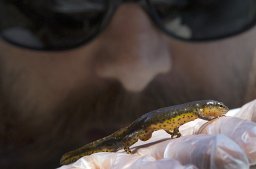 Grant Evan H Campbell合作论文数SO Conte Anadromous Fish Lab, Patuxent Wildlife Res Ctr5
 O'Donnell Katherine M合作论文数Division of Biological Sciences, University of Missouri5
 Daniel L Calhoun合作论文数5
 Blake Hossack合作论文数United States Geological Survey5
 David A. W. Miller合作论文数Department of Ecosystem Science and Management, College of Agricultural Sciences, The Pennsylvania State University5
 Steve A Johnson合作论文数Department of Wildlife;University of Florida;Department of Wildlife, University of Florida4
 Steven J. Price合作论文数Department of Biology;Davidson College;Department of Biology, Davidson College4Jeffrey W. Riley合作论文数3
 Raymond D. Semlitsch合作论文数Division of Biological Sciences, University of Missouri-Columbia3
 Brian J. Halstead合作论文数U.S. Geological Survey, Western Ecological Research Center3J. Hardin Waddle合作论文数3
 Brad M Glorioso合作论文数IAP Worldwide Services Inc;National Wetlands Research Center;IAP Worldwide Services Inc, National Wetlands Research Center3Michael J. Adams合作论文数3
 Thomas A Gorman合作论文数Department of Fisheries and Wildlife Sciences;Virginia Polytechnic Institute, State University;Department of Fisheries and Wildlife Sciences, Virginia Polytechnic Institute and State University3
 Lora L. Smith合作论文数Ecological Research Center3
 Robert Fisher合作论文数U. S. Geological Survey;Western Ecological Research Center;San Diego Field Station;U. S. Geological Survey, Western Ecological Research Center3Kenneth J. Sulak合作论文数3
 Patrick M. Kleeman合作论文数Research Center3Christopher A. Pearl合作论文数3Brent H. Sigafus合作论文数2
 Andrew J. Ray合作论文数2
 Davenport Jon M合作论文数Department of Biology and North Carolina Center for Biodiversity, East Carolina University2
 Megan E. Winzeler合作论文数Savannah River Ecology Lab, University of Georgia2Roth Mark合作论文数2Sadinski Walt合作论文数2
 Stephen F Spear合作论文数School of Biological Sciences;State University;School of Biological Sciences, State University2Daniel A. Grear合作论文数2
 Michael E. Dorcas合作论文数Department of Biology;Davidson College;Department of Biology, Davidson College2
 Erin L Koen合作论文数2Jeffrey M. Lorch合作论文数2
 Adrianne Brand合作论文数Department of Biological Sciences, Towson University2Thane Wibbels合作论文数2
 Erin Muths合作论文数U. S. Geological Survey;Midcontinent Ecological Science Center;U. S. Geological Survey, Midcontinent Ecological Science Center2Kevin G. Smith合作论文数1Samuel Sweet合作论文数1Benjamin J. LaFrance合作论文数1Sarah Leonhard合作论文数1Alyssa A. Geis合作论文数1
 Melinda J. Schuman合作论文数1Andrew E. Dietrich合作论文数1Iga Stasiak合作论文数1
 Ian Bartoszek合作论文数1Katy S. Delaney合作论文数1Alyssa Geis合作论文数1




