Photodissociation is one of the main destruction pathways for dicarbon (C$_{2}$) in astronomical environments such as diffuse interstellar clouds, yet the accuracy of modern astrochemical models is limited by a lack of accurate photodissociation cross sections in the vacuum ultraviolet range. C$_{2}$ features a strong predissociative $F\,^1\Pi_u - X\,^1\Sigma_g^+$ electronic transition near 130 nm originally measured in 1969; however, no experimental studies of this transition have been carried out since, and theoretical studies of the $F\,^1\Pi_u$ state are limited. In this work, potential energy curves of excited electronic states of C$_{2}$ are calculated with the aim of describing the predissociative nature of the $F\,^1\Pi_u$ state and providing new ab initio photodissociation cross sections for astrochemical applications. Accurate electronic calculations of 56 singlet, triplet, and quintet states are carried out at the DW-SA-CASSCF/MRCI+Q level of theory with a CAS(8,12) active space and the aug-cc-pV5Z basis set augmented with additional diffuse functions. Photodissociation cross sections arising from the vibronic ground state to the $F\,^1\Pi_u$ state are calculated by a coupled-channel model. The total integrated cross section through the $F\,^1\Pi_u$ $v=0$ and $v=1$ bands is 1.198$\times$10$^{-13} $cm$^2$cm$^{-1}$, giving rise to a photodissociation rate of 5.02$\times$10$^{-10}$ s$^{-1}$ under the standard interstellar radiation field, much larger than the rate in the Leiden photodissociation database. In addition, we report a new $2\,^1\Sigma_u^+$ state that should be detectable via a strong $2\,^1\Sigma_u^+-X\,^1\Sigma_g^+$ band around 116 nm.
Context: People with CHD are at increased risk for executive functioning deficits. Meta-analyses of these measures in CHD patients compared to healthy controls have not been reported. Objective: To examine differences in executive functions in individuals with CHD compared to healthy controls. Data sources: We performed a systematic review of publications from 1 January, 1986 to 15 June, 2020 indexed in PubMed, CINAHL, EMBASE, PsycInfo, Web of Science, and the Cochrane Library. Study selection: Inclusion criteria were (1) studies containing at least one executive function measure; (2) participants were over the age of three. Data extraction: Data extraction and quality assessment were performed independently by two authors. We used a shifting unit-of-analysis approach and pooled data using a random effects model. Results: The search yielded 61,217 results. Twenty-eight studies met criteria. A total of 7789 people with CHD were compared with 8187 healthy controls. We found the following standardised mean differences: -0.628 (-0.726, -0.531) for cognitive flexibility and set shifting, -0.469 (-0.606, -0.333) for inhibition, -0.369 (-0.466, -0.273) for working memory, -0.334 (-0.546, -0.121) for planning/problem solving, -0.361 (-0.576, -0.147) for summary measures, and -0.444 (-0.614, -0.274) for reporter-based measures (p < 0.001). Limitations: Our analysis consisted of cross-sectional and observational studies. We could not quantify the effect of collinearity. Conclusions: Individuals with CHD appear to have at least moderate deficits in executive functions. Given the growing population of people with CHD, more attention should be devoted to identifying executive dysfunction in this vulnerable group.
I have chosen to give an extensive account of my early life not because it is so unique but because, in about the same times and places in my life, there were others who were also accomplished, and I feel my story is also a part of their story. I was born in Birmingham, Alabama, into a middle-class family with both parents working during the Great Depression. My Father finished college at Tuskegee Institute and was a lifetime teacher of algebra and auto mechanics at Parker High School. It was the first high school for African Americans in Alabama. He was also an entrepreneur who owned and operated the Apex Taxicab Co., the only Black-owned taxicab company in Birmingham. My mother finished Santa Barbara Junior College and worked in administration for the federal government and industry.
Dicarbon (C 2 ) is one of the most abundant molecules in space and has been detected in different astronomical environments, including the interstellar medium, comets, and stars.In diffuse clouds, the dominant destruction pathway for C 2 is photodissociation by UV photons through the F 1 Π u state and other higher 1 Π u and 1 Σ + u states excited from the ground X 1 Σ + g state.However, the only laboratory study of the F 1 Π u state was more than half a century ago and did not provide detailed information about its photodissociation, while no MRCI+Q level calculation has been done on the F state to date.Thus, considerable uncertainty exists about the photodissociation rate of C 2 in space and its atomic branching ratios, limiting the accuracy of simulations given by astrochemical models.Here we present a high-level ab initio study of C 2 photodissociation, focusing on the F 1 Π u -X 1 Σ + g transition.Potential energy curves of C 2 electronic states were calculated at the SA-CASSCF/MRCI+Q level using the aug-cc-pV5Z basis set with additional diffuse functions.To represent the Rydberg state nature of F state, the active space consisted of the valence orbitals and several additional σ g orbitals.A total of 57 potential energy curves for singlet, triplet and quintet states were calculated, as well as transition dipole moments, nonadiabatic coupling matrix elements, and spin-orbit couplings.The F state lies near three 3 Π u states that are likely responsible for its predissociation via spin-orbit coupling.
SOME REACTION MECHANISMS DIRECTED BY AMBIENT MAGNETIC AND RADIATION FIELDS? G. Cooper1, W. M. Jackson2, A. C. Rios1,3, K. J. Yeung3, C. E. Dateo1, 1Exobiology Branch, NASA-Ames Research Center, MS 239-4, Moffett Field, CA 94035, george.cooper@nasa.gov, 2Dept. of Chemistry, U.C. Davis, Davis, CA 95616, 3Blue Marble Space Institute of Science, Exobiology Branch, NASA-Ames Research Center, MS 239-4, Moffett Field, CA 94035
Direct branching ratio measurements for (CO)-C-13-O-16 are reported for the three lowest dissociation channels that produce C(P-3)+O(P-3), C(D-1)+O(P-3), and C(P-3)+O(D-1) in the vacuum ultraviolet (VUV) region from 102,745 cm(-1) (97.33 nm) to 106,360 cm(-1) (94.02 nm) and covering six (1)sigma(+) and six (1)pi states. A time-slice velocity-map ion imaging apparatus with a tunable VUV laser source that is generated by the two-photon resonance-enhanced four-wave mixing technique is used to make these measurements. The results show that the substitution of C-12 by C-13 dramatically changes the photodissociation branching ratios into channels that produce C and O atoms in the excited D-1 state for most of the absorption bands in the titled energy range. This isotope effect strongly depends on the specific rovibronic quantum states of CO that are being excited. The branching ratio data from the present study for (CO)-C-13-O-16 may significantly impact existing photochemical models because of the higher reactivity of the D-1 states of the C and O atoms. In addition to this isotope effect, the rotational dependence of the branching ratios to high J ' levels for several vibronic states has been determined. This provides useful information for unraveling the complicated predissociation dynamics of (CO)-C-13-O-16.
The photoabsorption and photodissociation of carbon monoxide (CO) in the vacuum ultraviolet (VUV) region is one of the most important photochemical processes in the interstellar medium, thus it has attracted numerous experimental and theoretical studies. Here, we employed the two-color VUV-VUV laser pump-probe time-slice velocity-map ion imaging method to measure the relative branching ratios [C(3P0)+O(1D)]/ {[C(3P0)+O(3P)]+ [C(3P0)+O(1D)]} and [C(3P2)+O(1D)]/ {[C(3P2)+O(3P)]+[C(3P2)+O(1D)]} in the VUV photoexcitation energy range of 108000−113200 cm−1. Here, one tunable VUV laser beam is used to excite CO to specific rovibronic states, and a second independently tunable VUV laser beam is used to state-selectively ionize C(3P0) and C(3P2) for detection. State-selective photoionization through the 1VUV+1UV/visible resonance-enhanced multiphoton ionization scheme has greatly enhanced the detection sensitivity, which makes many new weak absorption bands observable in the current study. The branching ratio measurement shows that the spin-forbidden channels C(3P0)+O(1D) and C(3P2)+O(1D) only open at several discrete narrow energy windows. This might be caused by certain accidental resonance-enhanced spin-orbit interactions between the directly excited Rydberg states and valence states of triplet type which finally dissociate into the spin-forbidden channels.
ADVERTISEMENT RETURN TO ISSUEPREVSpecial Issue Prefac...Special Issue PrefaceNEXTColleagues of William M. JacksonWilliam M. JacksonWilliam M. JacksonMore by William M. Jacksonhttp://orcid.org/0000-0002-1961-9466Cite this: J. Phys. Chem. A 2019, 123, 10, 1914–1915Publication Date (Web):March 14, 2019Publication History Published online14 March 2019Published inissue 14 March 2019https://pubs.acs.org/doi/10.1021/acs.jpca.8b12224https://doi.org/10.1021/acs.jpca.8b12224introductionACS PublicationsCopyright © 2019 © William M. Jackson. This publication is available under these Terms of Use. Request reuse permissions This publication is free to access through this site. Learn MoreArticle Views237Altmetric-Citations-LEARN ABOUT THESE METRICSArticle Views are the COUNTER-compliant sum of full text article downloads since November 2008 (both PDF and HTML) across all institutions and individuals. These metrics are regularly updated to reflect usage leading up to the last few days.Citations are the number of other articles citing this article, calculated by Crossref and updated daily. Find more information about Crossref citation counts.The Altmetric Attention Score is a quantitative measure of the attention that a research article has received online. Clicking on the donut icon will load a page at altmetric.com with additional details about the score and the social media presence for the given article. Find more information on the Altmetric Attention Score and how the score is calculated. Share Add toView InAdd Full Text with ReferenceAdd Description ExportRISCitationCitation and abstractCitation and referencesMore Options Share onFacebookTwitterWechatLinked InRedditEmail PDF (165 KB) Get e-AlertscloseSUBJECTS:Clay,Students Get e-Alerts
ADVERTISEMENT RETURN TO ISSUEPREVSpecial Issue Prefac...Special Issue PrefaceNEXTAutobiography of "William M. Jackson, Jr."William M. JacksonWilliam M. JacksonMore by William M. Jacksonhttp://orcid.org/0000-0002-1961-9466Cite this: J. Phys. Chem. A 2019, 123, 10, 1908–1913Publication Date (Web):March 14, 2019Publication History Published online14 March 2019Published inissue 14 March 2019https://pubs.acs.org/doi/10.1021/acs.jpca.8b12310https://doi.org/10.1021/acs.jpca.8b12310introductionACS PublicationsCopyright © 2019 American Chemical Society. This publication is available under these Terms of Use. Request reuse permissions This publication is free to access through this site. Learn MoreArticle Views682Altmetric-Citations-LEARN ABOUT THESE METRICSArticle Views are the COUNTER-compliant sum of full text article downloads since November 2008 (both PDF and HTML) across all institutions and individuals. These metrics are regularly updated to reflect usage leading up to the last few days.Citations are the number of other articles citing this article, calculated by Crossref and updated daily. Find more information about Crossref citation counts.The Altmetric Attention Score is a quantitative measure of the attention that a research article has received online. Clicking on the donut icon will load a page at altmetric.com with additional details about the score and the social media presence for the given article. Find more information on the Altmetric Attention Score and how the score is calculated. Share Add toView InAdd Full Text with ReferenceAdd Description ExportRISCitationCitation and abstractCitation and referencesMore Options Share onFacebookTwitterWechatLinked InRedditEmail PDF (245 KB) Get e-AlertscloseSUBJECTS:Free radicals,Lasers,Molecules,Students Get e-Alerts
Branching ratios for N(2D03/2) and N(2D05/2) produced by predissociation of state selected excited nitrogen molecules in the vacuum ultraviolet region have been measured for the first time. The quantum numbers of the excited nitrogen molecule are defined by selective excitation of the nitrogen molecule in the Franck-Condon region from the ground electronic, 1Σg+, vibrational, v″, and rotational, J″ state to an excited Eu', v', J' state with a tunable vacuum ultraviolet, VUV1, laser. The neutral atoms produced by predissociation from this excited state are then selectively ionized with a second tunable VUV2 laser. Measurement of the relative populations of these two atoms formed in their spin-orbit states defines the quantum states for the atomic products. This means that the wave functions of the initial state and knowledge of the relative yields define all the experimental parameters for this series of unimolecular reactions. The ions formed by VUV2 are mass analyzed with a time-of-flight mass spectrometer and detected with a time slice velocity ion imaging mass spectrometer. In this manner, we can determine the recoil velocity associated with the predissociation process. Two different techniques are used to determine the spin-orbit ratios, namely, resonant VUV photoionization (RVUV-PI) spectroscopy and total kinetic energy release (TKER) spectroscopy determined from the image produced when the atoms are selectively ionized by VUV2 in the interaction region. The TKER spectra obtained from the lines at 110 296.25 and 110 304.96 cm-1 that couple to a newly discovered autoionization line at 129 529.4255 ± 0.0015 cm-1 prove that the lines observed in this region originate from the N(2D03/2) and N(2D05/2) atoms. Two other lines in this region at 110 286.20 and 110 299.89 cm-1 originate from the nitrogen N(4S03/2) that is photoionized in a 1+ 1 VUV-UV resonant multiphoton ionization process. The spin-orbit branching ratios have been evaluated for valence and Rydberg electronic excited states from 104 129.4 to 118 772.1 cm-1, and it shows that they are independent of the rotational and vibrational quantum numbers. They are not appreciably affected by the symmetry properties of the wave function in the Franck-Condon region of the excited states. In the energy region below 117 153.8 cm-1 the pathways at long internuclear distances appear to determine [N(2D03/2)]/[N(2D05/2)] branching ratios of ∼0.38, ∼0.62, and ∼1.04. At higher energies, TKER and RVUV-PI spectroscopy have been used to show that the average fraction of the N(2D03/2) and N(2D05/2) atoms produced in the spin-allowed channels that produce two N(2D0J) is 0.85 versus 0.15 for spin-forbidden channels. The importance and need for this information for comparison with theory and applications in astrochemistry are briefly discussed.
Photodissociation by ultraviolet radiation is the key destruction pathway for CS in photon-dominated regions, such as diffuse clouds. However, the large uncertainties of photodissociation cross sections and rates of CS, resulting from a lack of both laboratory experiments and theoretical calculations, limit the accuracy of calculated abundances of S-bearing molecules by modern astrochemical models. Here we show a detailed \textit{ab initio} study of CS photodissociation. Accurate potential energy curves of CS electronic states were obtained by choosing an active space CAS(8,10) in MRCI+Q/aug-cc-pV(5+d)Z calculation with additional diffuse functions, with a focus on the \(B\) and \(C\,^1\Sigma^+\) states. Cross sections for both direct photodissociation and predissociation from the vibronic ground state were calculated by applying the coupled-channel method. We found that the \(C-X\) \((0-0)\) transition has extremely strong absorption due to a large transition dipole moment in the Franck-Condon region and the upper state is resonant with several triplet states via spin-orbit couplings, resulting in predissociation to the main atomic products C \((^3P)\) and S \((^1D)\). Our new calculations show the photodissociation rate under the standard interstellar radiation field is \(2.9\ee{-9}\)\,s\(^{-1}\), with a 57\% contribution from \(C-X\) \((0-0)\) transition. This value is larger than that adopted by the Leiden photodissociation and photoionization database by a factor of 3.0. Our accurate \textit{ab initio} calculations will allow more secure determination of S-bearing molecules in astrochemical models.
ADVERTISEMENT RETURN TO ISSUEPREVSpecial Issue Prefac...Special Issue PrefaceNEXTPublications of William M. JacksonWilliam M. JacksonWilliam M. JacksonMore by William M. Jacksonhttp://orcid.org/0000-0002-1961-9466Cite this: J. Phys. Chem. A 2019, 123, 10, 1916–1922Publication Date (Web):March 14, 2019Publication History Published online14 March 2019Published inissue 14 March 2019https://pubs.acs.org/doi/10.1021/acs.jpca.8b12223https://doi.org/10.1021/acs.jpca.8b12223introductionACS PublicationsCopyright © 2019 © William M. Jackson. This publication is available under these Terms of Use. Request reuse permissions This publication is free to access through this site. Learn MoreArticle Views283Altmetric-Citations-LEARN ABOUT THESE METRICSArticle Views are the COUNTER-compliant sum of full text article downloads since November 2008 (both PDF and HTML) across all institutions and individuals. These metrics are regularly updated to reflect usage leading up to the last few days.Citations are the number of other articles citing this article, calculated by Crossref and updated daily. Find more information about Crossref citation counts.The Altmetric Attention Score is a quantitative measure of the attention that a research article has received online. Clicking on the donut icon will load a page at altmetric.com with additional details about the score and the social media presence for the given article. Find more information on the Altmetric Attention Score and how the score is calculated. Share Add toView InAdd Full Text with ReferenceAdd Description ExportRISCitationCitation and abstractCitation and referencesMore Options Share onFacebookTwitterWechatLinked InRedditEmail PDF (249 KB) Get e-AlertscloseSUBJECTS:Ions,Lasers,Optical imaging,Photodissociation,Vacuum Get e-Alerts
Author(s): Song, Y; Gao, H; Chang, YC; Hammoutene, D; Ndome, H; Hochlaf, M; Jackson, WM; Ng, CY
Photodissociation of CO is a fundamental chemical mechanism for mass-independent oxygen isotope fractionation in the early Solar System. Branching ratios of photodissociation channels for individual bands quantitatively yield the trapping efficiencies of atomic oxygen resulting into oxides. We measured the branching ratios for the spin-forbidden and spin-allowed photodissociation channels of (CO)-C-12-O-16 in the vacuum ultraviolet (VUV) photon energy region from 106 250 to 107 800 cm(-1) using the VUV laser time-slice velocity-map imaging photoion technique. The excitations to four (1)Pi bands and three (1)Sigma(+) bands of (CO)-C-12-O-16 were identified and investigated. The branching ratios for the product channels C(P-3) + O(P-3), C(D-1) + O(P-3), and C(P-3) + O(D-1) of these predissociative states strongly depend on the electronic and vibrational states of CO being excited. By plotting the branching ratio of the spin-forbidden dissociation channels versus the excitation energy from 102 500 to 110 500 cm(-1) that has been measured so far, the global pattern of the (1)Pi-(3)Pi interaction that plays a key role in the predissociation of CO is revealed and discussed.
NASA’s Genesis mission reveals that the rare isotope 15N is approximately seven times more enriched than the rare isotopes 17O and 18O in the terrestrial planets relative to the Sun. Here, we explain this peculiar observation under the framework of self-shielding and the difference in chemical reactivity between the excited O(1D) [N(2D)] and the ground O(3P) [N(4S)] states produced by VUV photodissociation of CO [N2]. After weighting the absorption cross-sections for individual photodissociation bands, and taking into account the mutual shielding by H2, the CO/N2 ratio, and the partition of O and N among gas:ice:dust phases in the solar nebula, we show that the trapping of N(2D) via hydrogenation is favored over that of O(1D). This provides a possible explanation of the Genesis results and supports the self-shielding model as the primary mechanism for generating isotopic anomalies of O and N in the early solar nebula.
The branching ratios for the N(S-4) + N(D-2), N(S-4) + N(P-2), and N(D-2) + N(D-2) channels are measured for the photodissociation of N-2(X-1 Sigma(+)(g); v '' = 0, J '') in the vacuum ultraviolet (VUV) region of 100,808-122,159 cm(-1) using the VUV-VUV pump-probe approach combined with velocity-map-imaging-photoion detection. No evidence of forming the ground-state N( + N(S-4) products is found. No potential barrier is observed for the N (D-2) N(D-2) channel, but the N(S-4) N(P-2) channel has a small potential barrier of approximate to 740 cm(-1). The branching ratios are found to depend on the symmetry of predissociative N-2 states instead of the total VUV excitation energy, indicating that N-2 photodissociation is nonstatistical. When the branching ratios for N(S-4) + N(D-2) and N(S-4) N (P-2) products are plotted as a function of the VUV excitation energy for the valence N-2 (1)Pi u and E-1(u)+ states, oscillations in these ratios are observed demonstrating how these channels are competing with each other. These data can be used to select both the velocity and internal states of the atomic products by picking the quantum state that is excited. High-level ab initio potential energy curves of the excited N-2 states are calculated to provide insight into the mechanisms for the observed branching ratios. The calculations predict that the formation of both N(S-4) + N(D-2) and N(S-4) + N(P-2) channels involves potential energy barriers, in agreement with experimental observations. A discussion of the application of the present results to astronomy, planetary sciences, and comets is given.
 Cheuk-Yiu Ng合作论文数Department of Chemistry, University of California, Davis22
 Hong Gao (高蕻)合作论文数19Dd Xu合作论文数14
 Yih-Chung Chang合作论文数Dept Chem, Univ Calif Davis14Xu Dadong合作论文数14
 Jianhua Huang (黄建华)合作论文数School of Data Science, Chinese University of Hong Kong, Shenzhen14Yu Song合作论文数School of Civil Engineering, Beijing Jiaotong University, Beijing, 100044, China13Hua Lin合作论文数13Bertram Donn合作论文数13
 Joshua B. Halpern合作论文数Department of Chemistry, Howard University13
 Michael Mumma合作论文数Goddard Space Flight Center, National Aeronautics and Space Administration;Astrobiology Institute, National Aeronautics and Space Administration11Anita L. Cochran合作论文数10J FARIS合作论文数9Jingang Zhou (周金刚)合作论文数Department of Chemistry, University of California, Davis9Victor M. Blunt合作论文数9
 Lei Yang (杨雷)合作论文数School of Mechanical Engineering, Xi'an Jiaotong University8
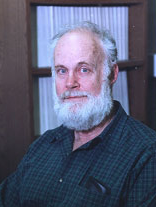 Michael F. A'Hearn合作论文数University of Maryland8Roosevelt J. Price合作论文数8
 Joseph S. Francisco合作论文数Department of Earth and Environmental Science, College of Arts & Sciences, University of Pennsylvania;Department of Earth, Atmospheric, and Planetary Sciences, College of Science, Purdue University8Osman Sorkhabi合作论文数8Xueliang Yang合作论文数7
 Zhou Lu合作论文数7
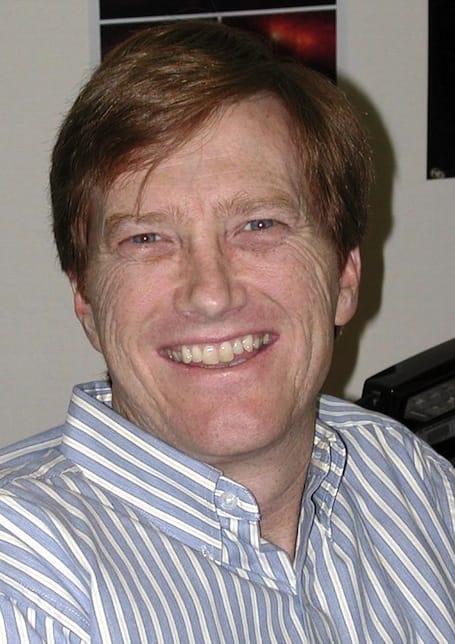 Harold A. Weaver合作论文数William H. Miller III Department of Physics and Astronomy, Krieger School of Arts and Sciences, Johns Hopkins University;Applied Physics Laboratory, Johns Hopkins University7William H. Fink合作论文数7
 Vernon Morris合作论文数Department of Chemistry, University of California, Davis7jacek wrobel合作论文数6Zhongxing Xu合作论文数6Rs Urdahl合作论文数6
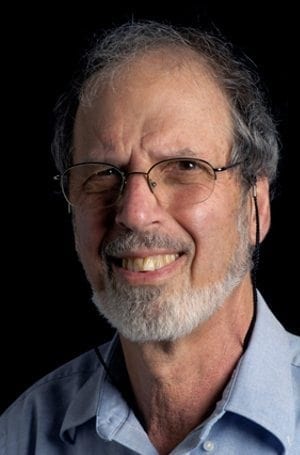 Paul Feldman合作论文数William H. Miller III Department of Physics & Astronomy, Krieger School of Arts & Sciences, Johns Hopkins University6
 Xiaoyu Shi合作论文数6
 Karen Jean Meech合作论文数Institute for Astronomy, University of Hawaii6
 Kyle N. Crabtree合作论文数Harvard Smithsonian Ctr Astrophys6Yh Bao合作论文数5
 Steven Federman合作论文数Department of Physics and Astronomy, University of Toledo5
 Keli Han (韩克利)合作论文数Dalian Institute of Chemical Physics, Chinese Academy of Sciences5
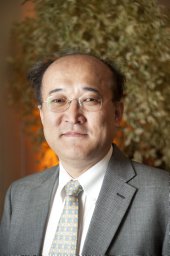 Qing-Zhu Yin合作论文数Department of Earth and Planetary Sciences, College of Letters and Science, University of California, Davis5Fida Mohammad合作论文数5Brant C. Jones合作论文数5O Sorkhabi合作论文数4juergen rahe合作论文数4Ian A. McLaren合作论文数4Yanice Benitez合作论文数4Greene Jamila R合作论文数4James R Mcnesby合作论文数4
 Lee-Ping Wang合作论文数Department of Chemistry, University of California, Davis4P. R. Weissman合作论文数3T. Fujiyoshi合作论文数3P. S. Butterworth合作论文数3




