If a finite group G has a presentation with d generators and r relations, it is well known that r−d is at least the rank of the Schur multiplier of G; a presentation is called efficient if equality holds. There is an analogous definition for proficient profinite presentations. We show that many perfect groups have proficient presentations. Moreover, we prove that infinitely many alternating groups, symmetric groups and their double covers have proficient presentations.
A simple replacement approach is used to construct new symmetric and affine designs from projective or affine spaces. This is used to construct symmetric designs with a given automorphism group, to study GMW designs, and to construct new affine designs whose automorphism group fixes a point and has just two point- and block-orbits.
There is a constantC0C_0such that all nonabelian finite simple groups of ranknnoverFq\mathbb {F}_q, with the possible exception of the Ree groups2G2(32e+1)^2G_2(3^{2e+1}), have presentations with at mostC0C_0generators and relations and total length at mostC0(logn+logq)C_0(\log n +\log q). As a corollary, we deduce a conjecture of Holt: there is a constantCCsuch thatdimH2(G,M)≤CdimM\dim H^2(G,M) \leq C\dim Mfor every finite simple groupGG, every primeppand every irreducibleFpG{\mathbb F}_p G-moduleMM.
Groups, Combinatorics and Geometry, pp. 123-137 (2003) No AccessComputing with matrix groupsWilliam M. Kantor and Ákos SeressWilliam M. KantorDepartment of Mathematics, University of Oregon, Eugene, OR 97403, USA and Ákos SeressThe Ohio State University, Department of Mathematics, 231 W. 18th Avenue, Columbus, OH 43210, USAhttps://doi.org/10.1142/9789812564481_0007Cited by:3 PreviousNext AboutSectionsPDF/EPUB ToolsAdd to favoritesDownload CitationsTrack CitationsRecommend to Library ShareShare onFacebookTwitterLinked InRedditEmail Abstract: The following sections are included: Introduction Permutation groups Matrix groups Nonconstructive recognition of simple groups Constructive recognition of simple groups General matrix groups References This research was supported in part by the National Science Foundation. AMSC: Primary 20D06, Secondary 20-04, Secondary 20P05, Secondary 68W30 FiguresReferencesRelatedDetailsCited By 3On the soluble residuals of maximal subgroups of Sp(6, r)Abdullah Çağman and Nurullah Ankaralioğlu1 Jan 2016Presentations of finite simple groups: A quantitative approachR. Guralnick, W. Kantor, M. Kassabov and A. Lubotzky18 February 2008 | Journal of the American Mathematical Society, Vol. 21, No. 3CONSTRUCTIVE RECOGNITION OF NORMALIZERS OF SMALL EXTRA-SPECIAL MATRIX GROUPSALICE C. NIEMEYER ()20 November 2011 | International Journal of Algebra and Computation, Vol. 15, No. 02 Groups, Combinatorics and GeometryMetrics History PDF download
Given a black-box group G isomorphic to some finite simple group of Lie type and the characteristic of G, we compute the standard name of G by a Monte Carlo algorithm. The running time is polynomial in the input length and in the time requirement for the group operations in G. The algorithm chooses a relatively small number of (nearly) uniformly distributed random elements of G, and examines the divisibility of the orders of these elements by certain primitive prime divisors. We show that the divisibility statistics determine G, except that we cannot distinguish the groups PWð2mþ 1; qÞ and PSpð2m; qÞ in this manner when q is odd and md 3. These two groups can, however, be distinguished by using an algorithm of Altseimer and
Equivalence of GMW difference sets corresponds to isomorphism of the associated designs.
Large numbers of new flag-transitive affine planes of even order are constructed.
The subject of this note began with Thompson [Thl,2].In the course of constructing his simple group Th, he considered the Lie algebra Lover iC of type Es.He constructed a decomposition L H 1 ..L ... ..L H31 using a family H.{H 1 , ... , H 31 } of Cartan algebras that are pairwise perpendicular with respect to the Killing form (he called this a "Dempwolff decomposition" of L; the construction was m~de with the assistance of P. Smith and a computer).Moreover,
Given a finite group G, for all sufficiently large d and for each q 3 there are symmetric designs and affine designs having the same parameters as PG(d, q) and AG(d, q), respectively, and having full automorphism group isomorphic to G.
Click to increase image sizeClick to decrease image size ∗Partially supported by NSF Notes ∗Partially supported by NSF Additional informationNotes on contributorsRobert M. Guralnick ∗ William M. Kantor ∗
Among the many aspects of coding theory Jack van Lint has studied intensively are some generalizations of Preparata and Kerdock codes (see Baker et al. (1983), Cameron and Van Lint (1991) and Van Lint (1983)). There are still many open problems concerning these. This note is a brief discussion of problems and new results involving orthogonal spreads, translation planes and associated generalized Kerdock codes.
Given a subgroup G=<Γ> of Sn specified in terms of a generating set Γ, when n≤106 we present algorithms to test the simplicity of G, to find all of its composition factors, and to find a composition series. While there are already existing algorithms for these purposes (due to Luks or Neumann) valid for all n, the ones in the present note are designed to replace many group theoretic computations by arithmetic calculations using properties of n and |G|.
Article Free AccessComputing in quotient groups Authors: W. M. Kantor University of Oregon University of OregonView Profile , E. M. Luks University of Oregon University of OregonView Profile Authors Info & Claims STOC '90: Proceedings of the twenty-second annual ACM symposium on Theory of ComputingApril 1990Pages 524–534https://doi.org/10.1145/100216.100290Published:01 April 1990Publication History 18citation364DownloadsMetricsTotal Citations18Total Downloads364Last 12 Months32Last 6 weeks5 Get Citation AlertsNew Citation Alert added!This alert has been successfully added and will be sent to:You will be notified whenever a record that you have chosen has been cited.To manage your alert preferences, click on the button below.Manage my AlertsNew Citation Alert!Please log in to your account Save to BinderSave to BinderCreate a New BinderNameCancelCreateExport CitationPublisher SiteeReaderPDF
Two randomly chosen elements of a finite simple classical group G are shown to generate G with probability →1 as ‖G‖ → ∞. Extensions of this result are presented, along with applications to profinite groups.
One of the most beautiful and important results concerning finite projective planes is the Ostrom-Wagner Theorem [26]: such a plane admitting a 2-transitive collineation group must be desarguesian. It has long been conjectured that the same conclusion must hold if it is only assumed that there is a collineation group transitive on incident point-line pairs [ll, pp. 208-214; 171. The starting point for this paper was a proof of this conjecture, modulo a degenerate situation:
Given a set Γ of permutations of an n-set, let G be the group of permutations generated by Γ. If p is a prime, a Sylow p-subgroup of G is a subgroup whose order is the largest power of p dividing |G|. For more than 100 years it has been known that a Sylow p-subgroup exists, and that for any two Sylow p-subgroups P1, P2 of G there is an element gϵG such that P2 = g−1P1 g. We present polynomial-time algorithms that find (generators for) a Sylow p-subgroup of G, and that find gϵG such that P2 = g−1P1 g whenever (generators for) two Sylow p-subgroups P1, P2 are given. These algorithms involve the classification of all finite simple groups.
If m is odd and \sigma /in Aut GF(2^{m}) is such that x \rightarrow x^{\sigma^{2}-1} is 1-1 , there is a [2^{m+1}-1,2^{m+l}-2m-2] nonlinear binary code P(\sigma) having minimum distance 5. All the codes P(\sigma) have the same distance and weight enumerators as the usual Preparata codes (which rise as P(\sigma) when x^{\sigma}=x^{2}) . It is shown that P(\sigma) and P(\tau) are equivalent if and only if \tau=\sigma^{\pm 1} , and Aut P(\sigma) is determined.
If q ≡ 2 (mod 3), a generalized quadrangle with parameters q, q2 is constructed from the generalized hexagon associated with the group G2(q).
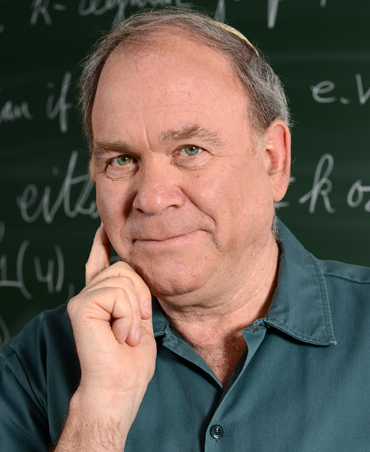 Alex Lubotzky合作论文数Einstein Institute of Mathematics, Hebrew University of Jerusalem3
 Robert Guralnick合作论文数Department of Mathematics, College of Letters, Arts and Sciences, University of Southern California3
 Eugene M. Luks合作论文数Comput.&Inf. Sci., Oregon Univ., Eugene, OR, USA2Á. Seress合作论文数Department of Mathematics;The Ohio State University2L Babai合作论文数1WM Nawijn合作论文数1Fotios Zaharoglou合作论文数1C HERING合作论文数1
 Michael Saks合作论文数Department of Mathematics, School of Arts and Sciences, Rutgers University1
 Martin Kassabov合作论文数Mathematics, College of Arts and Sciences, Cornell University1
 Anthony Lamarca合作论文数Paul G. Allen School of Computer Science & Engineering, University of Washington;Intel Labs1
 Richard E. Ladner合作论文数Paul G. Allen School of Computer Science & Engineering, University of Washington1Edward A. Bender合作论文数1
 Zsolt Tuza合作论文数Department of Computer Science and Systems Technology, University of Pannonia1
 Friedhelm Meyer Auf Der Heide合作论文数Heinz Nixdorf Institute & Department of Computer Science University of Paderborn1
 Meena Mahajan合作论文数The Institute of Mathematical Sciences1
 Berthold Vöcking合作论文数RWTH Aachen University1
 Shang-Hua Teng (滕尚华)合作论文数Thomas Lord Department of Computer Science, Viterbi School of Engineering, University of Southern California;Massachusetts Institute of Technology1Jan Saxl合作论文数1
 Gary L Miller合作论文数Computer Science Department, School of Computer Science, Carnegie Mellon University1
 Leonidas Guibas合作论文数Computer Science Department, School of Engineering, Stanford University;Department of Electrical Engineering, Stanford University1Julien Basch合作论文数1
 Sudipto Guha合作论文数Zscaler1
 Samir Khuller合作论文数Department of Computer Science, McCormick School of Engineering, Northwestern University1
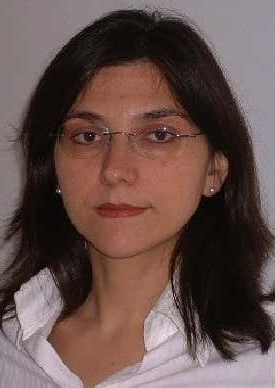 Cristina Bazgan合作论文数Laboratoire d'Analyse et Modélisation de Systèmes Pour l'Aide à La Décision, Université Paris Dauphine1
 Roberto Grossi合作论文数Dipartimento di Informatica, University of Pisa1
 Ulrich Faigle合作论文数Mathematisches Institut
Zentrum fur Angewandte Informatik
Universitat zu Koln1
Ulrich Faigle合作论文数Mathematisches Institut
Zentrum fur Angewandte Informatik
Universitat zu Koln1 Gary Seitz合作论文数Department of Mathematics, University of Oregon1
 Venkatesh Raman合作论文数The Institute of Mathematical Sciences1Dafna Talmor合作论文数Computer Science Department, Carnegie Mellon University
Sponsors SIGACT: ACM Special Interest Group on Algorithms and Computation Theory1
Venkatesh Raman合作论文数The Institute of Mathematical Sciences1Dafna Talmor合作论文数Computer Science Department, Carnegie Mellon University
Sponsors SIGACT: ACM Special Interest Group on Algorithms and Computation Theory1 Miklós Sántha合作论文数Centre for Quantum Technologies, National University of Singapore;French National Centre for Scientific Research, Université Paris Cité1Peter D. Mark合作论文数1Peter Pal Palfy合作论文数1
 Paolo Ferragina合作论文数Scuola Superiore Sant'Anna1Ulrich Dempwolff合作论文数Fachbereich Mathematik, Technische Universität Kaiserslautern1John Hershberger合作论文数Mentor Graphics Corporation1E.Rodney Canfield合作论文数Department of Computer Science
University of Georgia1
Paolo Ferragina合作论文数Scuola Superiore Sant'Anna1Ulrich Dempwolff合作论文数Fachbereich Mathematik, Technische Universität Kaiserslautern1John Hershberger合作论文数Mentor Graphics Corporation1E.Rodney Canfield合作论文数Department of Computer Science
University of Georgia1




