Encoder-free multimodal large language models(MLLMs) eliminate the need for a well-trained vision encoder by directly processing image tokens before the language model. While this approach reduces computational overhead and model complexity, it often requires large amounts of training data to effectively capture the visual knowledge typically encoded by vision models like CLIP. The absence of a vision encoder implies that the model is likely to rely on substantial data to learn the necessary visual-semantic alignments. In this work, we present BREEN, a data-efficient encoder-free multimodal architecture that mitigates this issue. BREEN leverages a learnable query and image experts to achieve comparable performance with significantly less training data. The learnable query, positioned between image and text tokens, is supervised by the output of a pretrained CLIP model to distill visual knowledge, bridging the gap between visual and textual modalities. Additionally, the image expert processes image tokens and learnable queries independently, improving efficiency and reducing interference with the LLM's textual capabilities. BREEN achieves comparable performance to prior encoder-free state-of-the-art models like Mono-InternVL, using only 13 million text-image pairs in training about one percent of the data required by existing methods. Our work highlights a promising direction for data-efficient encoder-free multimodal learning, offering an alternative to traditional encoder-based approaches.
Speculative decoding (SD), where an extra draft model is employed to provide multiple **draft** tokens first and then the original target model verifies these tokens in parallel, has shown great power for LLM inference acceleration.However, existing SD methods suffer from the mutual waiting problem, i.e., the target model gets stuck when the draft model is *guessing* tokens, and vice versa. This problem is directly incurred by the asynchronous execution of the draft model and the target model, and is exacerbated due to the fixed draft length in speculative decoding.To address these challenges, we propose a conceptually simple, flexible, and general framework to boost speculative decoding, namely **P**arallel sp**E**culative decoding with **A**daptive d**R**aft **L**ength (PEARL). Specifically, PEARL proposes *pre-verify* to verify the first draft token in advance during the drafting phase, and *post-verify* to generate more draft tokens during the verification phase.PEARL parallels the drafting phase and the verification phase via applying the two strategies, and achieves adaptive draft length for different scenarios, which effectively alleviates the mutual waiting problem.Experiments on various text generation benchmarks demonstrate the effectiveness of our PEARL, leading to a superior speedup performance up to **4.43$\times$** and **1.50$\times$**, compared to auto-regressive decoding and vanilla speculative decoding, respectively.
Recent advances in large language models, particularly following GPT-4o, have sparked increasing interest in developing omni-modal models capable of understanding more modalities. While some open-source alternatives have emerged, there is still a notable lag behind specialized single-modality models in performance. In this paper, we present Ola, an Omni-modal Language model that achieves competitive performance across image, video, and audio understanding compared to specialized counterparts, pushing the frontiers of the omni-modal language model to a large extent. We conduct a comprehensive exploration of architectural design, data curation, and training strategies essential for building a robust omni-modal model. Ola incorporates advanced visual understanding and audio recognition capabilities through several critical and effective improvements over mainstream baselines. Moreover, we rethink inter-modal relationships during omni-modal training, emphasizing cross-modal alignment with video as a central bridge, and propose a progressive training pipeline that begins with the most distinct modalities and gradually moves towards closer modality alignment. Extensive experiments demonstrate that Ola surpasses existing open omni-modal LLMs across all modalities while achieving highly competitive performance compared to state-of-the-art specialized models of similar sizes. We aim to make Ola a fully open omni-modal understanding solution to advance future research in this emerging field. Model weights, code, and data are open-sourced at https://github.com/Ola-Omni/Ola.
Visual data comes in various forms, ranging from small icons of just a few pixels to long videos spanning hours. Existing multi-modal LLMs usually standardize these diverse visual inputs to fixed-resolution images or patches for visual encoders and yield similar numbers of tokens for LLMs. This approach is non-optimal for multimodal understanding and inefficient for processing inputs with long and short visual contents. To solve the problem, we propose Oryx, a unified multimodal architecture for the spatial-temporal understanding of images, videos, and multi-view 3D scenes. Oryx offers an on-demand solution to seamlessly and efficiently process visual inputs with arbitrary spatial sizes and temporal lengths through two core innovations: 1) a pre-trained OryxViT model that can encode images at any resolution into LLM-friendly visual representations; 2) a dynamic compressor module that supports 1x to 16x compression on visual tokens by request. These designs enable Oryx to accommodate extremely long visual contexts, such as videos, with lower resolution and high compression while maintaining high recognition precision for tasks like document understanding with native resolution and no compression. Beyond the architectural improvements, enhanced data curation and specialized training on long-context retrieval and spatial-aware data help Oryx achieve strong capabilities in image, video, and 3D multimodal understanding simultaneously.
In this paper, we introduce Hunyuan-Large, which is currently the largest open-source Transformer-based mixture of experts model, with a total of 389 billion parameters and 52 billion activation parameters, capable of handling up to 256K tokens. We conduct a thorough evaluation of Hunyuan-Large's superior performance across various benchmarks including language understanding and generation, logical reasoning, mathematical problem-solving, coding, long-context, and aggregated tasks, where it outperforms LLama3.1-70B and exhibits comparable performance when compared to the significantly larger LLama3.1-405B model. Key practice of Hunyuan-Large include large-scale synthetic data that is orders larger than in previous literature, a mixed expert routing strategy, a key-value cache compression technique, and an expert-specific learning rate strategy. Additionally, we also investigate the scaling laws and learning rate schedule of mixture of experts models, providing valuable insights and guidances for future model development and optimization. The code and checkpoints of Hunyuan-Large are released to facilitate future innovations and applications. Codes: https://github.com/Tencent/Hunyuan-Large Models: https://huggingface.co/tencent/Tencent-Hunyuan-Large
 Yongming Rao合作论文数3
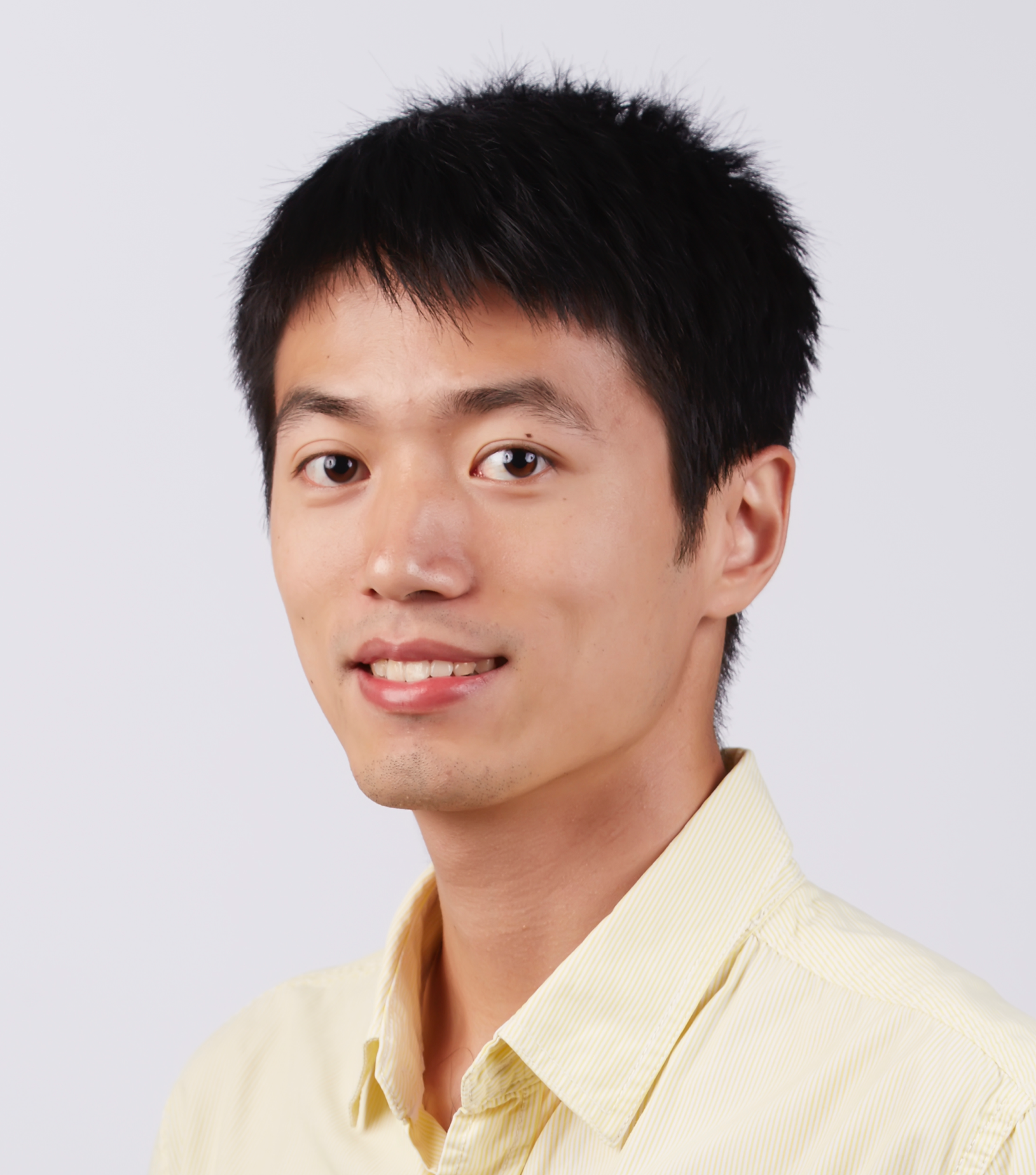 Ziwei Liu (刘子纬)合作论文数College of Computing and Data Science, Nanyang Technological University2
 Jiwen Lu (鲁继文)合作论文数Department of Automation, Tsinghua University2
 Haoyu Dong合作论文数Microsoft;University of Chinese Academy of Sciences2
 Xiao Sun合作论文数1Kai Liu合作论文数1Yun Li合作论文数1Yangyu Tao合作论文数1Kan Wu合作论文数1Jiaqi Zhu合作论文数1Shuaipeng Li合作论文数1
 Chenchen Zhang合作论文数1Chongqing Zhao合作论文数1Jinbao Xue合作论文数1Fengzong Lian合作论文数1Zhanhui Kang合作论文数1Yinben Xia合作论文数1Qitan Lv合作论文数1Tianyu Liu合作论文数University of Science and Technology of China1Feng Zhang合作论文数Key Lab of High Confidence Software Technologies, School of Computer Science, Peking University1
 Zhen Yang合作论文数Pattern Recognition Center, WeChat AI, Tencent Inc1
 Xingwu Sun合作论文数Meituan Dianping, Beijing, China1Zekun He合作论文数Tencent1Jianchen Zhu合作论文数1Zengyuan YU (于增源)合作论文数1
 Zuyan Liu合作论文数1
 Ao Liu (刘傲)合作论文数Department of Computer Science, Tokyo Institute of Technology1
 Chen Hu (胡辰)合作论文数School of Water Resources and Hydropower Engineering, Wuhan University1
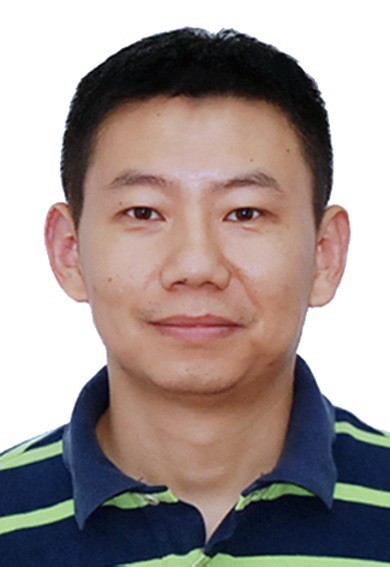 Liu Hong (洪流)合作论文数School of Artificial Intelligence and Automation, Huazhong University of Science and Technology1
 Suncong Zheng (郑孙聪)合作论文数Tencent Holdings Limited1
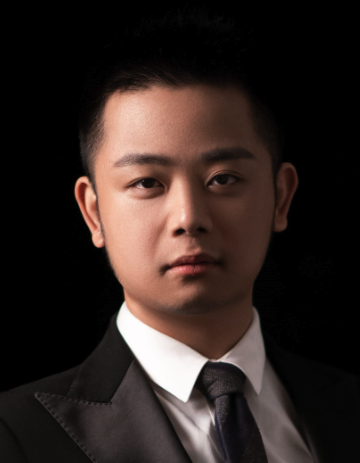 Ruobing Xie (谢若冰)合作论文数Tencent1Di Wang (王 迪)合作论文数腾讯AI平台部1Xiang Li合作论文数School of Computer Science, Beijing Institute of Technology1
 Kai Zhang (张凯)合作论文数Shenzhen International Graduate School, Tsinghua University1
 Yu Cheng (成宇)合作论文数The Chinese University of Hong Kong;Skywork AI1
 Bin Hu合作论文数1
 Cheng-Zhong Xu (须成忠)合作论文数Faculty of Science and Technology, University of Macau1
 Zhongzhi Chen合作论文数Beihang University;Tencent Inc1
 Chao Yu (余超)合作论文数School of Statistics, University of International Business and Economics1
 Zifan Wu合作论文数Sun Yat-Sen University1




