The distribution of Harta Sepencharian (classical Malay language for "matrimonial property") is a complex area within Islamic jurisprudence. The primary reason for the division of Harta Sepencharian is to acknowledge the ownership of each spouse (husband and wife), either directly or indirectly, to the property/ies acquired during their marriage and the means to divide the property/ies accordingly in the event of divorce or death. In Malaysia, the Shari'ah Court plays a vital role in ensuring fair and equitable protection of Muslim Malay women's rights to matrimonial property. The issue arises when there is a dispute as to the quantum of property distribution, especially if there is a divorce or when one spouse is deceased without leaving any will or clear instructions regarding property distribution. This study analyzes the Harta Sepencharian distribution practices and the governing statutes that dictate proper guidelines on how property is divided, whether jointly or solely acquired in Malaysia. This will include a discussion on the jurisdiction of the Shari'ah Court in recognizing women's rights and contributions for a fair distribution of the Harta Sepencharian, vis-a-vis the relevant provisions and decided cases.
The purpose of the study is to identify the motivation in participation for outdoor recreation activities for private city campus University in Kuala Lumpur. Demand for outdoor recreation activities among Malaysian is rising but lack of survey has been conducted focusing on outdoor recreation for students from the private University especially from the City Campus students. Data collected from 120 students (60 from Faculty of Science and 60 from Faculty of NonScience) who studying at this City Campus. Subjects were randomly selected for the survey consisted by the students from Faculty of Science and Faculty of Non Science. The questionnaire developed by Shazali & Hanim,(2012) to study the motivation in outdoor recreation activity for Science and Non Science students at University Putra Malaysia, Selangor, Malaysia. The data has been analyzed using the non-parametric measure by Mann Whitney U Test. Result indicated that the subject highly agreed that the main motivation for outdoor recreation participation for Private City Campus University, Kuala Lumpur for the Faculty of Science are the Accessibility to the Recreation Area, Healthy and As a Necessities of Life. For Faculty of Non Science are Looking for New Experience, Enjoy the Nature and Looking for Self Confident. The conclusion is for the city campus students, they are very appreciating the value of nature environment and highly request for the outdoor recreation activity to enrich their self-development value.
The purpose of the study is to identify the motivation in participation for outdoor recreation activities for private city campus University in Kuala Lumpur. Demand for outdoor recreation activities among Malaysian is rising but lack of survey has been conducted focusing on outdoor recreation for students from the private University especially from the City Campus students. Data collected from 120 students (60 from Faculty of Science and 60 from Faculty of NonScience) who studying at this City Campus. Subjects were randomly selected for the survey consisted by the students from Faculty of Science and Faculty of Non Science. The questionnaire developed by Shazali u0026 Hanim,(2012) to study the motivation in outdoor recreation activity for Science and Non Science students at University Putra Malaysia, Selangor, Malaysia. The data has been analyzed using the non-parametric measure by Mann Whitney U Test. Result indicated that the subject highly agreed that the main motivation for outdoor recreation participation for Private City Campus University, Kuala Lumpur for the Faculty of Science are the Accessibility to the Recreation Area, Healthy and As a Necessities of Life. For Faculty of Non Science are Looking for New Experience, Enjoy the Nature and Looking for Self Confident. The conclusion is for the city campus students, they are very appreciating the value of nature environment and highly request for the outdoor recreation activity to enrich their self-development value.
This article looks at the application of Islamic Family Law through decisions of the courts on matters of financial support for Muslim women after divorce in Bangladesh and Malaysia. The selection of the two countries was deliberate in that both are former British colonies with Muslim majority populations. In addition, both have ratified the United Nation's Convention on the Elimination of All Forms of Discrimination on Women (CEDAW), with reservations. Comparative generalization is made, wherein selected cases of alimony in both countries are analysed. Although Bangladesh and Malaysia are both Muslim countries, there are differences and similarities in how the courts in both countries construe legal provisions in making rulings. The differences, as reflected in their decisions, are influenced by various factors, most notably relating to socio-cultural aspects.
Characterized as divinely ordained, the Islamic law of inheritance defines women's tights to property of the deceased with specific roles and responsibilities for each individual. Obviously, the Islamic law of inheritance is a major contribution to the legal system of the world, compared to the customary laws in the pre-Islamic Arab society that denied any proprietary right by way of inheritance to female relatives including daughters. However, the jurisprudential inquiry into the legal nature of inheritance rights of women entails a dose analysis of various factors, including the contemporary socio-economic conditions of Muslim women. This paper revisits the historical and social aspects of the Islamic legal provisions with regard to inheritance rights in an effort to determine if the legal provision has merits to be implemented in light of the changing socio-economic conditions of women in Muslim majority states. It argues that a much dearer position that reflects the changing role of women needs to be postulated, though the challenge is to determine whether the Islamic epistemological position allows any room for restructuring the Islamic legal provision from the perspective of the current situation of Muslim nations such as Malaysia. An examination of the position of Muslim women's rights to property on the basis of the ontological, epistemological, and methodological aspects of legal rulings in Islam prompts us to call for a novel method of thinking, understanding, and implementing the Islamic inheritance provisions against the backdrop of the present globalized but stereotyped Muslim world. To that end, it concludes with the suggestion of enacting what can be called in modem terms "by-laws" within the Islamic framework in juxtaposition with the existing law of Islamic society in general, and that of Malaysia in particular.
The aim of this research is to present the analysis of the qualitative semi-structured interviews to determine the challenges and reality faced by women managers in managing the sport industry. Three major concerns are identified to be analysed based on the experiences of these women to determine the capabilities as managers through sport activities and challenges face by women sport managers in local sport industry. The three main concerns are firstly, the women sport managers’ requisite skills and corresponding qualities. Secondly, the women sport managers’ experience in juggling multiple responsibilities. Thirdly, the availability of support network for women sport managers. The research also found that these women sport managers gave positive feedback on the state of their readiness in facing the challenges of managing contemporary local sport industry. Overall, the respondents acknowledges that women play an important part in managing sport, although admitting that women in top-level positions is still lacking in numbers in contrast to the population. The engagement of women sport managers demand certain sacrifices and challenges that are balanced out mostly by the exceptional support they received from their spouses and immediate family members. The implications of the study would provide more data and inform policy-makers on future policy promulgations that concern the women sport managers. Among others is the consideration for an enabling infrastructure for more women to engage and subsequently contribute to the development of the local sport industry. [Megat Daud M.A.K, Radzi W. M., Abdullah R., Johari F. The Participation of Women Managers in Managing Sport: Challenges and Reality. Life Sci J 2013;10(3):870-878] (ISSN:1097-8135). http://www.lifesciencesite.com. 130
The concept of harta sepencharian1, a derivative of the Malay cultural custom (literally, adat) in Malaysia is now considered an integral element of shari'a secondary sources of 'Urf (customary laws). This concept - harta (Malay: property), sepencharian (Malay: jointly acquired) is the recognition of a married partner's share (both husband and wife) in property acquired during the material time of the marriage, regardless of whether the party in question (usually the wife) appears not to have contributed financially to its purchase or development, or even if the marriage ends through the death of either party. The article explores the evolution of the legal process that validates and promotes harta sepencharian to the level of 'Urf through the analysis of locally decided cases in both civil and shari'a court systems. This development signifies that the substantive and procedural dynamism of shari'a itself, and the uniqueness and applicability of Malay customary laws, transcend temporal and spatial differences. They particularly challenge the assumption that the local laws, including Islamic law, are passive.
'Modern sport' has been held to be one of the derivative of the Modernity agenda (Hargreaves, 2001), a tidal wave of intellectual and political change that swept most of the Western Europe in the 17(th) century. Few societies had resisted the transition to Modernity as the Muslim. Modern sport poses challenges to Muslim athletes, in that it conflicts with Muslim practices (Haji Omar & Gilbert, 2000). Women issues on the other hand took shape amidst the typically patriarchal policy development processes, whether it is within the religious, socio-legal, cultural, economic or political context (Abdullah, 2003; Omar & Hamzah, 2003). In the study of women, few would draw much controversy than the study of Muslim women. The image of a 'burka'-clad individual isolated from the rest of the world is perhaps the most common association made of a Muslim female. This paper would focus on ascertaining the role of Malaysian Muslim women through evaluation of the experiences of Muslim women as sport managers within the structure of the local sport governance. The discourse would also draw on the literatures of the women and sport in the West as comparison (Radzi 2006; Riphenburg, 1998; Roded, 1999; Sfeir, 1985; Stowasser, 1998; Walseth & Fasting, 2003)
‘Modern sport’ has been held to be one of the derivative of the Modernity agenda (Hargreaves, 2001), a tidal wave of intellectual and political change that swept most of the Western Europe in the 17 th century. Few societies had resisted the transition to Modernity as the Muslim. Modern sport poses challenges to Muslim athletes, in that it conflicts with Muslim practices (Haji Omar & Gilbert, 2000). Women issues on the other hand took shape amidst the typically patriarchal policy development processes, whether it is within the religious, socio-legal, cultural, economic or political context (Abdullah, 2003; Omar & Hamzah, 2003). In the study of women, few would draw much controversy than the study of Muslim women. The image of a ‘burka’-clad individual isolated from the rest of the world is perhaps the most common association made of a Muslim female. This paper would focus on ascertaining the role of Malaysian Muslim women through evaluation of the experiences of Muslim women as sport managers within the structure of the local sport governance. The discourse would also draw on the literatures of the women and sport in the West as comparison (Radzi 2006; Riphenburg, 1998; Roded, 1999; Sfeir, 1985; Stowasser, 1998; Walseth & Fasting, 2003)
Sports management as an area of academic preparation is a relatively recent phenomenon in Malaysia. The first sports science degree program was introduced by the University of Malaya only in July, 1995. Since then many public and private local universities began offering sports science degree programs at various levels. This article discusses the need, role and importance of sports science as an academic endeavor at public and private institutions of higher learning in Malaysia. The general overview of the sport industry is presented. While a range of programs is offered, attention must be given to the relevance of such programs to local needs. Sports development is high on the national development agenda based on the recent increase in allocation for sports in the Ninth Malaysia Plan. Local universities must now reassess and restructure sports science academic programs so that the educational process stays relevant to the changing needs of local sport development.
 Raihanah Abdullah合作论文数6
 Megat Ahmad合作论文数Faculty of Engineering;Universiti Pertahanan Nasional;Faculty of Engineering, Universiti Pertahanan Nasional4
 I. P. Henry合作论文数Department of Physical Education;Loughborough University of Technology;Department of Physical Education, Loughborough University of Technology3
 Emma Rich合作论文数Department for Health, University of Bath3
 Adli Sidi合作论文数2
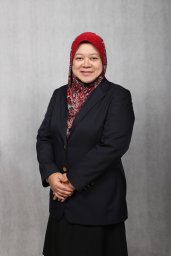 Fuadah Johari合作论文数Univ Sain Islam Malaysia USIM2
 Eleni Theodoraki合作论文数2nahid ferdousi合作论文数1taslima monsoor合作论文数1Mohd Norhusairi Mat Hussin合作论文数1
 Golam Dastagir合作论文数1Patricia Martinez合作论文数1Packianathan Chelladurai合作论文数1




