Classical orthogonal polynomials are solutions of a second order differential, difference, or q-difference equation for continuous, discrete, or q-discrete variables, respectively. Furthermore, all such systems satisfy a three-term recurrence equation of the form: p_n+1(x) = (A_n x + B_n)p_n(x) - C_n p_n-1(x), for n≥ 0 with p_-1=0, p_0=1 . Given a holonomic three-term recurrence equation, we implement in Maxima and Maple an algorithm which detects its classical orthogonal polynomial solutions for the continuous, discrete, and q-discrete variables when they exist. With our implementations, the results obtained using the Maple implementations by Koepf and Schmersau (Appl Math Comput 128:303–327, 2002) and Koorwinder and Swarttouw (Priv Commun, 1998) are easily recovered. In addition, we obtain new relations that extend beyond those previously established in the literature.
Now-a-days, ordinal patterns are shown to be effective in extracting discriminant image features. In this paper, we present the ordinal matrix encoding (OME) as a method that transforms an 8-bit encoded image into another image with s gray levels. Such an encoding acts as a highpass filter and allows us to enhance the image contours that are useful for feature extraction. In this work, we hybridized the OME technique with the linear discriminant analysis (LDA) approach to define the modified LDA (MLDA) to extract image features. The MLDA considers only interclass matrices of encoded images to highlight their singularities. Subsequently, a support vector machine (SVM) is applied to the MLDA output to perform facial image classification. We validated the proposed classification method using images from the ORL, FERET and FEI standard databases. The results indicate an overall accuracy of 99.07% , 73.61% and 98.78% for the ORL, FERET and FEI databases, respectively. Further, we evaluated the impact of OME by analyzing the classification accuracy of the SVM-LDA combination on raw images from the ORL database. The accuracy was 95.25% with intraclass matrices and 94.50% without, both lower than the 99.07% achieved with encoded images. This improvement occurs because OME preserves only the essential details of the raw images for feature extraction, enhancing their discriminative ability.
Measuring complexity allows to characterize complex systems. Existing techniques are limited to simultaneously measure complexity from short length data sets, detect transitions and periodic dynamics. This paper presents an approach based on ordinal pattern positioned slopes (OPPS). It considers exclusively OPPS group occurrences to compute the complexity from OPPS (COPPS) as the average number of patterns and applies to short data series. The COPPS measure was successfully applied to simulation data for measuring complexity, detecting transition phases and regular dynamics, distinguishing between chaotic and stochastic dynamics; and to real-world data for detecting arrhythmia ECG beats.
The permutation largest slope entropy (PLSE) algorithm has been shown to be effective to distinguish between regular and non-regular dynamics from time series analysis. However, as it is the case for many non-linear time series analysis algorithms, such a characterization is locally made and does not allow one to capture some micro-phenomena, such as intermittency, that may occur in the system behavior. This paper presents a PIC micro-controller based implementation of the PLSE for a real-time monitoring of system dynamics. The PLSE algorithm is optimized to fit the program and data memory of low-end processors using the XC8 compiler and the MPLAB X IDE. The resulting algorithm is implemented on the PIC16F18446 and deployed on the Explorer 8 development board. The effectiveness of the developed tool is validated by considering an electrical circuit of the Duffing oscillator that can generate both periodic and chaotic dynamics. By comparing the PLSE values with the phase portraits and previous results on the Duffing oscillator circuit, the developed tool efficiently allows one to monitor the behavior of dynamical systems.
Classical orthogonal polynomials are known to satisfy seven equivalent properties, namely the Pearson equation for the linear functional, the second-order differential/difference/ q -differential/ divided-difference equation, the orthogonality of the derivatives, the Rodrigues formula, two types of structure relations, and the Riccati equation for the formal Stieltjes function. In this work, following previous work by Kil et al. (J Differ Equ Appl 4:145–162, 1998a; Kyungpook Math J 38:259–281, 1998b), we state and prove a non-linear characterization result for classical orthogonal polynomials on non-uniform lattices. Next, we give explicit relations for some families of these classes.
This paper presents a piece-wise linear cat map (PWLCM) obtained by perturbing the conventional quantized Arnold cat map (QACM) with a nonlinear term. The effect of the nonlinear term on the dynamics of the QACM is investigated. We show that the eigenvalues, hence the Lyapunov exponents of the PWLCM depend on the initial conditions, which is not the case for the QACM. As a result, the proposed PWLCM is a generalized form of the QACM, whose the period exponentially increases with respect to the precision, thus taking as value 1.09 × 10 513 for only 10-bit precision; while that of the corresponding QACM is only 768. The nonlinear term increases the sensitivity of the system to the initial conditions, which contributes to increase its period, hence to enhance its complexity. An electronic implementation of both the QACM and the PWLCM in the case of 4-bit precision using Multisim is presented. The proposed architecture of both the QACM and the PWLCM are implemented using Verilog and prototyped on the Zynq 7020 FPGA board. For 4-bit precision, the FPGA implementation performs 1.072 Gbps throughput at 134 MHz maximum frequency. We verified that experimental and simulation behaviors of the proposed system perfectly match, thus confirming the effectiveness of the proposed electronic circuit for exhibiting the expected dynamics in real-time.
Implementing chaos based ciphers usually involves 32-bit floating-point arithmetics that is hardware resources costly. The limitation of the computational precision is hardware imposed and transforms chaotic orbits into limit cycles with short periods, hence alters their randomness. In cryptographic applications, short period dynamics and weak randomness result in security issues. In order to address this concern, we propose an 8-bit precision cipher that can be implemented with low-end microprocessors running 8-bit integer arithmetics. The cipher includes a quantized pseudo-random number generator (QPRNG) based on a 16-dimensional quantized Arnold's cat map (QACM). We used entropy measure, statistical, sensitivity and key space analyses to evaluate its security level under limited computational precision. Simulation results attest that it is as highly secure as those involving real-number arithmetics, even for only 8-bit precision. We also showed that the period of the proposed QACM can be chosen such that T-x > 10(27), which is very large as compared to existing QACM. Such a large period implies a high randomness of the derived QPRNG that is confirmed by statistical NIST tests. Contrary to existing ciphers that include other chaotic systems than the QACM for strengthening the security level, ours is exclusively based on the QACM and is fast, despite the included high-dimensional QACM.
This paper presents a multiplierless image-cipher, with extendable 2048-bit key-space, based on a 4-dimensional (4D) quantized piece-wise linear cat map (PWLCM). The quantized PWLCM exhibits limit-cycles of 4-bit encoded integers with periods greater than 10 7 . The synthesis of the PWLCM in a finite state space allows to eliminate the undesirable finite precision effect due to the hardware realization. The proposed image-cipher combines chaos, modular arithmetic, and lattice-based cryptography to encrypt a color image by performing pixel permutation and diffusion in a single operation. Further, an image-dependent confusion operation based on an 8-bit 2D-PWLCM is performed on the whole image to enhance security. In order to increase the key-space without key duplication, 16 × 16 sub-images are modified using sub-keys of different lattice length vectors generated from the external key. Both simulations and security analyses confirm that the proposed algorithm can resist common cipher attacks, in addition to its advantages such as simplicity, ease of implementation on low-end processors and extensibility of key-space that allows it to easily adapt even for future post-quantum computing attacks.
Linear recurrence equations with constant coefficients define the power series coefficients of rational functions. However, one usually prefers to have an explicit formula for the sequence of coefficients, provided that such a formula is "simple" enough. Simplicity is related to the compactness of the formula due to the presence of algebraic numbers: "the smaller, the simpler". This poster showcases the capacity of recent updates on the Formal Power Series (FPS) algorithm, implemented in Maxima and Maple (convert/FormalPowerSeries), to find simple formulas for sequences like those from https://oeis.org/A307717, https://oeis.org/A226782, or https://oeis.org/A226784 by computing power series representations of their correctly guessed generating functions. We designed the algorithm for the more general context of univariate P -recursive sequences. Our implementations are available at http://www.mathematik.uni-kassel.de/~bteguia/FPS_webpage/FPS.htm
A term an is m-fold hypergeometric, for a given positive integer m, if the ratio $${{a}_{{n + m}}}{\text{/}}{{a}_{n}}$$ is a rational function over a field $$\mathbb{K}$$ of characteristic zero. We establish the structure of holonomic recurrence equations, i.e. linear and homogeneous recurrence equations having polynomial coefficients, that have m-fold hypergeometric term solutions over $$\mathbb{K}$$ , for any positive integer m. Consequently, we describe a new algorithm, say mfoldHyper, that extends the algorithms by Petkovšek (1992) and van Hoeij (1998) which compute a basis of hypergeometric (m = 1) term solutions of holonomic recurrence equations to the more general case of m-fold hypergeometric terms.
Linear recurrence equations with constant coefficients define the power series coefficients of rational functions. However, one usually prefers to have an explicit formula for the sequence of coefficients, provided that such a formula is "simple" enough. Simplicity is related to the compactness of the formula due to the presence of algebraic numbers: "the smaller, the simpler". This poster showcases the capacity of recent updates on the Formal Power Series (FPS) algorithm, implemented in Maxima and Maple (convert/FormalPowerSeries), to find simple formulas for sequences like those from https://oeis.org/A307717, https://oeis.org/A226782, or https://oeis.org/A226784 by computing power series representations of their correctly guessed generating functions. We designed the algorithm for the more general context of univariate $P$-recursive sequences. Our implementations are available at http://www.mathematik.uni-kassel.de/~bteguia/FPS_webpage/FPS.htm
If we call a simplification command like Simplify, FullSimplify, Expand or Together in Mathematica, then algebraic expressions are replaced by (hopefully) mathematically equivalent ones. Therefore the general question arises under which circumstances such transformations are possible and which types of simplifications can be executed.
The integers with their operations addition and multiplication $$(\mathbb{Z}, +, \cdot)$$ form a commutative ring with unity 1. Now, we would like to translate this algebraic structure to finite subsets of $$\mathbb{Z}$$ . This is done by identification of certain elements in $$\mathbb{Z}$$ that lie in common arithmetic progressions.
In the previous chapter, we studied, among other things, the algorithmic computation of antidifferences in the special case where these antidifferences are hypergeometric terms. In this chapter, we would like to consider algorithmic integration.
Very recently, Masjed-Jamei & Koepf [Some summation theorems for generalized hypergeometric functions, Axioms, 2018, 7, 38, 10.3390/axioms 7020038] established some summation theorems for the generalized hypergeometric functions. The aim of this paper is to establish extensions of some of their summation theorems in the most general form. As an application, several Eulerian-type and Laplace-type integrals have also been given. Results earlier obtained by Jun et al. and Koepf et al. follow special cases of our main findings.
The aim of this chapter is the development of efficient algorithms for factorization in ℚ[x]. For this purpose, efficient factorization algorithms for ℤp[x] are used which, of course, are interesting by themselves.
Before we discuss mathematical algorithms and their programming, we want to show the capabilities of a general computer algebra system such as Mathematica (The same questions can be also treated with the systems Maple and Maxima, and the corresponding worksheets can be downloaded from www.computer-algebra.org ).
Since a rather simple (although not very efficient) algorithm exists for them we would first like to discuss bivariate sums of a specific form.
 Mohammad Masjed-Jamei合作论文数Department of Mathematics;Toosi University of Technology;Department of Mathematics, K. N. Toosi University of Technology20
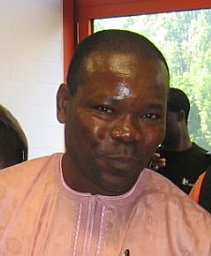 Mama Foupouagnigni合作论文数University of Yaounde;School of Education, Advanced;Department of Mathematics;Advanced School of Education, University of Yaounde18
 Adi Ben-Israel合作论文数Technion-Israel Institute of Technology Haifa12
 Daniel Duviol Tcheutia合作论文数Higher Teachers Training College, University of Yaounde I12
 Dieter Schmersau合作论文数12Bob Gilbert合作论文数12Jean Sire Armand Eyebe Fouda合作论文数10
 P. Njionou Sadjang合作论文数Higher Teachers Training College, University of Yaounde I8Andre Ronveaux合作论文数7D. Schmersau合作论文数6
 Predrag Milorad Rajkovic合作论文数5
 Bertrand Teguia合作论文数5Sladjana D. Marinkovic合作论文数5
 Evgenii V. Vorozhtsov合作论文数5
 Alta Jooste合作论文数5
 Ernst W. Mayr合作论文数Lehrstuhl fur Effiziente Algorithmen
Institut fur Informatik
Technische Universitat Munchen5
Ernst W. Mayr合作论文数Lehrstuhl fur Effiziente Algorithmen
Institut fur Informatik
Technische Universitat Munchen5 Rolf Biehler合作论文数Institut für Didaktik der Mathematik (IDM), Universit?t Bielefeld4
 Regina Bruder合作论文数Technical University of Darmstadt4Peter J. Larcombe合作论文数4thomas wassong合作论文数3
 Reinhard Hochmuth合作论文数3
 Werner M. Seiler合作论文数Department of Mathematics, University of Kassel3Ryul Kim合作论文数3
 Gilbert Greefrath合作论文数Seminar für Mathematik und ihre Didaktik, Universität zu Köln3Torsten Sprenger合作论文数3
 Arjun Kumar Rathie合作论文数Department of Mathematics, Vedant College of Engineering and Technology3Vladimir Gerdt合作论文数Joint Institute for Nuclear Research, Dubna, Moscow Region, Russia3
 Hamza Chaggara合作论文数Institut Préparatoire aux Études d'Ingénieur de Monastir, Département de Préparation en Math-Physique, 5019 Monastir, Tunisia3isabell bausch合作论文数2Jean Bertin Bidias à Mougoufan合作论文数2
 Asmaa O. Mohammed合作论文数Dept Math, Suez Canal Univ2M. R. Beyki合作论文数2Maurice Kenfack Nangho合作论文数Dept Math & Comp Sci, Univ Dschang2Mohammed M. Awad合作论文数Prince Sattam Bin Abdulaziz University College of Sciences and Humanities2
 Zahra Moalemi合作论文数Department of Mathematics, K.N. Toosi University of Technology2
 Thomas Sturm合作论文数CNRS, Inria, and the University of Lorraine, Nancy, France2
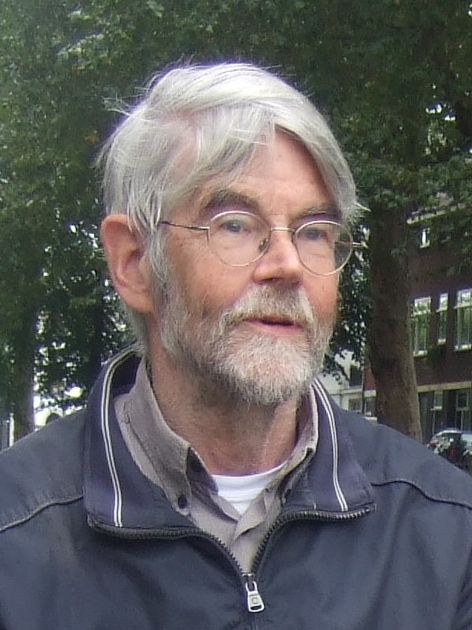 Tom Koornwinder合作论文数Faculty of Science, University of Amsterdam2Lawrence Wilets合作论文数2Fachbereich Mathematik合作论文数Technische Universität Darmstadt2Richard Askey合作论文数University of Wisconsin Madison Wis2
 Maurice Tchuente合作论文数University of Yaounde I;Pan-African Scientific Research Council, Princeton University2
 Vladimir P Gerdt合作论文数Laboratory of Information Technologies, Joint Institute for Nuclear Research, Dubna, Moscow oblast, Russia 1419802
 Samrat L. Sabat合作论文数School of Physics, University of Hyderabad2
 Medhat Rakha合作论文数Sultan Qaboos University, Suez Canal University2A. Eichler合作论文数1Georg Hoever合作论文数1
 Stephan Schreiber合作论文数1Oliver Gloor合作论文数1S. Mboutngam合作论文数1




