Electronic documents are widely used to store and share information such as bank statements, contracts, articles, maps and tax information. Many different applications exist for displaying a given electronic document, and users rightfully assume that documents will be rendered similarly independently of the application used. However, this is not always the case, and these inconsistencies, regardless of their causes-bugs in the application or the file itself-can become critical sources of miscommunication. In this paper, we present a study on the correctness of PDF documents and readers. We start by manually investigating a large number of real-world PDF documents to understand the frequency and characteristics of cross-reader inconsistencies, and find that such inconsistencies are common-13.5% PDF files are inconsistently rendered by at least one popular reader. We then propose an approach to detect and localize the source of such inconsistencies automatically. We evaluate our automatic approach on a large corpus of over 230 K documents using 11 popular readers and our experiments have detected 30 unique bugs in these readers and files. We also reported 33 bugs, some of which have already been confirmed or fixed by developers.
We advocate for a paradigm shift in supporting the information needs of developers, centered around the concept of automated on-demand developer documentation. Currently, developer information needs are fulfilled by asking experts or consulting documentation. Unfortunately, traditional documentation practices are inefficient because of, among others, the manual nature of its creation and the gap between the creators and consumers. We discuss the major challenges we face in realizing such a paradigm shift, highlight existing research that can be leveraged to this end, and promote opportunities for increased convergence in research on software documentation.
Code comments are an integral part of software development. They improve program comprehension and software maintainability. The lack of code comments is a common problem in the software industry. Therefore, it is beneficial to generate code comments automatically. In this paper, we propose a general approach to generate code comments automatically by analyzing existing software repositories. We apply code clone detection techniques to discover similar code segments and use the comments from some code segments to describe the other similar code segments. We leverage natural language processing techniques to select relevant comment sentences. In our evaluation, we analyze 42 million lines of code from 1,005 open source projects from GitHub, and use them to generate 359 code comments for 21 Java projects. We manually evaluate the generated code comments and find that only 23.7% of the generated code comments are good. We report to the developers the good code comments, whose code segments do not have an existing code comment. Amongst the reported code comments, seven have been confirmed by the developers as good and committable to the software repository while the rest await for developers' confirmation. Although our approach can generate good and committable comments, we still have to improve the yield and accuracy of the proposed approach before it can be used in practice with full automation.
We propose and implement a new approach, Document-Assisted Symbolic Execution (DASE), to improve automated test generation and bug detection. DASE leverages natural language processing techniques and heuristics to analyze program documentation to extract input constraints automatically. DASE then uses the input constraints to guide symbolic execution to focus on inputs that are semantically more important. We evaluated DASE on 88 programs from 5 mature real-world software suites: Coreutils, findutils, grep, Binutils, and elftoolchain. DASE detected 12 previously unknown bugs that symbolic execution without input constraints failed to detect, 6 of which have already been confirmed by the developers. In addition, DASE increases line coverage, branch coverage, and call coverage by 14.2--120.3%, 2.3--167.7%, and 16.9--135.2% respectively, which are 6.0--21.1 percentage points (pp), 1.6--18.9 pp, and 2.8--20.1 pp increases. The accuracies of input constraint extraction are 97.8--100%.
Code comments improve software maintainability. To address the comment scarcity issue, we propose a new automatic comment generation approach, which mines comments from a large programming Question and Answer (Q&A) site. Q&A sites allow programmers to post questions and receive solutions, which contain code segments together with their descriptions, referred to as code-description mappings.We develop AutoComment to extract such mappings, and leverage them to generate description comments automatically for similar code segments matched in open-source projects. We apply AutoComment to analyze Java and Android tagged Q&A posts to extract 132,767 code-description mappings, which help AutoComment to generate 102 comments automatically for 23 Java and Android projects. The user study results show that the majority of the participants consider the generated comments accurate, adequate, concise, and useful in helping them understand the code.
 Lin Tan合作论文数Department of Computer Science, Purdue University4
 Taiyue Liu合作论文数Amazon2
 Song Wang合作论文数Department of Electrical Engineering and Computer Science, Lassonde School of Engineering, York University1
 Gail C Murphy合作论文数Department of Computer Science, Faculty of Science, The University of British Columbia;Tasktop Technologies Incorporated1
 Laura Yolima Moreno Rozo合作论文数Dept. of Comput. Sci., Wayne State Univ.;c;Dept. of Comput. Sci., Wayne State Univ.1
 Tomasz Kuchta合作论文数Samsung Electronics1
 Michele Lanza合作论文数Faculty of Informatics, Universita della Svizzera italiana;Software Institute, University of Lugano1
 Marco Aurélio Gerosa合作论文数School of Informatics, Computing, and Cyber Systems, Northern Arizona University;College of Engineering, Informatics, and Applied Sciences, Northern Arizona University;Department of Computer Science, University of São Paulo1
 Andi Marcus合作论文数Department of Computer Science, The University of Texas at Dallas1
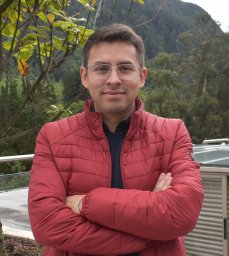 Mario Linares-Vasquez合作论文数Economic Optimization Research Group, National University of Colombia1
 Christoph Treude合作论文数School of Computing and Information Systems, Singapore Management University1
 Gabriele Bavota合作论文数Faculty of Informatics, Università della Svizzera Italiana1
 Neil A. Ernst合作论文数Department of Computer Science;University of Victoria;Department of Computer Science, University of Victoria1
 David Shepherd合作论文数Department of Computer Science, College of Engineering, Virginia Commonwealth University;Software Engineering Laboratory, Virginia Commonwealth University1
 Cristian Cadar合作论文数Department of Computing, Imperial College London1
 Martin Robillard合作论文数School of Computer Science, McGill University1
 Oscar Chaparro合作论文数1
 Jinqiu Yang合作论文数Medical College of Xiamen University1
 Michael W. Godfrey合作论文数David R. Cheriton School of Computer Science, University of Waterlooo1
 Thibaud Lutellier合作论文数Department of Computing Science, Faculty of Science, University of Alberta1




