In December 1967 Oswald Mathias Ungers convened an international congress on "Architectural Theory" at the TU Berlin. The proceedings of this event were published in German one year later. Here, two excerpts from those proceedings are published in English for the first time: the opening address given by Ungers, and a lecture by Colin Rowe. Ungers' welcoming remarks emphasise the importance of discussing architecture's theoretical foundations in a time of mounting protests, major technological innovations and an intense phase of building activity in the city of Berlin. He openly questions whether historical insights remain relevant, or whether they burden contemporary practice. Rowe responds by dissecting architecture's engagement with history. Rather than analysing the present situation, Rowe delves into modernism's historical subconscious and demonstrates how the threat of crisis has been used to fuel two enduring myths: architects as saviours of society; and their buildings as an index of the times.
How does one distinguish between a reactionary retreat into the past and a critical reconnection with lost practices that might disrupt the current order? This question weighed heavily on architectural educators in the 1960s and 1970s as they encountered an increasingly politicised student body. In this introduction, we detail some of the motivations and the consequences, of the turn to outmoded and forgotten architectural mentors, precedents, and ideas. In a period of pedagogical experimentation and curricular reform, how-and why-did a group of teachers find new techniques for sharing historical narratives and incorporating historical content into design studio practices? Friedrich Nietzsche's theorisation of the "untimely" provides a reference point for the wider range of anachronic pedagogies tested and developed by architect-historians during this period. Ultimately, the introduction frames the contributions to this issue as attempts to challenge the prevailing theorisations of postmodern time consciousness.
This chapter looks at the legitimisation and utilisation of urban knowledge from an institutional point of view referring to examples and case studies. It will examine epistemologies that created the framework for the development of urban knowledge institutions. The legitimacy of these institutions in matters of urban politics was based on new forms of expertise. Our contribution revisits the history of the way in which urban knowledge institutions in the late nineteenth and early twentieth century developed powerful epistemological models and narratives to analyse and picture the physical reality and development of a city. These, in turn, legitimised the implementation of city government strategies and the constitution of the urban planning and design disciplines. The urban epistemologies at the origin of this evolution were based on science, aesthetics, observation and description. They were intended to save the city from disorder, decay and destruction. To serve this civic purpose, the newly acquired urban knowledge was communicated through documentation, visual statistics and various displays (such as maps, diagrams, models, panoramic installations and interactive displays). This chapter illustrates the development of three epistemological fields through a series of case-studies: urban reform and the Musée Social in Paris; historicism and the Altstadt movements; city surveys and the Urbaneum.
Directly influenced by Colin Rowe’s essay “Mathematics of the Ideal Villa” (1947) and the Warburgian art historical tradition, John Hejduk’s nine-square grid studio exercise had an ambiguous relation to the instrumentality of architectural history. When the nine-square grid exercise was copied in many architecture schools around the world as a first-year studio project, initiating the novice student in the realm of architectural composition, the pedagogical interpretation of its relation to architectural history varied. This paper questions the relational model of architectural history to practice in the nine-square grid exercise, and subsequently investigates the reuse and reinterpretation of the exercise at the Versailles school and at Ghent University in the 1980s. It proposes a reading of the survival and return of this diagrammatic figure in studio pedagogy and villa architecture in the late twentieth century by reckoning with the history of its self-referentiality and the temporality of lateness.
Australia’s laid-back, sun-drenched beach lifestyle has been a celebrated and prominent part of its official popular culture for nigh on a century, and the images and motifs associated with this culture have become hallmarks of the country’s collective identity. Though these representations tend towards stereotype, for many Australians the idea of a summer holiday at the beach is one that is intensely personal and romanticised – its image is not at all urbanised. As Douglas Booth observed, for Australians the beach has become a ‘sanctuary at which to abandon cares – a place to let down one’s hair, remove one’s clothes […] a paradise where one could laze in peace, free from guilt, drifting between the hot sand and the warm sea, and seek romance’.1 Beach holidays became popular in the interwar years of the twentieth century, but the most intense burst of activity – both in touristic promotion and in the development of tourism infrastructure – accompanied the postwar economic boom, when family incomes were able to meet the cost of a car and, increasingly, a cheap block of land by the beach upon which a holiday home could be erected with thrift and haste. In subtropical southeast Queensland, the postwar beach holiday became the hallmark of the state’s burgeoning tourism industry; the state’s southeast coastline in particular benefiting from its warm climate and proximity to the capital, Brisbane. It was here – along the evocatively named Gold Coast (to Brisbane’s south) and Sunshine Coast (to its north) [1] – that many families experienced their first taste of what is now widely celebrated as the beach lifestyle [2]. As one reflection has it: In the era before motels and resorts, a holiday at the Gold and Sunshine coasts usually meant either pitching a tent and camping by the beach or staying in a simple cottage owned by family or friends […] Simplicity, informality, individuality […] were the hallmarks of these humble places.2
In January 1919, delegates to the Paris Peace Conference gathered to discuss the construction of a new international order in the wake of the First World War. The event raised substantial expectations, as reflected in a plethora of petitions and resolutions addressed to the ‘peacemakers’ in the French capital. One such submission came from the Union of International Associations (UIA) , whose Charter of Intellectual and Moral Interests stated that the ‘great international associations’ had been furthering the cause of international cooperation for half a century. Now was the time to acknowledge their work by including a ‘Charter of Intelligence’ alongside a ‘Labour Charter’ and an ‘Economic Charter’ within ‘a kind of Global Constitution of the League of Nations’. The document encapsulated many of the UIA’s core tenets: a belief in the role played by international associations in the making of global order; the impetus to...
Paul Otlet's exploration of the idea to record information in separate chunks or units according to the "monographic principle" has provoked considerable interest in information history for the way in which it resonates with the present tendency to conceive of information as detachable and manipulable units, whose retrieveability has become more important than the information itself. This paper aims to dissect within Otlet's historical and intellectual context the make-up of the positivist epistemology underpinning his concept of the "Universal Book." The "Universal Book" was of central importance in his theory of documentation as it proposed how documentalists-the new experts trained in documentary procedures-were to operate. These professionals were asked to gather facts or objective knowledge by removing the unwanted "dross" of subjectivity, and to synthesize those facts in an encyclopaedic form in order to make them ready for public use. Through an inquiry into the wide-ranging epistemological views prevalent in the French intellectual milieu in the belle epoque-notably monism, energeticism, materialism, idealism and spiritualism-this paper questions the positivist label that has been attributed to his concept of documentation.
In the face of being "othered" over issues to do with cultural isolation and derivation, a new generation of Australian architects arose in the 1970s, celebrating Australia's distinctive regionalism. This regionalist current chimed with the growth of the postmodern movement, which, had done much to liberate the Australian architect from the so-called "cultural cringe," as he or she no longer felt that they had to hobble after what was happening elsewhere. Among this new cohort of architects, the work of Peter Corrigan is notable for advocating a mongrel postmodern architecture that was positively and distinctively Australian, sampling from the ordinary and dreary Australian suburbs. This article seeks to clarify the architectural quest for an Australian identity in Corrigan's work, by exploring in depth the interdisciplinary and transatlantic transfer of ideas from theatre to architecture. Corrigan had a long-standing engagement with stage design, and this article will argue that his involvement in "New Wave theatre," notably the Australian Performing Group (APG), and the appropriation of concepts from directors and playwrights like John Vaccaro, John Romeril, Jerzy Grotowski, Casper Neher, and Bertold Brecht, determined how he transplanted postmodern ideas onto Australian soil.
Reviewing “Architecture in the Antipodes” in 1984, RIBA journal editor Peter Murray, put Peter Corrigan in a van of Australian architects searching for an architecture that was positively, proudly and distinctively Australian. Besides through his completion of a postgraduate programme at Yale under Charles Moore, and his work experience in the offices of Paul Rudolph, Victor Gruen Associates, and Philip Johnson, Corrigan played a crucial role as an attractor and translator of a postmodernist model of regionalism in Melbourne and Australia in the latter half of the 1970s and well into the 1990s, through various media: journals in which he published or that he co-founded like Smudges, discussion groups like Half-Time, conferences such as the “Pleasures of Architecture”(1980) conference, and most importantly university lectures and his legendary studio training at RMIT.
In 1978, coinciding with the exhibition Dada and Surrealism Reviewed in the Hayward Gallery, Dalibor Veseley edited a double issue of Architectural Design on surrealism and architecture. The issue mined manifold connections between modernist architecture and surrealism, and it marked a penchant for surrealism among postmodern architects. It included, among others, essays by Rem Koolhaas and Bernard Tschumi referencing the key ideas of Salvador Dali and the playwright and surrealist Antonin Artaud, respectively. In hindsight, such links seem ubiquitous in postmodern architecture. John Hejduk’s Masques call upon a self-proclaimed ‘medieval surrealism’; Aldo Rossi’s images are indebted to the metaphysical paintings of Giorgio de Chirico; designs by Oswald Mathias Ungers include René Magritte’s bowler man and doll-in-doll motif; and Peter Eisenman’s work deals with psychoanalysis, automatism, and the links between perception and representation.
When Peter Corrigan passed away on 1 December last year, Australian architecture lost one of, if not, its major protagonist and pioneer of the postmodern movement. Although history books will remember him foremost as an architect, his life and work are done more justice by paying tribute to his combined and almost equal commitment to three professions: architecture, theatre and teaching. While he emphasized that in the end these fields had little to do with each other, their cross-fertilisation is what makes his work so original.
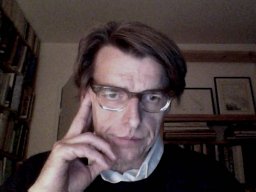 Pieter Uyttenhove合作论文数9
 Christophe Verbruggen合作论文数8Daniel Laqua合作论文数3
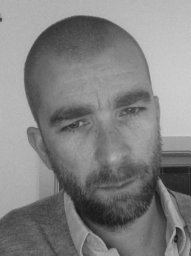 Wouter Davidts合作论文数2
 Rika Devos合作论文数BATir Dept, Univ Libre Bruxelles1
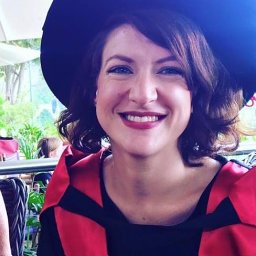 Amy Clarke合作论文数University of the Sunshine Coast1
 Michiel Dehaene合作论文数Dept Architecture & Urban Planning, Univ Ghent1Andres Kurg合作论文数Inst Art Hist & Visual Culture, Estonian Acad Arts1
 Stuart King合作论文数Melbourne School of Design, The University of Melbourne1
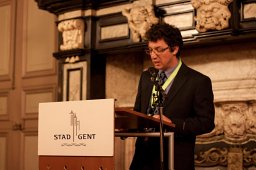 Guy De Tré合作论文数Dept Telecommun & Informat Proc, Univ Ghent1Andrew Leach合作论文数1
 Geert Somsen合作论文数1Ruben Mantels合作论文数1sylvia van peteghem合作论文数1




