Autonomous industrial Internet of Things (IIoT) systems increasingly connect real-time sensing, edge intelligence, and mobile robots in a closed decision–execution loop. An automated guided vehicle (AGV) is a type of mobile robot widely used for material handling and constitutes the physical execution layer considered in this study. In a heterogeneous fleet, single-load and multi-load AGVs differ in task compatibility, slot capacity, admissible dimensions, payload, and battery state. Their dispatching decisions therefore affect task completion, physical load construction, energy consumption, and subsequent charging feasibility. This paper proposes a causality-driven multidimensional load-matching task-dispatching method. A mechanism-informed causal structure links synchronized IIoT states, dispatch interventions, physical mediators, potential outcomes, and rolling feedback. In Stage 1, each battery-critical AGV is evaluated under candidate-task execution and charging/waiting from the same restored state and common exogenous scenario, and only safely executable pairs are fixed. In Stage 2, the remaining assignment, task grouping, loading/LIFO sequence, and partial-stack consolidation decisions are optimized by multidimensional load-matching adaptive large-neighborhood reconstruction (MDLM-ALNR). The order of reconstruction and feasibility repair follows the physical causal dependency chain from assignment and load construction to travel, energy, and charger reachability. Simulation results show that the two-stage strategy retains 62.4% of battery-critical AGVs in task execution and reduces runtime by 20.43% relative to unified optimization with nearly unchanged physical outcomes. Compared with ALNS-MDLM, MDLMALNR reduces average task travel time and load imbalance by 2.52% and 13.18%, respectively.
Collision avoidance is one crucial technique to achieve safe and efficient robotic vehicle navigation in unknown environments. However, moving obstacles with unpredictability in dynamic scenarios, usually increase the difficulty and complexity in collision avoidance of robotic vehicles. To enhance the stability of collision avoidance and boost its adaptability to uncertain dynamic scenes, a new attention-based significance measurement actor-critic (ASMAC) architecture is proposed. It is an end-to-end robot navigation model that uses imperfect local observation to directly plan precise collision-free motion commands. Firstly, a significance-measured rollout replaybuffer (SMRR) is presented to categorize the experiences into different pools. It can prevent any overfitting or bias that may result from repeatedly sampling experience of a certain type during policy learning. Then, we enhance the traditional actor-critic network by integrating a multi-head local attention module to extract the local information at entity level. This way, the collision avoidance system can focus on key environmental features to compute more lightweight and respond more swiftly to dynamic changes in environment. Besides, a multi-step lookahead prediction (MLP) reward function is designed in the ASMAC-based reinforcement learning (RL) framework to prevent the generation of unnatural, intrusive, and short-sighted motion decisions. Finally, the asynchronous multithreading (AM) mechanism and proximal policy optimization (PPO) algorithm are extended to ASMAC model to offload the expensive online computation to an offline training process, enhancing the exploration efficiency in navigation policy learning of robotic vehicles. Extensive simulation and real-world physical experiments show that our method can generate time-efficient and collision-free guide paths in complex dynamic scenes, to successfully dodge collisions while moving towards the goal.
In the semiconductor manufacturing process, wafer defect inspection is crucial for ensuring product quality. However, due to the high cost and scarcity of defect samples, how to effectively enhance detection performance under data-scarce scenarios has become a significant challenge. This study proposes an innovative approach for the YOLOv11 baseline detection network to address the small-sample problem in wafer defect detection. Firstly, we adopt the Multi-Domain Offset Normalization (MDON) technique, which avoids the chaotic data distribution caused by traditional data augmentation by performing batch normalization on each augmented image domain independently, allowing for learning the most critical consistency information within features. Secondly, a simulation-to-reality sample domain alignment migration learning method based on Maximum Mean Discrepancy (MMD) is introduced. By jointly inputting simulated and real samples and incorporating MMD loss, this method reduces the gap between simulation and reality, thereby enhancing the model’s generalization ability on real-world samples. Experimental results demonstrate that the effective combination of these two methods significantly improves the performance of YOLOv11 in wafer defect detection under data-scarce scenarios, offering a new avenue for industrial applications.
To develop a safe and efficient navigation system of robotic vehicles in dynamic scenes, a new collision-avoidance method using deep reinforcement learning (DRL) is presented. First, a novel method of DRL based on multithreaded asynchronous proximal policy optimization (MAPPO) is developed. It can convert expensive online calculation into an offline training process, improving the sample efficiency during policy learning. Then, a multisensor fusion measurement (MSFM) method is presented by the combination of global reference path (GRP), laser scanner measurement (LSM), and motion energy (ME), to observe the state space of environment to maximum extent. By multireward refining at each timestep, the sparsity of rewards is avoided. On this basis, a collision-avoidance neural network (CANN) fused in multiscale and multilevel is devised to generate high-quality obstacle features, which can enable the MAPPO to master collision threat effectively. Besides, a premature collision prediction (PCP) module supervised by GRP is devised as an auxiliary task to learn high-level feature representation to further improve the safety during robot collision avoidance. Finally, a two-stage training strategy from 2-D Stage to 3-D Gazebo is presented to realize sufficient robot-environment interaction. This way, the policy model can maximize its degree of exploration in complex dynamic scenarios. Extensive navigation experiments are conducted on the complex simulation and real-world scenarios with a variety of obstacles, along with multiple comparative experiments to testify the effectiveness and robustness of our approach in robot collision avoidance. Experiment results reveal that our method can make farsighted navigation decisions in complex dynamic environments to dodge collisions successfully while moving toward the goal.
To tackle compatibility issues arising from uneven phase shifts during phase extraction from spectral interferograms, this paper finds what we believe to be a novel approach and bridges the tilted phase-shifting method with spectrally resolved interferometry (SRI). A tilt phase-shifting iterative method based on the spectral interferogram reconstruction strategy is proposed, achieving high-quality phase extraction and overcoming the limitations of phase shifts. This method utilizes the interpolation reconstruction of spectral interferograms to make the phase shift exhibit a linear tilt, allowing the tilt phase-shifting iterative method to extract phase from at least three frames with random phase shifts. By evaluating the profile measurement, our method demonstrates higher accuracy than previous methods under high-noise conditions, with random phase shifts, and across varying heights.
The heterogeneous automatic guided vehicle (AGV) system, composed of several AGVs with different load capability and handling function, has good flexibility and agility to operational requirements. Accurate task travel time prediction (T3P) is vital for the efficient operation of heterogeneous AGV systems. However, T3P remains a challenging problem due to individual task correlations and dynamic changes in model input/output dimensions. To address these challenges, a biomimetics-inspired learning framework based on a radial basis function (RBF) neural network with an improved mayfly algorithm and a selective update strategy (IMA-SURBF) is proposed. Firstly, a T3P model is constructed by using travel-influencing factors as input and task travel time as output of the RBF neural network, where the input/output dimension is determined dynamically. Secondly, the improved mayfly algorithm (IMA), a biomimetic metaheuristic method, is adopted to optimize the initial parameters of the RBF neural network, while a selective update strategy is designed for parameter updates. Finally, simulation experiments on model design, parameter initialization, and comparison with deep learning-based models are conducted in a complex assembly line scenario to validate the accuracy and efficiency of the proposed method.
Collision avoidance is a crucial technique to achieve safe and efficient robotic vehicle navigation in unknown environments. However, moving obstacles with unpredictability in dynamic scenarios, usually increase the difficulty and complexity in collision avoidance of robotic vehicles. To enhance the stability of collision avoidance and boost its adaptability to uncertain dynamic scenes, a new attention-based value classification actor-critic (AVCAC) architecture is proposed. It is an end-to-end robot navigation model that utilizes imperfect local observation to directly plan accurate collision-free motion commands. First, we design a value-classified rollout replaybuffer to categorize the experiences into different pools. It can prevent any overfitting or bias that may result from repeatedly sampling experiences of a certain type during policy learning. Then, we improve the conventional actor-critic network with a multi-head local attention module to extract the local observations at entity-level. This way, the collision avoidance system can focus on key environmental features to operate more efficiently and respond more swiftly to dynamic changes in the environment. Moreover, a lookahead multi-step prediction (LMP) reward setting is devised in the AVCAC-based reinforcement learning (RL) framework to facilitate more informed and forward-looking decision-making. Finally, the policy entropy (PE) and policy delay (PD) are extended to AVCAC model to enhance policy exploration and make policy more robust. Extensive experimental results reveal that our method can generate time-efficient and collision-free guide paths to dodge collisions under complex dynamic environments.
This paper investigates the methodology and techniques for a soft biomimetic robot fish that has a straightforward design, relatively simple fabrication, and low cost. In addition to the investigations of fabrication techniques, we also explore the numerical analysis of the biological fish swimming performance, with its inspiration for robot fish design, which is less studied in the literature. In this research, therefore, various swimming locomotion patterns within the body and/or caudal fin family are analyzed for kinematics and hydrodynamics using analytical methods and computational fluid dynamics (CFD) to inspire the robot fish design for improved swimming performance. By straightforward design and fabrication, the swimming performance of the numerical robot fish is verified by means of simulation using 3D CFD, and the prototype performance is validated using in-water experimental tests. This study showcases a new easy-to-design and easy-to-fabricate robust biomimetic robot fish with comparable swimming performance, which has good potential for purposes like education, research, and entertainment.
Localization in an unexplored environment is a fundamental capability for robotic vision navigation. However, due to the static world assumption, it still suffers the impoverishment of robustness and accuracy in complex dynamic workspaces. Moving objects with indeterminate motion status in dynamic scenarios, usually increase the difficulty and complexity to the localization of the robotic vehicles. To address this problem, a robust and real-time RGB-D vision navigation system based on motion saliency measurement (MSM) and twin reprojection (TR) optimization is proposed to allow accurate localization for the robotic vehicles under complex dynamic scenes. Firstly, a novel saliency-induced dense motion removal (SDMR) method is developed to detect and eliminate the dynamic regions in RGB-D inputs, which can effectively filter out the outlier data that are associated with the moving objects. Then, a robust matching strategy for edge drawing lines (EDLines) feature is devised to acquire fine line inliers by constructing keypoint correspondence. Furthermore, the TR error is built by depth measurement for the line features. It is incorporated into a new error optimization function to achieve optimal pose estimation. The experimental results demonstrate that the SDMR can accurately detect dynamic objects and eliminate movement regions in complex dynamic scenarios. The proposed navigation system proves to attain at least 26% improvement of localization accuracy over other advanced dynamic navigation solutions. Test code is available on https://github.com/SunIMLab/TL-REE.
OBJECTIVE:To explore the genetic etiology of two children with Spinal muscular atrophy with respiratory distress type 1 (SMARD1), and prevent the recurrence of birth defects.METHODS:Two unrelated families who had visited the Obstetrics and Gynecology Medical Center of Drum Tower Hospital from August to November 2021 were selected as the study subjects. Copy number of SMN1 gene exon 7 for the probands and their parents was detected by multiple ligation-dependent probe amplification (MLPA). and whole exome sequencing (WES) was carried out to screen the variants in the probands. Sanger sequencing was used to validate the variants within the families. Pathogenicity of the variants were predicted by bioinformatic analysis. Based on the results, prenatal diagnosis was performed for the fetuses.RESULTS:Both probands were found to harbor compound heterozygous variants of the IGHMBP2 gene, which were inherited from their parents. Among these, c.1144C>T, c.866delG and c.1666C>G were previously unreported and respectively classified as pathogenic variant (PVS1+PM2_Supporting+PP3+PP4), likely pathogenic variant (PM1+PM2_Supporting+PM4+PP3+PP4) and likely pathogenic variant (PM1+PM2_Supporting+PP2+PP3+PP4) based on the ACMG guidelines. Through preimplantation genetic testing for monogenic (PGT-M) and interventional prenatal diagnosis, transmission of the variants within the families was successfully blocked.CONCLUSION:The SMARD1 in both children may be attributed to the compound heterozygous variants of the IGHMBP2 gene, which has facilitated the genetic diagnosis and counselling, and provided reference for delineating the molecular pathogenesis of this disease.
针对现代柔性制造生产车间存在的任务类型多、AGV种类多、AGV数量多的问题,从多任务学习、单车任务与协同任务问题混合下的数学建模和任务调度算法三方面对AGV协同多任务规划问题进行研究,将AGV协同多任务调度问题抽象为多种约束条件下的优化问题.提出一种改进遗传算法(IGA),在构建初始种群时引入随机函数并对重复基因使用覆盖法增加初始种群多样性,在交叉变异中采用自适应迭代模式防止陷入局部最优.仿真结果表明,该算法能有效完成任务调度,与传统遗传算法相比优化性能更高.
针对传统路径规划方法在部分未知复杂大场景环境下搜索空间大、效率低、避障成功率不高等问题,提出一种基于拓扑栅格度量复合地图的移动机器人分层路径规划方法.首先将机器人作业环境描述为栅格地图并划分为多个栅格化的子区域,以子区域为关键节点进行位置关系抽象从而获得拓扑架构,并对局部栅格区域进行精细化描述,构建拓扑栅格度量的复合地图.其次,在不同地图层级上分区域搜索机器人路径,在拓扑地图上采用Floyd算法规划子区域之间的区间路径,面向栅格地图提出搜索子区域内部路径的改进A?算法,通过引入扩展点筛选策略、双向搜索机制、路径冗余点剔除技术提高路径规划的效率与质量,并拼接各段区间路径和内部路径生成全局优化初始路径.最后,针对部分未知场景中的动态障碍物,在度量地图上提出基于深度强化学习架构的动态避障路径规划方法,利用价值分类经验回放机制提高样本的利用率和模型训练的效率.实验结果表明,所提方法有较高的搜索效率和避障成功率,生成的路径兼具安全性和平滑性.
Nowadays, pointer instruments remain the main state monitoring devices in the power industry, because they have strong mechanical stability to resist electromagnetic interferences compared with digital instruments. Although the object detection algorithms based on deep learning have widely been used in the field of instrument detection, the meter recognition process still relies on threshold segmentation to recognize object points and on Hough transform to extract the meter pointer. An intelligent vision recognition method based on YOLOv5 and U 2 -Net network (YLU 2 -Net) is proposed to improve the accuracy and efficiency of meter recognition in a complex environment. Firstly, the pointer meter is located in the instrument images by using the YOLOv5 network as a region of interest (RoI). Then, the instrument RoI is processed by means of perspective transformation and image resizing. Thirdly, an improved U 2 -Net image segmentation method with the deep separable convolution and the focal loss function is devised to distinguish the pointers and scales from the background in the instrument RoI. Further, a dimension reduction reading method with the polar coordinate transformation is developed to calculate the meter reading accurately and efficiently. Finally, the ablation experiment is conducted to test the performance of each algorithm module in our method, and the competition experiment is completed to compare our method with other state-of-the-art ones. The experimental results verify the accuracy and efficiency of the YLU 2 -Net recognition method proposed.
Localization in unknown environments is an essential requirement for vision navigation of robotic vehicles in intelligent transportation systems. However, moving objects in dynamic scenarios usually bring about great difficulty for robot localization, because motion estimation of robotic vehicles is disturbed by increasing feature outliers caused by moving objects. In order to improve the accuracy and robustness of robot localization, a novel saliency-induced moving object detection (SMOD) approach is proposed to filter out feature outliers for RGB-D-based simultaneous localization and mapping (SLAM) in complex dynamic workspaces. Firstly, three complementary motion saliency potentials, including motion energy (ME), spatiotemporal objectness (STO), and dynamic superpixels (DS), are modeled by fully analyzing spatial, temporal, appearance and depth cues in RGB-D inputs. They can be used to identify the dynamic objects effectively from diversely changing backgrounds. Then, a superpixel-level graph-based motion saliency (MS) measure is proposed to generate the MS map for reliable localization of the moving objects. The edge weights and background nodes on the graph are determined reasonably by fusing ME, STO, and DS, which is not vulnerable to background interferences. Furthermore, the SMOD approach is embedded into the front-end of ORB-SLAM3 as a pre-processing stage, in order to filter out feature outliers associated with the moving objects. Finally, the extensive experiments are performed to verify the accuracy and robustness of the proposed approach on the public dynamic datasets. The experimental results show that the SMOD method can detect the moving objects effectively in a variety of challenging dynamic environments, and separate the dynamic regions reliably from the irrelevant background. The data comparison demonstrates that the SMOD-SLAM navigation system can outperform other state-of-the-art dynamic visual SLAM (vSLAM) systems.
多载量自动导引车(AGV)具有更高的单车运输能力和更强的配送作业柔性,然而其长度不断变化的特点也加大了交通管控的难度.为保证生产线多种物料准时配送,研究了多载量AGV系统的交通管控问题.首先分析了与单载量AGV差异较大的两种运动冲突:针对多载量AGV变长特性,设计了一种变长度AGV路径空间冲突避免方法;针对交叉路口冲突,考虑到多载量AGV变长特性对阻塞环路死锁的影响,提出一种带防死锁策略的交叉路口通行顺序优化方法.根据AGV紧迫度和交通负荷均衡度构建了综合竞标价模型,并对获标AGV即将进入的目标路径段的阻塞环路进行死锁预测与避免.仿真实验结果表明,所提方法可保证任务紧迫度高的AGV优先通过,降低路口相关路径段的交通拥堵,并避免高密度AGV系统的环路死锁,从而提高生产线物料配送的任务准时率.
针对大质量、大尺寸、低刚度的异形大部件,采用多机器人的合作搬运方式具有显著的作业灵活性和工况适应性.研究了单目-双驱动、双目-双驱动、双目-多运动副全向等合作搬运导引控制构型,建立了多输入-多输出的运动控制模型;采用领航者-跟随者策略设计了协同路径跟踪控制方法,该方法包括偏差转化预测控制+参数模糊调节的同构架构,以及模型预测控制+反演控制+参数强化学习的异构架构.最后,为进行导引控制实验开发了多机器人合作搬运原型系统,实验结果验证了所提构型、模型、架构与方法的可行性和有效性.
An AGV system can be used to transport different-size materials in an assembly line. The hybrid task allocation problem is involved in the assembly line, where both single-AGV tasks and multi-AGV tasks exist. However, there is little research on this problem. The goal of solving this problem is to obtain a task allocation scheme with minimum idle time and maximum system throughput. Since all necessary materials must be delivered to the assembly station before the operation can start, the delivery tasks are not independent of each other in a task group serving the operation. To solve the problem above, a hybrid task allocation method based on a task binding strategy and an improved particle swarm optimization (IPSO) is proposed. Firstly, a mathematical model considering the punctuality of material delivery and the cooperative relationship between tasks is established. Secondly, a task binding strategy and four heuristic rules are devised to improve the quality of randomly- and heuristic-generated individuals in the initial population for model optimization. Thirdly, an IPSO is developed to help the optimization algorithm jump out of local optimums. Finally, a simulation is performed to verify the effectiveness of the proposed methods. The simulation results show that a better scheme can be obtained by our hybrid task allocation method, compared to conventional Genetic Algorithms and PSO algorithms.
针对多品种、小批量混流生产中存在的调度复杂、准时率难以保证的问题,构建包含单载量AGV和多载量AGV的异构AGV调度系统,提出基于紧迫度和最早完工时间的任务调度方法、基于Floyd算法的路径规划技术和多AGV运动冲突解决方案,利用Qt开发框架设计异构AGV调度控制软件,实现了调度控制的整体作业流程.实验结果表明,该系统能准确、快速响应物料需求,具有较高的准时率和效率.
Inspired by gecko's adhesive feet, a wheeled wall climbing robot is designed in this paper with the synchronized gears and belt system acting as the wheels by considering both motion efficiency and adhesive capability. Adhesion of wheels is obtained by the bio-inspired adhesive material wrapping on the outer surface of wheels. A ducted fan mounted on the back of the robot supplies thrust force for the adhesive material to generate normal and shear adhesion force whilemoving on vertical surfaces. Experimental verification of robot climbing on vertical flat surface was carried out. The stability and the effect of structure design parameters were analyzed.
Feature detection is a crucial technique for a vision navigation system to estimate robot pose according to natural landmarks. It is difficult for the existing feature detection techniques to balance the feature quality, processing time and robustness for a vision-based robot in complex workspaces. An adaptive Oriented fast and Rotated Brief (ORB) feature detection method with a variable extraction radius in Region of Interest (RoI) is proposed to deal with these problems. Firstly, the original camera image is processed by means of the Laplace transform of Gaussian (LTOG) pyramid and the grayscale centroid method, in order to obtain the rotation and scale invariance for ORB features. Then, a RoI segmenting technique is developed to locate the image areas that contain potential ORB features due to obvious grayscale variation. Thirdly, the ORB features are extracted in RoIs by using a set of variable-radius templates, adaptive to different illumination conditions. Finally, a number of feature detection and robot localization experiments are conducted on a vision-based robot prototype in different scenes under complex illumination. The experimental results verify that the RoI segmenting technique can correctly preserve the grayscale-varying regions to search ORB features with scattered distribution but excluding the irrelevant areas to suppress feature noises, while the variable-radius template extraction method can detect more feature inliers in complex workspaces. Therefore, our adaptive ORB method can outperform other commonly-used algorithms in accuracy, efficiency and robustness.
 Peihuang Lou (楼佩煌)合作论文数College of Mechanical and Electrical Engineering, Nanjing University of Aeronautics and Astronautics74
 Xiaoming Qian (钱晓明)合作论文数College of Mechanical and Electrical Engineering, Nanjing University of Aeronautics and Astronautics33
 Haining Xiao合作论文数16
 Dunbing Tang (唐敦兵)合作论文数College of Mechanical & Electrical Engineering, Nanjing University of Aeronautics and Astronautics14
 Chao Sun (孙超)合作论文数Faculty of Artificial Intelligence in Education, Central China Normal University13
 Ting Zou合作论文数Ctr Intelligent Machines, McGill Univ11
 RuiFang Zhu (朱瑞芳)合作论文数9Jun Yu (于军)合作论文数8HU Ya (胡亚)合作论文数7
 Changyin Sun (孙长银)合作论文数School of Artificial Intelligence, Anhui University;Engineering Center of the Ministry of Education for Autonomous Unmanned Systems Technology, Anhui University;School of Automation, Southeast University7Ying Yang合作论文数6Xiangyu Zhu合作论文数6
 Yali Hu (胡娅莉)合作论文数The State Key Laboratory of Pharmaceutical Biotechnology, Nanjing University;Nanjing Drum Tower Hospital, The Affiliated Hospital of Nanjing University Medical School6Honglei Duan合作论文数5
 Longjun Wang (王龙军)合作论文数School of Physical Science and Technology, Southwest University5Jie Li合作论文数5Shen Weiliang合作论文数4LOU Hangfei (楼航飞)合作论文数4Linhui Li (李林慧)合作论文数4Jun-jie YANG (杨俊杰)合作论文数4Hua Chen (陈华)合作论文数4
 Jingjing Zhai合作论文数4
 Kai Meng合作论文数Department of Mechanical Engineering,Massachusetts Institute of Technology4
 dejin qin (秦德金)合作论文数3
 Zhengfeng Xu (许争峰)合作论文数The Fourth School of Clinical Medicine3
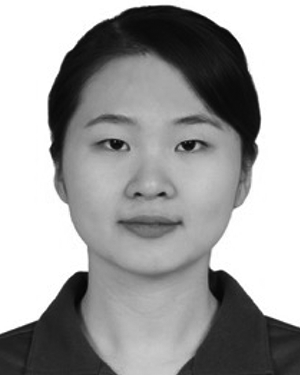 Jia Sun合作论文数3Shi Chenchen (石陈陈)合作论文数3Jingyang Wu (武靖洋)合作论文数3Jiong Zhang (张炯)合作论文数3Ying Zhang (张颖)合作论文数3
 Hui Liu (刘辉)合作论文数School of Traffic and Transportation Engineering, Central South University3
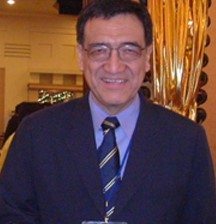 Jorge Angeles合作论文数Robotic Mechanical Systems Laboratory, Department of Mechanical Engineering, Faculty of Engineering, McGill University3Hongkai Li合作论文数3Leisheng Chen合作论文数2HU Zihan (胡子寒)合作论文数2Xinwei Lv合作论文数2Wei Li合作论文数2Kun Zheng (郑堃)合作论文数2Zengguang MAN (满增光)合作论文数2Zhen HE (何珍)合作论文数2WanJun Wang (王皖骏)合作论文数2XiaoLing Zhong (仲晓玲)合作论文数2QiXiang Cai (蔡祺祥)合作论文数2Xu Yang (杨旭)合作论文数2Lei Yang (杨雷)合作论文数2Bin Wu (吴斌)合作论文数2




