Although microcredit has reached millions, recent randomised evaluations find limited average business impacts. Contract rigidity, specifically the fixed and frequent instalments, may restrict moral hazard, but limit productive risk-taking, thus limiting the impact. With a Colombian lender, we experimentally compared, for a sample of new borrowers, a standard rigid loan to a more flexible loan that included three 'passes' with which borrowers could delay repayments. The flexible loan led to some shifts in investment behaviour, but had no average impact on revenue, profit level, or profit variance, and led to higher default.
This paper uses a randomized controlled trial to compare different banking delivery channels. Individuals living close to banking agents and branches of the same financial institution were encouraged to open a savings account and transact at either an agent or a branch. Compared with individuals sent to a branch, individuals sent to an agent increased their number of transactions at the agent and incurred lower transaction costs there. One year later, 42% of active users still used both channels but made transactions at the agent only half as large as those made at the branch.
Despite the rapid growth in digital payments (DP) adoption and its positive socio-economic impacts in low-income countries, a large portion of the population remains disconnected from DP. At the same time, usage of DP conditional on adoption is low, highlighting the unexplored potential for financial inclusion and economic advancement. This paper reviews the burgeoning academic literature on DP and categorizes both macro-level adoption barriers (extensive margin) and micro-level usage challenges (intensive margin). We draw on the Transaction Cost Index, a new comprehensive database encompassing 16 low-income countries, to shed light on major themes in markets for DP. We conclude by outlining potential avenues for future research in this area.
Borewells for groundwater extraction have proliferated across India, encouraged by massive electricity subsidies. Because the discharges from borewells operating near one another are mutually attenuated, farmers interact strategically with potentially many neighbors in deciding whether and when to drill. An analysis of survey data from two districts in southern India establishes both the importance of this well interference externality and its influence on drilling decisions. This paper then estimates a structural model of well-drilling as a dynamic discrete investment game played across a network of adjacent plots. Using this model, the paper compares the current regime of free (but rationed) electricity against an annual tax on all functioning borewells that fully defrays electricity costs. The findings show that the counterfactual policy, by reining in over-drilling, reduces deadweight loss by US$170 (in present value terms) per acre of land with groundwater potential, or by around 3 percent of its market value. The paper also finds that taxing only newly drilled borewells at a rate 23 percent higher than annual electricity costs (to address the negative externality) is nearly welfare-maximizing yet avoids a capital levy on existing well owners.
By bringing the point of service closer to the client, both literally in terms of physical distance, but also in terms of social proximity, agent networks have improved the provision of micro-banking services in terms of client convenience and lower costs. Evidence from multiple studies shows that clients conduct more financial transactions when agents are available, especially deposits, withdrawals, and transfers of funds. Greater perceived security of transactions and balances and more trust in agents than other providers are likely contributing to these patterns, though the evidence base is not yet well established. There are also emerging indications that transacting with agents deepens clients' experience with financial services and thus improves their financial capabilities. From the providers' side, agent networks can reduce costs and expand service delivery, though agents often have lower levels of training and accountability than branch staff, raising concerns about service quality. Lack of competition and pricing transparency are related concerns, which disproportionately affect clients in poor rural areas and those with less experience with financial services, especially women.
Widespread adoption of efficient irrigation technologies, including drip irrigation, has been proposed to limit groundwater over-exploitation, especially in water-stressed South Asia. This paper evaluates the potential productivity and water-saving benefits of smallholder drip irrigation by conducting a randomized control trial in Andhra Pradesh, India. A group of well-owners was offered a subsidy to adopt drip irrigation, while a comparable group acted as controls. After three years, the drip group shifted more into horticultural crops, enjoyed higher farm profit, and transferred (primarily through cash sales) more of its groundwater to adjacent plots. There is no difference in groundwater pumping, which is constrained by electricity rationing in this setting. The evidence thus suggests that drip adoption in South India, while increasing irrigation efficiency, will not save groundwater.
Fifty-three percent of subjects who owned a high-fee account with a local bank in Malawi did not switch to a new, lower-fee account when given the choice. In contrast, holders of high-fee accounts who had been induced to make more transactions in the past were significantly more likely to adopt the new, cheaper account. Using estimates from a structural model, we find that the different propensity to switch is better explained by differences in the valuation of the new account rather than differences in the cost of switching. Experience using financial products can thus improve financial decision making.
We assess the role of monetary incentives in a mission-oriented organization by randomly assigning workers to one of two bonus schemes, incentivizing either the performance of a microcredit program (bottom line) or the empowerment of clients (mission). We find that the credit bonus improved credit-related outcomes but undermined the social mission, while the social bonus did not harm the bottom line. These results are consistent with a multitasking model with production spillovers or with prosocial behavior. We show that when mission-related rewards are not feasible, organizations that care about both the mission and the bottom line prefer flat wages to incentives.
Input subsidy programs (ISP) often have two conflicting targeting goals: selecting individuals with the highest marginal return to inputs on efficiency grounds, or the poorest individuals on equity grounds, allowing for a secondary market to restore efficiency gains. To study this targeting dilemma, we implement a field experiment where beneficiaries of an ISP were selected via a lottery or a local committee. In lottery villages, we find evidence of displacement of private fertilizer and of a secondary market as beneficiaries are more likely to sell inputs to non-beneficiaries. In contrast, in non-lottery villages we find no evidence of displacement nor of elite capture. The impacts of the ISP on agricultural productivity and welfare are limited, suggesting that resources should be directed at complementary investments, such as improving soil quality and irrigation.
No AccessPolicy Research Working Papers21 Dec 2022Give me a Pass: Flexible Credit for Entrepreneurs in ColombiaAuthors/Editors: Lasse Brune, Xavier Giné, Dean KarlanLasse Brune, Xavier Giné, Dean Karlanhttps://doi.org/10.1596/1813-9450-10235SectionsAboutPDF (3.6 MB) ToolsAdd to favoritesDownload CitationsTrack Citations ShareFacebookTwitterLinked In Abstract:Microcredit promised business growth for small firms lacking access to banking loans. Although microcredit has reached millions, recent randomized evaluations find limited average business impacts. Critics often blame contract rigidity, specifically the fixed and frequent installments, for the lack of productive risk-taking. But such rigidity may instill borrower discipline. This study partnered with a Colombian lender that offered first-time borrowers a flexible loan that permitted delaying up to three monthly repayments. The study finds null effects for revenue and profits but increases in loan defaults. The evidence thus aligns with established microlender practice of offering rigid contracts to first-time borrowers. Previous bookNext book FiguresreferencesRecommendeddetails View Published: November 2022 Copyright & Permissions KeywordsREPAYMENT FLEXIBILITYCREDIT PRODUCTFIXED PAYMENTSFLEXIBLE PAYMENTSRIGID CONTRACTSFIRST-TIME BORROWERSMICROCREDIT PDF DownloadLoading ...
An audit study was conducted in Ghana, Mexico and Peru to understand the quality of financial information and products offered to low-income customers. Trained auditors visited multiple financial institutions, seeking credit and savings products. Consistent with Gabaix and Laibson (2006), staff only provides information about the cost when asked, disclosing less than a third of the total cost voluntarily. In fact, the cost disclosed voluntarily is uncorrelated with the expensiveness of the product. In addition, clients are rarely offered the cheapest product, most likely because staff is incentivized to offer more expensive and thus more profitable products to the institution. This suggests that clients are not provided enough information to be able to compare among products, and that disclosure and transparency policies may be ineffective because they undermine the commercial interest of financial institutions.
This paper uses a unique data set with 1.1 million customer transactions from a microfinance institution in the Democratic Republic of Congo from 2017 to 2018. Regression analysis of individual-level transaction behavior and customer-agent dyads provides evidence of assortative gender matching in agent banking transactions, as clients prefer to transact with agents of their own gender. Female clients show a robust preference for female agents even when they are less available, particularly when making high-value transactions and when they have higher account balances. We also replicate the analysis with a second microfinance institution in Senegal and find similar patterns. The underrepresentation of female agents may contribute to the persistent gender gap in financial access and usage in Sub-Saharan Africa. (c) 2021 The International Bank for Reconstruction and Development/The World Bank. Published by Elsevier Ltd. All rights reserved.
Widespread adoption of efficient irrigation technologies, including drip irrigation, has been proposed as a means of limiting groundwater overexploitation, especially in the intensively farmed and water-stressed South Asia region. This paper reports on a randomized controlled trial conducted in the Indian state of Andhra Pradesh to evaluate the potential productivity and water-saving benefits of smallholder drip irrigation. A group of well-owners was encouraged to adopt drip irrigation through a subsidy scheme, whereas a control group was left to its own devices. The results indicate that, after three years, the drip group shifted into more remunerative and irrigation reliant crops, enjoyed higher agricultural revenue, and transferred (primarily through cash sales) more of its groundwater to adjacent plots. In terms of groundwater pumping, which has zero marginal price in this setting, there is precisely zero difference between the drip and control groups. The evidence thus suggests that drip adoption in South India, while increasing irrigation efficiency, will not save groundwater.
Markets for consumer financial services are growing rapidly in low- and middle-income countries and are being transformed by digital technologies and platforms. With growth and change come concerns about protecting consumers from firm exploitation due to imperfect information and contracting as well as from their own decision-making limitations. We seek to bridge regulator and academic perspectives on these underlying sources of harm and five potential problems that can result: high and hidden prices, overindebtedness, postcontract exploitation, fraud, and discrimination. These potential problems span product markets old and new and could impact micro- and macroeconomies alike. Yet there is little consensus on how to define, diagnose, or treat such problems. Evidence-based consumer financial protection will require substantial advances in theory and especially empirics, and we outline key areas for future research.
We explore heterogeneity in soil quality, lack of knowledge and autonomy as explanations for the low adoption of improved agricultural practices using a randomized field experiment that combined localized soil analyses, tailored input recommendations, extension services and an in-kind grant. We find that while neither the degree of recommendation specificity (plot vs cluster level) nor the extent of autonomy (defined as the freedom of choice in spending the in-kind grant) had any effect on adoption during the intervention, farmers with autonomy had substantially higher adoption of improved practices two years after the intervention ended. JEL: D01, Q12, O33 ∗We are grateful to Qué Funciona para el Desarrollo (QFD) for managing the entire project, to Fertilab for the soil analyses, to Agropecuaria Amozoc for providing and mixing fertilizers and to Ipampa S.C. for the provision of agricultural extension services. We would also like to thank Pranab Bardhan, Chico Ferreira, Andy Foster, and Berk Özler for very helpful comments and suggestions. We also thank seminar participants at various workshops for their comments and suggestions. Michelle Infanzón, Victor Manuel Pérez, Bernardo Ribeiro, Mónica Vargas and Victor Vergara provided outstanding research assistance. We also gratefully acknowledge funding from 3ie, BASIS (UC Davis), the World Bank and ISPC-SPIA (under the grant “Strengthening Impact Assessment in the CGIAR System (SIAC)"). Views expressed in this paper are those of the authors, and do not necessarily reflect the opinions of the World Bank, its executive directors, or the countries they represent.This project was reviewed and approved by the ITAM IRB and UCLA IRB # 12–001756. This study is registered in the AEA RCT Registry with the unique identifying number AEARCTR-0006264.
To quantify contracting distortions in a real‐world market, we develop and structurally estimate a model of contracting under payoff uncertainty in the south Indian groundwater economy. Uncertainty arises from unpredictable fluctuations in groundwater supply during the agricultural dry season. Our model highlights the tradeoff between the ex post inefficiency of long‐term contracts and the ex ante inefficiency of spot contracts. We use unique data on both payoff uncertainty and relationship‐specific investment collected from a large sample of well‐owners in Andhra Pradesh to estimate the model's parameters. Our estimates imply that spot contracts entail a 3% efficiency loss due to hold‐up. Counterfactual simulations also reveal that the equilibrium contracting distortion reduces the overall gains from trade by about 4% and the seasonal income of the median borewell owner by 2%, with proportionally greater costs borne by smaller landowners.
What major insights have emerged from development economics in the past decade, and how do they matter for the World Bank? This challenging question was recently posed by World Bank Group President David Malpass to the staff of the Development Research Group. This paper assembles a set of 13 short, nontechnical briefing notes prepared in response to this request, summarizing a selection of major insights in development economics in the past decade. The notes synthesize evidence from recent research on how policies should be designed, implemented, and evaluated, and provide illustrations of what works and what does not in selected policy areas.
 Dean Karlan合作论文数Kellogg School of Management, Northwestern University;ImpactMatters;Innovations for Poverty Action14
 Jessica Goldberg合作论文数University of Maryland10
 Dean Yang合作论文数Department of Economics, College of Literature, Science, and the Arts, University of Michigan-Ann Arbor10
 Ghazala Mansuri合作论文数Development Research Group;World Bank;Development Research Group, World Bank10
 James Vickery合作论文数University of Chicago9
 Robert M. Townsend合作论文数Department of Economics, Massachusetts Institute of Technology8
 Hanan G. Jacoby合作论文数Development Economics Research Group, World Bank8
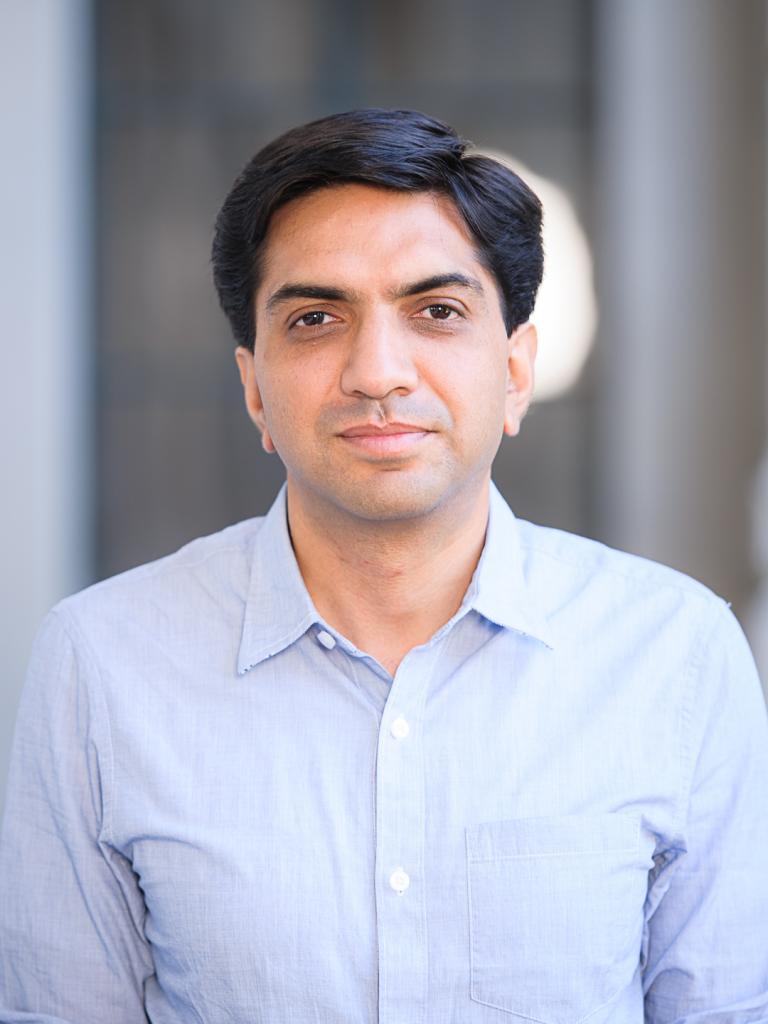 Aprajit Mahajan合作论文数Agricultural & Resource Economics, College of Natural Resources, University of California, Berkeley7Robert Cull合作论文数World Bank7Jonathan Zinman合作论文数Dartmouth College6Lasse Brune合作论文数Northwestern University5
 Shawn A. Cole合作论文数Harvard Business School5
 Stefan Klonner合作论文数Williams College5Bernardo Ribeiro合作论文数4Carolina Corral合作论文数4Soren Heitmann合作论文数4
 Monica Martinez-Bravo合作论文数Ctr Monetary & Financial Studies, Madrid, Spain4
 David McKenzie合作论文数Development Research Group, World Bank4
 Enrique Seira合作论文数NATIONAL BUREAU OF ECONOMIC RESEARCH4ajai nair合作论文数3Sven Harten合作论文数3Sinja Buri合作论文数3Rafael Keenan Mazer合作论文数3Slesh A. Shrestha合作论文数Natl Univ Singapore3erin bryla合作论文数2ornsaran pomme manuamorn合作论文数2william dick合作论文数2joanna syroka合作论文数2Keesler Welch合作论文数2Mario Picon合作论文数2kara bunte合作论文数2Ildrim Valley合作论文数2sumeet bhatti合作论文数2
 Tara Vishwanath合作论文数2karuna krishnaswamy合作论文数2Michael Toman合作论文数2Ram Fishman合作论文数Tel Aviv University2
 Francis Annan合作论文数J. Mack Robinson College of Business, Georgia State University2
 Goldstein Markus合作论文数2
 Michael Woolcock合作论文数Development Research Group, World Bank;School of Government, Harvard University's Kennedy2
 Sergio Schmukler合作论文数The World Bank2
 Aart Kraay合作论文数Development Research Group, The World Bank2
 Adam Wagstaff合作论文数The World Bank2
 Erhan Artuc合作论文数2
 Jose Eduardo Gomez-Gonzalez合作论文数Department of Economics;Cornell University;Department of Economics, Cornell University2
 Arianna Legovini合作论文数2
 Nava Ashraf合作论文数Department of Economics, London School of Economics and Political Science2
 Deon Filmer合作论文数Research Department, World Bank2
 Vijayendra Rao合作论文数Development Research Group, The World Bank2




