Two pre-hydrolyzed coagulants, polyaluminum chloride (PAC) and polyferric chloride (PFC) were used to treat the low organic matter (OM) surface water. The coagulation performance, disinfection by-products (DBPs) pr ecursors removal and floc properties at pH 4, 6 and 8 were i nvestigated. The results showed that the best DOC, UV 254 and DBPs precursors removal was achieved at pH 6, while the DOC and UV 254 trend were different from the chlorine demand results for the low OM surface water. At pH 8, the DBPs precursors were not effectively removed as DOC and UV 254 because the conditions were not favorable for prec ipitate formation. The differences of the PFC-flocs size were not significant in the pH range while the PAC-flocs were larger at pH 6. The flocs strength decreased with the increasing pH. The compact flocs tend to be gen erated at alkaline solution in the study. The preli minary study of the relationship between the floc properties and DB Ps precursors removal showed that the small flocs were not favorable for DBPs precursors removal. Similarly, the compact flocs may not provide high removal efficie ncy on the DBPs precursors.
Prehydrolyzed coagulants (polyaluminum chloride, denoted as PAC, and polyferric chloride, denoted as PFC) were used to study the effect of different velocity gradient values (G ranging from 4.4s−1 to 28.3s−1) on the flocculation performance and floc properties from the low organic matter (OM) surfacewater. For different coagulants there were three distinct zones observed in terms of the magnitude of G. At low G values (G<7.6s−1), mean particle diameter increased with G, showing that aggregation dominated over breakup. The flocs were loosely compacted with poor settling ability and high strength and recovery factors. At intermediate G values (7.6s−1<G<15.1s−1 for PFC; 7.6s−1<G<11.2s−1 for PAC), flocculation rates were maximized, resulting in large flocs with low strength and recovery factors. The residual turbidity was lower and the flocs were more compact. At higher G values (G>15.1s−1 for PFC; G>11.2s−1 for PAC), the dominant effect of breakup was shown through reduced maximum floc size with increasing G values. The strength and recovery factors increased and the residual turbidity also increased due to the small flocs. In addition, the PFC-NOM flocs properties were more influenced by the velocity gradients. In terms of NOM removal, the differences of the residual UV254 and DOC in the range of G studied were slight. The lowest SUVA value was achieved at G 7.6s−1 and 15.2s−1 respectively for PFC and PAC.
Polyferric chloride (PFC) was used to remove natural organic matter (NOM) from the surface water with low concentration of organic matter to evaluate coagulation behavior and floc parameters. The relationship between PFC dosages and chlorine decay was also investigated and the chlorine demand for reacting with organic compounds was estimated by a chlorine model. Under the raw water conditions, the NOM removal efficiency increased within the dosage investigated. The lower specific UV absorbance (SUVA) values were achieved in the dosage range 10–16mg/L of PFC. Adsorption, entrapment, and complexation played important roles for PFC in removing NOM besides charge neutralization in the coagulation process. Large flocs formed with a PFC dosage of 22mg/L were better resistant to increasing shear but showed poor recoverability. Small flocs at a PFC dosage of 3mg/L were little influenced by the increasing shear and showed full reversibility. Coagulation treatment with 22mg/L of PFC resulted in higher chlorine decay rate, more free chlorine residuals and less total chlorine demand in the effluent when compared to coagulation with dosages of 14 and 3mg/L. Furthermore, minimal amount of disinfection by-products (DBPs) would be possibly produced after treatment with 22mg/L of PFC.
The removal of natural organic matter (NOM) by coagulation and adsorption on modified wheat straw (MWS) was investigated. Two types of inorganic polymer coagulants, polyferric chloride (PFC) and polyaluminum chloride (PAC), were used during experiments. The removal efficiency of NOM in terms of UV254, DOC and CODMn increased with the dosage of coagulants and adsorbent increasing. Combined coagulation and adsorption showed better UV254 and turbidity removal efficiency (61.8% and 95.8% respectively for PFC–MWS, and 61.5% and 94.2% respectively for PAC–MWS) than individual treatment. The effects of combination sequences on DOC fractionation and residual chlorine decay were analyzed and the chlorine data were fitted using a chlorine decay model. In general, the higher the molecular weight of NOM was, the better removal efficiency the combined treatment can achieve. MWS can enhance the removal of NOM with higher molecular weight. The disinfection by-products (DBPs) formation potential in the effluents from coagulation and subsequent adsorption was greater than that in the effluents from adsorption and subsequent coagulation.
The effect of polyaluminum chloride (PAC) dosage on the coagulation performance and the floc characteristic with respect to the treatment of surface water with low specific UV absorbance (SUVA) value was investigated in this paper. The subsequent effect on chlorine decay was studied by a first decay model and AQUASIM modeling software. The results showed that natural organic matter (NOM) removal increased with the increasing dosage of PAC, while the turbidity removal decreased as the zeta potential further increased to the positive side. At low PAC dosages, charge neutralization was the main mechanism for NOM removal. For the dosage of PAC increased, entrapment, adsorption and complexation played important roles in removing NOM. The growth rate of the flocs was raised with the PAC dosage. Flocs formed at a PAC dosage of 3mg/L were larger than those at high dosages (12mg/L and 20mg/L) and became more compact during the slow stir process. Df values of flocs with 12mg/L and 20mg/L of PAC exhibited a slight decrease at the end of slow stir stage. Floc breakage behavior showed that flocs formed at different dosages of PAC gave different floc strength and the strength factors were in the order: 3mg/L<12mg/L<20mg/L. While the floc regrowth factors at different dosages of PAC were in the order: 3mg/L>20mg/L>12mg/L. Coagulation treatment with 20mg/L of PAC resulted in lower chlorine decay rate, but did not lower the total reacting compounds in the effluent when compared with coagulation with the PAC dosage of 12mg/L. Furthermore, minimal amount of disinfection by-products (DBPs) would be possibly produced after treatment with 12mg/L of PAC due to the minimal reacting compounds present in the water in this investigation.
Two types of inorganic polymer coagulants, polyferric chloride (PFC) and polyaluminum chloride (PAC), were chosen to treat the Yellow River water. Different dosages were investigated in order to investigate the turbidity, UV24, DOC and permanganate index removal efficiency and their coagulation mechanisms based on the Zeta potentials. The natural organic matter removal by the combination of coagulation and adsorption with powder activated carbon were analyzed based on different coagulant and adsorbent dosages and dosing orders. The effects of combination of coagulation and adsorption on the residual chlorine decay were analyzed. The results showed that the two coagulants had high turbidity removal efficiency ( > 90%). The UV254, DOC, permanganate index removal efficiency were 29.2%, 26.1% and 27.9% respectively for PAC coagulation and were 32.3%, 23.3% and 32.9% respectively for PFC. Electric neutralization played an important role in the PAC coagulation process while both adsorption bridging and electric neutralization performed when PFC was used. The removal percentage of organic matter increased with the increase coagulant and adsorbent. The adsorption after coagulation process gave the better UV254 and DOC removal efficiency than the coagulation after adsorption. The UV254 and DOC removal efficiency were 95.2% and 99.9% for PAC coagulation after adsorption and were 90.1% and 99.9% for PFC coagulation first. But adding powder activated carbon can improve floc settlement performance and maintained persistent disinfection effect.
Wheat residue based anion exchanger (WR-AE) was prepared by ETM (epichlorohydrin–triethylamine method), which is the reaction of wheat residue (WR) with epichlorohydrin and triethylamine in the presence of ethylenediamine and N,N-dimethylformamide. Characterization of WR-AE was measured, including BET surface area, SEM, zeta potential, nitrogen content and FTIR analysis. Batch experiments and statistical analysis were conducted to study its ion-exchange property for phosphate from aqueous solutions. Filter bed experiment was conducted for the regeneration test. The characteristic results validated the increased amine groups in WR-AE and its maximum sorption capacity (Qmax, mmolg−1) of phosphate was 1.80±0.06mmolg−1. More over, the WR-AE regenerated in both NaCl and HCl solutions can be repeatedly used in several sorption–desorption cycles without any significant loss of the sorption capacities.
Epichlorohydrin-dimethylamine polymers with different intrinsic viscosity (η) and cationicity (τ) were synthesized. The flocculation performance and mechanism of these polymers in the removal of the reactive and disperse dyes from synthetic wastewater was investigated in terms of flocculation dynamics and color removal efficiency. The polymer flocculation efficiency was compared with that of polyaluminum chloride (PAC) and a composite flocculant based on polyaluminum chloride-epichlorohydrin-dimethylamine polyamine. The results showed that epichlorohydrin-dimethylamine polymer was effective over a pH range of 2–10 for the reactive and disperse dye removal (Reactive Brilliant Red and Disperse Yellow dyes). Epichlorohydrin-dimethylamine polymer with the highest η and τ gave the best reactive dye removal efficiency, and its adsorption-bridging and electric neutralization ability played important roles in the flocculation process. The higher the η viscosity of the epichlorohydrin-dimethylamine polymer, the better the flocculation performance of epichlorohydrin-dimethylamine polyamine, and stronger adsorption-bridging ability was obtained for removing the disperse dye from dyeing wastewaters. Epichlorohydrin-dimethylamine polymer achieved better decolorization performance when used together with PAC.
 Baoyu Gao (高宝玉)合作论文数School of Environmental Science and Engineering, Shandong University9
 Qinyan Yue (岳钦艳)合作论文数Shandong Key Laboratory of Water Pollution Control and Resource Reuse, School of Environmental Science and Engineering, Shandong University8
 Yan Wang (王燕)合作论文数School of Environmental Science and Engineering, Shandong University5
 Xing Xu (许醒)合作论文数School of Environmental Science and Engineering, Shandong University2
 Defang Ma (马德方)合作论文数School of Environmental Science and Engineering, Shandong University2
 Wang Qian合作论文数1Bin Liu (刘滨)合作论文数1
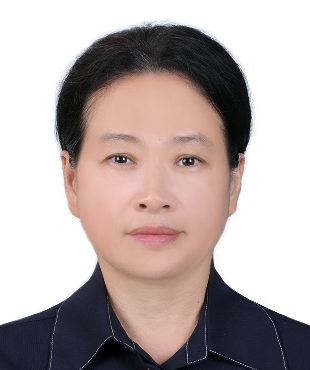 Chunhua Xu (许春华)合作论文数School of Environmental Science and Engineering, Shandong University1
 Qian Li (李倩)合作论文数School of Environmental Science and Engineering, Shandong University1Xiaohui Si (司晓慧)合作论文数1
 Baichuan Cao (曹百川)合作论文数School of Environment, South China Normal University1Chunxiao Li (李春晓)合作论文数1Qian-Qian Zhong合作论文数1




