Medical Knowledge Graphs (MKGs) are vital in propelling big data technologies in healthcare and facilitating the realization of medical intelligence. However, large-scale MKGs often exhibit characteristics of data sparsity and missing facts. Following the latest advances, knowledge embedding addresses these problems by performing knowledge graph completion. Most knowledge embedding algorithms rely solely on triplet structural information, overlooking the rich information hidden within entity property sets, leading to bottlenecks in performance enhancement when dealing with the intricate relations of MKGs. Inspired by the semantic sensitivity and explicit type constraints unique to the medical domain, we propose BioBERT-based graph embedding model. This model represents an evolvable framework that integrates graph embedding, language embedding, and type information, thereby optimizing the utility of MKGs. Our study utilizes not only WordNet as a benchmark dataset but also incorporates MedicalKG to compare and corroborate the specificity of medical knowledge. Experimental results on these datasets indicate that the proposed fusion framework achieves state-of-art (SOTA) performance compared to other baselines. We believe that this incremental improvement provides promising insights for future medical knowledge graph completion endeavors.
Medical Consortias (MCs) are networks that co-ordinate healthcare providers across different levels of care to deliver efficient, patient-centered services. This study addresses ongoing challenges in resource distribution within MCs, despite their expansion and positive impact on health care in China. Significant disparities, particularly between urban a nd rural areas, persist. To tackle these issues, the study introduces a dynamic distance-based community detection algorithm aimed at optimizing patient-hospital networks within MCs. This approach seeks to equitably distribute healthcare resources and improve service delivery in underserved rural regions, ensuring timely and appropriate care for all patients, regardless of location.
Multimorbidity, the presence of two or more chronic conditions within an individual, represents one of the most intricate challenges for global health systems. Traditional single-disease management often fails to address the multifaceted nature of multimorbidity. Network model emerges as a growing field for elucidating the interconnections among multimorbidity. However, the field lacks a standardized method to compute and visually represent of these networks. Given the challenges, this study proposes a three-stage methodology to decipher multimorbidity. First, we integrate the Failure Modes and Effects Analysis (FMEA) method with the multimorbidity encapsulation framework to develop the Multimorbidity Risk Network (MRN). Second, we use complex network techniques to identify high-risk patterns within MRN communities. Finally, we apply machine learning techniques to correlate these communities with the biological attributes of patients that have been marginalized in most studies. Our approach advocates a paradigm shift from the conventional focus on single diseases to a holistic, patient-centric approach, providing decision-makers with integrated information technology artifacts for deciphering the multimorbidity.
Although urban rail transit provides significant daily assistance to users, traffic risk remains. Turn-back faults are a common cause of traffic accidents. To address turn-back faults, machines are able to learn the complicated and detailed rules of the train's internal communication codes, and engineers must understand simple external features for quick judgment. Focusing on turn-back faults in urban rail, in this study we took advantage of related accumulated data to improve algorithmic and human diagnosis of this kind of fault. In detail, we first designed a novel framework combining rules and algorithms to help humans and machines understand the fault characteristics and collaborate in fault diagnosis, including determining the category to which the turn-back fault belongs, and identifying the simple and complicated judgment rules involved. Then, we established a dataset including tabular and text data for real application scenarios and carried out corresponding analysis of fault rule generation, diagnostic classification, and topic modeling. Finally, we present the fault characteristics under the proposed framework. Qualitative and quantitative experiments were performed to evaluate the proposed method, and the experimental results show that (1) the framework is helpful in understanding the faults of trains that occur in three types of turn-back: automatic turn-back (ATB), automatic end change (AEC), and point mode end change (PEC); (2) our proposed framework can assist in diagnosing turn-back faults.
Traditional question answering methods are basically divided into the retrieval of KG (Knowledge Graph) and the QA (Question Answering) corpus. The purpose of this paper is to combine both types of methods to devise a quick and comprehensive QA method. In terms of question identifying, a method of question classification label and answer template are defined. The data used to fabricate the KG comes from the books. During processing the text data, Bi-LSTM-CRF combined with the BIO text labeling method is used to carry out named entity recognition. The relationships and attributes of entities are identified using parameter sharing through the previously defined tags and dictionaries. The KG will be stored and retrieved in the graph database. Moreover, the QA corpus comes from three sources: discussion issues, tutor-student interaction, and crowdsourcing platform. It focuses on solving multi-attribute multi-relationship problems that are not included in the KG. QA corpus will output the highest-ranking answer by comparing the semantic similarity of the questions. The final answer output is given both from KG and QA corpus.
Urban rail transit industry has accumulated a mass of data about intercity railways. There are three types of turnback fault in urban rail transit industry data: automatic turnback, end changed automatically, and end changed intermittently. The three type of faults may cause serious accidents, which will damage people's life. However, the end changed automatically and the end changed intermittently are getting much less focus than the automatic turn-back. Recognizing those faults can improve the managers' working efficiency of urban rail transit and protect the safety of passengers. The Apriori algorithm has been frequently used for fault diagnosis under different circumstances, helping managers make effective decisions based on the turn-back fault association rules hidden in the past data. Spark, a fast and general-purpose computing engine, is designed for large-scale data processing. In the era of big data that the amount of data increases exponentially, the memory calculation method of Spark can improve the computing efficiency of the Apriori algorithm. In this paper, we resort to the Apriori algorithm based on Spark implementation to mine feature combinations that appear in message data frequently when faults occur in automatic turnback, end changed automatically, and end changed intermittently respectively.
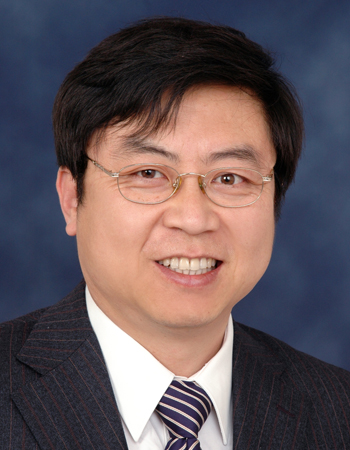 Runtong Zhang (张润彤)合作论文数School of Economics and Management, Beijing Jiaotong University5
 Siqi Ma合作论文数2Butian Zhao合作论文数1
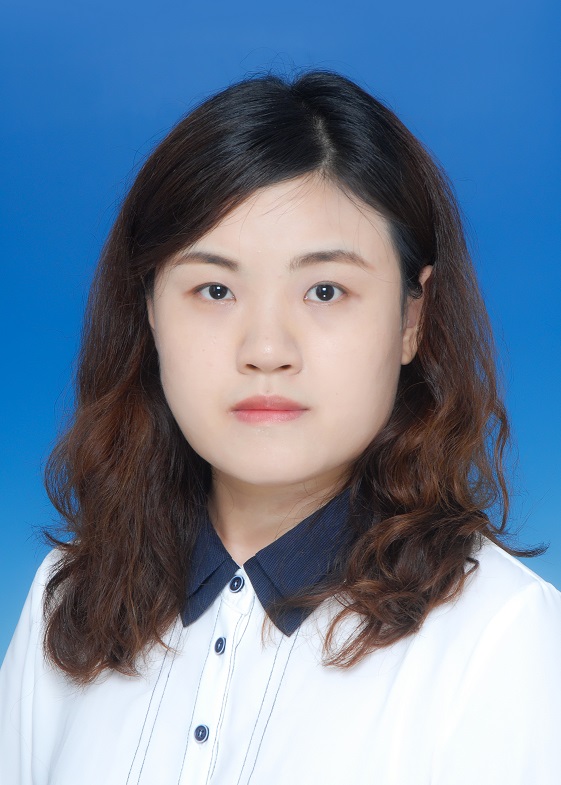 Xin Wang (王鑫)合作论文数School of Electronic and Information Engineering, Beijing Jiaotong University1
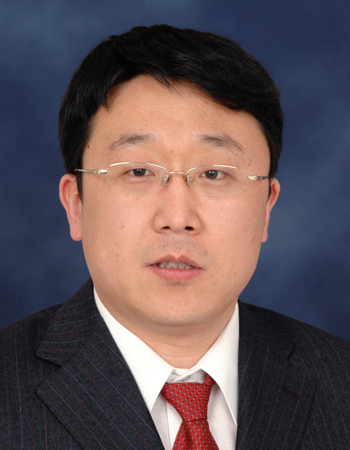 Hui Du (杜晖)合作论文数School of Economics and Management, Beijing Jiaotong University1
 Xiaomin Zhu (朱晓敏)合作论文数School of Mechanical,Electronic and Control Engineering, Beijing Jiaotong University1Hongmei Zhao (赵红梅)合作论文数School of Mechanical Engineering, Beijing Institute of Technology1




