In machine learning and data analysis, dimensionality reduction and high-dimensional data visualization can be accomplished by manifold learning using a t-Distributed Stochastic Neighbor Embedding (t-SNE) algorithm. We significantly improve this manifold learning scheme by introducing a preprocessing strategy for the t-SNE algorithm. In our preprocessing, we exploit Laplacian eigenmaps to reduce the high-dimensional data first, which can aggregate each data cluster and reduce the Kullback–Leibler divergence (KLD) remarkably. Moreover, the k-nearest-neighbor (KNN) algorithm is also involved in our preprocessing to enhance the visualization performance and reduce the computation and space complexity. We compare the performance of our strategy with that of the standard t-SNE on the MNIST dataset. The experiment results show that our strategy exhibits a stronger ability to separate different clusters as well as keep data of the same kind much closer to each other. Moreover, the KLD can be reduced by about 30% at the cost of increasing the complexity in terms of runtime by only 1–2%.
在太阳望远镜的相关跟踪稳像系统的实验室研制阶段,需要能反映真实时变特性的面源目标.动态目标模拟装置应兼具高刷新率和高成像质量的特点.目前,国内外使用的目标模拟器的帧频普遍较低,有的在高速显示时会出现亮度闪烁现象,不适于本系统的应用.使用数字微镜阵列(Digital Micromirror Device,DMD)作为相关跟踪稳像系统的显示器件进行实验,以图像序列的相关系数值为衡量动态目标演化特性的指标,研究了不同目标图像、灰度级、帧频等因素对模拟效果的影响.实验结果表明,对目标时变特性的模拟效果与观测站进行太阳观测的实际情况吻合,使用数字微镜器件提供动态模拟目标能够满足稳像系统的开发需求.
This chapter describes the application of lasers, specifically diode lasers, in the area of quantum key distribution (QKD). First, we motivate the distribution of cryptographic keys based on quantum physical properties of light, give a brief introduction to QKD assuming the reader has no or very little knowledge about cryptography, and briefly present the state-of-the-art of QKD. In the second half of the chapter we describe, as an example of a real-world QKD system, the system deployed between the University of Calgary and SAIT Polytechnic. We conclude the chapter with a brief discussion of quantum networks and future steps.
Single-pixel imaging has become a topic of intense interest amongst theoreticians and experimentalists in recent years, and is still attracting great attention due to its potential applications in biomedical imaging, remote sensing, defence monitoring, etc. Two main fields should be involved in single-pixel imaging scheme: single-pixel camera and computational quantum imaging, which are proposed in the year 2006 and 2008, respectively. Although these two single-pixel imaging schemes belong to different research fields, they are nearly identical in the realization setup and using the similar image recovering algorithm. The single-pixel camera scheme is mainly based on compressive sensing algorithms, which can recover the image with about 30 percent measurements of its total pixels (raster scan method), but need the prior knowledge of the image. While the computational quantum imaging method usually recovers the image by using the second-order correlation function, which is computational fast but need more measurements to retrieve a high quality image. Thus, both the methods mentioned above are time consuming. In this paper, a single-pixel imaging scheme based on Walsh-Hadamard transform is proposed and is demonstrated both theoretically and experimentally. The retrieving times of different algorithms are discussed and compared with each other. An image of 10241024 pixels can be acquired around 1 second with our method while it will take 8 seconds by using TVAL3 algorithm on the general computer in our numerical simulation experiment. It is also experimentally demonstrated that the nature targets from 500 meters to 5000 meters away are acquired, with pixels of 128128 and in the waveband of 350-900 nm, and the speed of the imaging frame rate is achieved at 0.5 frame per second. The differences and commons between single-pixel imaging and computational quantum imaging are also discussed in this article. It is found that the Walsh-Hadamard transform we proposed is stable and can be sufficiently saving the imaging time of the single-pixel imaging schemes while maintaining a high imaging quality. Moreover, the single-pixel remote imaging scheme can be used in other wave band such as infrared and micro wave imaging, or will be useful in the case when the array detector technique is difficult to meet the requirements such as the sensitivity or the volume. And our scheme proposed here can make the single-pixel imaging technique step further toward its real applications.
量子成像从1995年利用纠缠光源实现至今已有20多年的历史.目前,量子成像已经与压缩感知传感、激光雷达、结构光照明等各个领域形成了多学科交叉.本文回顾了量子成像技术的发展历程,列出了量子成像的关键技术及研究进展,展望了量子成像技术的发展趋势.
After tens of years development, photo-electronic imaging during day and night has entered the practical stage, and playes an important role in military, aerospace, astronomy, etc. In order to realize the photo-electronic imaging in low-light-level, a new-type of imaging system was proposed by analyzing the Image-Intensifier Tubes and near-thermal imaging. In this new-type of imaging system, spatial light modulator and single element detectors could be used to modulate and detect the information of the objective, after that correlation algorithm was used to restore the objective image. In experiment, a setup based on single element detectors was built to take an image of the television tower for a long distance about 17 km range. High sensitive imaging could be realized by this new-type of imaging system. The results demonstrate that this new imaging system is a promising approach to achieve photo-electronic imaging in low-light-level, such as moonless night.
In this paper, a single pixel star sensor has been introduced, which uses the intensity correlation between the modulation matrix and the voltage values of the optical signals. Though controlling single or multiple the reflective mirror of the spatial light modulator as a pixel, it is given in a rough scan or an accurate imaging of the stars. As a result, this star sensor can realize a fast and high precision spacecraft attitude determination.
Atomic guiding with a hollow optical fiber can realize atomic bent guiding and flexible manipula-tion, which has been developing as an important theme in atomic manipulation.The principle, methods and experi-ment researches of atomic guiding with a blued-detuned laser in hollow optical fibers are expatiated.Application of atomic guiding in atom optics, such as atomic funnel, atomic deposition and atomic lens are introduced.
In the well-studied cryptographic primitive 1-out-of-N oblivious transfer, a user retrieves a single element from a database of size N without the database learning which element was retrieved. While it has previously been shown that a secure implementation of 1-out-of-N oblivious transfer is impossible against arbitrarily powerful adversaries, recent research has revealed an interesting class of private query protocols based on quantum mechanics in a cheat sensitive model. Specifically, a practical protocol does not need to guarantee that the database provider cannot learn what element was retrieved if doing so carries the risk of detection. The latter is sufficient motivation to keep a database provider honest. However, none of the previously proposed protocols could cope with noisy channels. Here we present a fault-tolerant private query protocol, in which the novel error correction procedure is integral to the security of the protocol. Furthermore, we present a proof-of-concept demonstration of the protocol over a deployed fibre.
量子保密通信是近年来逐渐发展成熟的一种新型保密通信机制,其安全性建立在量子力学基本原理上,被证明具有信息论条件下的绝对安全性.偏振编码光纤量子保密通信系统使用光子的偏振态进行信息编码.当环境变化时,光纤传输特性的改变将导致光子偏振态变化.因此,光子偏振态的补偿控制是光纤量子保密通信系统的一项关键技术,能否快速、准确的对偏振态进行补偿将直接影响系统的通信性能.本文提出一种基于光纤偏振控制器和扫描控制算法的偏振补偿方案.该方案通过控制光纤偏振控制器的电压大小,将量子误码率最小化,实现偏振光的补偿控制,满足量子通信系统自动控制的要求.
Considering the multi-functional needs of the Automatic Train Operation System (ATO), this paper uses a method combined the prediction algorithm and the multi-variable fuzzy control algorithm to design the ATO automatic speed control module. It divides the operation process into three conditions, includes starting, cruising and parking, and assigns different weights to the three condition depend on the performance of comfort, energy saving and stopping accuracy, and uses fuzzy control algorithm on the two variables of displacement and velocity, at last gets the comprehensive control value. Then the control system sends the control values which would be used in the next cycle to calculate the actual curve module, so that the system can achieve automatic operation. In this paper, the writer simulated the system, and verified the speed control function of the ATO speed control module, through the analysis of test results that the system has reached the desired control effect.
With the development of Chinese high-speed railway system, the safety of CTCS-3 system is drawing more and more attention. Hazop is a useful method to conduct hazard identification for the CTCS-3 system. In this paper, a complete process of identify the potential hazard of CTCS-3 onboard system on the basis of UML sequence diagram is shown, which can find out the hazards through analysis of every information and behavior interaction between different components of the system by the experts on the hazop conference. So, the sequence diagram is kind of the most directly model to provide basis for the hazard identification. Possible severity estimation and actions to avoid the hazards should also be proposed on the conference.
We characterize a near-infrared single-photon detector based on an InGaAs/InP avalanche photodiode and the self-differencing post-processing technique. It operates at gate rates of 200 MHz and higher. The compact, integrated design employs printed circuit boards and features a semiconductor-based self-differencing subtraction implemented with a fully differential amplifier. At a single-photon detection efficiency of 6.4%, the detector has a dark count probability of 9x10^-7 per gate, an afterpulse probability of 6.3% per detection event, a detection time jitter of 150 ps, and a dead time of 5 ns (equivalent to one gate period). Furthermore, it can be operated as a standard photodiode, which benefits applications that require detecting single photons as well as strong light signals.
We present an experimental set-up for quantum key distribution in a special optical fibre at the wavelength of 850 nm. The system employs the BB84 protocol to establish a secret key between Alice and Bob over 14.8 km. The key is encoded in the phase of very weak laser of average photon number 0.11 per pulse. The measured error rate is lower than 10%.
 Anning Zhang (张安宁)合作论文数Department of Optical Physics, School of Physics, Beijing Institute of Technology5
 LianJie Zhao (赵连洁)合作论文数4Huo Juan合作论文数3Yang Ran合作论文数3
 Wolfgang Tittel合作论文数Quantum Cryptography and Communication Laboratory, Department of Physics and Astronomy, Faculty of Science, University of Calgary;Institute for Quantum Science and Technology, University of Calgary3philip chan合作论文数2Lucio-Martinez Itzel合作论文数2i luciomartinez合作论文数1Zhenghu Zhong合作论文数1
 Sha Shi合作论文数1Kai Li (李凯)合作论文数1Zeng-bin WANG (王增斌)合作论文数1Xueqi Chen (陈雪旗)合作论文数1Tian-yu ZHANG (张天宇)合作论文数1XiaoJun Yan (严小军)合作论文数1
 Youzhen Gui (桂有珍)合作论文数中国科学院大学上海光学精密机械研究所1AiMin Jiang (姜爱民)合作论文数中国科学院国家天文台1Chris Healey合作论文数1
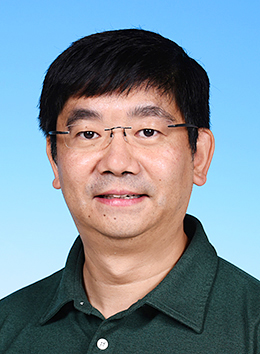 Yuan Yao (姚遠)合作论文数Department of Mathematics, School of Science, Hong Kong University of Science and Technology1
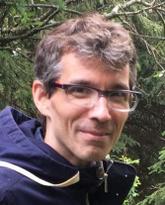 Christoph Simon合作论文数Institute for Quantum Science and Technology, University of Calgary1
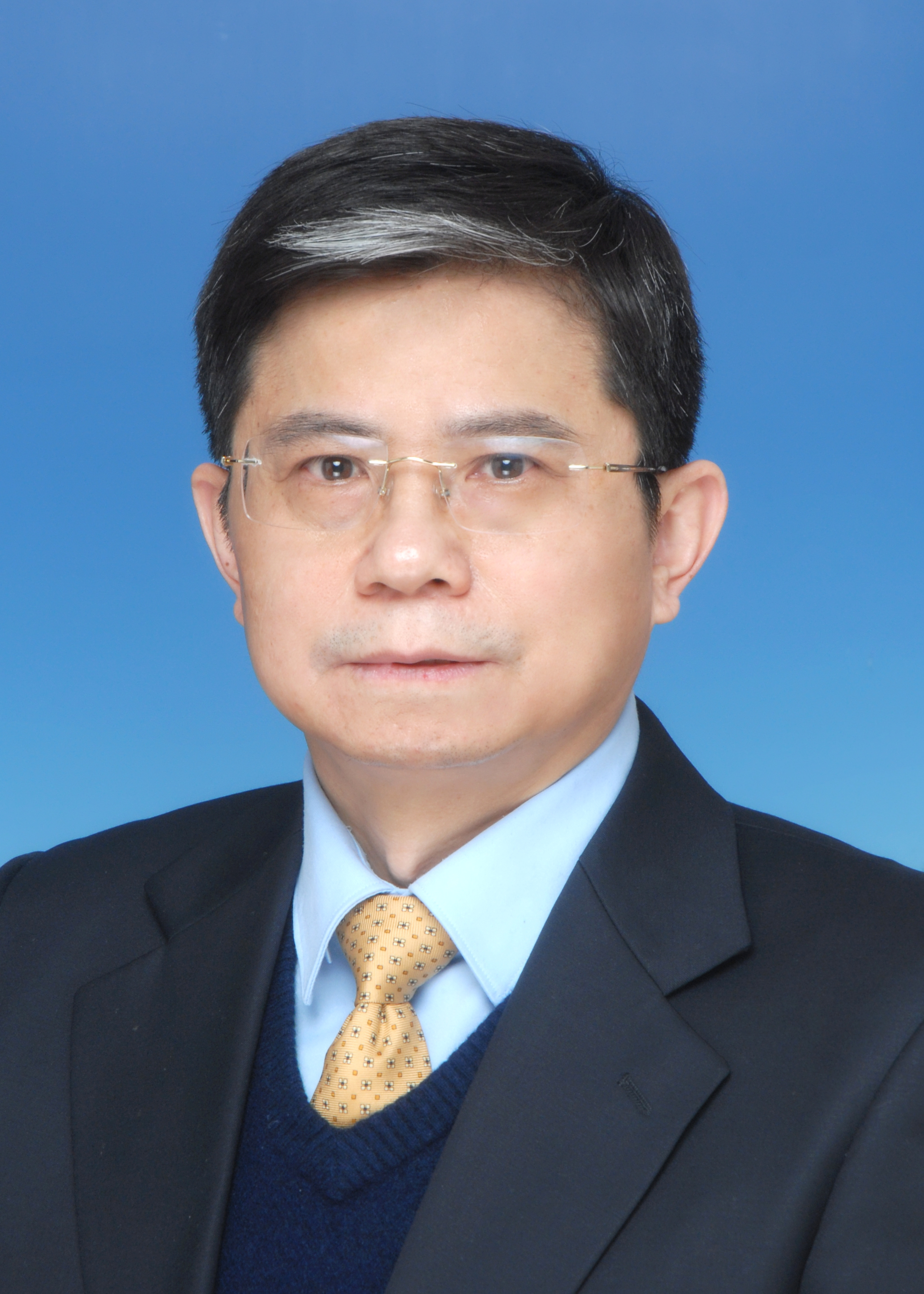 Kaicheng Li (李开成)合作论文数School of Electronic and Information Engineering, Beijing Jiaotong University1Datian Zhou (周达天)合作论文数School of Electronic and Information Engineering, Beijing Jiaotong University1
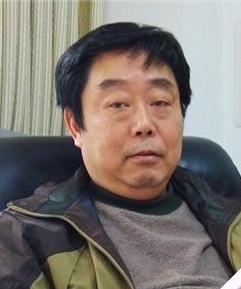 Zheng-Fu Han (韩正甫)合作论文数Department of Optics and Optical Engineering, School of Physical Sciences, University of Science and Technology of China;Anhui Asky Quantum Technology Co.,Ltd1
 Tao Tang (唐涛)合作论文数School of Electronic and Information Engineering, Beijing Jiaotong University;State Key Laboratory of Rail Traffic Control and Safety, Beijing Jiaotong University1
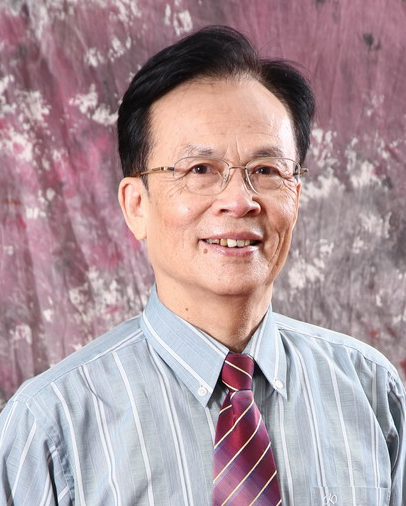 Guangcan Guo (郭光灿)合作论文数School of Physical Sciences, University of Science and Technology of China;Key Lab of Quantum Information, Chinese Academy of Sciences, University of Science and Technology of China1Guowan Zhang合作论文数1




