Robust design ensures consistent product performance in the presence of uncertainty arising from randomness in manufacturing, materials, and user environments. This type of uncertainty, known as aleatory uncertainty, is typically addressed using models derived from domain physics principles. However, many physics models are computationally expensive, leading to the growing use of statistical and machine learning techniques to construct surrogate models. While surrogate models significantly reduce computational cost, they introduce epistemic (model) uncertainty, which is used to estimate prediction errors. This study presents a robust design methodology for managing mixed uncertainty—aleatory and epistemic—without requiring retraining of the surrogate model. The expected quality loss function under mixed uncertainty serves as the objective function, while the constraints are expressed as reliability constraints based on the probability distribution or the first two moments of the corresponding performance functions. By incorporating the first-order second-moment method, this approach quantifies and optimizes robustness in the presence of mixed uncertainty. The methodology is demonstrated with three design problems, and results show that accounting for model (epistemic) uncertainty yields more conservative designs or robust designs compared to traditional robust design methods.
ML models have errors when used for predictions. The errors are unknown but can be quantified by model uncertainty. When multiple ML models are trained using the same training points, their model uncertainties may be statistically dependent. In reality, model inputs are also random with input uncertainty. The effects of these types of uncertainty must be considered in decision-making and design. This study develops a theoretical framework that generates the joint distribution of multiple ML predictions given the joint distribution of model uncertainties and the joint distribution of model inputs. The strategy is to decouple the coupling between the two types of uncertainty and transform them as independent random variables. The framework lays a foundation for numerical algorithm development for various specific applications.
Image-based computational hemodynamics (ICH) employs medical imaging data to model and simulate patient-specific blood flow. Uncertainties arising from image noise, segmentation inaccuracies, and boundary condition modeling can significantly affect simulation outcomes. This study uses a case study to demonstrate the impact of image segmentation uncertainty and outlet boundary condition variability in ICH of blood flow within a human iliac arterial system reconstructed from CT angiography. To address challenges from high dimensionality and limited image data, the Uncertainty Separation Method is applied to decompose the simulation model into image segmentation and numerical submodels, enabling uncertainty estimations at the average 3D shape and mean numerical inputs. An alignment method is introduced to compute the average 3D anatomy from multiple segmented samples. Results show that this alignment method is essential for statistical analysis of image-based vascular shapes, and that image uncertainty, especially with limited samples, strongly influences the simulation outcomes.
Machine learning (ML) surrogate models are increasingly used in engineering analysis and design to replace computationally expensive simulation models, significantly reducing computational cost and accelerating decision-making processes. However, ML predictions contain inherent errors, often estimated as model uncertainty, which is coupled with variability in model inputs. Accurately quantifying and propagating these combined uncertainties is essential for generating reliable engineering predictions. This paper presents a robust framework based on Polynomial Chaos Expansion (PCE) to handle joint input and model uncertainty propagation. While the approach applies broadly to general ML surrogates, we focus on Gaussian Process regression models, which provide explicit predictive distributions for model uncertainty. By transforming all random inputs into a unified standard space, a PCE surrogate model is constructed, allowing efficient and accurate calculation of the mean and standard deviation of the output. The proposed methodology also offers a mechanism for global sensitivity analysis, enabling the accurate quantification of the individual contributions of input variables and ML model uncertainty to the overall output variability. This approach provides a computationally efficient and interpretable framework for comprehensive uncertainty quantification, supporting trustworthy ML predictions in downstream engineering applications.
Machine learning surrogates are increasingly employed to replace expensive computational models for physics-based reliability analysis. However, their use introduces epistemic uncertainty from model approximation errors, which couples with aleatory uncertainty in model inputs, potentially compromising the accuracy of reliability predictions. This study proposes a Gauss-Hermite quadrature approach to decouple these nested uncertainties and enable more accurate reliability analysis. The method evaluates conditional failure probabilities under aleatory uncertainty using First and Second Order Reliability Methods and then integrates these probabilities across realizations of epistemic uncertainty. Three examples demonstrate that the proposed approach maintains computational efficiency while yielding more trustworthy predictions than traditional methods that ignore model uncertainty.
Surrogate models have become increasingly essential for replacing simulation models in additive manufacturing (AM) process analysis and design, particularly for assessing the impact of microstructural variations and process imperfections (aleatory uncertainty). However, these surrogate models can introduce predictive errors, introducing epistemic uncertainty. The challenge arises when dealing with image input data, which is inherently high-dimensional, making it challenging to apply existing uncertainty quantification (UQ) techniques effectively. To address this challenge, this study develops a new UQ methodology based on an existing concept of combining convolutional neural network (CNN) and Gaussian process (GP) regression (GPR). This CNN-GP method converts both numerical and image inputs into a unified, larger-sized image dataset, enabling direct dimension reduction with CNN. Subsequently, GPR constructs the surrogate model, not only providing predictions but also quantifying the associated model uncertainty. This approach ensures that the surrogate model considers both input-related aleatory uncertainty and model-related epistemic uncertainty when it is used for prediction, enhancing confidence in image-based AM simulations and informed decision-making. Three examples validate the high accuracy and effectiveness of the proposed method.
Image-based Computational Fluid Dynamics ( ICFD) is widely applied for simulating and predicting patient-specific hemodynamics in human blood vessels. This study explores the impact of image input uncertainty from segmentation on ICFD simulation outputs for the iliac stenosis application for individual patients, using patients' Computed Tomography Angiography imaging data. This investigation includes key components: first, we assess uncertainty in the patient's three-dimensional (3D) vessel geometry extracted by three image segmentation platforms and multiple different operators, highlighting segmentation-induced variability. Secondly, ICFD simulations are performed to predict flow pressure fields based on random 3D shapes generated from segmentation, illustrating the impact of image uncertainty. To enable statistical image analysis, we develop an alignment method that computes the average 3D shape from a set of sample shapes from segmentation. By transforming complex 3D vessel shapes into coordinate vectors with automatic detection of correspondence points, this method enables the alignment and averaging of multiple 3D shapes. The resulting average 3D shape serves as input for ICFD simulation, generating a flow pressure field that can approximate the average prediction. The findings of this study demonstrate the effects of image uncertainty and the need for new methodologies to quantify these effects. The alignment method proves valuable for statistically analyzing random image data and 3D geometries, providing a useful tool for image statistical analysis.
Machine learning is increasingly employed in engineering, with one of its primary applications being the construction of surrogate models to replace computationally expensive physical models for analysis and design, especially control co-design which integrates physical and control system design. In cases where generating labels for training through physical models is computationally intensive, label-free machine learning offers a viable alternative. However, surrogate models built from label-free machine learning typically have prediction errors, which can be characterized and quantified through epistemic uncertainty, representing model-form uncertainty. Moreover, when these surrogate models are used in optimization design for real-world applications, inherent random variables introduce aleatory uncertainty. This study introduces a robust design optimization method that addresses the intertwined epistemic and aleatory uncertainty. By optimizing both the average product performance and reducing uncertainty stemming from the coupled uncertainty, the method achieves improved robustness. A four-bar linkage mechanism design serves as a demonstration of this approach. The surrogate model for the design is constructed using label-free neural network, accommodating a system of physical equations. The error of the surrogate model is assessed through Gaussian Process regression, using existing training points and derivatives of the physical equations at these points. The design of the four-bar linkage aims to minimize both its average motion error and the variability of the error attributed to coupled uncertainty.
Machine learning is gaining prominence in mechanical design, offering cost-effective surrogate models to replace computationally expensive models. Nevertheless, concerns persist regarding the accuracy of these models, especially when applied to safety-critical products. To address this challenge, this study investigates methods to account for model prediction errors by incorporating epistemic uncertainty within surrogate models while managing aleatory uncertainty in input variables. The paper clarifies key aspects of modeling coupled epistemic and aleatory uncertainty when using surrogate models derived from noise-free training data. Specifically, the study concentrates on quantifying the impacts of coupled uncertainty in mechanical design through the development of numerical methods based on the concept of the most probable point. This method is particularly relevant for mechanical component design, where failure prevention holds paramount importance, and the probability of failure is low. It is applicable to design problems characterized by probability distributions governing aleatory and epistemic uncertainties in model inputs and predictions. The proposed method is demonstrated using shaft and beam designs as two illustrative examples. The results demonstrate the method's effectiveness in quantifying and mitigating the influence of coupled uncertainty in the design process.
Deterministic optimization may lead to unreliable design results if significant uncertainty exists. Including reliability constraints in reliability-based design (RBD) can solve such a problem. It is difficult to use current RBD methods to deal with time- and space-dependent reliability when responses vary randomly with respect to time and space. This study employs an envelope method for time- and space-dependent reliability for the optimal design. To achieve high accuracy, we propose an inverse envelope method that converts a time- and space-dependent limit-state function into a time- and space-independent counterpart and then use the second-order saddlepoint approximation to compute the probability of failure. The strategy is to find an equivalent most probable point for a given permitted probability of failure for each reliability constraint. To achieve high efficiency, we use a sequential optimization process to decouple the double-loop structure of RBD. The overall optimization is performed with a sequence of cycles consisting of deterministic optimization and reliability analysis. The constraints of the deterministic optimization are formulated using the equivalent most probable points. The accuracy and efficiency are demonstrated with four examples, including one mathematical problem and three engineering problems.
Many engineering systems involve multiple interacting disciplines or subsystems. For a design or analysis task, unknown linking variables, which are those variables that are outputs of some disciplines and inputs of other disciplines, are obtained by solving the system of implicit interdisciplinary compatibility equations for a given set of system inputs. This study creates surrogate models for linking variables using label-free training with neural networks. The compatibility equations are embedded in the cost function of the model training. They are calculated and are not solved for given input training variables, thereby avoiding label acquisition. To quantify the prediction errors of the surrogate models, we build their error models with Gaussian Process regression, which uses the existing training points and the derivatives of the compatibility equations at the training points. The error models are then used to compensate for the errors of neural network surrogate models of the linking variables, producing more accurate predictions of linking variables with quantified model uncertainty for predicting system responses. The linking variables with quantified model uncertainty are then used to predict the system responses and associated prediction errors. We demonstrate the effectiveness of the proposed method by the application to a propane combustion problem.
Computational or simulation models derived from domain physics principles are commonly used in engineering design. But the models are often expensive. Machine learning is increasingly used to generate surrogate models to replace the computational models. Almost all machine learning models have errors, and the errors are unknown at a new design point. The model error can be estimated by quantifying the model uncertainty, and the estimated model uncertainty is now available in many machine learning techniques. This study uses a shaft design to investigate the effects of model uncertainty of surrogate models on the design result when the design is also subject to data (aleatory) uncertainty, which comes from the randomness in the model input. Gaussian process regression is used for the design. This study also discusses the unique features of model training of the surrogate for a computational model, such as noise-free training points and uncertainty free in prediction at a training point. The study indicates that different treatments of model and data uncertainties can result in quite different designs and that new ways for predicting design performance and optimizing design need to be developed.
Machine learning is becoming increasingly prevalent in mechanical design as it allows for surrogate models to replace expensive computational models. However, the accuracy of these models is of particular concern when safety-critical products are involved. In order to address this issue, we examine how to estimate model error by taking into account epistemic uncertainty in surrogate models when the design is also subject to randomness (aleatory uncertainty) in data. The paper clarifies important questions about modeling coupled epistemic and aleatory uncertainty when using surrogate models built from noise-free training points without aleatory uncertainty. Specifically, the study focuses on quantifying the effects of uncertainty in mechanical design by developing a most-probable-point based method. This method can be especially applicable for mechanical component design, where failure prevention is a critical concern, and the probability of failure is low. The proposed method is demonstrated using a shaft design as an example. The results show that the method can effectively estimate the model error and quantify the uncertainty in the design process. This approach can help designers to make more informed decisions by providing them with a better understanding of the limitations of surrogate models. By doing so, designers can ensure that their designs are safe and meet the required specifications.
In order to effectively reduce the construction accidents caused by water gushing in karst tunnel, the bad geological position, nature, occurrence and size in front of the excavation face of karst tunnel can be predicted by means of drilling method, geophysical exploration method and other technical means. Through innovation and practice in concrete projects, this paper puts forward a set of advanced and systematic construction technology in karst tunnels, which has achieved good economic and social benefits. This construction method combines geophysical exploration and drilling, and organically combines the detection characteristics of different equipment, so that the advanced prediction work in complex situations is more systematic, refined and accurate.
Deterministic optimization may lead to unreliable design results if significant uncertainty exists. Including reliability constraints in reliability-based design optimization (RBDO) can solve such a problem. It is difficult to use current RBDO methods to deal with time- and space-independent reliability when responses vary randomly with respect to time and space. This study employs an envelope method for time- and space-dependent reliability for the optimal design. To achieve high accuracy, we propose an inverse envelope method that converts a time- and space-dependent limit-state function into a time- and space-independent counterpart, and then the second-order saddlepoint approximation is used to estimate the probability of failure. The strategy is to find an equivalent most probable point for a given permitted probability of failure for each of the reliability constraint. To achieve high efficiency, the new method uses a sequential optimization process to decouples the double-loop structure of RBDO. The overall optimization is performed with a sequence of cycles consisting of deterministic optimization and reliability analysis. The constraints of the deterministic optimization are formulated using the equivalent most probable points. The accuracy and efficiency are demonstrated with four examples, including one mathematical problem and three engineering problems.
View Video Presentation: https://doi.org/10.2514/6.2022-1097.vid Uncertainty quantification (UQ) is essential in scientific computation since it can provide the estimate of the uncertainty in the model prediction. Intensive computation is required for UQ as it calls the deterministic simulation repeatedly. This study discusses a physics-based label-free deep learning UQ method that does not need predictions at training points or labels. It satisfies the physical equations from which labels could be generated without solving the equations during the training process. Then inexpensive surrogate models are built with respect to model inputs. The surrogate models are used for UQ with a much lower computational cost. Two examples demonstrate that the label-free method can efficiently produce probability distributions of model outputs for given distributions of random input variables.
Inlet and outlet boundary conditions (BCs) play an important role in newly emerged image-based computational hemodynamics for blood flows in human arteries anatomically extracted from medical images. We developed physiological inlet and outlet BCs based on patients’ medical data and integrated them into the volumetric lattice Boltzmann method. The inlet BC is a pulsatile paraboloidal velocity profile, which fits the real arterial shape, constructed from the Doppler velocity waveform. The BC of each outlet is a pulsatile pressure calculated from the three-element Windkessel model, in which three physiological parameters are tuned by the corresponding Doppler velocity waveform. Both velocity and pressure BCs are introduced into the lattice Boltzmann equations through Guo’s non-equilibrium extrapolation scheme. Meanwhile, we performed uncertainty quantification for the impact of uncertainties on the computation results. An application study was conducted for six human aortorenal arterial systems. The computed pressure waveforms have good agreement with the medical measurement data. A systematic uncertainty quantification analysis demonstrates the reliability of the computed pressure with associated uncertainties in the Windkessel model. With the developed physiological BCs, the image-based computation hemodynamics is expected to provide a computation potential for the noninvasive evaluation of hemodynamic abnormalities in diseased human vessels.
It is computationally expensive to predict reliability using physical models at the design stage if many random input variables exist. This work introduces a dimension reduction technique based on generalized sliced inverse regression (GSIR) to mitigate the curse of dimensionality. The proposed high dimensional reliability method enables active learning to integrate GSIR, Gaussian Process (GP) modeling, and Importance Sampling (IS), resulting in an accurate reliability prediction at a reduced computational cost. The new method consists of three core steps, 1) identification of the importance sampling region, 2) dimension reduction by GSIR to produce a sufficient predictor, and 3) construction of a GP model for the true response with respect to the sufficient predictor in the reduced-dimension space. High accuracy and efficiency are achieved with active learning that is iteratively executed with the above three steps by adding new training points one by one in the region with a high chance of failure.
Renal arterial stenosis (RAS) often causes renovascular hypertension, which may result in kidney failure and life-threatening consequences. Direct assessment of the hemodynamic severity of RAS has yet to be addressed. In this work, we present a computational concept to derive a new, noninvasive, and patient-specific index to assess the hemodynamic severity of RAS and predict the potential benefit to the patient from a stenting therapy. The hemodynamic index is derived from a functional relation between the translesional pressure indicator (TPI) and lumen volume reduction (S) through a parametric deterioration of the RAS. Our in-house computational platform, InVascular, for image-based computational hemodynamics is used to compute the TPI at given S. InVascular integrates unified computational modeling for both image processing and computational hemodynamics with graphic processing unit parallel computing technology. The TPI-S curve reveals a pair of thresholds of S indicating mild or severe RAS. The TPI at S = 0 represents the pressure improvement following a successful stenting therapy. Six patient cases with a total of 6 aortic and 12 renal arteries are studied. The computed blood pressure waveforms have good agreements with the in vivo measured ones and the systolic pressure is statistical equivalence to the in-vivo measurements with p < .001. Uncertainty quantification provides the reliability of the computed pressure through the corresponding 95% confidence interval. The severity assessments of RAS in four cases are consistent with the medical practice. The preliminary results inspire a more sophisticated investigation for real medical insights of the new index. This computational concept can be applied to other arterial stenoses such as iliac stenosis. Such a noninvasive and patient-specific hemodynamic index has the potential to aid in the clinical decision-making of interventional treatment with reduced medical cost and patient risks.
Reliability can be predicted by a limit-state function, which may vary with time and space. This work extends the envelope method for a time-dependent limit-state function to a time- and space-dependent limit-state function. The proposed method uses the envelope function of time- and space-dependent limit-state function. It at first searches for the most probable point (MPP) of the envelope function using the sequential efficient global optimization in the domain of the space and time under consideration. Then the envelope function is approximated by a quadratic function at the MPP for which analytic gradient and Hessian matrix of the envelope function are derived. Subsequently, the second-order saddlepoint approximation method is employed to estimate the probability of failure. Three examples demonstrate the effectiveness of the proposed method. The method can efficiently produce an accurate reliability prediction when the MPP is within the domain of the space and time under consideration.
 Zhen hu合作论文数18
 Wei Chen (陈卫)合作论文数美国西北大学机械工程系13
 Hao Wu合作论文数10
 Jianhua Yin合作论文数School of Mechanical Engineering, Purdue University9
 Xinpeng Wei合作论文数Missouri Univ Sci & Technol, Dept Mech & Aerosp Engn, 400 West 13th St, Rolla, MO 65409 USA8
 Agus Sudjianto合作论文数University of Michigan;Hong Kong Baptist University;Pennsylvania State University;Hong Kong Baptist University, Pennsylvania State University8
 Zhangli Hu合作论文数7
 Zhengwei Hu合作论文数7
 Zhen Hu (胡桢)合作论文数School of Chemistry and Chemical Engineering, Harbin Institute of Technology7Zhifu Zhu合作论文数Parallon Business Performance Grp6
 Daoru Han合作论文数Missouri University of Science and Technology6
 Junfu Zhang (张均富)合作论文数School of Mechanical Engineering and Automation,Xihua University6ShaoJun Xie (谢少军)合作论文数5
 Hongzhong Huang (黄洪钟)合作论文数School of Mechanical and Electrical Engineering, University of Electronic and Technology of China;Institute of Reliability Engineering, University of Electronic Science and Technology of China5
 Yao Cheng合作论文数5
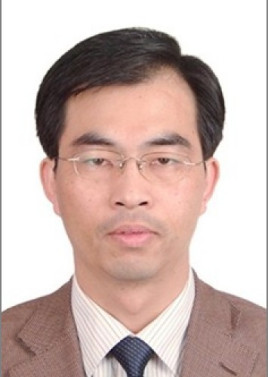 Baisong Pan (潘柏松)合作论文数Zhejiang University of Technology5Beiqing Huang合作论文数5Jianxun Zhao合作论文数Missouri University of Science and Technology4
 Xiaoming (Shawn) He合作论文数Fischell Department of Bioengineering, University of Maryland;HOHCells, LLC4
 Monsurul Khan合作论文数3
 Xiongqing Yu (余雄庆)合作论文数College of Aerospace Engineering, Nanjing University of Aeronautics and Astronautics3
 Yue Wenhui (岳文辉)合作论文数College of Electromechanical Engineering,Hunan University of Science and Technology3
 Jinge Wang (王进戈)合作论文数西华大学机械工程与自动化学院3Alan P. Sawchuk合作论文数3
 Zhonglai Wang (汪忠来)合作论文数School of Mechanical and Electrical Engineering, University of Electronic Science and Technology of China3
 Deshun Liu (刘德顺)合作论文数School of Mechanical Engineering, Hunan University of Science and Technology3Jia Guo (郭嘉)合作论文数3
 Nitin Kolekar合作论文数Dept Mech Engn & Mech, Lehigh Univ2Huiru Li合作论文数2Jianyun Long合作论文数2
 Rou Chen合作论文数Dept Mech & Energy Engn, Indiana Univ Purdue Univ Indianapolis2
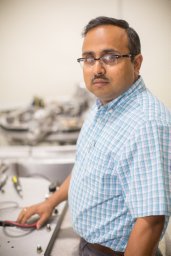 Arindam Banerjee合作论文数Dept Mech Engn & Mech, Lehigh Univ2Xin Fang合作论文数2
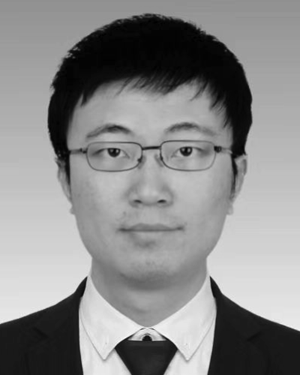 Dan Shen合作论文数Sch Engn & Technol, Indiana Univ Purdue Univ Indianapolis IUPUI2
 Yu Wang (王瑜)合作论文数Arts College, Nanjing University of Aeronautics and Astronautics2
 Lingxi Li合作论文数Elmore Family School of Electrical and Computer Engineering, College of Engineering, Purdue University2
 Sankaran Mahadevan合作论文数Department of Civil and Environmental Engineering, School of Engineering, Vanderbilt University;Department of Mechanical Engineering, School of Engineering, Vanderbilt University2Kang Luo (罗康)合作论文数2joseph l stout合作论文数1
 Arun Subramaniyan合作论文数1Xu Chenke合作论文数1yi zhang合作论文数1Dave Rollins合作论文数1
 Linlin Lu (鹿琳琳)合作论文数1Lingbin Meng合作论文数1rui wang合作论文数1




