The development of 3D Vision-Language Models (VLMs), crucial for applications in robotics, autonomous driving, and augmented reality, is severely constrained by the scarcity of paired 3D-text data. Existing methods rely solely on next-token prediction loss, using only language tokens for supervision. This results in inefficient utilization of limited 3D data and leads to a significant degradation and loss of valuable geometric information in intermediate representations.To address these limitations, we propose {\mname}, a novel feature-level alignment regularization method. {\mname} explicitly supervises intermediate point cloud representations to preserve fine-grained 3D geometric-semantic information throughout the language modeling process. Specifically, we constrain the intermediate point cloud tokens within the LLM to align with visual input tokens via a consistency loss. By training only a lightweight alignment projector and LoRA adapters, {\mname} achieves explicit feature-level supervision with minimal computational overhead, effectively preventing geometric degradation.Extensive experiments on ModelNet40 and Objaverse datasets demonstrate that our method achieves \textbf{2.08} pp improvement on average for classification tasks, with a substantial \textbf{7.50} pp gain on the challenging open-vocabulary Objaverse classification task and \textbf{4.88} pp improvement on 3D object captioning evaluated by Qwen2-72B-Instruct, validating the effectiveness of {\mname}.
Transformer-based models have advanced feedforward novel view synthesis (NVS). Current architectures such as GS-LRM and LVSM mix semantic information (e.g., RGB) and spatial information (e.g., Plücker rays) into a shared feature space. Since Plücker rays naturally carry lattice-like spatial structure, these designs can make the spatial bias interfere with appearance representation and degrade rendering fidelity. To this end, we propose to decouple the representation of feedforward NVS transformers into separate semantic and spatial tokens. The decoupled design keeps semantic and spatial information explicit in their branches while preserving cross-branch interaction through shared attention routing. Built on this design, we introduce optional categorized supervision and bidirectional modulation: the former provides branch-specific training signals, while the latter improves interaction between the two branches. Notably, the base decoupled design introduces virtually zero additional inference latency due to its architectural design. The proposed designs achieve consistent improvements, demonstrating effectiveness across decoder-only and encoder-decoder feedforward NVS models.
Reactive capability is a key property of data-driven behavior world model simulators for autonomous driving simulation systems. With this capability, simulated world agents can respond feasibly to autonomous vehicle (AV) behaviors that differ from the log. However, existing behavior simulation benchmarks do not directly measure reactive capability. They often let the simulator jointly control the AV and surrounding agents and evaluate realism through log similarity or open-loop prediction metrics. In this work, we introduce ReactSim-Bench for evaluating the reactive capability of behavior world model simulation in autonomous driving. We decouple the control of agents and the AV, using AV behaviors that differ from the log and require agents to respond as independent AV inputs. To obtain these AV behaviors, we construct a pipeline that uses an AV planner model to generate candidate behaviors and filters the data using rules and manual verification. Collision metrics, map-based metrics, and kinematic feasibility metrics are used to evaluate the safety and rule compliance of reactive responses. We construct 2,636 test scenarios with three categories and conduct a systematic evaluation of state-of-the-art models across multiple architectures, including Transformer-based, diffusion-based, and next-token-prediction-based models. We further analyze how replan frequency affects performance and provide insights for future studies.
Behavior generation in autonomous driving aims to simulate dynamic driving scenarios from recorded driving logs. A popular approach is to apply next-token-prediction with discrete trajectory tokenization. In this work, we explore what makes a good trajectory tokenizer from the perspective of logged data usage. We first analyze the four properties (coverage, utilization, symmetry and robustness) of vocabularies of data-driven and rule-based trajectory tokenizers and their impact on performance and generalization. Data-driven tokenizers often build vocabularies with better utilization but suffer from insufficient coverage and sensitivity to noise, while rule-based methods have better coverage but contain too many useless tokens. With these insights, we propose TrajTok, a trajectory tokenizer that combines the two methods with rule-based vocabulary candidate setup and data-driven filtering and selection processes. The tokenizer has balanced coverage and utilization as well as good symmetry and robustness. Furthermore, we propose a spatial-aware label smoothing method for the cross-entropy loss to better model the similarities between the trajectory tokens. Our method wins first place in the 2025 Waymo Open Sim Agents Challenge.
Robotic manipulation with dexterous hands is a cornerstone of Embodied AI, yet its progress is stifled by the high cost of collecting embodiment-aware teleoperation data. While abundant egocentric videos of human hands offer a scalable alternative, the profound discrepancies in appearance, articulation, and camera viewpoints between human and robotic data raise significant challenges for co-training. Though existing general image-editing models demonstrate strong capabilities, they lack necessary embodiment-specific priors to fully bridge this gap. In this work, we present HandEdit, a unified large-scale embodiment-aware image-editing dataset and benchmark specifically designed to transform human hands and arms into various dexterous robotic embodiments within egocentric frames. HandEdit comprises over 200M editing instances derived from five diverse source datasets, covering 26 distinct URDFs, including 13 hand-only and 13 hand-arm configurations. Alongside the dataset, we establish a unified benchmark protocol with two tracks: Hand-only and Hand-Arm, supporting URDF-conditioned evaluation. We conduct extensive evaluations of 11 representative image-editing baselines using a multi-dimensional metric suite, including generic similarity metrics, VLM-based judgment, and embodiment-aware metrics. HandEdit serves as a critical resource at the intersection of image editing and robotics: it advances embodiment-aware editing models while enabling scalable dexterous robotic learning from abundant human video data, paving the way for more generalizable Embodied AI.
End-to-end autonomous driving (E2E-AD) has achieved remarkable progress. However, one practical and useful function has been long overlooked: users may wish to customize the desired speed of the policy or specify whether to allow the autonomous vehicle to overtake. To bridge this gap, we present Bench2Drive-Speed, a benchmark with metrics, dataset, and baselines for desired-speed conditioned autonomous driving. We introduce explicit inputs of users' desired target-speed and overtake/follow instructions to driving policy models. We design quantitative metrics, including Speed-Adherence Score and Overtake Score, to measure how faithfully policies follow user specifications, while remaining compatible with standard autonomous driving metrics. To enable training of speed-conditioned policies, one approach is to collect expert demonstrations that strictly follow speed requirements, an expensive and unscalable process in the real world. An alternative is to adapt existing regular driving data by treating the speed observed in future frames as the target speed for training. To investigate this, we construct CustomizedSpeedDataset, composed of 2,100 clips annotated with experts demonstrations, enabling systematic investigation of supervision strategies. Our experiments show that, under proper re-annotation, models trained on regular driving data perform comparably to on expert demonstrations, suggesting that speed supervision can be introduced without additional complex real-world data collection. Furthermore, we find that while target-speed following can be achieved without degrading regular driving performance, executing overtaking commands remains challenging due to the inherent difficulty of interactive behaviors. All code, datasets and baselines are available at https://github.com/Thinklab-SJTU/Bench2Drive-Speed
Robust embodied robots should be able to recover from failures and retry tasks in order to operate reliably in unstructured and noisy real-world environments. Achieving this capability requires training policies on data that captures recovery behaviors. However, collecting such data through robot teleoperation is difficult to scale, as it is time-consuming to induce diverse failure states, perform corrective actions, and reset the environment. This challenge is further exacerbated by the high diversity of failure modes, which demands substantially more recovery data than success demonstrations. In this work, we show that egocentric human data capturing failure recovery processes provides a scalable alternative. By efficiently arranging task-level failure configurations and recording short recovery segments, human operators can generate more than 10x as much valid recovery data per hour compared to robot teleoperation under our protocol. To address the embodiment gap between human and robot, we propose EgoRecovery, a co-training framework for learning recovery behavior, where human recovery demonstrations are aligned to a compact corrective-intent space shared with robot data, which captures the timing and magnitude of correction. Only a small number of robot recovery demonstrations are required to connect this intent to executable robot actions. At deployment, a learned recovery gate predicts when correction is needed from robot observations and activates the corrective intent only in recovery states. Experiments on real-world recovery tasks show that EgoRecovery improves success from failure starts over robot-only recovery, direct co-training with human recovery data, and direct intent-transfer baselines.
The rise of foundation models paves the way for generalist robot policies in the physical world. Existing methods relying on text-only instructions often struggle to generalize to unseen scenarios. We argue that interleaved image-text inputs offer richer and less biased context and enable robots to better handle unseen tasks with more versatile human-robot interaction. Building on this insight, we introduce Interleave-VLA, a robot learning paradigm extending interleaved image-text instructions from digital world to directly generating continuous action sequences in the physical world. Interleave-VLA offers a natural, flexible, and model-agnostic paradigm that extends state-of-the-art vision-language-action (VLA) models with minimal modifications while achieving strong zero-shot generalization. Interleave-VLA also includes an automatic pipeline that converts text instructions from Open X-Embodiment into interleaved image-text instructions, resulting in a large-scale real-world interleaved embodied dataset with 210k episodes. Comprehensive evaluation in simulation and the real world shows that Interleave-VLA offers two major benefits: (1) improves out-of-domain generalization to unseen objects by 2× compared to text input baselines, (2) supports flexible task interfaces and diverse instructions in a zero-shot manner, such as hand-drawn sketches. We attribute Interleave-VLA's strong zero-shot capability to the use of instruction images, which effectively mitigate hallucinations, and the inclusion of heterogeneous multimodal datasets, enriched with Internet-sourced images, offering potential for scalability. [Our project site](https://interleave-vla.github.io/Interleave-VLA-Anonymous/) has more information.
Streaming long-video generation faces a central challenge in continuous semantic switching, requiring adaptive memory to preserve coherent visual evolution. Current approaches rely on cache rebuilding at prompt boundaries or fixed memory budgets, but they introduce redundant computation and limit flexible semantic adaptation. This limitation arises from a mismatch between cached video history and prompt updates, as memory preserves visual continuity while prompt switches demand rapid semantic adaptation. Motivated by this observation, we present SWIFT, Semantic Windowing and Injection for Flexible Transitions, a training-free framework for multi-prompt long-video generation that enables efficient semantic switching while preserving temporal coherence in causal video diffusion models. SWIFT introduces a lightweight Semantic Injection Cache that augments cached video memory rather than reconstructing it from scratch at every prompt boundary. To avoid uniformly perturbing all attention channels, we further perform head-wise semantic injection, so that each attention head receives a prompt update proportional to its alignment with the current video state. In addition, we introduce an Adaptive Dynamic Window that allocates temporal memory according to prompt phase, using larger local context near switching boundaries and smaller windows during stable segments to reduce average inference cost. To preserve long-range semantic consistency under compressed local attention, we further maintain segment-level semantic anchors that summarize prompt-conditioned video history and reintroduce it as compact memory tokens. Compared with current state-of-the-art methods, SWIFT preserves generation quality while achieving 22.6 FPS on a single H100 GPU, establishing a substantially more efficient solution for multi-prompt long-video generation. Our code is available at https://github.com/ShanwenTan/SWIFT.
End-to-end autonomous driving (E2E-AD) demands effective processing of multi-view sensor data and robust handling of diverse and complex driving scenarios, particularly rare maneuvers such as aggressive turns. The recent success of the Mixture-of-Experts (MoE) architecture in Large Language Models (LLMs) demonstrates that expert specialization enables strong scalability. In this work, we propose DriveMoE, a novel MoE-based E2E-AD framework, with a Scene-Specialized Vision MoE and a Skill-Specialized Action MoE. First, we introduce Drive-π0, a Vision-Language-Action (VLA) baseline adapted from Embodied AI for autonomous driving, which serves as the foundation model for DriveMoE. Building on this, we strengthen perception through a carefully designed Vision MoE, where a router adaptively selects context-relevant camera views. This mechanism is inspired by human driving cognition, in which attention is directed to key visual cues rather than to all sensory inputs simultaneously. Beyond perception, we introduce an Action MoE that augments the framework by training a router to activate specialized expert modules tailored to distinct driving behaviors. Within the Action MoE, we implement two distinct styles(Token-level Router and Trajectory-level Router) and extensively explore their applicability in autonomous driving. In Bench2Drive closed-loop evaluations, DriveMoE demonstrates robust performance across diverse driving scenarios, alleviates the mode-averaging effect that limits existing models, and achieves state-of-the-art results with significant improvements over Drive-π0. We will release our code and models of DriveMoE and Drive-π0.
Existing autonomous driving systems rely on onboard sensors (cameras, LiDAR, IMU, etc) for environmental perception. However, this paradigm is limited by the drive-time perception horizon and often fails under limited view scope, occlusion or extreme conditions such as darkness and rain. In contrast, human drivers are able to recall road structure even under poor visibility. To endow models with this "recall" ability, we propose the spatial retrieval paradigm, introducing offline retrieved geographic images as an additional input. These images are easy to obtain from offline caches (e.g, Google Maps or stored autonomous driving datasets) without requiring additional sensors, making it a plug-and-play extension for existing AD stacks.For experiments, we first extend the nuScenes dataset with geographic images retrieved via Google Maps APIs and align the new data with ego-vehicle trajectories. We establish baselines across five core autonomous driving tasks: object detection, online mapping, occupancy prediction, end-to-end planning, and generative world modeling. Extensive experiments show that the extended modality could enhance the performance of certain tasks. We will open-source dataset curation code, data, and benchmarks for further study of this new autonomous driving paradigm.
Visual Geometry Grounded Transformer (VGGT) advances 3D reconstruction via scalable Transformer architecture, but the quadratic complexity of global attention prevents long context application. StreamVGGT enables streaming with causal attention, yet its KV cache grows linearly with frames, causing memory overflow and quality degradation. We present RetrieveVGGT, a training-free framework, which formulates context construction for VGGT as a retrieval problem. By retrieving a fixed number of relevant frames at each step, VGGT maintains a controllable memory budget, which is close to its training context length. Interestingly, we find that the similarity between current frame queries and cached history frame keys at the first global attention layer of VGGT is already a strong indicator of relevance, eliminating the need for additional learned scoring. To enhance information diversity similar to a recommender system, we propose Segment Sampling so that the retrieval spans distinct relevant segments rather than a single high-similarity region. We design a pose-aware spatial memory mechanism that organizes history frames according to their already estimated camera poses, enabling location-aware retrieval. Extensive experiments demonstrate that RetrieveVGGT achieves state-of-the-art performance, outperforming StreamVGGT, TTT3R, and InfiniteVGGT while maintaining constant memory usage regardless of sequence length. Code is available at https://github.com/zzctmd/RetrieveVGGT.
Universal embodied intelligence demands robust generalization across heterogeneous embodiments, such as autonomous driving, robotics, and unmanned aerial vehicles (UAVs). However, existing embodied brain in training a unified model over diverse embodiments frequently triggers long-tail data, gradient interference, and catastrophic forgetting, making it notoriously difficult to balance universal generalization with domain-specific proficiency. In this report, we introduce ACE-Brain-0, a generalist foundation brain that unifies spatial reasoning, autonomous driving, and embodied manipulation within a single multimodal large language model (MLLM). Our key insight is that spatial intelligence serves as a universal scaffold across diverse physical embodiments: although vehicles, robots, and UAVs differ drastically in morphology, they share a common need for modeling 3D mental space, making spatial cognition a natural, domain-agnostic foundation for cross-embodiment transfer. Building on this insight, we propose the Scaffold-Specialize-Reconcile (SSR) paradigm, which first establishes a shared spatial foundation, then cultivates domain-specialized experts, and finally harmonizes them through data-free model merging. Furthermore, we adopt Group Relative Policy Optimization (GRPO) to strengthen the model's comprehensive capability. Extensive experiments demonstrate that ACE-Brain-0 achieves competitive and even state-of-the-art performance across 24 spatial and embodiment-related benchmarks.
Evaluating end-to-end autonomous driving (E2E-AD) remains challenging, as existing driving simulation methods often trade off closed-loop interactivity (e.g., CARLA) and real-world visual fidelity (e.g., nuScenes). We present Point as Skeleton, a generative sensor simulation framework for state-updated autoregressive driving video generation, in which an autoregressive generator synthesizes visual observations from step-wise updated ego states, actor states, scene maps, and point-cloud skeleton conditions. To support closed-loop rollout, we introduce Reset-and-Roll, which adapts rolling diffusion inference to simulation by preventing future-conditioned latent states from being committed across simulation steps. To stabilize error accumulation during step-wise autoregressive rollout, we introduce point-cloud skeletons that decouple foreground and background assets and project them into camera-view painted-point and template-depth conditions, providing appearance and geometric cues. We further implement a nuPlan-based renderer-level closed-loop generative interface for evaluating generation under ego deviations from the original log. Experiments on nuScenes and nuPlan show that Point as Skeleton improves autoregressive generation quality during closed-loop rollout, demonstrating its potential for visually faithful closed-loop driving simulation. The code is available at https://github.com/krauwu/point-as-skeleton.
With the rise of vision-language models (VLM), their application for autonomous driving (VLM4AD) has gained significant attention. Meanwhile, in autonomous driving, closed-loop evaluation has become widely recognized as a more reliable validation method than open-loop evaluation, as it can evaluate the performance of the model under cumulative errors and out-of-distribution inputs. However, existing VLM4AD benchmarks evaluate the model`s scene understanding ability under open-loop, i.e., via static question-answer (QA) dataset. This kind of evaluation fails to assess the VLMs performance under out-of-distribution states rarely appeared in the human collected datasets.To this end, we present Bench2Drive-VL, an extension of Bench2Drive that brings closed-loop evaluation to VLM-based driving, which introduces: (1) DriveCommenter, a closed-loop generator that automatically generates diverse, behavior-grounded question-answer pairs for all driving situations in CARLA,including severe off-route and off-road deviations previously unassessable in simulation. (2) A unified protocol and interface that allows modern VLMs to be directly plugged into the Bench2Drive closed-loop environment to compare with traditional agents. (3) A flexible reasoning and control framework, supporting multi-format visual inputs and configurable graph-based chain-of-thought execution. (4) A complete development ecosystem. Together, these components form a comprehensive closed-loop benchmark for VLM4AD. All codes and annotated datasets are open sourced.
Feedforward models for novel view synthesis (NVS) have recently advanced by transformer-based methods like LVSM, using attention among all input and target views. In this work, we argue that its full self-attention design is suboptimal, suffering from quadratic complexity with respect to the number of input views and rigid parameter sharing among heterogeneous tokens. We propose \textbf{Efficient-LVSM}, a dual-stream architecture that avoids these issues with a decoupled co-refinement mechanism. It applies intra-view self-attention for input views and self-then-cross attention for target views, eliminating unnecessary computation. Efficient-LVSM achieves 30.6 dB PSNR on RealEstate10K with 2 input views, surpassing LVSM by 0.9 dB, with 2× faster training convergence and 4.2× faster inference speed. Efficient-LVSM achieves state-of-the-art performance on multiple benchmarks, exhibits strong zero-shot generalization to unseen view counts, and enables incremental inference with KV-cache, thanks to its decoupled designs.
Dexterous hands are essential for fine-grained manipulation, but their hardware designs vary substantially across embodiments. Differences in kinematics, joint definitions, and degrees of freedom make it difficult to define a shared state representation compared with parallel grippers. As a result, dexterous-hand data remains fragmented and difficult to use for joint training. In this work, we propose the Unified Dexterous Hand Model (UDHM), which maps human and robot hand states into a shared 22-DoF semantic interface. Based on UDHM, we introduce UniDexTok, a retargeting-free state tokenizer that learns embodiment-conditioned discrete tokens from standardized real joint states. UniDexTok provides a unified representation for heterogeneous dexterous hands without relying on retargeting or simulation data. Compared with the recent baseline UniHM, UniDexTok reduces MPJAE from 15.63 degrees to 0.16 degrees and MPJPE from 18.51 mm to 0.18 mm, corresponding to error reductions of 98.98
Autonomous driving heavily relies on accurate and robust spatial perception. Many failures arise from inaccuracies and instability, especially in long-tail scenarios and complex interactions. However, current vision–language models are weak at spatial grounding and understanding, and VLA systems built on them therefore show limited perception and localization ability.To address these challenges, we introduce Percept-WAM, a perception-enhanced World–Awareness–Action Model that is the first to implicitly integrate 2D/3D scene understanding abilities within a single vision-language model (VLM).Instead of relying on QA-style spatial reasoning, Percept-WAM unifies 2D/3D perception tasks into World-PV and World-BEV tokens, which encode both spatial coordinates and confidence.We propose a grid-conditioned prediction mechanism for dense object perception, incorporating IoU-aware scoring and parallel autoregressive decoding, improving stability in long-tail, far-range, and small-object scenarios. Additionally, Percept-WAM leverages pretrained VLM parameters to retain general intelligence (e.g., logical reasoning) and can output perception results and trajectory control outputs directly. Experiments show that Percept-WAM matches or surpasses classical detectors and segmenters on downstream perception benchmarks, achieving 51.7/58.9 mAP on COCO 2D detection and nuScenes BEV 3D detection. When integrated with trajectory decoders, it further improves planning performance on nuScenes and NAVSIM, e.g., surpassing DiffusionDrive by 2.1 in PMDS on NAVSIM.Qualitative results further highlight its strong open-vocabulary and long-tail generalization.
Building memory is essential for long-horizon planning in zero-shot embodied navigation. Detector-centric scene graphs often compress observations into sparse nodes, discarding fine-grained visual evidence and accumulating noise, while 3D reconstruction-based methods remain computationally prohibitive. We present EvoMemNav, an efficient, self-evolving, fine-grained memory framework for zero-shot embodied navigation. EvoMemNav constructs a Visual-Semantic Memory Graph (VSMGraph) that keeps raw views as first-class memory and organizes them with lightweight semantic cues and topological relations into a room-view-object hierarchy, preserving fine-grained details for disambiguation and Stop verification. To scale to growing memory, we introduce a budgeted coarse-to-fine policy: a coarse stage compresses the search space into promising regions, and a fine stage invokes a VLM only for targeted verification and decision. Beyond static memories, EvoMemNav performs reflection-driven write-back after each subtask, updating graph-attached priors that encode accumulated environmental knowledge to refine future decisions without retraining. Experiments on GOAT-Bench and HM3D across object, text-description, and image-goal modalities show consistent gains in SR/SPL, with better multi-instance disambiguation, fewer premature stops, and stronger zero-shot generalization.
Generative world models for autonomous driving (AD) have become a trending topic. Unlike the widely studied image modality, in this work we explore generative world models for LiDAR data. Existing generation methods for LiDAR data only support single frame generation, while existing prediction approaches require multiple frames of historical input and can only deterministically predict multiple frames at once, lacking interactivity. Both paradigms fail to support long-horizon interactive generation. To this end, we introduce LaGen, which to the best of our knowledge is the first framework capable of frame-by-frame autoregressive generation of long-horizon LiDAR scenes. LaGen is able to take a single-frame LiDAR input as a starting point and effectively utilize bounding box information as conditions to generate high-fidelity 4D scene point clouds. In addition, we introduce a scene decoupling estimation module to enhance the model's interactive generation capability for object-level content, as well as a noise modulation module to mitigate error accumulation during long-horizon generation. We construct a protocol based on nuScenes for evaluating long-horizon LiDAR scene generation. Experimental results comprehensively demonstrate LaGen outperforms state-of-the-art LiDAR generation and prediction models, especially on the later frames.
 Junchi Yan (严骏驰)合作论文数Department of Computer Science and Engineering, Shanghai Jiao Tong University;ReThinkLab, Shanghai Jiao Tong University37
 Hongyang Li (李弘扬)合作论文数Musketeers Foundation Institute of Data Science, The University of Hong Kong14
 Li Chen (陈立)合作论文数The University of Hong Kong;OpenDriveLab12
 Yu-Gang Jiang (姜育刚)合作论文数College of Intelligent Robotics and Advanced Manufacturing, Fudan University;Institute of Trustworthy Embodied Al, Fudan University11
 Zhiyuan Zhang合作论文数9Qifeng Li合作论文数Department of Computer Science and Engineering, Shanghai Jiao Tong University9
 Zuxuan Wu (吴祖煊)合作论文数Fudan Vision and Learning Laboratory, School of Computer Science, Fudan University9
 Xue Yang (杨学)合作论文数School of Automation and Intelligent Sensing, Shanghai Jiao Tong University;ReThinkLab, Shanghai Jiao Tong University7
 Yu Qiao (乔宇)合作论文数Multimedia Laboratory, Shenzhen Institutes of Advanced Technology, Chinese Academy of Sciences;Shanghai AI Laboratory;Shenzhen University of Advanced Technology7Junqi You合作论文数6
 Shaofeng Zhang (张少锋)合作论文数School of Artificial Intelligence and Data Science, University of Science and Technology of China6Zhenjie Yang合作论文数5
 Penghao Wu合作论文数Nanyang Technological University5
 Jiazhi Yang (杨佳智)合作论文数Multimedia Laboratory, Chinese University of Hong Kong4
 Jifeng Dai (代季峰)合作论文数Department of Electronic Engineering, Tsinghua University4
 Lewei Lu合作论文数SenseTime Research4
 Chonghao Sima (司马崇昊)合作论文数The University of Hong Kong;Shanghai AI Lab4
 Yu Chen Zhou合作论文数4Senyao Du合作论文数3
 Yu-ke Li合作论文数Institute of Transportation Studies, University of California, Berkeley3Siqi Chai合作论文数3
 Tianwei Lin合作论文数Department of Computer Vision Technology, Baidu3Xizhou Zhu合作论文数Shanghai AI Laboratory;Tsinghua University3
 Wenhai Wang (王文海)合作论文数Multimedia Laboratory, The Chinese University of Hong Kong3
 Wenlong Liao合作论文数上海交通大学3
 Masayoshi Tomizuka合作论文数Mechanical Systems Control Lab, Department of Mechanical Engineering, University of California, Berkeley3Cunxin Fan合作论文数2Yutao Zhu合作论文数Department of Computer Science and Engineering, School of AI, Shanghai Jiao Tong University2Renqiu Xia合作论文数2
 Yue Zhou (周越)合作论文数School of Geospatial Artificial Intelligence, East China Normal University;DREAMS Lab, East China Normal University2
 Jia Zeng合作论文数AI Planning and Cooperation Department, Huawei Noah’s Ark Lab2
 Jiangwei Xie合作论文数Sensetime2
 Liting Sun合作论文数Waymo2
 Mingyu Ding (丁明宇)合作论文数UC Berkeley2Han Lu合作论文数Shanghai Jiao Tong University2
 Qi Fan (范琦)合作论文数School of Intelligence Science and Technology, Nanjing University2
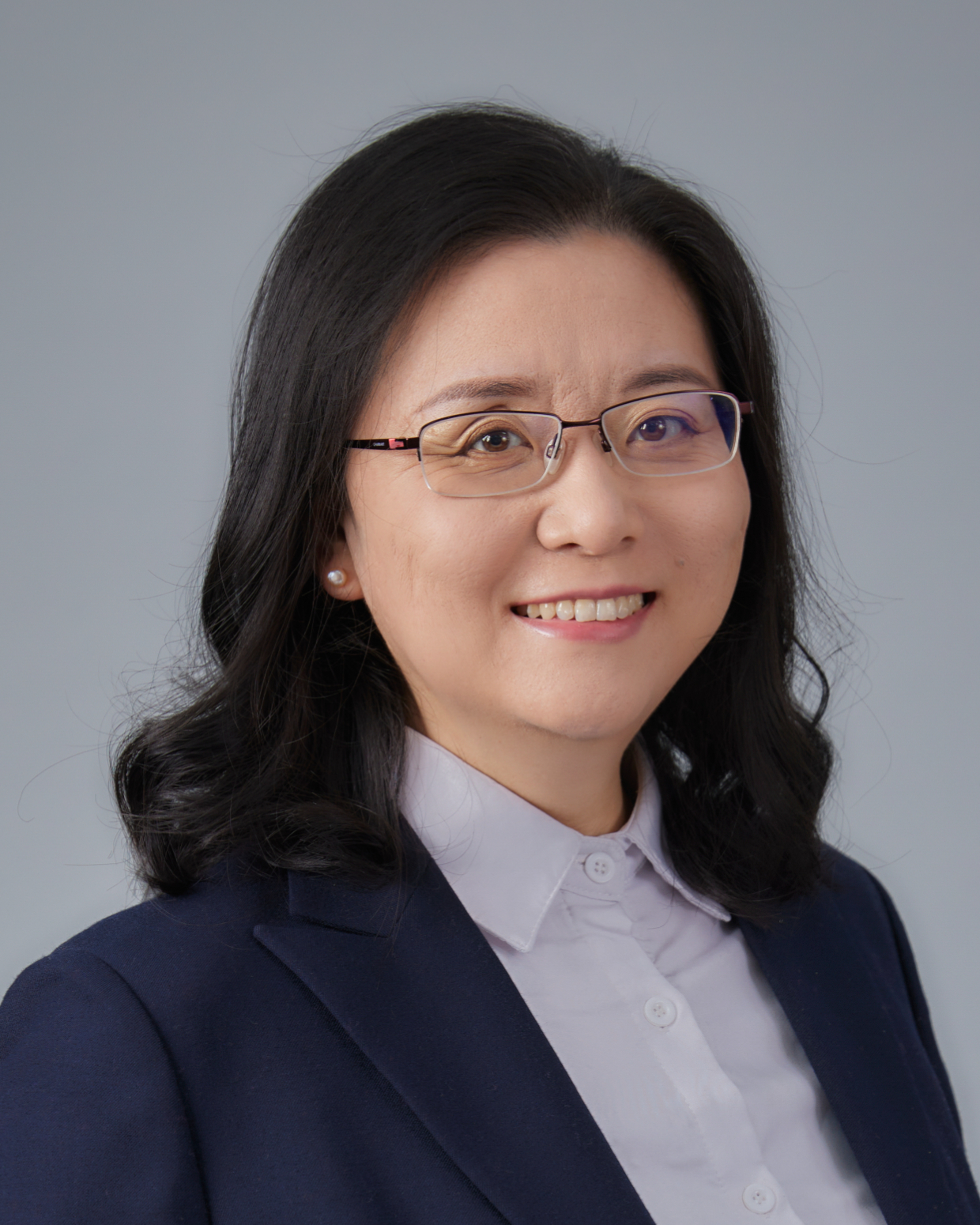 Xiaofeng Gao (高晓沨)合作论文数School of Computer Science, Shanghai Jiao Tong University;École d'Ingénieur Paris, Shanghai Jiao Tong University2
 Haisheng Su (苏海昇)合作论文数School of Computer Science, Shanghai Jiao Tong University;SenseAuto Research2Yulu Gao (高玉录)合作论文数2
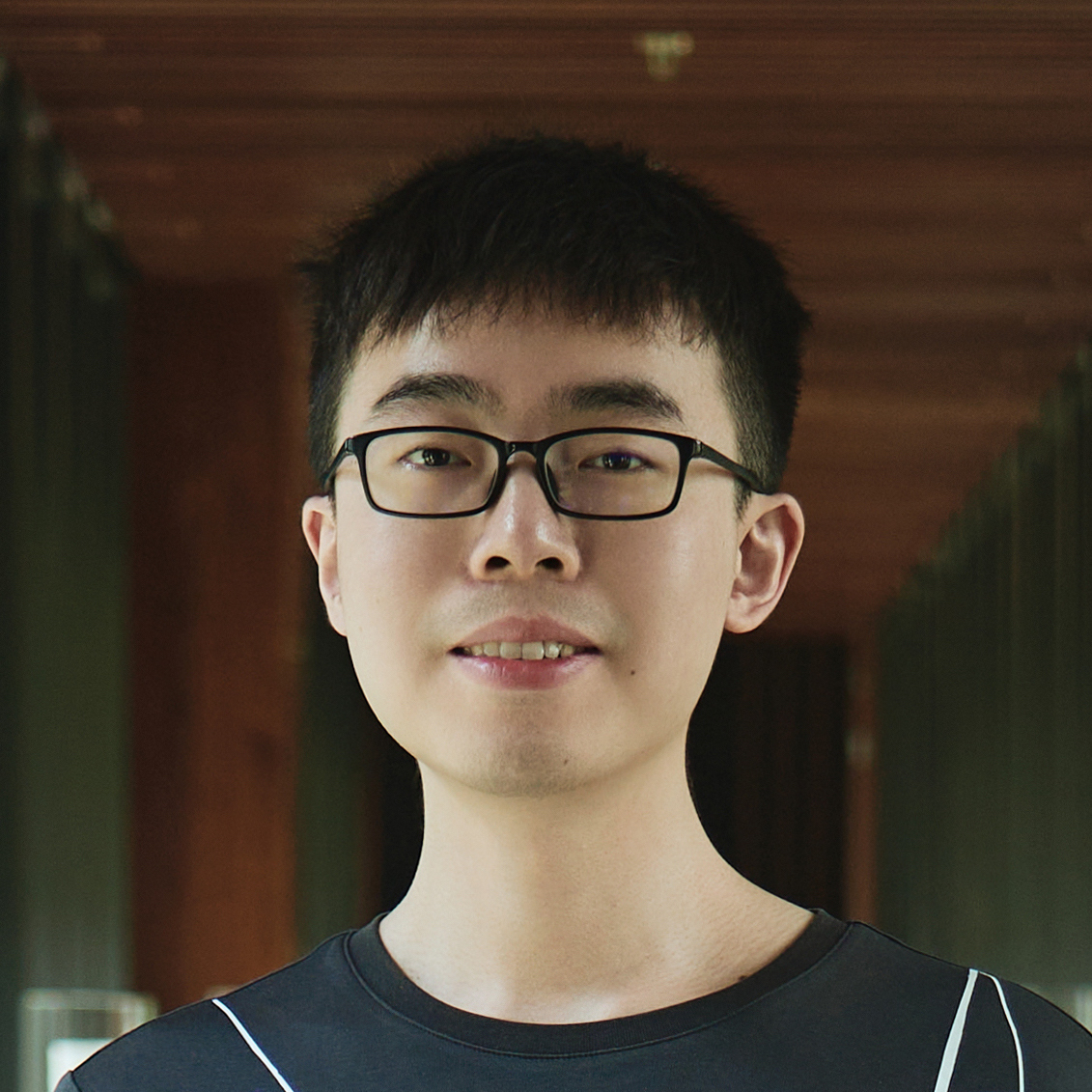 Qitian Wu (吴齐天)合作论文数Broad Institute of MIT and Harvard;Massachusetts Institute of Technology2
 Yihan Hu合作论文数Applied Intuition2
 Hang Xu (徐航)合作论文数Huawei Noah‘s Ark Lab;2030 Lab, Huawei ADS2
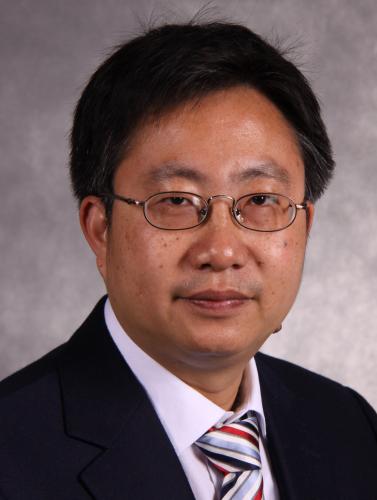 Xiaokang Yang (杨小康)合作论文数Institute of Image Communication and Network Engineering, School of Electronic Information and Electrical Engineering, Shanghai Jiao Tong University2
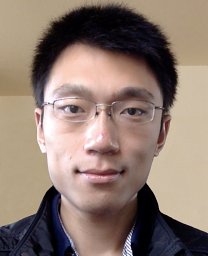 Wei Zhan合作论文数Applied Intuition;Mechanical Systems Control Lab, University of California, Berkeley;Berkeley DeepDrive2
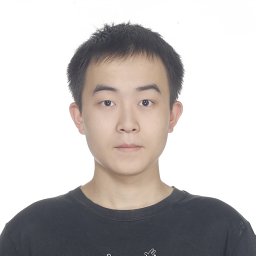 Jianhua Han (韩建华)合作论文数2030 Research, YinWang, Huawei1Yuanhao Su (苏元皓)合作论文数Fuzhou University1Yuqian Shao合作论文数1




