The exponential growth of large language models (LLMs) has opened up numerous possibilities for multi-modal AGI systems. However, progress in vision and vision-language foundation models, critical for multi-modal AGI, lags behind LLMs. In this chapter, we discuss a large-scale vision-language foundation model (InternVL) , which scales up the vision foundation model to 6 billion parameters and progressively aligns it with the LLM, using web-scale image-text data from various sources. This model demonstrates state-of-the-art performance across 32 generic visual-linguistic benchmarks, including visual perception tasks such as image-level and pixel-level recognition, vision-language tasks like zero-shot image/video classification and zero-shot image/video-text retrieval, and integration with LLMs to develop powerful multi-modal dialog systems, which closes the performance gap from open-sourced MLLMs to commercial multimodal models like GPT-4V.
Despite the remarkable progress of large language models (LLMs), the capabilities of standalone LLMs have begun to plateau when tackling real-world, complex tasks that require interaction with external tools and dynamic environments. Although recent agent frameworks aim to enhance model autonomy through tool integration and external interaction, they still suffer from naive workflows, unstable performance, limited support across diverse benchmarks and tasks, and heavy reliance on costly commercial APIs. In this work, we propose a high-performance and robust open-source agent framework, termed MiroFlow, which incorporates an agent graph for flexible orchestration, an optional deep reasoning mode to enhance performance, and a robust workflow execution to ensure stable and reproducible performance. Extensive experiments demonstrate that MiroFlow consistently achieves state-of-the-art performance across multiple agent benchmarks, including GAIA, BrowseComp-EN/ZH, HLE, xBench-DeepSearch, and notably FutureX. We hope it could serve as an easily accessible, reproducible, and comparable baseline for the deep research community.
The remarkable progress of Multimodal Large Language Models (MLLMs) has attracted increasing attention to extending them to physical entities like legged robots and robotic arms. This typically requires MLLMs to not only grasp multimodal understanding abilities, but also integrate visual-spatial reasoning and physical interaction capabilities. Nevertheless, existing methods struggle to jointly accommodate these capabilities within a shared multimodal model, due to the substantial differences between vision-language reasoning and low-level physical control. In this paper, we present Visual Embodied Brain-1.5 (VeBrain-1.5), a task-level unified framework that connects multimodal perception and spatial reasoning with robot control through a shared MLLM-compatible decision interface. VeBrain-1.5 reformulates robotic control into common text-based MLLM tasks in the 2D visual space, thereby aligning the supervision format and prediction interface of multimodal understanding, spatial reasoning, and robot control. A modular robotic adapter subsequently translates these high-level textual decisions into embodiment-specific motion commands and executes them in a closed loop. From the data perspective, we further introduce VeBrain-1M, a high-quality instruction dataset encompassing various capabilities of VeBrain-1.5. In VeBrain-1M, we take hundreds of hours to collect, curate and annotate the data, and adopt multimodal chain-of-thought (CoT) to mix the different capabilities into a single conversation. Extensive experiments on 13 multimodal benchmarks, 7 spatial intelligence benchmarks and 4 simulation and real-world robotic benchmarks demonstrate the superior performance of VeBrain-1.5 over existing MLLMs like Qwen2.5-VL. To further eliminate the task ambiguity and enhance the reasoning capability, we adopt an offline RL policy learning with verifiable reward to increase the task success rate. When deployed to two robotic entities including legged robots and robotic arms, VeBrain-1.5 shows strong adaptability, flexibility, and compositional capabilities compared to existing methods.
We construct VisualPRM400K, a dataset comprising about 400K multimodal process supervision data. Building upon this dataset, we develop VisualPRM, an advanced multimodal Process Reward Model (PRM) capable of estimating the value score of each step during the reasoning process. Under the Best-of-N evaluation setting, our model improves the reasoning performance of three types of MLLMs and four different model scales. Even when applied to the highly capable InternVL2.5-78B, it achieves a 5.9-point improvement across seven multimodal reasoning benchmarks. Experimental results show that the PRM model trained on our VisualPRM400K exhibits superior performance compared to Outcome Reward Models and Self-Consistency during BoN evaluation. To further facilitate the development of multimodal PRMs, we construct VisualProcessBench, a benchmark designed to measure the abilities of PRMs and MLLMs to detect incorrect steps in multimodal reasoning tasks. We hope that our work can inspire more future research and contribute to the development of MLLMs. Our model, data, and benchmark will be released.
Building a powerful vision-language model (VLM) necessitates a holistic system design encompassing model architecture, data curation, and training paradigms. In this paper, we present a longitudinal study of the InternVL series (v1.0-v3.0), distilling its technical evolution into a systematic framework for constructing large-scale, high-performance VLMs. This framework is characterized by three pivotal technical shifts: 1) Perceptual Scaling: We develop a 6-billion parameter vision encoder (InternViT-6B) and introduce a VLM-oriented alignment strategy, which bridges the representation gap between vision and language while enabling fine-grained, high-resolution perception. 2) Multimodal Alignment Scaling: We implement a multimodal dynamic high-resolution (mDHR) mechanism that provides a unified interface for single-image, multi-image, and video inputs. Combined with massive data curation and multi-scale model expansion, this shift pushes the performance frontier through systematic scaling. 3) Native Multimodal Pre-training: We transition from decoupled multi-stage tuning to a native multimodal continual pre-training paradigm. By jointly optimizing interleaved multimodal and text-only data, the model achieves a deep synergy that preserves linguistic proficiency while internalizing visual-world knowledge. Extensive evaluations across a broad range of benchmarks demonstrate that models built upon this framework achieve state-of-the-art performance among open-source VLMs and rival leading proprietary systems. By formalizing these design principles, we offer a reproducible roadmap for future multimodal research. Code and models are available at https://github.com/OpenGVLab/InternVL.
We introduce MMBench-GUI, a hierarchical benchmark for evaluating GUI automation agents across Windows, macOS, Linux, iOS, Android, and Web. The benchmark spans four levels: Content Understanding, Element Grounding, Task Automation, and Task Collaboration, covering essential skills for GUI agents. To assess both effectiveness and efficiency, we further propose the Efficiency–Quality-Aware (EQA) metric, which measures task success alongside action redundancy. Extensive evaluations reveal that precise visual grounding is the critical determinant of performance, underscoring the advantages of modular designs with specialized grounding modules. Moreover, all agents suffer from substantial inefficiencies, frequently completing tasks with excessive steps despite eventual success. Performance also degrades on complex or cross-application tasks, exposing weaknesses in memory, planning, and adaptive reasoning. By providing broad coverage, standardized protocols, and novel metrics, MMBench-GUI establishes the first comprehensive foundation for advancing GUI agent research.
Visual reasoning is a core component of human intelligence and a critical capability for advanced multimodal models. Yet current reasoning evaluations of multimodal large language models (MLLMs) often rely on text descriptions and allow language-based reasoning shortcuts, failing to measure genuine vision-centric reasoning. To address this, we introduce VisuLogic: a benchmark of 1,000 human-verified problems across six categories (e.g., quantitative shifts, spatial relations, attribute comparisons). These various types of questions can be evaluated to assess the visual reasoning capabilities of MLLMs from multiple perspectives. We evaluate leading MLLMs on this benchmark and analyze their results to identify common failure modes. Most models score below 30\% accuracy—only slightly above the 25\% random baseline and far below the 51.4\% achieved by humans—revealing significant gaps in visual reasoning.
We present MiroThinker v1.0, an open-source research agent designed to advance tool-augmented reasoning and information-seeking capabilities. Unlike previous agents that only scale up model size or context length, MiroThinker explores interaction scaling at the model level, systematically training the model to handle deeper and more frequent agent-environment interactions as a third dimension of performance improvement. Unlike LLM test-time scaling, which operates in isolation and risks degradation with longer reasoning chains, interactive scaling leverages environment feedback and external information acquisition to correct errors and refine trajectories. Through reinforcement learning, the model achieves efficient interaction scaling: with a 256K context window, it can perform up to 600 tool calls per task, enabling sustained multi-turn reasoning and complex real-world research workflows. Across four representative benchmarks-GAIA, HLE, BrowseComp, and BrowseComp-ZH-the 72B variant achieves up to 81.9
Unified image understanding and generation has emerged as a promising paradigm in multimodal artificial intelligence. Despite recent progress, the optimal architectural design for such unified models remains an open challenge. In this work, we start by analyzing the modality alignment behaviors of task-specific expert models for understanding and generation, as well as current unified models. Our analysis reveals a crucial observation: understanding tasks benefit from a progressively increasing modality alignment across network depth, which helps build up semantic information for better comprehension; In contrast, generation tasks follow a different trend: modality alignment increases in the early layers but decreases in the deep layers to recover spatial details. These divergent alignment patterns create a fundamental conflict in fully shared Transformer backbones, where a uniform representational flow often leads to performance compromises across two tasks. Motivated by this finding, we introduce UniFork, a novel Y-shaped architecture that shares the shallow layers for cross-task representation learning, while employing task-specific branches in deeper layers to avoid task interference. This design effectively balances shared learning and task specialization. Through extensive ablation experiments, we demonstrate that Unifork consistently outperforms conventional fully shared Transformer architectures, and achieves performance on par with or better than task-specific models.
We introduce InternVL3, a significant advancement in the InternVL series featuring a native multimodal pre-training paradigm. Rather than adapting a text-only large language model (LLM) into a multimodal large language model (MLLM) that supports visual inputs, InternVL3 jointly acquires multimodal and linguistic capabilities from both diverse multimodal data and pure-text corpora during a single pre-training stage. This unified training paradigm effectively addresses the complexities and alignment challenges commonly encountered in conventional post-hoc training pipelines for MLLMs. To further improve performance and scalability, InternVL3 incorporates variable visual position encoding (V2PE) to support extended multimodal contexts, employs advanced post-training techniques such as supervised fine-tuning (SFT) and mixed preference optimization (MPO), and adopts test-time scaling strategies alongside an optimized training infrastructure. Extensive empirical evaluations demonstrate that InternVL3 delivers superior performance across a wide range of multi-modal tasks. In particular, InternVL3-78B achieves a score of 72.2 on the MMMU benchmark, setting a new state-of-the-art among open-source MLLMs. Its capabilities remain highly competitive with leading proprietary models, including ChatGPT-4o, Claude 3.5 Sonnet, and Gemini 2.5 Pro, while also maintaining strong pure-language proficiency. In pursuit of open-science principles, we will publicly release both the training data and model weights to foster further research and development in next-generation MLLMs.
We introduce MMBench-GUI, a hierarchical benchmark for evaluating GUI automation agents across Windows, macOS, Linux, iOS, Android, and Web platforms. It comprises four levels: GUI Content Understanding, Element Grounding, Task Automation, and Task Collaboration, covering essential skills for GUI agents. In addition, we propose a novel Efficiency-Quality Area (EQA) metric to assess GUI agent execution efficiency in online automation scenarios. Through MMBench-GUI, we identify accurate visual grounding as a critical determinant of overall task success, emphasizing the substantial benefits of modular frameworks that integrate specialized grounding modules. Furthermore, to achieve reliable GUI automation, an agent requires strong task planning and cross-platform generalization abilities, with long-context memory, a broad action space, and long-term reasoning playing a critical role. More important, task efficiency remains a critically underexplored dimension, and all models suffer from substantial inefficiencies, with excessive redundant steps even when tasks are ultimately completed. The integration of precise localization, effective planning, and early stopping strategies is indispensable to enable truly efficient and scalable GUI automation. Our benchmark code, evaluation data, and running environment will be publicly available at https://github.com/open-compass/MMBench-GUI.
While recent vision-language-action models trained on diverse robot datasets exhibit promising generalization capabilities with limited in-domain data, their reliance on compact action heads to predict discretized or continuous actions constrains adaptability to heterogeneous action spaces. We present Dita, a scalable framework that leverages Transformer architectures to directly denoise continuous action sequences through a unified multimodal diffusion process. Departing from prior methods that condition denoising on fused embeddings via shallow networks, Dita employs in-context conditioning – enabling fine-grained alignment between denoised actions and raw visual tokens from historical observations. This design explicitly models action deltas and environmental nuances. By scaling the diffusion action denoiser alongside the Transformer's scalability, Dita effectively integrates cross-embodiment datasets across diverse camera perspectives, observation scenes, tasks, and action spaces. Such synergy enhances robustness against various variances and facilitates the successful execution of long-horizon tasks. Evaluations across extensive benchmarks demonstrate state-of-the-art or comparative performance in simulation. Notably, Dita achieves robust real-world adaptation to environmental variances and complex long-horizon tasks through 10-shot finetuning, using only third-person camera inputs. The architecture establishes a versatile, lightweight and open-source baseline for generalist robot policy learning. Project Page: https://robodita.github.io.
In this paper, we focus on monolithic Multimodal Large Language Models (MLLMs) that integrate visual encoding and language decoding into a single LLM. In particular, we identify that existing pre-training strategies for monolithic MLLMs often suffer from unstable optimization or catastrophic forgetting. To address this issue, our core idea is to embed a new visual parameter space into a pre-trained LLM, thereby stably learning visual knowledge from noisy data while freezing the LLM. Based on this principle, we present Mono-InternVL, a novel monolithic MLLM that seamlessly integrates a set of visual experts via a multimodal mixture-of-experts structure. Moreover, we propose an innovative pre-training strategy to maximize the visual capability of Mono-InternVL, namely Endogenous Visual Pre-training (EViP). In particular, EViP is designed as a progressive learning process for visual experts, which aims to fully exploit the visual knowledge from noisy data to high-quality data. To validate our approach, we conduct extensive experiments on 16 benchmarks. Experimental results confirm the superior performance of Mono-InternVL than existing monolithic MLLMs on 13 of 16 multimodal benchmarks, e.g., +80 points over Emu3 on OCRBench. Compared to the modular baseline, i.e., InternVL-1.5, Mono-InternVL still retains comparable multimodal performance while reducing up to 67% first token latency. Our project is available at https://internvl.github.io/blog/2024-10-10Mono-InternVL/.
The rapid advance of Large Language Models (LLMs) has catalyzed the development of Vision-Language Models (VLMs). Monolithic VLMs, which avoid modality-specific encoders, offer a promising alternative to the compositional ones but face the challenge of inferior performance. Most existing monolithic VLMs require tuning pre-trained LLMs to acquire vision abilities, which may degrade their language capabilities. To address this dilemma, this paper presents a novel high-performance monolithic VLM named HoVLE. We note that LLMs have been shown to be capable of interpreting images when image embeddings are aligned with text embeddings. The challenge for current monolithic VLMs actually lies in the lack of a holistic embedding module for both vision and language inputs. Therefore, HoVLE introduces a holistic embedding module that converts visual and textual inputs into a shared space, allowing LLMs to process images in the same way as texts. Furthermore, a multi-stage training strategy is carefully designed to empower the holistic embedding module. It is first trained to distill visual features from a pre-trained vision encoder and text embeddings from the LLM, enabling large-scale training with unpaired random images and text tokens. The whole model further undergoes next-token prediction on multi-modal data to align the embeddings. Finally, an instruction-tuning stage is incorporated. Our experiments show that HoVLE achieves performance close to leading compositional models on various benchmarks, outperforming previous monolithic models by a large margin.
In this paper, we propose the task of Ranked Video Moment Retrieval (RVMR) to locate a ranked list of matching moments from a collection of videos, through queries in natural language. Although a few related tasks have been proposed and studied by CV, NLP, and IR communities, RVMR is the task that best reflects the practical setting of moment search. To facilitate research in RVMR, we develop the TVR-Ranking dataset, based on the raw videos and existing moment annotations provided in the TVR dataset. Our key contribution is the manual annotation of relevance levels for 94,442 query-moment pairs. We then develop the NDCG@K, IoU≥μ evaluation metric for this new task and conduct experiments to evaluate three baseline models. Our experiments show that the new RVMR task brings new challenges to existing models and we believe this new dataset contributes to the research on multi-modality search. The dataset is available at
Transformers have revolutionized computer vision and natural language processing, but their high computational complexity limits their application in high-resolution image processing and long-context analysis. This paper introduces Vision-RWKV (VRWKV), a model that builds upon the RWKV architecture from the NLP field with key modifications tailored specifically for vision tasks. Similar to the Vision Transformer (ViT), our model demonstrates robust global processing capabilities, efficiently handles sparse inputs like masked images, and can scale up to accommodate both large-scale parameters and extensive datasets. Its distinctive advantage is its reduced spatial aggregation complexity, enabling seamless processing of high-resolution images without the need for window operations. Our evaluations demonstrate that VRWKV surpasses ViT's performance in image classification and has significantly faster speeds and lower memory usage processing high-resolution inputs. In dense prediction tasks, it outperforms window-based models, maintaining comparable speeds. These results highlight VRWKV's potential as a more efficient alternative for visual perception tasks. Code and models are available at~\url{https://github.com/OpenGVLab/Vision-RWKV}.
Recent years have witnessed remarkable advances in Large Vision-Language Models (LVLMs), which have achieved human-level performance across various complex vision-language tasks. Following LLaVA's paradigm, mainstream LVLMs typically employ a shallow MLP for visual-language alignment through a two-stage training process: pretraining for cross-modal alignment followed by instruction tuning. While this approach has proven effective, the underlying mechanisms of how MLPs bridge the modality gap remain poorly understood. Although some research has explored how LLMs process transformed visual tokens, few studies have investigated the fundamental alignment mechanism. Furthermore, the MLP adapter requires retraining whenever switching LLM backbones. To address these limitations, we first investigate the working principles of MLP adapters and discover that they learn to project visual embeddings into subspaces spanned by corresponding text embeddings progressively. Based on this insight, we propose LangBridge, a novel adapter that explicitly maps visual tokens to linear combinations of LLM vocabulary embeddings. This innovative design enables pretraining-free adapter transfer across different LLMs while maintaining performance. Our experimental results demonstrate that a LangBridge adapter pre-trained on Qwen2-0.5B can be directly applied to larger models such as LLaMA3-8B or Qwen2.5-14B while maintaining competitive performance. Overall, LangBridge enables interpretable vision-language alignment by grounding visual representations in LLM vocab embedding, while its plug-and-play design ensures efficient reuse across multiple LLMs with nearly no performance degradation. See our project page at https://curryx-001.github.io/LangBridge.github.io/
Recent advancements in Large Vision-Language Models built upon Large Language Models have established aligning visual features with LLM representations as the dominant paradigm. However, inherited LLM architectural designs introduce suboptimal characteristics for multimodal processing. First, LVLMs exhibit a bimodal distribution in attention allocation, leading to the progressive neglect of middle visual content as context expands. Second, conventional positional encoding schemes fail to preserve vital 2D structural relationships when processing dynamic high-resolution images. To address these limitations, we propose CoMemo - a dual-path architecture that combines a Context image path with an image Memory path for visual processing, effectively alleviating visual information neglect. Additionally, we introduce RoPE-DHR, a novel positional encoding mechanism that employs thumbnail-based positional aggregation to maintain 2D spatial awareness while mitigating remote decay in extended sequences. Evaluations across seven benchmarks,including long-context comprehension, multi-image reasoning, and visual question answering, demonstrate CoMemo's superior performance compared to conventional LVLM architectures. Project page is available at https://lalbj.github.io/projects/CoMemo/.
We introduce InternVL 3.5, a new family of open-source multimodal models that significantly advances versatility, reasoning capability, and inference efficiency along the InternVL series. A key innovation is the Cascade Reinforcement Learning (Cascade RL) framework, which enhances reasoning through a two-stage process: offline RL for stable convergence and online RL for refined alignment. This coarse-to-fine training strategy leads to substantial improvements on downstream reasoning tasks, e.g., MMMU and MathVista. To optimize efficiency, we propose a Visual Resolution Router (ViR) that dynamically adjusts the resolution of visual tokens without compromising performance. Coupled with ViR, our Decoupled Vision-Language Deployment (DvD) strategy separates the vision encoder and language model across different GPUs, effectively balancing computational load. These contributions collectively enable InternVL3.5 to achieve up to a +16.0% gain in overall reasoning performance and a 4.05× inference speedup compared to its predecessor, i.e., InternVL3. In addition, InternVL3.5 supports novel capabilities such as GUI interaction and embodied agency. Notably, our largest model, i.e., InternVL3.5-241B-A28B, attains state-of-the-art results among open-source MLLMs across general multimodal, reasoning, text, and agentic tasks – narrowing the performance gap with leading commercial models like GPT-5. All models and code are publicly released.
The remarkable progress of Multimodal Large Language Models (MLLMs) has attracted increasing attention to extend them to physical entities like legged robot. This typically requires MLLMs to not only grasp multimodal understanding abilities, but also integrate visual-spatial reasoning and physical interaction capabilities. Nevertheless,existing methods struggle to unify these capabilities due to their fundamental differences.In this paper, we present the Visual Embodied Brain (VeBrain), a unified framework for perception, reasoning, and control in real world. VeBrain reformulates robotic control into common text-based MLLM tasks in the 2D visual space, thus unifying the objectives and mapping spaces of different tasks. Then, a novel robotic adapter is proposed to convert textual control signals from MLLMs to motion policies of real robots. From the data perspective, we further introduce VeBrain-600k, a high-quality instruction dataset encompassing various capabilities of VeBrain. In VeBrain-600k, we take hundreds of hours to collect, curate and annotate the data, and adopt multimodal chain-of-thought(CoT) to mix the different capabilities into a single conversation. Extensive experiments on 13 multimodal benchmarks and 5 spatial intelligence benchmarks demonstrate the superior performance of VeBrain to existing MLLMs like Qwen2.5-VL. When deployed to legged robots and robotic arms, VeBrain shows strong adaptability, flexibility, and compositional capabilities compared to existing methods. For example, compared to Qwen2.5-VL, VeBrain not only achieves substantial gains on MMVet by +5.6
 Jifeng Dai (代季峰)合作论文数Department of Electronic Engineering, Tsinghua University81
 Yu Qiao (乔宇)合作论文数Multimedia Laboratory, Shenzhen Institutes of Advanced Technology, Chinese Academy of Sciences;Shanghai AI Laboratory;Shenzhen University of Advanced Technology52
 Wenhai Wang (王文海)合作论文数Multimedia Laboratory, The Chinese University of Hong Kong47
 Lewei Lu合作论文数SenseTime Research43
 Zhe Chen (陈喆)合作论文数Department of Computer Science and Technology, Nanjing University;Shanghai AI Laboratory32
 Weiyun Wang合作论文数21
 Tong Lu (路通)合作论文数National Key Laboratory for Novel Software Technology, Department of Computer Science and Technology, Nanjing University19
 Jinguo Zhu合作论文数Xi An Jiao Tong Univ, Inst Artificial Intelligence & Robot, Xian, Shaanxi, Peoples R China17
 Weijie Su (苏伟杰)合作论文数University of Science and Technology of China;Shanghai AI Laboratory;SenseTime Research17
 Xiaogang Wang (王曉剛)合作论文数Department of Electronic Engineering, The Chinese University of Hong Kong14
 Gao Huang (黄高)合作论文数Institute of Industrial Intelligence and Systems, Department of Automation, Tsinghua University14
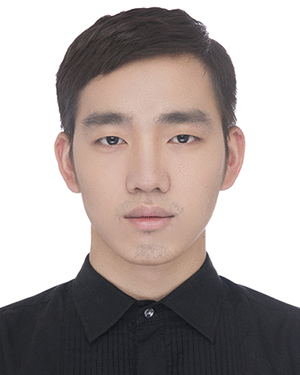 Hao Tian合作论文数13
 Chenxin Tao合作论文数Fundamental Vision Laboratory, Tsinghua University13
 Hongsheng Li (李鴻升)合作论文数Department of Electronic Engineering, The Chinese University of Hong Kong;Multimedia Laboratory, The Chinese University of Hong Kong13
 Changyao Tian合作论文数MMLab, The Chinese University of Hong Kong12
 Hao Li (李豪)合作论文数12Shenglong Ye合作论文数11Zhangwei Gao合作论文数11Erfei Cui合作论文数10
 Zhaoyang Liu合作论文数Department of Computer Science and Engineering, Hong Kong University of Science and Technology;Shanghai AI Laboratory10
 Gen Luo合作论文数Shanghai Artificial Intelligence Laboratory9
 Chenyu Yang合作论文数Department of Electronic Engineering, Tsinghua University9
 Jie Zhou (周杰)合作论文数Department of Automation, Tsinghua University9
 Yue Cao (曹越)合作论文数Sand AI8
 Bin Li (李斌)合作论文数Department of Electronic Engineering and Information Sciences, School of Information Science and Technology, University of Science and Technology of China8Shiqian Su合作论文数7Zhaokai Wang合作论文数7
 Yuntao (Simon) Chen合作论文数Faculty of Brain Science, University College London7
 Xuan Dong (董譞)合作论文数School of Artificial Intelligence, Beijing University of Posts and Telecommunications7
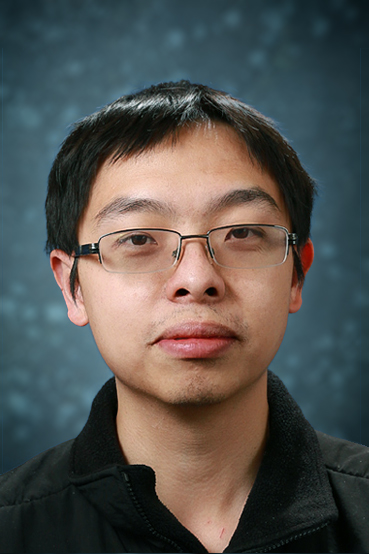 Dahua Lin (林達華)合作论文数Department of Information Engineering, The Chinese University of Hong Kong;Shanghai Artificial Intelligence Laboratory7Wenhan Dou合作论文数6Min Dou合作论文数6
 Limin Wang (王利民)合作论文数Multimedia Computing Group, State Key Laboratory for Novel Software Technology, Department of Computer Science and Technology, Nanjing University6
 Qingyun Li合作论文数6
 Ping Luo (羅平)合作论文数Department of Computer Science, School of Computing and Data Science, The University of Hong Kong6
 Xuehui Wang (王雪辉)合作论文数Huawei6
 Xue Yang (杨学)合作论文数School of Automation and Intelligent Sensing, Shanghai Jiao Tong University;ReThinkLab, Shanghai Jiao Tong University6
 Wenqi Shao (邵文琪)合作论文数Shanghai AI Lab6
 Steve Lin合作论文数Microsoft Research Asia6Botian Shi合作论文数Shanghai AI Laboratory6Yiming Ren合作论文数5
 Junjun He (何军军)合作论文数Shanghai AI Laboratory5
 Yuwen Xiong (熊郁文)合作论文数Machine Learning Group, Department of Computer Science, University of Toronto5
 Kaipeng Zhang (张凯鹏)合作论文数Shanghai AI Laboratory5
 Xiangyu Zhao (赵翔宇)合作论文数Applied Machine Learning Lab, Department of Data Science, College of Computing, City University of Hong Kong5
 Haodong Duan (段浩东)合作论文数ByteDance5
 Yi Wang (王毅)合作论文数Shanghai AI Laboratory5
 Conghui He (何聪辉)合作论文数Shanghai AI Laboratory5Tianyi Zhang合作论文数4




