In this paper, the de-silicated fly ash (DSFA) was sintered with soda and calcium oxide. Detailed analysis and characterization was carried out by using thermal gravimetric analysis (TGA) and X-ray diffraction (XRD). Two dominant reactions take place in the sintering process. The kinetics was studied by using Jander mode, and the sintering activation energies were determined based on the weight loss of CO2.
Generated during the combustion of coal for electricity production, fly ash is a solid waste and causes great ecomomic burden and serious environmental pollution. On the other hand, it is a good resource for the preparation of industrial products. Especially, alumina rich fly ash from Inner-Mongolia Guohua Junggar Power Plant typically contains 45-55% alumina, 30-40% silica, and 5-10% other metallic oxides, it is a perfect resource for alumina extraction. In order to improve the utilization value of alumina rich fly ash and lessen environmental strain, a novel approach for alumina extraction from alumina rich fly ash was proposed. The proposed process includes a pre-desilication process, soda lime sintering process, dissolving process, carbonation process and calcination process. The technological conditions for alumina extraction from Junggar alumina rich fly ash were optimized by means of orthogonal experment design. The extraction rate of alumina was 96%. Value-added products, such as electrolytic grade alumina and white carbon black, were produced at the same time.
The objective of paper is to optimize the variables of the sintering process with the six sigma philosophy. The impact of sintering temperature, Ca ratio, Na ratio and reaction time on the alumina reaching rate were primarily studied. In the research, a novel method was adopted to efficiently recover alumina and silica from high-alumina fly ash, and the response surface methodology of six sigma approach was also implemented to analysis the results obtained by the experiments. There is great significance to optimize sintering process for the industrialization of the novel method. Amount of energy consumption will be reduced in the production.
To recover alumina and silica from alumina rich fly ash, a predesilication process has been developed to extract glassy amorphous silica from the fly ash. The predesilication apparent reaction kinetics in 15 wt-% NaOH solution were studied. The results showed that the predesilication process followed a shrinking unreacted core model of decreasing particle size. The apparent reaction rate of the predesilication process was predominantly controlled by internal diffusion, then by chemical reaction and last by fluid film diffusion. The apparent reaction activation energy for the process was found to be 14.2 kJ mol(-1) and the pre-exponential factor was 0.024. Using the leaching process, about 57.56% of glassy amorphous silica was removed from alumina rich fly ash, the silica content being reduced from 40.20 to 26.96% in the resulting dried desilicated fly ash. This study provides a theoretical foundation for the separation of alumina and silica and the design of a predesilication reactor.
Based on the actual pressure condition of throttle slice of telescopic shock absorber, the general solution of throttle-slice deformation curved surface’s differential equation on a non-uniform pressure, was given, and by mathematical transformation, the deformation analytic formula was established. With the practical example, the deformation of throttle slice on non-uniform pressure at any radius was computed, and was testified by ANSYS, the value computed is close to that simulated, and the relative deviation is only 0.0021%. The results shows that the method of deformation analysis computation of throttle slice on non-uniform pressure is reliable, which has important reference value for throttle slice thickness design and characteristic simulation modeling of shock absorber.
 Baodong Wang (王宝冬)合作论文数神华集团北京低碳清洁能源研究所5
 Gengzhi Yu合作论文数4Xiaohuan Wang合作论文数3Yongfeng Xiao合作论文数3
 Lijun Zhao (赵立军)合作论文数School of Automotive Engineering, Harbin Institute of Technology, Weihai2Wei Wang合作论文数1
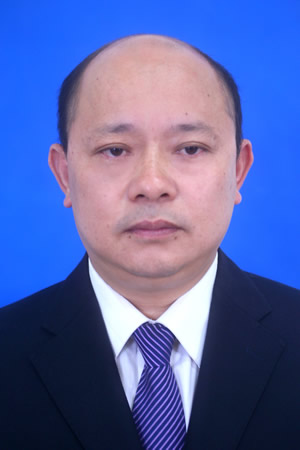 Yifeng Xiao (肖逸峰)合作论文数School of Mechanical Engineering and Mechanics, Xiangtan University1
 Zhou Chang-Cheng (周长城)合作论文数山东理工大学交通与车辆工程学院1Hong Yan Li合作论文数1




