We present a method for relighting 3D reconstructions of large room-scale environments. Existing solutions for 3D scene relighting often require solving under-determined or ill-conditioned inverse rendering problems, and are as such unable to produce high-quality results on complex real-world scenes. Though recent progress in using generative image and video diffusion models for relighting has been promising, these techniques are either limited to 2D image and video relighting or 3D relighting of individual objects. Our approach enables controllable 3D relighting of room-scale scenes by distilling the outputs of a video-to-video relighting diffusion model into a 3D reconstruction. This side-steps the need to solve a difficult inverse rendering problem, and results in a flexible system that can relight 3D reconstructions of complex real-world scenes. We validate our approach on both synthetic and real-world datasets to show that it can faithfully render novel views of scenes under new lighting conditions.
Image-to-image relighting requires representations that disentangle scene properties from illumination. Recent methods rely on latent intrinsic representations but remain under-constrained and often fail on challenging materials such as metal and glass. A natural hypothesis is that stronger pretrained visual priors should resolve these failures. We find the opposite: features from top-performing semantic encoders often degrade relighting quality, revealing a fundamental trade-off between semantic abstraction and photometric fidelity. We study this trade-off and introduce Augmented Latent Intrinsics (ALI), which balances semantic context and dense photometric structure by fusing features from a pixel-aligned visual encoder into a latent-intrinsic framework, together with a self-supervised refinement strategy to mitigate the scarcity of paired real-world data. Trained only on unlabeled real-world image pairs and paired with a dense, pixel-aligned visual prior, ALI achieves strong relighting improvements, with the largest gains on complex, specular materials.
Image-to-image relighting requires representations that separate illumination from scene properties while preserving dense geometry, material, and photometric cues. We use this task as a probe of visual priors: unlike recognition tasks that reward invariance, relighting tests whether visual features retain the information needed for light transfer. Through a controlled generative relighting framework, we find that strong semantic encoders can degrade relighting quality, exposing a semantic–photometric trade-off between abstraction and physical fidelity. We introduce Augmented Latent Intrinsics (ALI), which balances this trade-off by fusing dense, pixel-aligned visual features into a latent-intrinsic relighting model and refining it with self-supervision on unlabeled real image pairs. ALI improves relighting quality, especially on glossy, metallic, and transparent materials, and demonstrates that generative relighting is an effective tool for quantifying what visual encoders encode about the physical world.
We introduce LumiNet, a novel architecture that leverages generative models and latent intrinsic representations for transferring lighting from one image to another. Given a source image and a target lighting image, LumiNet generates a relit version of the source scene that captures the target's lighting. Our approach makes two key contributions: a data curation strategy from the StyleGAN-based relighting model for our training, and a modified diffusion-based ControlNet that processes both latent intrinsic properties from the source image and latent extrinsic properties from the target image. We further improve lighting transfer through a learned adaptor that injects the target's latent extrinsic properties via cross-attention and light-weight fine-tuning. Unlike traditional ControlNet, which generates images with conditional maps from a single scene, LumiNet processes latent representations from two different images preserving geometry and albedo from the source while transferring lighting characteristics from the target. Experiments demonstrate that our method successfully transfers complex lighting phenomena including specular highlights and indirect illumination across scenes with varying spatial layouts and materials, outperforming existing approaches on challenging indoor scenes using only images as input.
3D stylization is central to game development, virtual reality, and digital arts, where the demand for diverse assets calls for scalable methods that support fast, high-fidelity manipulation. Existing text-to-3D stylization methods typically distill from 2D image editors, requiring time-intensive per-asset optimization and exhibiting multi-view inconsistency due to the limitations of current text-to-image models, which makes them impractical for large-scale production. In this paper, we introduce GaussianBlender, a pioneering feed-forward framework for text-driven 3D stylization that performs edits instantly at inference. Our method learns structured, disentangled latent spaces with controlled information sharing for geometry and appearance from spatially-grouped 3D Gaussians. A latent diffusion model then applies text-conditioned edits on these learned representations. Comprehensive evaluations show that GaussianBlender not only delivers instant, high-fidelity, geometry-preserving, multi-view consistent stylization, but also surpasses methods that require per-instance test-time optimization - unlocking practical, democratized 3D stylization at scale.
This paper introduces a novel approach to illumination manipulation in diffusion models, addressing the gap in conditional image generation with a focus on lighting conditions. While most of methods employ ControlNet and its variants to address the illumination-aware guidance in diffusion models. In contrast, We conceptualize the diffusion model as a black-box image render and strategically decompose its energy function in alignment with the image formation model. Our method effectively separates and controls illumination-related properties during the generative process. It generates images with realistic illumination effects, including cast shadow, soft shadow, and inter-reflections. Remarkably, it achieves this without the necessity for learning intrinsic decomposition, finding directions in latent space, or undergoing additional training with new datasets.
In this paper, we present Point Cloud Color Constancy, in short PCCC, an illumination chromaticity estimation algorithm exploiting a point cloud. We leverage the depth information captured by the time-of-flight (ToF) sensor mounted rigidly with the RGB sensor, and form a 6D cloud where each point contains the coordinates and RGB intensities, noted as (x,y,z, r,g, b). PCCC applies the PointNet architecture to the color constancy problem, deriving the illumination vector point-wise and then making a global decision about the global illumination chromaticity. On two popular RGB-D datasets, which we extend with illumination information, as well as on a novel benchmark, PCCC obtains lower error than the state-of-the-art algorithms. Our method is simple andfast, requiring merely 16 x 16-size input and reaching speed over 140 fps (CPU time), including the cost of building the point cloud and net inference.
Illumination estimation refers to estimating the chromaticity vector of illumination, and can be used to recover the surface color under white light. Dual-illuminant is a common scenario in computational illumination estimation tasks. A straightforward way to correct the dual-illuminant image can be estimating a spatially-varying illumination map. However, it is hindered by the lack of large-scale annotated datasets for data-driven methods. In this paper, we propose a novel approach to obtain the dominant dual-illuminant and the pixel-wise illuminant map on real dual-illuminant raw images. Our method consists of 1) dual-illuminant image generator (DIG) to synthesize dual-illuminant images from unique-illuminant datasets assuming the Lambertian model; 2) dual-illuminant estimation network (DE-Net) to estimate illuminant both globally and locally. Quantitative experiments show that with DIG synthesized dual-illuminant images, DE-Net obtains the best accuracy in dual-illumination detection and estimation on the Gehalr-shi dataset and Mutlti-Illuminant Multi-Object dataset.
Melanoma detection is a crucial yet hard task for both dermatologists and computer-aided diagnosis (CAD). Many traditional machine learning algorithms including deep learning-based methods are employed for melanoma classification. However, more and more complex network architectures do not harvest a leap in model performance. In this paper, we aim to enhance the credibility of CAD approach for melanoma by paying more attention to clinically important information. We propose a Zoom-in Attention and Metadata Embedding (ZooME) melanoma detection network by: 1) introducing a Zoom-in Attention model to better extract and utilize unique pathological information of dermoscopy images; 2) embedding patients' demographic information including age, gender, and anatomic body site, to provide well-rounded information for better prediction. We apply a ten-fold cross-validation on the latest ISIC-2020 dataset with 33,126 dermoscopy images. The proposed ZooME achieved state-of-the-art results with 92.23% in AUC score, 84.59% in accuracy, 85.95% in sensitivity, and 84.63% in specialty, respectively.
 Sezer Karaoglu合作论文数3DUniversum;weScan.io;Fairfake;Computer Vision Group Amsterdam, Informatics Institute, University of Amsterdam6
 Theo Gevers合作论文数Informatics Institute, Faculty of Science, University of Amsterdam;Computer Vision Lab;3DUniversum;Delta Lab;Atlas Lab6
 Anand Bhattad合作论文数Department of Computer Science, Johns Hopkins University;Data Science and AI Institute, Johns Hopkins University3
 Sibo Feng合作论文数Huawei, Central Media Technology Institute2
 Yanlin Qian (钱彦霖)合作论文数Huawei Camera Team2
 Yuhan Dong (董宇涵)合作论文数Tsinghua Shenzhen International Graduate School2
 Kai Zhang合作论文数1Konrad Groh合作论文数1
 Dor Verbin合作论文数Google Research1
 Xiao Zhang合作论文数Department of Computer Science, The University of Chicago1
 Jiri Matas合作论文数The Center for Machine Perception, Department of Cybernetics, Faculty of Electrical Engineering, Czech Technical University1
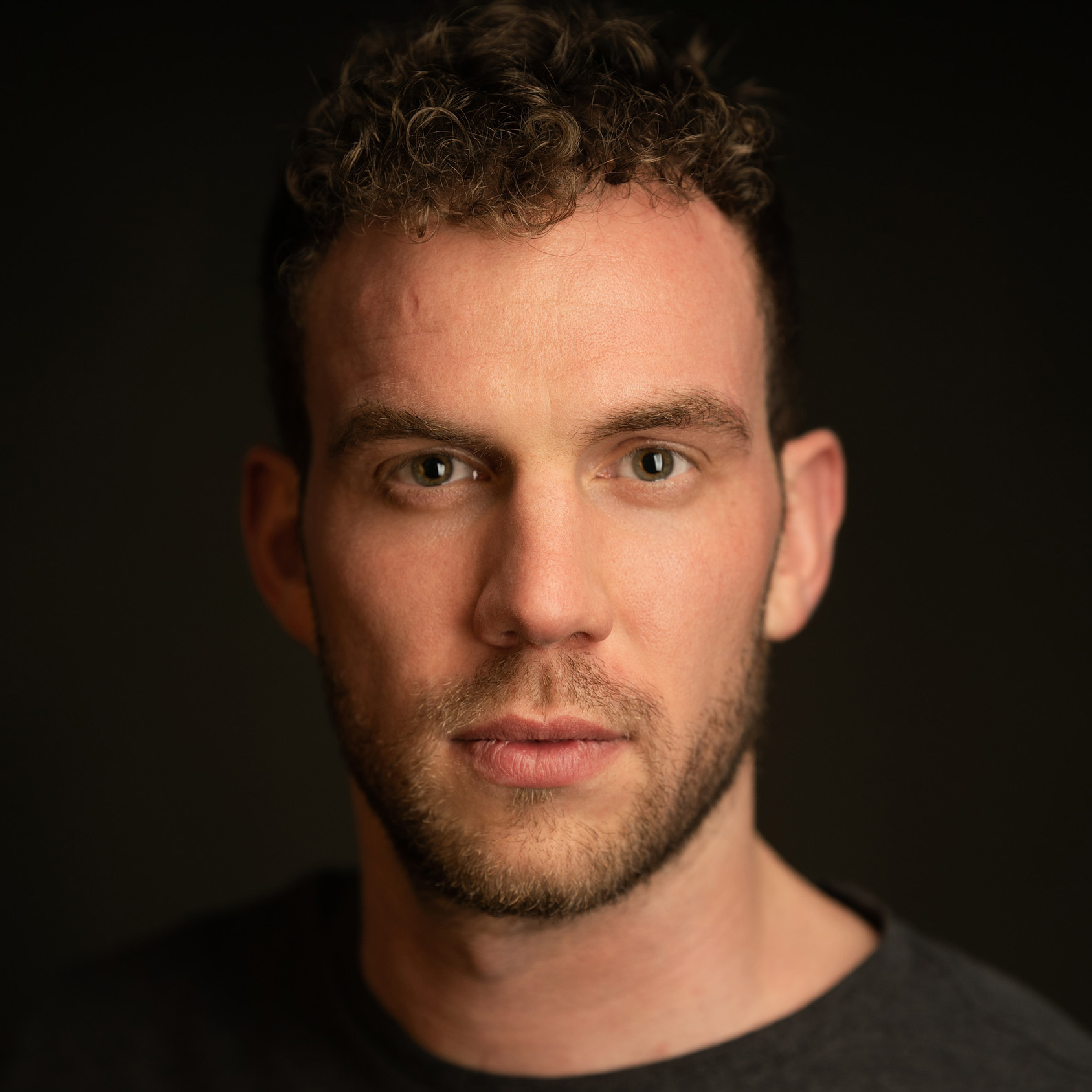 Philipp Henzler合作论文数Google1
 Jan Hendrik Metzen合作论文数Aleph Alpha Research1
 Junhwa Hur合作论文数Google DeepMind1
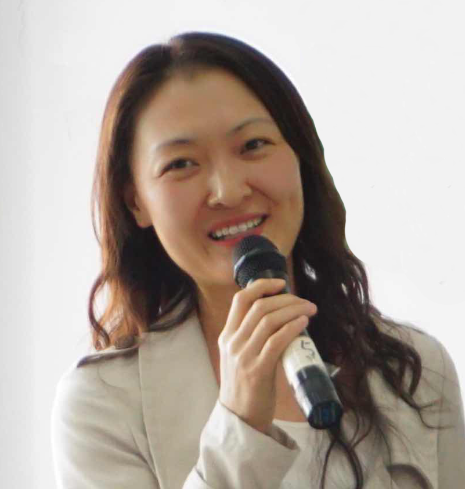 Fang Yang (杨芳)合作论文数College of Chemistry and Materials Science, Jinan University1




