State-of-the-art ultra-stable lasers have achieved a fractional frequency stability at the 10 −17 level. Further advancement to the 10 −18 level requires frequency stabilization servo controllers with stronger noise suppression capabilities over a broader frequency band. For external-cavity semiconductor lasers, the prevailing stabilization approach utilizes a combination of current frequency modulation and PZT frequency modulation. In this study, we employed a dedicated loop analyzer and an IQ demodulation frequency measurement method to perform detailed measurements of the transfer functions of individual stages and the closed-loop system of this dual feedback loop, with particular focus on its performance limitations in the frequency range within 10 kHz. By optimizing the feedback path, we improved the laser noise suppression at 1 kHz by three orders of magnitude, thereby reducing the contribution of residual laser frequency noise below 10 kHz to the fractional frequency stability at one second to 4.4×10 −19 . The proposed method not only provides significant value for achieving ultra-stable lasers at the 10 −18 level but is also applicable to newer types of semiconductor lasers that rely solely on current frequency modulation.
We report a systematic uncertainty of 9.2 & times;10-19 for the Sr1 optical lattice clock at the University of Science and Technology of China (USTC), achieving accuracy at the level required for the roadmap of the redefinition of the SI second. A finite-element model with in situ-validated, spatially-resolved chamber emissivity reduced blackbody radiation (BBR) shift uncertainty to 6.3 & times;10-19. Concurrently, the externally mounted lattice cavity, by providing a larger beam waist, reduced the atomic density and thereby suppressed the density shift. Enhanced lattice depth modulation consolidated lattice light shift uncertainty to 6.3 & times;10-19 by enabling simultaneous determination of key polarizabilities and magic wavelength. Magnetic shifts were resolved below 10-18 via precision characterization of the second-order Zeeman coefficient. Supported by a clock laser stabilized on an ultralow-expansion glass cavity with crystalline-coated mirrors and refined temperature control suppressing BBR fluctuations, the clock also achieves a frequency stability better than 1 & times;10-18 at 30 000 s averaging time. These developments collectively establish a new benchmark in USTC Sr1 clock performance and pave the way for high-accuracy applications in metrology and fundamental physics.
In optical atomic clocks, the low phase noise of the frequency conversion is essential to maintain the high frequency stability and phase coherence of clock lasers. Higher power of interrogation lasers is required for future optical clocks. In this work, we present a cavity-enhanced frequency doubler based on second harmonic generation with an intra-cavity PPLN crystal. The frequency doubler is highly efficient in obtaining the strontium atomic clock laser from the fundamental laser at 1397 nm. We measure the excess phase noise introduced by the enhancement cavity. The cavity-enhanced frequency doubler introduces excess phase noise with a power spectral density that is nearly an order of magnitude lower than that of state-of-the-art interrogation lasers for offset frequencies between 0.001 Hz and 1 Hz. The modified Allan deviation of fractional frequency instability is 5.3×10⁻¹⁸ at a 1-second averaging time under a homemade housing. It indicates that the doubler can be used to improve the short-term stability of strontium optical clocks with the best up-to-date ultra-stable lasers. Meanwhile, its high efficiency can match increasing interrogation laser power for further applications.
Recent assessments have enhanced the evaluation of the lattice ac Stark shift in optical clocks to a fractional frequency level below 10-18. With this level of accuracy, meticulous attention is required to address shifts from the background spectrum of the lattice laser. Therefore, it is essential for the lattice laser to exhibit a minimal background spectrum. In this investigation, we employ a system based on sum-frequency generation (SFG) of the fiber-amplified lasers as the source for the strontium optical-clock lattice laser. The spectrum purity of this laser system has been confirmed through a heterodyne measurement involving a titanium:sapphire (Ti:Sa) laser. Consequently, we have characterized the background light shift resulting from its background spectrum, which is more than one order of magnitude lower than that of a tapered amplifier (TA). Through the implementation of carefully selected spectral filtering, the background light shift can be suppressed to a level of mid-10-20. Additionally, the suitability of the SFG laser is also experimentally verified in a strontium clock.
Optical atomic clocks play a crucial role in fundamental physics, relativistic geodesy, and the future redefinition of the Systeme International second. Standard operation relies on cyclic interrogation sequences, which alternate between atomic interrogation and dead time used for state preparation and readout. This approach introduces the Dick effect, where laser frequency noise aliases onto the atomic transition frequency. Although reducing laser noise improves clock stability, the Dick effect remains a key limitation. In this Letter, we demonstrate a zero-dead-time optical clock based on two interleaved ensembles of cold ^{87}Sr atoms. Our system significantly suppresses this noise and achieves a fractional frequency instability at the 10^{-19} level between 10 000 and 20 000 s over repeated measurements, with a best value of 2.9×10^{-19} at τ=20000 s. The estimated long-term stability based on the combined data of these measurements reaches 2.5×10^{-19} at 1 day. These results represent a more than ninefold improvement over a conventional single-ensemble clock, highlighting its potential for next-generation timekeeping applications.
The high-finesse Fabry-Pérot cavity is the most critical component of an ultra-stable laser. The coupling efficiency of the intra-cavity beam directly influences the frequency stability of ultra-stable lasers. For transportable or space-borne ultra-stable lasers, an automatic coupling procedure is typically required to address the reduction in coupling efficiency caused by environmental changes. We propose an automatic coupling method based on coupling efficiency feedback, which can achieve a fundamental mode coupling efficiency of 94% within a cavity displacement of 1.6 mm. Compared to conventional image recognition-based methods, our approach eliminates the need for bulky and expensive charge-coupled devices and complex image recognition algorithms. Most importantly, the maximum coupling range and coupling efficiency are no longer limited by the algorithm but are determined by hardware performance. This makes our automatic coupling method highly suitable for transportable and space-borne ultra-stable lasers.
State-of-the-art ultra-stable laser systems exhibit fractional frequency stability on the order of 10−17. The imminent challenge lies in advancing this stability to the 10−18 range, thereby approaching the fundamental limit imposed by thermal noise. To achieve such a milestone, it is necessary that all technical noise sources, particularly electrical noise, be suppressed well below the level of thermal noise. As an initial stride toward 10−18 stability, we have improved an ultra-stable laser system through the redesign of its frequency stabilization feedback electronics, introducing an innovative servo controller architecture. This innovative servo controller incorporates a pre-amp stage comprising 16 parallel operational amplifiers, which feeds into a high-gain stage constituted by four cascaded integrators. This design yields an impressive input noise floor of 1.4 nV/Hz at 1 Hz and delivers a substantial servo gain of 230 dB at 1 Hz. Consequently, the upgraded ultra-stable laser system exhibits a residual in-loop error noise that contributes a mere fractional frequency stability of 4.7 × 10⁻²⁰, signifying an improvement of two orders of magnitude. This significant advancement not only paves the way for addressing other technical noise challenges but also holds immense appeal for applications demanding utmost precision, including ultra-stable laser systems, gravitational wave detectors, and optical clocks.
Ultra-stable lasers with extremely low-frequency noise are essential for space-based precision metrology.Transportable single-crystal silicon optical reference cavities offer lower thermal noise floors in compact volumes, making them ideal candidates for ultra-stable lasers deployed in space. However, achieving low vibration sensitivity in transportable designs remains challenging due to the anisotropic mechanical properties of silicon. In this work, we present a finite element method (FEM) optimized design for transportable single-crystal silicon cavities, featuring a 112.5 mm long spacer supported by an Invar six-point mounting frame, and a predicted thermal noise floor of 8.9 x 10⁻¹⁷. The assembly successfully withstood in-vehicle transportation and cryogenic thermal cycling tests. Moreover, we have established an ultra-stable laser system based on the cavity operating at 124 K, experimentally measured its total vibration sensitivity of 4.9(1) x 10-10/g, and estimated the fractional frequency instability of 4 x 10-16 for averaging times ranging from 0.5 to 100 s. These results demonstrate that our cavity design takes the first step in the way for future ultra-stable lasers for space-based precision metrology and fundamental physics experiments. (c) 2025 Optica Publishing Group under the terms of the Optica Open Access Publishing Agreement
Optical thin films with high-reflectivity (HR) are essential for applications in quantum precision measurements. In this work, we propose a coating technique based on reactive magnetron sputtering with RF-induced substrate bias to fabricate HR-optical thin films. First, atomically flat SiO2 and Ta2O5 layers have been demonstrated due to the assistance of radio-frequency plasma during the coating process. Second, a distributed Bragg reflector (DBR) mirror with an HR of ∼99.999 328% centered at 1397 nm has been realized. The DBR structure is air-H{LH}19-substrate, in which the L and H denote a single layer of SiO2 with a thickness of 237.8 nm and a single layer of Ta2O5 with a thickness of 171.6 nm, respectively. This novel coating method would facilitate the development of HR reflectors and promote their wide applications in precision measurements.
State-of-the-art optical cavities are pivotal in pushing the envelope of laser frequency stability below 10−16. This is often achieved by extending the cavity length or cooling the system to cryogenic temperatures to reduce the thermal noise floor. In our study, we present a 30-cm-long cavity that operates at room temperature and is outfitted with crystalline coatings. The system has a predicted ultralow thermal noise floor of 4.4 × 10⁻¹⁷, comparable to what is observed in cryogenic silicon cavities. A 1397-nm laser is stabilized in this advanced cavity, and the stable frequency is then transferred to the clock transition in strontium optical lattice clocks via a frequency-doubling process. We have meticulously minimized and assessed the technical noise contributions through comparisons with an ultrastable reference laser that is locked to a commercially available 30-cm cavity. The frequency instability of the system is rigorously evaluated using a three-cornered-hat method. The results demonstrate that the laser frequency instability remains below 2 × 10⁻¹⁶ for averaging times ranging from 1 to 50 s. These findings underscore the significant potential of room-temperature cavities with crystalline coatings in high-precision metrology and pave the way for further improvements in optical lattice clocks.
In this paper, the transfer function of the Pound-Drever-Hall feedback loop in an ultra-stable laser system is comprehensively measured and verified, and then a noise analysis is performed.
We present a fully digital servo optimized for ultra-stable laser frequency stabilization. Experiments such as optical clock experiments can achieve high laser frequency stability, imposing high bandwidth, high precision, and low noise requirements on servo systems. The laser system utilizes the Pound-Drever-Hall method, employing an ultra-stable cavity to generate an error signal for servo input. The input is separated into two independent channels, with one channel featuring high feedback bandwidth and the other channel featuring high gain in the low-frequency domain. The process is fully digitized using field-programmable gate arrays with custom-made infinite impulse response filters and proportional-integral-derivative algorithms. Thanks to the low latency of 120.5 ns and low input noise of 3.22 × 10⁻¹² V2/Hz@1 Hz, our digital servo can easily lock an external-cavity diode laser to a typical ultra-low expansion ultra-stable cavity. The laser system has a fractional frequency stability of 10-16@1s, with the servo electrical noise contributing only 5.54 × 10⁻¹⁸@1s.
We report the realization of the closed-loop operation of an optical lattice clock based on Sr-87 atoms. A cavity-stabilized 698 nm laser is used to probe the( 1)S(0)-> P-3(0) clock transition of strontium atoms trapped in optical lattices. Therein, we obtain a Fourier-limited Rabi spectrum with 0.6 Hz linewidth. The two transitions from m(F) = +/- 9/2 ground states are alternatively interrogated to realize the closed-loop operation of the clock, and the clock laser light is frequency-stabilized to the center of the two transitions. Based on the interleaved measurement, the frequency instability of a single optical clock is optimized for the Dick effect, which is demonstrated to be 4.5x10(-16)/root tau , with tau being the averaging time for measurement. Further, we build another similar setup of the strontium lattice clock, which is used for the asynchronous comparison between the two clocks, where the stability is measured as 2.1x10(-18) at 47 000 s. Moreover, we carefully calibrate the systematic effects of the Sr1 optical clock, and the total uncertainty is evaluated as 4.4x10(-18) .
At present, most ultra-stable lasers are locked onto the optical cavity through Pound-Drever-Hall (PDH) technology, but the frequency instability of the locked laser is often limited by the thermal noise limit of the reference cavity. It can mainly be reduced by increasing the cavity length, or operating at cryogenic temperatures. Here, we present an ultra-stable laser based on a 30-cm-long room temperature cavity. The cavity consists of an ultralow expansion (ULE) glass spacer and fused silica (FS) mirrors with Al0.92Ga0.08As/GaAs crystalline coatings. A 1396.9-nm laser is stabilized on this cavity and a periodically poled lithium niobate (PPLN) waveguide is used to obtain 698.45 nm light for the strontium atomic clock by second harmonic generation (SHG). Technical noise contributions are estimated by beating another 698nm ultra-stable laser system based on a commercial 30-cm-long cavity. The zero-coefficient thermal expansion (zero-CTE) temperature of the cavity is about 266.2 K, and the time transport constant is 1.2×10⁶ s. The total noise is the sum of all estimated noise contributions and the short-term frequency stability mainly dominated by the vibration noise. The evaluation of total noise is close to the frequency instability of the 1×10⁻¹⁶ at the 1 s average time.
To obtain a narrow linewidth ultra-stable laser for strontium atomic optical clocks, a laser is usually locked to a low-thermal-noise ultra-stable cavity with crystalline coatings through Pound–Drever–Hall (PDH) frequency locking technique. However, crystalline coatings in ultra-stable cavities have been observed with obvious birefringence properties in recently research. In our work, by comparing the incident light between two orthogonal polarization eigenmodes aligned with the slow and fast axes, we investigate photo-birefringent effects on our 30-cm-long room-temperature ultra-low-expansion (ULE) cavity to figure out the noise contribution of frequency. We measured that the light-power sensitivity in the fast axis has a lower value than the slow axis in different modulation frequencies, owing to its opposite contributions from thermal expansion noise and birefringent noise. Finally, we estimated that the noise contribution of incident light aligned with the fast axis is below the thermal noise floor.
We present the design, construction, and characterization of an integrated cold atomic beam source for strontium (Sr), which is based on a compact Zeeman slower for slowing the thermal atomic beam and an atomic deflector for selecting the cold flux. By adopting arrays of permanent magnets to produce the magnetic fields of the slower and the deflector, we effectively reduce the system size and power compared to traditional systems with magnetic coils. After the slower cooling, one can employ additional transverse cooling in the radial direction and improve the atom collimation. The atomic deflectors employ two stages of two-dimensional magnetic-optical trapping (MOT) to deflect the cold flux, whose atomic speed is lower than 50 m/s, by 20° from the thermal atomic beam. We characterize the cold atomic beam flux of the source by measuring the loading rate of a three-dimensional MOT. The loading rates reach up to 109 atoms/s. The setup is compact, highly tunable, lightweight, and requires low electrical power, which addresses the challenge of reducing the complexity of building optical atomic clocks and quantum simulation devices based on Sr.
High power continuous-wave (CW) single-frequency 1342 nm lasers are of interest for fundamental research, particularly, for laser cooling of lithium atoms. Using the popular Nd:YVO4 laser crystal requires careful heat management, because strong thermal effects in the gain medium are the most severe limitations of output power. Here, we present a multi-segmented Nd:YVO4 crystal design that consists of three segments with successive doping concentrations, optimized using a theoretical model. In order to quantify the optimization, we measured the thermal lens power of conventional crystal designs and compare them to our multi-segmented design. The optimized design displays a two times lower thermal lens dioptric power for the same amount of absorbed pump power in the non-lasing case. Using the optimized design, we demonstrate a high power all-solid-state laser emitting 10.0 W single-frequency radiation at 1342 nm when operating the laser crystal at room temperature. Further integration of the laser allows us to operate the laser crystal below room temperature for improving output power up to 11.4 W at 8°C. This is explained by the reduction of energy-transfer upconversion and excited-state absorption effects. Stable free-running operation at the low temperature of 8 °C is achieved with the power stability of ± 0.42 % by peak-to-peak fluctuation and frequency peak-to-peak fluctuation of ± 72 MHz in three hours.
We present a high-efficiency extra-cavity SHG of high-power CW 1342-nm laser. By employing LBO and PPKTP, we obtained the output power up to 3.3W and 5.2W with the conversion efficiency of 57.9% and 93.8%, respectively.
Second-harmonic generation (SHG) is useful for obtaining single-frequency continuous-wave laser sources at various wavelengths for applications ranging from biology to fundamental physics. Using an external power-enhancement cavity is an effective approach to improve the frequency conversion efficiency. However, thermal effects limit the efficiency, particularly, in high-power operation. Therefore, reducing thermal effects is important when designing a cavity. This Letter reports the use of an external ring cavity for SHG, yielding a 5.2 W, 671 nm laser light with a conversion efficiency of 93.8±0.8% which, to the best of our knowledge, is a new record of conversion efficiency for an external ring cavity. It is achieved using a 10 mm length periodically poled potassium titanyl phosphate crystal and a 65 μm radius beam waist in the cavity so as to minimize thermal dephasing and thermal lensing. Furthermore, a method is developed to determine a conversion efficiency more accurately based on measuring the pump depletion using a photodiode detector and a maximum pump depletion up to 97% is recorded. In this method, the uncertainty is much less than that achieved in a common method by direct measuring with a power meter.
 Hanning Dai (戴汉宁)合作论文数Division of Quantum Physics and Quantum Information, University of Science and Technology of China16
 Yu-Ao Chen (陈宇翱)合作论文数Department of Modern Physics, School of Physical Sciences, University of Science and Technology of China16
 Xiao Jiang (江晓)合作论文数Division of Quantum Physics and Quantum Information;University of Science and Technology of China15
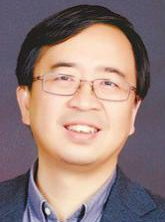 Jian-Wei Pan (潘建伟)合作论文数Division of Quantum Physics and Quantum Information, University of Science and Technology of China13
 Ping Xu (徐平)合作论文数National University of Defense Technology7
 Jie Li (李杰)合作论文数Division of Quantum Physics and Quantum Information, University of Science and Technology of China5
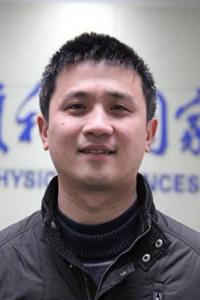 Chengzhi Peng (彭承志)合作论文数Shanghai Institute for Advanced Studies, University of Science and Technology of China5
 Xu Ping合作论文数4Xiang-Pei Liu合作论文数4
 Xiang Zhang合作论文数4
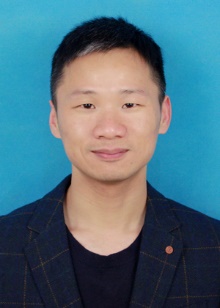 Shengkai Liao (廖胜凯)合作论文数Hefei National Research Center of Microscale Material Science, University of Science and Technology of China4
 Qi Shen (沈奇)合作论文数Shanghai Institute for Advanced Studies, University of Science and Technology of China4Mei-Chen Yan合作论文数3Yuan Tao合作论文数3
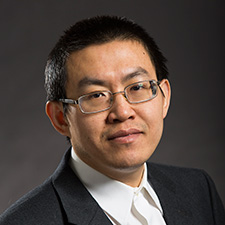 Yi Hu合作论文数University of Wisconsin-Milwaukee3Wen-Zhuo Zhang合作论文数3
 Yumeng Yang (杨雨梦)合作论文数School of Information Science and Technology, ShanghaiTech University2Chao Zeng合作论文数2
 Juan Yin (印娟)合作论文数Division of Quantum Physics and Quantum Information, Shanghai Institute for Advanced Studies, University of Science and Technology of China2
 Qiang Zhang (张强)合作论文数Division of Quantum Physics and Quantum Information, University of Science and Technology of China2
 Xingcan Yao (姚星灿)合作论文数Division of Quantum Physics and Quantum Information, University of Science and Technology of China2Yan-Jun Xie合作论文数1Wen-Chao Ji合作论文数1Tung-Hsun Chung合作论文数1Qihang Zhang合作论文数Dept Elect Engn & Comp Sci, MIT1
 Ming-Yang Zheng合作论文数1
 Rong Shu (舒嵘)合作论文数Innovation Academy for Microsatellites, Chinese Academy of Sciences;Key Laboratory of Space Active Optical-Electro Technology, Shanghai Institute of Technical Physics, Chinese Academy of Sciences;University of Chinese Academy of Sciences1
 Jun Zhang (张军)合作论文数Division of Quantum Physics and Quantum Information, University of Science & Technology of China1
 Shubin Liu (刘树彬)合作论文数Institute of Advanced Technology, University of Science and Technology of China1
 Jianjun Jia (贾建军)合作论文数Shanghai Institute of Technical Physics, CAS;University of Chinese Academy of Sciences1
 Ulrich Eismann合作论文数1
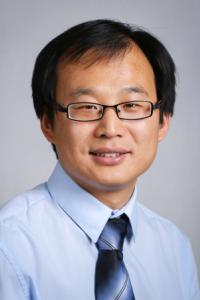 Yongheng Huo (霍永恒)合作论文数Shanghai Institute for Advanced Studies, University of Science and Technology of China1
 Bo Zhang (张博)合作论文数School of Physics, Beijing Institute of Technology1
 Yu Wang (王宇)合作论文数Depaitment of Astronomy, School of Physical Sciences, University of Science and Technology of China1
 Changqing Feng (封常青)合作论文数School of Physical Sciences, University of Science and Technology of China1
 Baoyu Yang (杨宝玉)合作论文数Shanghai Institute of Technical Physics, Chinese Academy of Sciences;University of Chinese Academy of Sciences1Xiuping Xie合作论文数Edward L. Ginzton Laboratory;Stanford University1Yi-Wen Zhang合作论文数1




