The Korshinsk peashrub (Caragana korshinskii), known for its exceptional drought tolerance, is widely cultivated in arid and semi-arid regions for vegetation restoration and as a vital forage plant. To elucidate the genomic basis of its drought tolerance, we generated a chromosomal-scale genome sequence of C. korshinskii. Our synteny analysis disputes the previously hypothesized genus-specific whole-genome duplication event, as suggested by earlier transcriptome study of this species and its congeners. We identified that tandem duplications were critical for the expansion of gene families, such as early light-induced protein, heat shock protein 100, and Dehydrin, which are involved in cellular protection processes. These expansions are likely pivotal to the superior drought tolerance observed in C. korshinskii, as evidenced by the elevated gene expression of these genes under drought conditions. Furthermore, overexpression studies of seven tandemly duplicated DHN genes revealed a substantial enhancement in drought survival rates of seedlings, likely attributable to increased gene dosage effects. Conversely, gene silencing via virus-induced gene silencing demonstrated opposing effects. Additionally, we have established the CakorDB, a genomic resource database for C. korshinskii (https://bis.zju.edu.cn/cakordb/), accessible freely to the scientific community. Collectively, our study not only provides a valuable genomic resource for the Korshinsk peashrub but also highlights the genetic adaptations that enable C. korshinskii to thrive in desert environments, positioning its stress-responsive genes as a valuable genetic reservoir for breeding drought-resistant crops.
Dear Editor, Humans cannot survive without plants because many plants have evolved beneficial traits that not only support their own sur-vival and reproduction but also provide essential goods,including food,for humans.
How plants find a way to thrive in alpine habitats remains largely unknown. Here we present a chromosome-level genome assembly for an alpine medicinal herb, Triplostegia glandulifera (Caprifoliaceae), and 13 transcriptomes from other species of Dipsacales. We detected a whole-genome duplication event in T. glandulifera that occurred prior to the diversification of Dipsacales. Preferential gene retention after whole-genome duplication was found to contribute to increasing cold-related genes in T. glandulifera. A series of genes putatively associated with alpine adaptation (e.g. CBFs, ERF-VIIs, and RAD51C) exhibited higher expression levels in T. glandulifera than in its low-elevation relative, Lonicera japonica. Comparative genomic analysis among five pairs of high- vs low-elevation species, including a comparison of T. glandulifera and L. japonica, indicated that the gene families related to disease resistance experienced a significantly convergent contraction in alpine plants compared with their lowland relatives. The reduction in gene repertory size was largely concentrated in clades of genes for pathogen recognition (e.g. CNLs, prRLPs, and XII RLKs), while the clades for signal transduction and development remained nearly unchanged. This finding reflects an energy-saving strategy for survival in hostile alpine areas, where there is a tradeoff with less challenge from pathogens and limited resources for growth. We also identified candidate genes for alpine adaptation (e.g. RAD1, DMC1, and MSH3) that were under convergent positive selection or that exhibited a convergent acceleration in evolutionary rate in the investigated alpine plants. Overall, our study provides novel insights into the high-elevation adaptation strategies of this and other alpine plants.
Elaeagnus moorcroftii Wall. (Elaeagnaceae) is an important tree species naturally growing in arid Northwest China that has great economic and ecological values in drylands. In this study, we de novo assembled a chromosome-level genome for E. moorcroftii by using PacBio's high-fidelity (HiFi) sequencing and Hi-C-assisted assembly technology. The assembled genome size was 529.56 Mb, of which 94.56% was anchored to 14 pseudochromosomes with a contig N50 up to 28.21 Mb. In total, 29,243 protein-coding genes were annotated, and 98.5% of the Benchmarking Universal Single-Copy Orthologs (BUSCOs) were captured in the genome. Evolutionary genomic analysis showed that E. moorcroftii split with Elaeagnus mollis 9.38 million years ago (Ma), and contrasted evolutionary trajectories of gene family expansion and contraction were observed for these two closely related species. Furthermore, we identified two successive whole genome duplication (WGD) events occurred in the genome of E. moorcroftii, in addition to the ancient gamma hexaploidization event shared by core eudicots. Together, the chromosome-level genome assembly for E. moorcroftii decoded here provides valuable genomic information for the further genetic improvement and molecular breeding of this indigenous species in drylands.
Plant sigma factors (SIGs) are key regulators of chloroplast gene expression and chloroplast differentiation. Despite their functional importance, the evolutionary history of these factors remains unclear. Using newly available genomic and transcriptomic data, we undertook a detailed and comprehensive phylogenetic analysis of SIG homologues from land plants and algae. Our results reveal that plants have acquired sigma factors from ancestor cyanobacteria through endosymbiotic gene transfers, forming four major clades, namely, super-SIG2 (SIG2/3/4/6/SIG2-like), SIG1, SIG5, and SIGX. The super-SIG2 clade was confirmed to have evolved from cyanobacterial SIGA factors, and a novel clade (SIGX) specific to non-angiosperms was revealed here. Gene duplications (mainly whole genome duplications) within lineages and species have contributed to the expansion of sigma factors in plants, especially flowering plants. We hypothesize that plant sigma factors originated from different endosymbiotic ancestors and evolved diverse functions. This not only sheds new light on the evolution of plant SIG genes but also paves the way for understanding the functional diversification of these genes.
Hornworts, liverworts and mosses are three early diverging clades of land plants, and together comprise the bryophytes. Here, we report the draft genome sequence of the hornwort Anthoceros angustus. Phylogenomic inferences confirm the monophyly of bryophytes, with hornworts sister to liverworts and mosses. The simple morphology of hornworts correlates with low genetic redundancy in plant body plan, while the basic transcriptional regulation toolkit for plant development has already been established in this early land plant lineage. Although the Anthoceros genome is small and characterized by minimal redundancy, expansions are observed in gene families related to RNA editing, UV protection and desiccation tolerance. The genome of A. angustus bears the signatures of horizontally transferred genes from bacteria and fungi, in particular of genes operating in stress-response and metabolic pathways. Our study provides insight into the unique features of hornworts and their molecular adaptations to live on land.
 Jingjing Wu合作论文数3Zhong-Jian Liu (刘仲健)合作论文数3
 Shengdan Wu合作论文数3
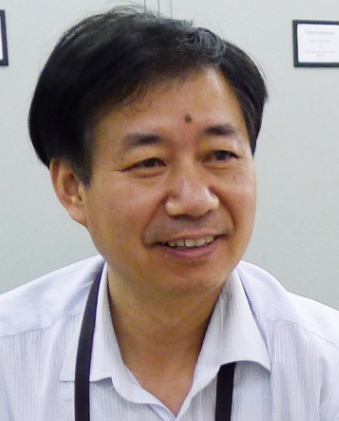 Zhiduan Chen (陈之端)合作论文数State Key Laboratory of Systematic and Evolutionary Botany, Institute of Botany, Chinese Academy of Sciences3
 Jian Zhang (张健)合作论文数School of Life Sciences, Sun Yat-Sen University3
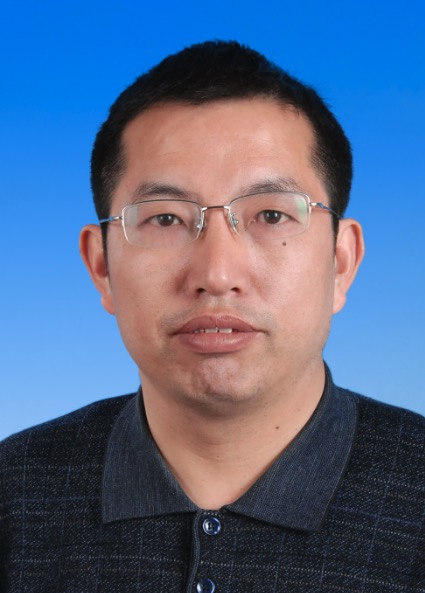 Jianquan Liu (刘建全)合作论文数The College of Life Sciences, Sichuan University2Xiaohui Ma合作论文数2Guoqiang Zhang合作论文数2
 Zhiwen Wang (王智文)合作论文数School of Chemical Engineering and Technology, Tianjin University2
 Xiang Zhao合作论文数National Oceanography Centre, University of Southampton2
 Yuannian Jiao (焦远年)合作论文数State Key Laboratory of Systematic and Evolutionary Botany, Institute of Botany, Chinese Academy of Sciences2Bing Liu合作论文数1Mei-Zhi Wang合作论文数1
 Yanlong Guan (关艳龙)合作论文数University of Chinese Academy of Sciences;Kunming Institute of Botany, Chinese Academy of Sciences1
 Yang Liu合作论文数1Mo-Zhu Wang合作论文数1Jun-Xia Su合作论文数1
 Jian-Fei Ye (叶建飞)合作论文数School of Ecology, Sun Yat-sen University1
 Arthur Zwaenepoel合作论文数Univ Ghent, Dept Plant Biotechnol & Bioinformat, Ghent, Belgium1Linjing Zhang合作论文数1Qirui Li合作论文数1
 Jie-Yu Wang合作论文数Key Laboratory of Plant Resources Conservation and Sustainable Utilization, South China Botanical Garden, Chinese Academy of Sciences, Guangzhou, China.1Gang Zeng合作论文数1Wenjing Sun合作论文数1
 Kunpeng Li (李坤鹏)合作论文数1Qinghua Wang合作论文数1
 Yanting Niu合作论文数1TianRui Yang (杨天瑞)合作论文数1CuiPing Gao (高翠萍)合作论文数1
 Fei Chen (陈飞)合作论文数College of Horticulture, Nanjing Agricultural University1
 Jiayu Xue (薛佳宇)合作论文数College of Horticulture, Nanjing Agricultural University1
 Ming Chen (陈铭)合作论文数Department of Bioinformatics, College of Life Sciences, Zhejiang University1Daming Zhang (张大明)合作论文数中国科学院植物研究所1
 Liwang Qi (齐力旺)合作论文数State Key Laboratory of Tree Genetics and Breeding, Research Institute of Forestry Chinese Academy of Forestry1
 Yu Jia (贾渝)合作论文数Institute of Botany, Chinese Academy of Sciences1
 Huanming Yang (杨焕明)合作论文数Chinese Academy of Medical Sciences;BGI Group;Advanced Institute for Life and Health, Southeast University1
 Guojing Li (李国婧)合作论文数College of Life Sciences, Inner Mongolia Agricultural University1Hui Zhang合作论文数Div Rheumatol & Immunol, Stanford Univ1Li Ming-He合作论文数1Shanshan Dong (董珊珊)合作论文数School of Life Science and Technology, Xi'an Jiaotong University1
 Yalong Guo (郭亚龙)合作论文数State Key Laboratory of Systematic and Evolutionary Botany, Institute of Botany, The Chinese Academy of Sciences;University of Chinese Academy of Sciences1Jianfen Yang合作论文数1
 Limin Lu (鲁丽敏)合作论文数State Key Laboratory of Systematic and Evolutionary Botany, Institute of Botany, the Chinese Academy of Sciences1
 Qian Wang (王倩)合作论文数College of Horticulture, China Agricultural University1
 Qi Yang (杨琪)合作论文数College of Forestry and Biotechnology, Zhejiang A&F University1
 Jianhua Li (李建华)合作论文数Hope College1
 Qingfeng Wang (王青锋)合作论文数Wuhan Botanical Garden, Chinese Academy of Sciences1
 Douglas E. Soltis合作论文数Laboratory of Molecular Systematics & Evolutionary Genetics, Florida Museum of Natural History, University of Florida;Department of Biology, University of Florida1
 Ruigang Wang (王瑞刚)合作论文数内蒙古农业大学生命科学学院1




