In single molecule study, surface-enhanced Raman scattering (SERS) has the advantage of specifically providing structural information of the molecules targeted. The main challenge in single molecule SERS is developing reusable plasmonic substrates that ensures single molecule sensitivity and acquires intrinsic information of molecules. Here, we proposed a strategy to utilize single- walled carbon nanotubes (SWNTs) to construct SERS substrates. Employing ultrasonic spray pyrolysis, we prepared in situ polyhedral gold nanocrystals closely spaced and attached to nanotubes, ensuring valid hot spots formed along the tube-walls. With such SERS substrates, we proved the single molecule detection by the statistical analysis based on the natural abundance of isotopes. Since SWNTs provide non-chemical bonding adsorption sites, our SERS substrates are easily reusable and have a unique advantage of preserving the intrinsic property of the molecules detected. Using SWNTs to build SERS substrates may become a powerful general strategy in various static and dynamic studies of single molecules.
Tungsten disulphide has attracted great research interest due to its layered structure as well as physical and chemical properties. A less common type of tungsten sulphide, WS3, has also been studied as an electrochemical catalyst, but its crystal structure remains unclear because it has only been prepared in the amorphous form. In this work, crystalline WS3 is synthesized with a desert-rose-like morphology through the sulphurization of WO3·0.33H2O in a solvothermal reaction. The composition of WS3 is confirmed by X-ray photoelectron spectroscopy measurements as well as thermogravimetric experiment. The crystalline WS3 also has a layered structure and is likely to belong to the trigonal crystal system. Its lattice parameters in the hexagonal description are 5.30 Å × 5.30 Å × 29.0 Å <90 ° × 90 ° × 120°>, which are determined by 3D electron diffraction and powder X-ray diffraction. The WS3 shows potential as catalyst for the electrochemical hydrogen evolution reaction. Our findings extend the family of layered tungsten sulphide materials.
The resonant Raman spectroscopy can only detect on‐resonance single‐walled carbon nanotubes (SWNTs) within the laser resonance window. In principle, surface‐enhanced Raman scattering (SERS) spectroscopy can expand the resonance window. However, detection of off‐resonance SWNTs by SERS remains challenging due to the difficulties in locating the SWNTs exactly at the hot spots with enormous SERS enhancements. Here, polyhedral gold nanocrystals (AuNCs) are in situ prepared on SWNTs for SERS detection via a facile ultrasonic spray pyrolysis method. The fact that the edges of the AuNCs attach to the SWNTs ensures the location of SWNTs perfectly at the SERS hot spots. Consequently, the enormous SERS enhancement enables a maximum enhancement factor of (3.4 ± 0.6) × 10 4 for an individual SWNT, which is about two orders of magnitude higher than the maximum reported in literatures. The detection ratio of SWNTs is also dramatically increased from 33% without SERS to 76% with SERS. The existence of the polyhedral AuNCs suppresses the antenna effects of the SWNTs and allows effective enhancements of the SWNTs under various polarization conditions. The enormous enhancements also enable the detection of several new Raman bands of the SWNTs.
Graphene oxide-supported uniform cobalt tungstate nanoparticles (CoWO4/GO) were prepared, which can be used as catalyst precursors for the diameter-controlled growth of single-walled carbon nanotubes (SWCNTs).
Catalyst design plays vital roles in structurally relevant reactions. Revealing the catalyst structure and chemistry in the reactive environment at the atomic scale is imperative for the rational design of catalysts as well as the investigation of reaction mechanisms, while in situ characterization at the atomic scale at high temperature is still a great challenge. Here, tracking intermetallic Co7W6 nanocrystals with a defined structure and a high melting point by environmental aberration-corrected transmission electron microscopy in combination with in situ synchrotron X-ray absorption spectroscopy, we directly present the structural and chemical stability of the Co7W6 nanocrystals in methane, carbon monoxide, and hydrogen at temperatures of 700-1100 °C. The evidence is in situ and in real time with both atomic scaled resolution and collective information. The results are helpful in revealing the mechanism of structural-specified synthesis of single-walled carbon nanotubes. This research offers an example of systematic investigation at the atomic scale on catalysts under reactive conditions. Such catalysts presenting high structural stability may also find applications in other structure-specific synthesis.
More than 20 years after their discovery, our understanding of the growth mechanisms of single-wall carbon nanotubes is still incomplete, in spite of a large number of investigations motivated by potential rewards in many possible applications. Among the many techniques used to solve this challenging puzzle, computer simulations can directly address an atomic scale that is hardly accessible by other experiments, and thereby support or invalidate different ideas, assumptions, or models. In this paper, we review some aspects of the computer simulation and theoretical approaches dedicated to the study of single-wall carbon nanotube growth, and suggest some ways towards a better control of the synthesis processes by chemical vapor deposition.
Controlled growth of patterned single-walled carbon nanotubes (SWNTs) is an important issue in many applications. Herein, we demonstrated a method to pattern catalyst via inkjet printing for the growth of SWNTs, using metal salt solutions as the inks and an ordinary office-use printer. We printed water solutions of cobalt acetate on hydrophilic Si substrates and grew high quality SWNT films. The composition of the precursor solutions and the hydrophilicity of the substrates were crucial factors to the patterning.
Bimetallic catalysts play important roles in the selective growth of single-walled carbon nanotubes (SWNTs). Using the simple salts (NH4)6W7O24·6H2O and Co(CH3COO)2·4H2O as precursors, tungsten-cobalt catalysts were prepared. The catalysts were composed of W6Co7 intermetallic compounds and tungsten-dispersed cobalt. With the increase of the W/Co ratio in the precursors, the content of W6Co7 was increased. Because the W6Co7 intermetallic compound can enable the chirality specified growth of SWNTs, the selectivity of the resulting SWNTs is improved at a higher W/Co ratio. At a W/Co ratio of 6 : 4 and under optimized chemical vapor deposition conditions, we realized the direct growth of semiconducting SWNTs with the purity of ∼96%, in which ∼62% are (14, 4) tubes. Using salts as precursors to prepare tungsten-cobalt bimetallic catalysts is flexible and convenient. This offers an efficient pathway for the large-scale preparation of chirality enriched semiconducting SWNTs.
Bismuth oxides are important battery materials owing to their ability to electrochemically react and alloy with Li, which results in a high capacity level, which substantially exceeds that of graphite anodes. However, this high Li-storage capability is often compromised by the poor electrochemical cyclability and rate capability of bismuth oxides. To address these challenges, in this study, we design a hybrid architecture composed of reduced graphene oxide (rGO) nanosheets decorated with ultrafine Bi2O2.33 nanodots (denoted as Bi2O2.33/rGO), based on the selective and controlled hydrolysis of a Bi precursor on graphene oxide and subsequent crystallization via solvothermal treatment. Because of its high conductivity, large accessible area, and inherent flexibility, the Bi2O2.33/rGO hybrid exhibits stable and robust Li storage (346 mA·h·g–1 over 600 cycles at 10 C), significantly outperforming previously reported Bi-based materials. This superb performance indicates that decorating rGO nanosheets with ultrafine nanodots may introduce new possibilities for the development of stable and robust metal-oxide electrodes.
We developed a W/WOx-supported Ni catalyst for the diameter-controlled growth of single-walled carbon nanotubes (SWNTs) by chemical vapor deposition (CVD) valid for different substrates and broad growth conditions. The Ni nanoparticles anchored on W/WOx are well dispersed and show superior stability to high temperature. Under broad CVD windows of temperature and carbon feedstock supply conditions, SWNTs with narrow diameter distribution of similar to 1.3 +/- 0.1 nm can be steadily synthesized. This strategy also works well in the growth of surface lattice oriented SWNT arrays. The aligned SWNTs grown on ST-cut quartz show similar diameters to those obtained on silicon wafers. (C) 2017 Published by Elsevier Ltd.
Single-walled carbon nanotubes (SWNTs) have shown great potential in various applications attributed to their unique structure-dependent properties. Therefore, the controlled preparation of chemically and structurally pristine SWNTs is a crucial issue for their advanced applications (e.g., nanoelectronics) and has been a great challenge for two decades. Epitaxial growth from well-defined seeds has been shown to be a promising strategy to control the structure of SWNTs. Segments of carbon nanotubes, including short pipes from cutting of preformed nanotubes and caps from opening of fullerenes or cyclodehydrogenation of polycyclic hydrocarbon precursors, have been used as the seeds to grow SWNTs. Single-chirality SWNTs were obtained with both presorted chirality-pure SWNT segments and end caps obtained from polycyclic hydrocarbon molecules with designed structure. The main challenges of nanocarbon-segment-seeded processes are the stability of the seeds, yield, and efficiency. Catalyst-mediated SWNT growth is believed to be more efficient. The composition and morphology of the catalyst nanoparticles have been widely reported to affect the chirality distribution of SWNTs. However, chirality-specific SWNT growth is hard to achieve by alternating catalysts. The specificity of enzyme-catalyzed reactions brings us an awareness of the essentiality of a unique catalyst structure for the chirality-selective growth of SWNTs. Only catalysts with the desired atomic arrangements in their crystal planes can act as structural templates for chirality-specific growth of SWNTs. We have developed a new family of catalysts, tungsten-based intermetallic compounds, which have high melting points and very special crystal structures, to facilitate the growth of SWNTs with designed chirality. By the use of W6Co7 catalysts, (12,6) SWNTs were directly grown with purity higher than 92%. Both high-resolution transmission electron microscopy measurements and density functional theory simulations show that the selective growth of (12,6) tubes is due to a good structural match between the carbon atom arrangement around the nanotube circumference and the metal atom arrangement of (0 0 12) planes in the catalyst. Similarly, (16,0) SWNTs exhibit a good structural match to the (116) planes of the W6Co7 catalyst. By optimization of the chemical vapor deposition (CVD) conditions, zigzag (16,0) SWNTs, which are generally known as a kinetically unfavorable species in CVD growth, were obtained with a purity of ∼80%. Generally speaking, the chirality-specific growth of SWNTs is realized by the cooperation of two factors: the structural match between SWNTs and the catalysts makes the growth of SWNTs with specific chirality thermodynamically favorable, and further manipulation of the CVD conditions results in optimized growth kinetics for SWNTs with this designed chirality. We expect that this advanced epitaxial growth strategy will pave the way for the ultimate goal of chirality-specified growth of SWNTs and will also be applicable in the controlled preparation of other nanomaterials.
 Yan Li (李彦)合作论文数College of Chemistry and Molecular Engineering, Peking University11
 Feng Yang (杨烽)合作论文数Department of Chemistry, College of Science, Southern University of Science and Technology7
 Zeyao Zhang合作论文数5
 Daqi Zhang合作论文数5
 Meihui Li合作论文数5
 Juan Yang (杨娟)合作论文数College of Chemistry and Molecular Engineering, Peking University5Xiulan Zhao合作论文数4
 Li Ding (丁力)合作论文数School of Electronics, Peking University4Chenmaya Xia合作论文数2
 Min Lyu合作论文数College of Chemistry and Molecular Engineering, Peking University2Qidong Liu合作论文数2
 Xu Liu (刘旭)合作论文数School of Energy and Environment, Southeast University2Haoming Liu合作论文数2Ruoming Li合作论文数2
 Sheng Li (李胜)合作论文数School of Computer Sciences, Peking University;Department of Computer Science, Peking University;Graphics and Interaction Lab, Peking University2
 Jiye Xia合作论文数1
 Liyu Hao合作论文数1Wenqing Yan合作论文数1Yixi Yao合作论文数1
 Xiaowei Wang (王小玮)合作论文数School of Metallurgy and Environment, Central South University1Xue Zhao合作论文数1Yu CAO (曹宇)合作论文数1
 Sheng Zhu合作论文数1Junhan Chen合作论文数1Haichen Liang合作论文数1
 Qingzhou Liu合作论文数Univ Southern Calif, Mork Family Dept Chem Engn & Mat Sci, Los Angeles, CA 90089 USA1
 Fengrui Yao合作论文数Peking Univ, Sch Phys, State Key Lab Mesoscop Phys, Beijing 100871, Peoples R China1
 Yi Qiu (邱忆)合作论文数Analytical Instrumentation Center, College of Chemistry and Molecular Engineering, Peking University1
 Nguyen Tuan Hung合作论文数Frontier Research Institute for Interdisciplinary Sciences, Tohoku University1
 Yan Zhang (张焱)合作论文数Institute of Condensed Matter and Material Physics, Peking University1
 Kaihui Liu (刘开辉)合作论文数School of Physics, Peking Univeristy1
 Chuanhong Jin (金传洪)合作论文数Center for Electron Microscopy, State Key Laboratory of Silicon and Advanced Semiconductor Materials, School of Materials Science and Engineering, Zhejiang University1
 Esko Kauppinen合作论文数Department of Applied Physics, School of Science, Aalto University1
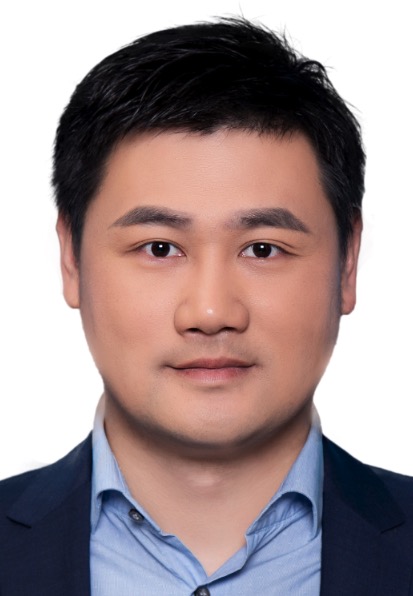 Xiao Wang (王笑)合作论文数College of Materials Science and Engineering, Hunan University1
 Hirotani Jun合作论文数Graduate School of Engineering, Kyushu University1Gao Dongliang合作论文数1
 Zhengyang Zhou (周钲洋)合作论文数Shanghai Institute of Ceramics, Chinese Academy of Sciences;University of Chinese Academy of Sciences1
 Tian Boyuan合作论文数1Haofei Zhao (赵豪飞)合作论文数School of Mathematics and Physics, University of Science and Technology Beijing1
 Xuan Cao (曹煊)合作论文数Tencent1Nugraha A R T合作论文数1
 Patrik Laiho合作论文数1
 Rongming Wang (王荣明)合作论文数School of Mathematics and Physics, University of Science and Technology Beijing1
 Raymond Wai-yeung Wong (黄维扬)合作论文数Department of Applied Biology and Chemical Technology, Faculty of Science, The Hong Kong Polytechnic University1
 Chongwu Zhou合作论文数Department of Electrical Engineering, Viterbi School of Engineering, University of Southern California1
 Junliang Sun (孙俊良)合作论文数College of Chemistry and Molecular Engineering, Peking University1
 Ming Zheng合作论文数Materials Science and Engineering Division, Material Measurement Laboratory, National Institute of Standards and Technology1
 Shigeo Maruyama (丸山茂夫)合作论文数School of Mechanical Engineering, Zhejiang University1
 Yutaka Matsuo (松尾豊)合作论文数Department of Chemical Systems Engineering, Graduate School of Engineering, Nagoya University;School of Engineering Materials Science and Engineering, Nagoya University;Graduate School of Science, Tohoku University1




