Bio-oil/char slurry from wood biomass is an attractive and novel fuel with advantages in energy density, storage and transportation. In this paper, fundamental characteristics of fluidized bed system for fast pyrolysis is presented as improved pyrolysis reactor of our earlier system. This system shows good performance for short residence time close to a few seconds. Influences of the location of biomass supply in a fluidized bed and the resident time on yields quantity and quality are clarified. The property of the yields is shown that the high quality (high-heating value) of bio-oil is obtained under the short residence time.
When a small quantity of water (of volume typically one-tenth of the dense bed total volume) is added to a gas-fluidized bed of relatively large non-wettable particles, such as 6 mm polystyrene spheres, the added water can cause a dramatic improvement in the quality of fluidization. By reducing the water requirement, the resulting fluidized bed is advantageous for washing of farm products or fragile industrial devices. In this article, the characteristics of washing in this unique multi-phase flow system are investigated. Three kinds of experiments were conducted on target cylinders immersed in a water-assisted fluidized bed to measure particle collision forces on the cylinder surface, to determine attrition of a cylinder surface and to test whitening of a cylinder covered with soiled cloth. It is shown that the washing results from a combination of gentle abrasive washing due to liquid movement and direct attrition and fragment removal caused by particle collisions with the surface.
Bio-oil/char slurry from wood biomass is an attractive and novel fuel with advantages in energy density, storage and transportation. In this paper, limitations in the performance of free-fall (drop test) reactors are discussed first. Then the characteristics of the yields of quasi-bio-oil and its slurry produced by "intermediate speed (10-60 s residence time)" pyrolysis of Sugi-material, are discussed as the first stage in the development of an effective process. Intermediate-rate pyrolysis has important engineering advantages relative to conventional fast (0.5-2 s residence time) pyrolysis. It is shown that quasi-bio-oil/char slurry has the potential to provide a good source of low-quality industrial fuel.
The addition of liquid water to beds of polystyrene particles exceeding 3 mm in diameter enhanced spouting by causing a decrease in the minimum spouting velocity. While the degree of enhancement is quantitatively comparable to what we reported previously for fluidized beds of large light hydrophobic particles, the mechanism is quite different. Enhancement of spouting takes place because the liquid congregates at the spout-annulus interface, forming an effective nearly-impermeable draft tube which then increases the velocity of the gas up the spout.
According to the trend of needs for renewable or sustainable energy in the world, issues for wind power, solar, and biomass energies have become a large concern. Among such renewable energies, biomass energy is thought to have a great potentiality. In Kochi, prefectural feasibility studies regarding the biomass energy from trees were planned and studied. However, the wood-based biomass energy system is not economical, and no actual biomass energy projects have started yet in Kochi. The income from the biomass energy (electricity and heat) is much lower than the expenditure for purchasing trees and the depreciation for a biomass plant. Therefore, the items to be discussed here are: 1) how to achieve an economical system considering income and outcome of wood-based biomass energy and 2) how to obtain an efficient biomass system for continuous running operation. The first issue is to find an economical way to obtain some by-products such as ethanol or sugar, which is the idea in the US. Herein, we have tried to produce cypress oil as a by-product from cypress trees. The second is to find an efficient way for biomass energy production. We selected a spouted bed technique rather than conventional fluidized bed techniques which are widely used for biomass energy production. The method was selected so that tar removal is easy compared to the conventional fluidized bed. This report is the interim report on the development of cypress oil extraction and small-sized biomass energy system using the spouted bed technique.
When liquid is added to large-particle gas-fluidized beds where the liquid density is similar to the particle density, the liquid addition can cause a dramatic increase in the velocity range and intensity of fluidization. In this paper it is shown that this also leads to strong enhancement of the heat transfer between the bed and an immersed tube. Experiments were carried out using a heated tube of outer diameter 25 mm in air-fluidized beds of polystyrene particles or glass beads to which small quantities of water (typically equivalent to 10 per cent of the bed volume) were added. The results from the heat transfer experiments are explained with the aid of observations of the tube surface using an industrial endoscope located inside the tube. The key factors underlying the enhancement of heat transfer are identified to be heat conduction to liquid-solid aggregates, convection to the liquid phase, convection to the gas phase and vaporization.
There are circumstances where fluidization of particles by a gas can be promoted by the addition of small quantities of liquid, contrary to many reported cases where liquid impedes gas-solid fluidization. Enhancement occurs only when the particles are larger than about 3 mm in diameter, the liquid and particles have similar densities (within similar to25%), and the particles are poorly wetted by the liquid. When these conditions are met, the liquid causes the minimum gas fluidization velocity U-gmf to decrease and particle motion to be more vigorous. For low liquid loadings, U-gmf and the pressure drop across the bed are then predicted well by a "modified liquid-perturbed gas model."
Dynamic forces on a single horizontal tube have been investigated in a two-dimensional fluidized bed, and key mechanisms relating to buffeting forces on tubes have been identified. The net force acting on the tube, as well as pressure profiles arount it, have been measured simultaneously by strain gauges and pressure transducers. Pressure forces resulting from the gas pressure distribution have been calculated and compared with the actual forces measured by strain gauges. The experimental results have been matched with visual observations, and the characteristics transient force profiles are distinguished. In general, the net force experienced by the tube due a single bubble passage correlates well with that calculated from the pressure distribution, predicted using the simple Davidson model, except for the period corresponding to particle wake impact. The force due to wake impact is considerably larger than that due to the dynamic pressure distribution, but is significantly reduced when a bubble splits due to the presence of the tube.
流動層中に置かれたフィン付単一管,フィン付管群,裸管群の伝熱性能や流動抵抗に関する実験的研究を行った。フィン条件や管群条件が諸性能へ及ぼす影響や,管群まわりの粒子濃度と伝熱性能との関係を調査し,更に層高を低減化した場合の検討も行った。結果として,フィン高さやフィン間隔,フィン厚さ,管ピッチ,層高などに対する最適値を明らかにすることができ,流動層形熱交換器の設計指針の一例を提示することができた。
Etude experimentale du transfert de chaleur entre un tube horizontal et un lit fluidise de particules relativement grosses en vue de determiner l'influence des facteurs principaux sur le point optimal de fonctionnement du systeme: coefficient de transfert de chaleur maximal et vitesse optimale de fluidisation
 John R. Grace合作论文数Department of Chemical and Biological Engineering, University of British Columbia8
 Yutaka Asako合作论文数Malaysia - Japan International Institute of Technology6
 A. Yokogawa合作论文数4
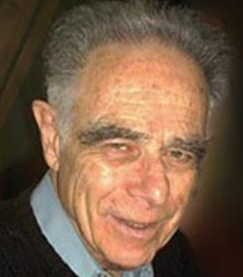 Norman Epstein合作论文数Department of Chemical and Biological Engineering, Faculty of Applied Science, The University of British Columbia3
 Dong Ha Lee合作论文数Dept Integrated Energy & Infra Syst, Kangwon Natl Univ2K.S. Lim合作论文数1




