Symmetry is a key structural cue in computer graphics, guiding many shape analysis tasks. We propose a novel method to extract intrinsic reflective symmetry axis curves—curves that split a mesh into two intrinsically symmetric, near-equal regions. Our approach begins with geodesic-based point sampling, followed by point matching via spectral histograms computed along geodesic paths to candidate bisector regions. These histograms are compared using normalized optimal transport. To improve robustness, we aggregate votes from multiple paths and midpoints, selecting the best bisector region and refining the axis iteratively. Our method outperforms state-of-the-art techniques on SCAPE and TOSCA, and produces strong results on the diverse Princeton dataset.
In this paper, we introduce a fast, simple and novel mesh convolution operator for learning dense shape correspondences. Instead of calculating weights between nodes, we explicitly aggregate node features by serializing neighboring vertices in a fan-shaped order. Thereafter, we use a fully connected layer to encode vertex features combined with the local neighborhood information. Finally, we feed the resulting features into the multi-resolution functional maps module to acquire the final maps. We demonstrate that our method works well in both supervised and unsupervised settings, and can be applied to isometric shapes with arbitrary triangulation and resolution. We evaluate the proposed method on two widely-used benchmark datasets, FAUST and SCAPE. Our results show that FanNet runs significantly faster and provides on-par or better performance than the related state-of-the-art shape correspondence methods.
This paper introduces a novel approach to compute the geometric kernel of a polygon mesh embedded in 3D. The geometric kernel defines the set of points inside or on the shape’s boundary, ensuring visibility of the entire shape. The proposed method utilizes scattered rays to identify a sufficient number of sample points on the kernel surface and subsequently leverages these points to locate as many surface vertices as possible. By computing the convex hull of these identified points, we derive an approximation of the kernel. Notably, the output of our method consists exclusively of interior or boundary points of the actual kernel. Comparative evaluations against established CGAL and Polyhedron Kernel algorithms highlight our method’s superior computational speed and high approximation accuracy. The parametric structure of our solution allows for different levels of accuracy to be obtained, enabling the user to tailor the approximation to their specific needs. This property sets our algorithm apart from others and provides greater flexibility in its use. Additionally, adjusting the algorithmic settings also enables the computation of the kernel itself with a trade-off in computational speed. Furthermore, our algorithm swiftly and accurately identifies an empty kernel for non-star-shaped configurations.
The majority of the simplification methods focus on preserving the appearance of the mesh, ignoring the spectral properties of the differential operators derived from the mesh. The spectrum of the Laplace-Beltrami operator is essential for a large subset of applications in geometry processing. Coarsening a mesh without considering its spectral properties might result in incorrect calculations on the simplified mesh. Given a 3D triangular mesh, this article aims to simplify the mesh using edge collapses, while focusing on preserving the spectral properties of the associated cotangent Laplace-Beltrami operator. Unlike the existing spectrum-preserving coarsening methods, we consider solely the eigenvalues of the operator in order to preserve the spectrum. The presented method is partition based, that is the input mesh is divided into smaller patches which are simplified individually. We evaluate our method on a variety of meshes, by using functional maps and quantitative norms, to measure how well the eigenvalues and eigenvectors of the Laplace-Beltrami operator computed on the input mesh are maintained by the output mesh. We demonstrate that the achieved spectrum preservation is at least as effective as the existing spectral coarsening methods.
We compute the kernel of a shape embedded in 3D as a polygon mesh, which is defined as the set of all points that have a clear line of sight to every point of the mesh. The KerGen algorithm, short for Kernel Generation, employs efficient plane-plane and line-plane intersections, alongside point classifications based on their positions relative to planes. This approach allows for the incremental addition of kernel vertices and edges to the resulting set in a simple and systematic way. The output is a polygon mesh that represents the surface of the kernel. Extensive comparisons with the existing methods, CGAL and Polyhedron Kernel, demonstrate the remarkable timing performance of our novel additive kernel computation method. Yet another advantage of our additive process is the availability of the partial kernel at any stage, making it useful for specific geometry processing applications such as star decomposition and castable shape reconstruction.
Approximate convex decomposition simplifies complex shapes into manageable convex components. In this work, we propose a novel surface-based method that achieves efficient computation times and sufficiently convex results while avoiding overapproximation of the input model. We start approximation using mesh simplification. Then we iterate over the surface polygons of the mesh and divide them into convex groups. We utilize planar and angular equations to determine suitable neighboring polygons for inclusion in forming convex groups. To ensure our method outputs a sufficient result for a wide range of input shapes, we run multiple iterations of our algorithm using varying planar thresholds and mesh simplification levels. For each level of simplification, we find the planar threshold that leads to the decomposition with the least number of pieces while remaining under a certain concavity threshold. Subsequently, we find the simplification level that houses the decomposition with the least concavity, and output that decomposition as our result. We demonstrated experiment results that show the stability of our method as well as compared our work to two convex decomposition algorithms, providing discussion on the shortcomings and advantages of the proposed method. Notably, our main advantage turns out to be on time efficiency as we produce output faster than our competitors which, however, outperform our results for some models from an accuracy perspective.
In this paper, a novel data-centric approach is proposed for solving the 3D mesh segmentation problem. The method uses node2vec, a semi-supervised learning algorithm, to create vector embedding representations for each node in a 3D mesh graph. This makes the mesh data more compact and easier to process which is important for reducing computation costs. K-Means clustering is then used to cluster each node according to their node embedding information. This data-centric approach is more computationally efficient than other complex models such as CNN and RNN. The main contribution of this study is the development of a data-centric AI framework that combines node2vec embedding, machine learning, and deep learning techniques. The use of cosine similarity is also adapted to compare and evaluate the trained node embedding vectors with different hyperparameters. Additionally, a new algorithm is developed to determine the optimal cluster number using geodesic distance on the 3D mesh. Overall, this approach provides competitive results compared to existing mesh segmentation methods.
Machine learning and deep learning techniques are widely used to make sense of 3D point cloud data which became ubiquitous and important due to the recent advances in 3D scanning technologies and other sensors. In this work, we propose two networks to predict the class of the input 3D point cloud: 3D Auxiliary Classifier Generative Adversarial Network (ACGAN-3D) and Versatile Auxiliary Conditional Wasserstein Generative Adversarial Network with Gradient Penalty (VACWGAN-GP). Unlike other classifiers, we are able to enlarge the limited data set with the data produced by generative models. We consequently aim to increase the success of the model by training it with more data. As suggested by the conventional ACGAN models, in addition to the real dataset, we train the Discriminator with synthetic data generated by the Generator using the class label. By doing so, we ensure that Discriminator can discriminate between the real data and the synthetic data. Thus, as the training evolves, the Generator is trained to produce more realistic synthetic data, which in turn forces Discriminator to classify or discriminate better. Defined originally on 2D images, our ACGAN-3D modifies this conventional ACGAN model in order to classify 3D point clouds by updating the neural network layers. Our second model VACWGAN-GP, on the other hand, demonstrates similar abilities with more stable training by replacing its Discriminator with Critic and by modifying its loss function. In this model, we managed to merge Wasserstein GAN-GP with conditional GAN in order to improve the classifier’s performance. The proposed models ACGAN-3D and VACWGAN-GP were tested extensively on 3D datasets and comparisons with the other state-of-the-art studies have revealed our clear advantages on various aspects. While ACGAN-3D can be preferred with its compact design, our second method VACWGAN-GP stands out for higher performance.
We propose a fully-automatic method that computes from scratch pointto-point dense correspondences between isometric shapes under topological noise. While relying on pairwise distance preservation constraints is common and generally sufficient to handle isometric deformations, presence of topological noise needs further actions that we present as our main contributions. First, instead of comparing distances over two paths on two input surfaces, we cast fuzzy votes at the path endpoints based on topologically-robust heat diffusion from path vertices. Second, we make the matching even more stable to topological noise by introducing the so-called reodesics, which are locally shortest geodesics that go through robust matches. In addition to the five standard datasets for isometric shape correspondence with and without topological noise, we employ and release a sixth one geared specifically towards topological noise evaluation with ground-truth information. We demonstrate our qualitative and quantitative advantages over seven recent state-of-the-art methods on these six datasets.
Generating 3D models from 2D images or sketches is a widely studied important problem in computer graphics. We describe the first method to generate a 3D human model from a single sketched stick figure. In contrast to the existing human modeling techniques, our method does not require a statistical body shape model. We exploit Variational Autoencoders to develop a novel framework capable of transitioning from a simple 2D stick figure sketch, to a corresponding 3D human model. Our network learns the mapping between the input sketch and the output 3D model. Furthermore, our model learns the embedding space around these models. We demonstrate that our network can generate not only 3D models, but also 3D animations through interpolation and extrapolation in the learned embedding space. In addition to 3D human models, we produce 3D horse models in order to show the generalization ability of our framework. Extensive experiments show that our model learns to generate compatible 3D models and animations with 2D sketches.
Obtaining new poses of an articulated character is a critical task in computer graphics. We address this issue with a new shape deformation approach consisting of two phases enabling the user to express the new pose as a simple stick figure, also called skeleton consisting of few bones. We interchangeably refer to this problem as shape transfer because the template shape is transferred to the independent stick figure that may be obtained from any source such as motion capture and 3D sketching. In the first phase, the stick figure is embedded into the template shape, resembling the rigging process of character skinning. Then, instead of computing blend weights as in skinning, the shape, discretized as a mesh, is augmented by adding extra edges between a subset of mesh vertices and the embedded stick figure. The second phase deforms the augmented mesh towards the new pose under the guidance of the embedded stick figure by minimizing an As-Rigid-As-Possible (ARAP) energy. The overall deformation is intuitive as skinning, preserves surface details as it is based on ARAP deformation yet has better volume preservation capability owing to the augmented mesh. Our results are validated both in terms of timing and accuracy in a comprehensive test suite that includes state-of-the-art deformation techniques. • Edges between mesh and its skeleton prevent from volume loss in ARAP deformation. • Two skeletons can be matched by minimizing a distance-based penalty function. • Distance-based skeleton matching method can be used as an automatic rigging method. • New poses of a shape can be created by using a stick figure and a template mesh.
We propose a novel approach for reconstructing plausible three‐dimensional (3D) human body models from small number of 3D points which represent body parts. We leverage a database of 3D models of humans varying from each other by physical attributes such as age, gender, weight, and height. First we divide the bodies in database into seven semantic regions. Then, for each input region consisting of maximum 40 points, we search the database for the best matching body part. For the matching criterion, we use the distance between novel point‐based features of input points and body parts in the database. We then combine the matched parts from different bodies into one body, with the help of Laplacian deformation, which results in a plausible human body. To evaluate our results objectively, we pick points from each part of the ground‐truth human body models, then reconstruct them using our method and compare the resulting bodies with the corresponding ground‐truths. Also, our results are compared with registration‐based results. In addition, we run our algorithm with noisy data to test the robustness of our method and run it with input points whose body parts are manually edited, which produces plausible human bodies that do not even exist in our database. Our experiments verify qualitatively and quantitatively that the proposed approach reconstructs human bodies with different physical attributes from a small number of points using a small database.
We present a new scale-adaptive ICP (Iterative Closest Point) method which aligns two objects that differ by rigid transformations (translations and rotations) and uniform scaling. The motivation is that input data may come in different scales (measurement units) which may not be known a priori, or when two range scans of the same object are obtained by different scanners. Classical ICP and its many variants do not handle this scale difference problem adequately. Our novel solution outperforms three different methods that estimate scale prior to alignment and a fourth method that, similar to ours, jointly optimizes for scale during the alignment.
An active problem in digital geometry processing is shape interpolation which aims to generate a continuous sequence of in-betweens for a given source and target shape. Unlike traditional approaches that interpolate source and target shapes in isolation, recent data-driven approaches utilize multiple interpolations through intermediate database shapes, and consequently perform better at the expense of a database requirement. In contrast to the existing data-driven approaches that consider intermediate shapes as full inseparable entities, our novel data-driven method treats the shapes as separable parts. In particular, we interpolate parts over different intermediate shapes and merge them all in the end, which brings more flexibility and variety than the existing ways of interpolating the full shape as a whole over one fixed set of intermediates. To be able to proceed consistently over different sets of intermediate shapes, we construct a unified framework based on parametric curves. We justify the two key points in the proposed method, interpolating parts separately and data-driven by curve parameterization, in the qualitative and quantitative evaluations. We demonstrate promising results in comparison with five other techniques. Our method morphs not only poses but also forms, e.g., turning one person to another. The results are improved further with a mild data augmentation procedure that is based on the original algorithm. As a side contribution, we provide a public articulated hand dataset with fixed connectivity, which can be used in the evaluation of other interpolation methods.
We propose a method for extracting auxetic patterns from meshes for fabrication by modifying the existing mesh primitives directly and fully automatically. This direct approach is novel in the sense that most of the fabricationoriented surface tiling methods introduce additional primitives, such as curve networks in an interactive semiautomatic framework. Our method is based on a remeshing procedure that converts a given quad mesh with arbitrary topology into our desired structure that is ready to be fabricated. The main advantages of establishing auxetic patterns on meshes are the achieved flexibility using cheap inflexible materials as well as less material usage and fabrication time, as demonstrated in our results.
Generating 3D models from 2D images or sketches is a widely studied important problem in computer graphics. We describe the first method to generate a 3D human model from a single sketched stick figure. In contrast to the existing human modeling techniques, our method requires neither a statistical body shape model nor a rigged 3D character model. We exploit Variational Autoencoders to develop a novel framework capable of transitioning from a simple 2D stick figure sketch, to a corresponding 3D human model. Our network learns the mapping between the input sketch and the output 3D model. Furthermore, our model learns the embedding space around these models. We demonstrate that our network can generate not only 3D models, but also 3D animations through interpolation and extrapolation in the learned embedding space. Extensive experiments show that our model learns to generate reasonable 3D models and animations.
Important new developments have appeared since the most recent direct survey on shape correspondence published almost a decade ago. Our survey covers the period from 2011, their stopping point, to 2019, inclusive. The goal is to present the recent updates on correspondence computation between surfaces or point clouds embedded in 3D. Two tables summarizing and classifying the prominent, to our knowledge, papers of this period, and a large section devoted to their discussion lay down the foundation of our survey. The discussion is carried out in chronological order to reveal the distribution of various types of correspondence methods per year. We also explain our classification criteria along with the most basic solution examples. We finish with conclusions and future research directions.
We present a curve-skeleton extraction method in the form of curve-skeleton transfer from the source shape to the target. The shapes we deal with need to be in correspondence. They are discretized as meshes embedded in 3D and are not necessarily watertight. They can even be in arbitrary topology, and furthermore be disconnected point clouds. Our method associates the source skeleton with the source shape and computes the optimal rigid transformations towards the corresponding query shape points. This transformation for each source skeleton point is followed by a post-processing operation. Fixed skeleton connectivity maintained throughout the transfer guarantees that the resulting skeleton is as complex as the source skeleton, e.g., no redundant branches and complicated joint hierarchies. The performance and versatility of our method as well as its advantages over a direct skeleton extraction method are demonstrated.
In real-time computer graphics, efficient discretization of scenes is required in order to accelerate graphics related algorithms such as realistic rendering with indirect illumination and visibility checking. Sparse voxel octree (SVO) is a popular data structure for such a discretization task. Populating an SVO with data is challenging when dynamic object count is high, especially when data per spatial location is large. Problem of populating such trees is adressed with our Voxel Transformation method, where pre-generated voxel data is transformed from model space to world space on demand, in contrast to the common way of voxelizing each dynamic object over each frame. Additionally, an accompanying filtering technique for voxel transformation is also proposed. This technique serves proposed system in two ways: (1) resolves issues introduced by the proposed fast and scalable voxel transformation method, and (2) enables smooth transitions between frames and handles the aliasing problem naturally as shown in the supplementary video. As an application use case, the proposed Voxel Transformation method is demonstrated in order to achieve indirect illumination using the well-known voxel cone tracing method. Results, which is compared with the standard voxelization method and ground-truth, are visually appealing and also scalable over large number of dynamic objects as shown in the supplementary video.
 Yücel Yemez合作论文数Department of Computer Engineering, Koç University;Department of Design, Technology and Society, Graduate School of Social Sciences and Humanities, Koç University13
 T. Metin Sezgin合作论文数Department of Computer Engineering, College of Engineering, Koç University;Intelligent User Interfaces Laboratory, Koç University8
 Omar Seddati合作论文数University of Mons5
 Luca Rossetto合作论文数Faculty of Engineering and Computing, School of Computing, Dublin City University5
 Stephane Dupont合作论文数Laboratoire de Théorie des Circuits et Traitement du Signal ( TCTS );Faculté Polytechnique de Mons;Laboratoire de Théorie des Circuits et Traitement du Signal ( TCTS ), Faculté Polytechnique de Mons5
 Heiko Schuldt合作论文数Databases and Information Systems Group, University of Basel5
 Ivan Giangreco合作论文数4
 Daniel Cremers合作论文数Departments of Informatics and Mathematics, School of Computation, Information and Technology, Technical University of Munich3
 Michael Bronstein合作论文数Department of Computer Science, University of Oxford;AITHYRA Research Institute for Biomedical Artificial Intelligence3
 Ladislav Kavan合作论文数School of Computing, University of Utah;Meta3
 Emanuele Rodolà合作论文数Dipartimento di Informatica, Sapienza University of Rome3
 Claudiu Tanase合作论文数Faculty of Automatic Control and Computers, University Politehnica of Bucharest3
 Çaglar Seylan合作论文数2
 Ozan Can Altiok合作论文数2Melike Aydınlılar合作论文数2
 Alican Akman合作论文数2
 Silvan Heller合作论文数University of Basel2
 Zorah Lähner合作论文数University of Bonn;Lamarr Institute2
 Luca Cosmo合作论文数Department of Environmental Sciences, Informatics and Statistics, University of Venice2
 Sinan Kalkan合作论文数Department of Computer Engineering, Middle East Technical University2Sibel Tari合作论文数Computer Engineering Department
Middle East Technical Univ.2
Sinan Kalkan合作论文数Department of Computer Engineering, Middle East Technical University2Sibel Tari合作论文数Computer Engineering Department
Middle East Technical Univ.2 Vaclav Skala合作论文数Center of Computer Graphics and Visualization, Department of Computer Science and Engineering, Faculty of Applied Sciences, University of West Bohemia2Misranur Yazgan合作论文数1
 Tal Remez合作论文数Meta;Facebook AI Research1Devin Horsman合作论文数1
 Merve Asiler合作论文数1
 Bora Yalcıner合作论文数1
 Amit Boyarski合作论文数Technion1Alexander Dieckmann合作论文数1Roberto M. Dyke合作论文数School of Computer Science & Informatics, Cardiff University, United Kingdom1Ron Slossberg合作论文数Lumana1Emre Külah合作论文数1
 Sean U N Wood合作论文数Univ Sherbrooke, GEGI, NECOTIS, Sherbrooke, PQ, Canada1
 Gueorgui Pironkov合作论文数Univ Mons, TCTS Lab, Mons, Belgium1
 Daoliang Guo合作论文数1
 Paul L. Rosin合作论文数School of Computer Science, Cardiff University1
 Ulas Yaman合作论文数1
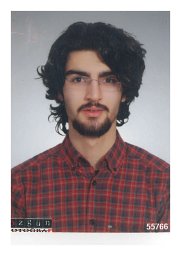 Tastan, Oguzhan合作论文数1
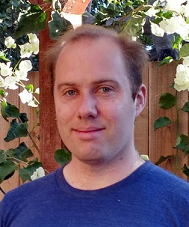 Matt Fisher合作论文数Adobe Research1
 Reinhard Klein合作论文数Computer Graphics Group, Institute of Computer Science II, University of Bonn1
 Matthias Vestner合作论文数1
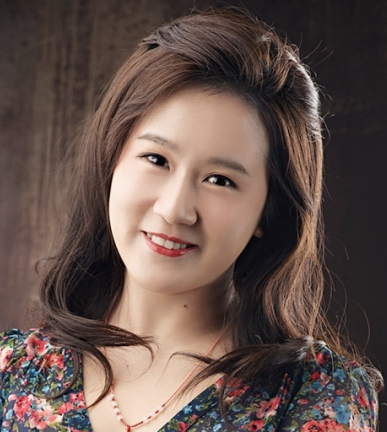 Kun Li (李坤)合作论文数College of Intelligence and Computing, Tianjin University1
 Yu-Kun Lai合作论文数School of Computer Science and Informatics, Cardiff University;AI Hub in Generative Models1
 Oliver Burghard合作论文数1
 Thibault Groueix合作论文数Adobe Research1
 Jingyu Yang (杨敬钰)合作论文数School of Electrical and lnformation Engineering, Tianjin University1
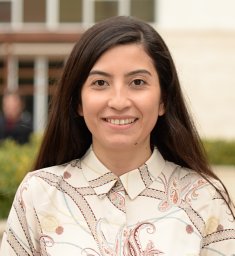 Asli Gençtav合作论文数Middle East Technical University1
 Or Litany合作论文数NVIDIA;Technion - Israel Institute of Technology1Alex M. Bronstein合作论文数School of Electrical Engineering, Tel Aviv University1




