Adaptive beamforming is applied in audio and acoustic applications to enhance a broadband signal of interest while suppressing interferences in challenging acoustic time-varying environments. A significant challenge in designing such beamformers is to minimize the number of sensors while maintaining a required level of performance. Herein, we focus on designing sparse broadband adaptive beamformers for concentric circular arrays, often used in video conferencing and various home vocal applications. We propose an iterative greedy design that selects a small number of sensors distributed over the rings of the array while imposing several constraints regarding the desired attributes of the beamformer. One of the constraints is a joint sparsity constraint on the sensor subset selection. This constraint ensures shared use of all the selected sensors for the bandwidth of interest, contributing to resource consumption reduction. Experimental results demonstrate the benefits of the proposed sparse sensor design in terms of desired signal frequency-invariant recovery and interference suppression level under limited computational and hardware constraints.
Frequency-invariant (FI) beamformers are used in audio and acoustic applications to enhance broadband signals with possibly varying angles of arrival. One of the main challenges is designing such beamformers using a small number of sensors while still performing well under adverse conditions. This paper introduces a new design approach for FI beamformers with sparse concentric circular arrays. We propose an iterative greedy design that optimizes both the number of required sensors and rings while preserving the pre-defined directivity pattern's properties for different frequencies and azimuthal steering directions. Experimental results demonstrate the benefits of the proposed sparse sensor design and FI beamformer in terms of array gain and rotationally invariant beampattern, under limited computational and hardware constraints.
In this paper, we propose an incoherent design method of sparse broadband arrays that optimizes the number of sensors and their positions simultaneously. We introduce an iterative clustering procedure that merges different groups of sensors with a small distance, in terms of Bhattacharyya distance, between their angle distributions. The iterative clustering procedure is initialized with a large number of groups of sensors, and computes in each iteration a clustering score and a threshold. Then, near groups are merged into joint groups, yielding a new set of groups of sensors. We show that the optimal set of sensors is obtained when the clustering score is larger than the threshold, indicating that the remaining groups are distant. The proposed approach is demonstrated by a design of a superdirective beamformer, and its performance is compared with an existing incoherent approach. Experimental results show improved performance in terms of a more favorable tradeoff between directivity factor and white noise gain.
Frequency-invariant concentric arrays are fundamental components in some real-world applications, like teleconferencing, voice service devices, underwater acoustics, and others, where the azimuthal arrival direction of the desired signal is varying. The fact that the demand for limited hardware and computational resources in such applications is essential, motivates the use of a sparse design which can optimize both the number of the required sensors and the complex weights of the beamformer. Herein, we propose a new greedy based joint-sparse design of frequency and rotationally invariant concentric arrays which preserves the properties of the designed directivity pattern for different azimuthal directions of steering. Simulation results show that the greedy sparse design, compared to uniform and random designs, gives superior performance in terms of array gain, and frequency and rotationally invariant beampattern, with a reasonable computational and hardware resources.
A common approach for acoustic source localization is based on finding the maximum of a spatial cost function, such as the steered response power (SRP) function. The shape of the SRP highly depends on the constellation of sensors within the array layout, and have a direct impact on the performance. Thus, an array may be designed to produce high localization performance and small error regions, especially when a spatially prioritized source location distribution is taken into account. We introduce a new measure called power spread, which quantifies the localization error region. Then, we propose a greedy algorithm for a sparse array design, aiming to minimize the power spread for optimal error region in a given area of interest. Simulations demonstrate that the proposed design, compared to standard linear array design and random array design, obtains superior performance in terms of power spread and localization error, with a reasonable computational effort.
Differential microphone arrays (DMAs) are characterized as compact superdirective beamformers whose beampatterns are almost frequency invariant. In this work, we present a time-domain design of Nth-order DMAs, which is important in some applications where minimal delay is required, such as real-time audio communications. Moreover, design in the time domain can reduce the computational efforts, compared to the frequency-domain design, especially when short filters are sufficient. We present design examples for DMAs illustrating some of the fundamental properties of the time-domain implementation as well as the equivalence to the frequency-domain design approach.
Frequency-invariant beamformers are used to prevent signal waveform distortions in real world applications like audio, underwater acoustics, and radar. Most of existing methods assume uniform arrays, and only few consider sparse designs, which may lead to higher performance in terms of robustness and directivity factor. We propose an incoherent approach that first determines for each frequency bin a sparse set of sensors positions. Subsequently, by using tools of dimensionality reduction and clustering, these selections are merged together yielding the optimal sensors on a sparse array layout. We present design examples of sparse linear and planar superdirective array designs. We show that the proposed incoherent sparse design obtains superior performance in terms of white noise gain, directivity factor, and computational load compared to a uniform array design and compared to a coherent sparse approach, where the sensors' locations and the beamformer coefficients are optimized simultaneously for all frequencies.
In this paper, we present a new approach for analyzing white light speckle patterns. The paper introduces an analytic model and heuristic explanations for the phenomena using the contrast and intensity statistics of the speckles. Relations between the coherence length, central wavelength and surface roughness are examined. It is shown that the speckle intensity is directly related to the autocorrelation function. We show that the new approach is consistent with previous models using simulation results and experimental data.
We present a joint-diagonalization based approach for a closed-form solution of the asymmetric supercardioid, implemented with circular differential microphone arrays. These arrays are characterized as compact frequency-invariant superdirective beamformers, allowing perfect steering for all azimuthal directions. Experimental results show that the asymmetric supercardioid yields superior performance in terms of white noise gain, directivity factor, and front-to-back ratio, when additional directional attenuation constraints are imposed in order to suppress interfering signals.
Circular differential microphone arrays (CDMAs) facilitate compact superdirective beamformers whose beampatterns are nearly frequency invariant. In contrast to linear differential microphone arrays where the optimal steering direction is at the endfire, CDMAs provide perfect steering for all azimuthal directions. Herein, we extend the traditional symmetric model of DMAs and establish an analytical asymmetric model for Nth-order CDMAs. This model exploits the circular geometry to eliminate the inherent limitation of symmetric beampatterns associated with a linear geometry and allows also asymmetric beampatterns. This new model is then used to develop asymmetric versions of two optimal commonly used beampatterns namely the hypercardioid and the supercardioid. Experimental results demonstrate the advantages of the asymmetric model compared to the traditional symmetric one, when additional directional constraints are imposed. The proposed model yields superior performance in terms of white noise gain, directivity factor, and front-to-back ratio, as well as more flexible design of nulls for the interfering signals.
Circular differential microphone arrays (CDMAs) facilitate compact superdirective beamformers whose beampatterns are nearly frequency invariant, and allow perfect steering for all azimuthal directions. Herein, we eliminate the inherent limitation of symmetric beampatterns associated with a linear geometry, and introduce an analytical asymmetric model for Nth-order CDMAs. We derive the theoretical asymmetric beampattern, and develop the asymmetric supercardioid. In addition, an Nth-order CDMAs design is presented based on the mean-squared-error (MSE) criterion. Experimental results show that the proposed model yields optimal performance in terms of white noise gain, directivity factor, and front-to- back ratio, as well as more flexible nulls design for the interfering signals.
Design of underwater acoustic sensing and communication systems is a very challenging task due to several channel effects like multipath propagation and Doppler spread. In order to cope with these effects, beamforming techniques have been applied to the design of such systems. The broadband nature of acoustic systems motivates the use of beamformers with frequency-invariant beampattern. Moreover, in some cases, these systems are limited by their physical dimensions. Differential microphone arrays (DMAs) beamformers, which have been used extensively in recent years for broadband audio signals, may comply with these requirements. DMAs are small-size arrays which can provide almost frequency-invariant beampatterns and high directivity. In this paper, we present a pool experiment which shows the compatibility of DMAs for the underwater acoustic channel. Additionally, we show how to compensate for the array mismatch errors leading to much better performance level and robust beamformers.
Circular differential microphone arrays (CDMAs) are characterized as compact superdirective beamformers whose beampatterns are almost frequency invariant. In contrast to linear differential microphone arrays (LDMAs) where the optimal steering direction is at the endfire, CDMAs provide almost perfect steering for all azimuthal directions. Herein, we present the design of a first-order CDMA in the time domain which is motivated by several aspects. First, time-domain implementation is important in some applications where minimal delay is required, such as realtime communications. Moreover, direct design in the time domain can reduce the computational efforts compared to the frequency-domain design, especially when short filters are sufficient. We present a design example for the time-domain first-order CDMA illustrating some of its fundamental properties as well as the equivalence to the frequency-domain alternative.
Differential microphone arrays (DMAs) have a great potential to overcome some of the problems of additive arrays and provide high spatial gain relative to their small size. In this work, we present a time-domain formulation for implementing first-order DMAs, which is very important for some applications in which minimal delay is required, such as real-time communications. We present a design example for first-order DMAs illustrating some of the fundamental properties of the time-domain implementation as well as the equivalence to the frequency-domain implementation.
Pitch estimation has been of great interest for several decades due to many important audio applications, such as music transcription, source separation, and speech coding. There are several approaches in the literature for estimating pitch, many of which make use of short-time spectrum analysis. A recently proposed algorithm, namely the PEFAC algorithm, performs pre-enhancement of speech components in the short time spectrum to yield a robust pitch estimation. This pre-enhancement procedure is based on a function that outlines the spectral envelope of human speech in the universal sense. In this paper, we propose to overcome some limitations of the PEFAC algorithm by employing an alternative enhancement procedure, which uses an estimation of the individual spectral envelope instead of using a universal function. This approach allows better correspondence to the specific speaker's spectral features. Experimental results show that the proposed algorithm outperforms the original PEFAC algorithm, especially in hard conditions such as low SNR and transient noise.
Audio-visual voice activity detectors are traditionally based on fixed algorithms and do not consider the quality of the signals in each modality. This could significantly decrease the detector's performance in cases when one of the signals is relatively of poor quality. We proposed an improved solution, which evaluates the signal's quality in each modality and weights them accordingly. In this paper, we present a method for estimating the video quality, particularly in the presence of noisy motion vectors or global motion of the camera. The fussy motion vectors are intended to simulate blurred, unfocused video or low resolution sensor. An adaptive setting of the weighting parameter between the audio and the video signals ensures an optimal bimodal detector. The proposed method was incorporated with an audio-visual voice activity detector, and was tested with a real data set. Simulation results have shown an improved performance compared to the existing fixed method.
In this paper, we generalize the recently proposed multi-stage minimum variance distortionless response beamformer to all distortionless linearly constrained minimum variance (LCMV) beamformers with directional constraints. Given Nc constraints and an M-element microphone array, we propose to divide this array into K-element microphone sub-arrays (Nc ≤ k ≤ M) on which LCMV beamforming is performed. The K-element outputs are then used as new sensor inputs, and the operation is performed recursively until there is only one output at the last stage. The multistage LCMV beamformer satisfies all the imposed directional constraints but with reduced complexity compared to the conventional one. Simulation results show that in the presence of diffuse noise, the multistage LCMV beamformer achieves higher white noise gain than that of the classic LCMV beamformer, although the directivity factor is slightly decreased.
We propose a spatial combining technique for detection of multicarrier underwater acoustic communication signals using a vertical array of receivers. Instead of estimating the channel for each receiver independently and ignoring the angles of arrival of each of the channel paths, the suggested technique is based on spatially filtering each of the channel paths by steering a multi-frequency beamformer to their angles of arrival. As the number of channel paths is usually smaller than the number of the receivers, this process reduces the dimensionality of the model and involves a lower computational load. The signals at the output of the beamformer are then decoded in a coherent or differentially-coherent form. Simulation results show that angle-of-arrival-based detection outperforms the traditional angle-of-arrival-ignorant spatial combining methods for low signal to noise ratio and moderate range.
We present a closed-form least squares algorithm for estimating the position and velocity of a source, asynchronously transmitting known dual linear chirp signals, given times of arrival measurements obtained by spatially distributed sensors. The estimates involve less computational load compared to the optimal maximum likelihood estimates. Simulations show that the proposed estimates have similar mean square errors as the optimal estimates, and are close to the lower bound for small and moderate measurement noise.
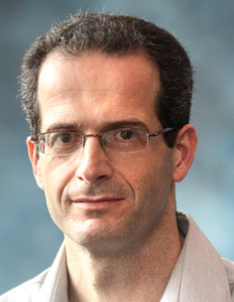 Israel Cohen合作论文数The Andrew and Erna Viterbi Faculty of Electrical & Computer Engineering, Technion - Israel Institute of Technology19
 Alon Amar合作论文数8
 Jacob Benesty合作论文数Énergie Matériaux Télécommunications Research Centre, Institut National de la Recherche Scientifique8Ma Doron合作论文数1Moran Davoodi合作论文数1
 Guy Gubnitsky合作论文数Department of Electrical and Electronics Engineering, Ariel University1
 Yotam Gershon合作论文数Dept Elect Engn, Technion Israel Inst Technol1
 Rotem Mulayoff合作论文数Department of Electrical Engineering, Technion Israel Institute of Technology1
 Milica Stojanovic合作论文数Department of Electrical and Computer Engineering, College of Engineering, Northeastern University;Department of Bioengineering, College of Engineering, Northeastern University;Woods Hole Oceanographic Institution;AUV Laboratory, Massachusetts Institute of Technology1




