Synthesizing realistic 12-lead electrocardiogram (ECG) data is a complex task due to the intricate spatial and temporal dynamics of cardiac electrophysiology. Traditional generative models often struggle to capture the nuanced interdependencies among ECG leads, which are essential for accurate medical analysis. In this paper, we propose Physics-Inspired Partial Differential Equation GAN for Multilead ECG Synthesis (PhysioPDE-GAN), a generative framework designed to model the spatiotemporal structure of multilead ECG signals by incorporating physiological priors and spatial constraints directly into the generative process. By embedding PDE-based representations directly into the generative process, our approach effectively captures both the temporal evolution and spatial relationships between ECG leads. We conduct extensive experiments to evaluate the performance of various base classifiers trained on the synthetic 12-lead ECG data generated by PhysioPDE-GAN. These classifiers outperform those trained on data produced by other conventional methods, achieving statistically significant improvements in detecting cardiac abnormalities. Our work highlights the potential of combining PDE-driven cardiac models with advanced generative techniques to enhance the quality and utility of synthetic biomedical datasets.
Generating realistic training data for supervised learning remains a significant challenge in artificial intelligence, particularly in domains where large, expert-labeled datasets are scarce or costly to obtain. This is especially true for electrocardiograms (ECGs), where privacy constraints, class imbalance, and the need for physician annotation limit the availability of labeled 12-lead recordings, motivating the development of high-fidelity synthetic ECG data. The primary challenge in this task lies in accurately modeling the intricate biological and physiological interactions among different ECG leads. Although mathematical process models have shed light on these dynamics, effectively incorporating this understanding into generative models is not straightforward. We introduce an innovative method that employs ordinary differential equations (ODEs) to enhance the fidelity of 12-lead ECG data generation. This approach integrates cardiac dynamics directly into the generative optimization process via a novel Euler Loss, producing biologically plausible data that respects real-world variability and inter-lead constraints. Empirical analysis on the G12EC and PTB-XL datasets demonstrates that augmenting training data with MultiODE-GAN yields consistent, statistically significant improvements in specificity across multiple cardiac abnormalities. This highlights the value of enforcing physiological coherence in synthetic medical data.
Despite the many advances of Large Language Models (LLMs) and their unprecedented rapid evolution, their impact and integration into every facet of our daily lives is limited due to various reasons. One critical factor hindering their widespread adoption is the occurrence of hallucinations, where LLMs invent answers that sound realistic, yet drift away from factual truth. In this paper, we present a novel method for detecting hallucinations in large language models, which tackles a critical issue in the adoption of these models in various real-world scenarios. Through extensive evaluations across multiple datasets and LLMs, including Llama-2, we study the hallucination levels of various recent LLMs and demonstrate the effectiveness of our method to automatically detect them. Notably, we observe up to 87% hallucinations for Llama-2 in a specific experiment, where our method achieves a Balanced Accuracy of 81%, all without relying on external knowledge.
Transcriptions of phone calls are of significant value across diverse fields, such as sales, customer service, healthcare, and law enforcement. Nevertheless, the analysis of these recorded conversations can be an arduous and time-intensive process, especially when dealing with long and multifaceted dialogues. In this work, we propose a novel method, which we name SegLLM, for efficient and accurate call segmentation and topic extraction. SegLLM is composed of offline and online phases. The offline phase is applied once to a given list of topics and involves generating a distribution of synthetic sentences for each topic using a large language model (LLM). The online phase is applied to every call separately and scores the similarity between the transcripted conversation and the topic anchors found in the offline phase. The proposed paradigm provides an accurate and efficient method for call segmentation and topic extraction that does not require labeled data, thus making it a versatile approach applicable to various domains.
Despite the many advances of Large Language Models (LLMs) and their unprecedented rapid evolution, their impact and integration into every facet of our daily lives is limited due to various reasons. One critical factor hindering their widespread adoption is the occurrence of hallucinations, where LLMs invent answers that sound realistic, yet drift away from factual truth. In this paper, we present a novel method for detecting hallucinations in large language models, which tackles a critical issue in the adoption of these models in various real-world scenarios. Through extensive evaluations across multiple datasets and LLMs, including Llama-2, we study the hallucination levels of various recent LLMs and demonstrate the effectiveness of our method to automatically detect them. Notably, we observe up to 62% hallucinations for Llama-2 in a specific experiment, where our method achieves a Balanced Accuracy (B-ACC) of 87%, all without relying on external knowledge.
Summarization techniques strive to create a concise summary that conveys the essential information from a given document. However, these techniques are often inadequate for summarizing longer documents containing multiple pages of semantically complex content with various topics. Hence, in this work, we present a Topic-Conditional Summarization (TCS) method, that produces different summaries each conforming to a different topic. TCS is an unsupervised method and does not require ground truth summaries. The proposed algorithm adapts the TextRank paradigm and enhances it with a language model specialized in a set of documents and their topics. Extensive evaluations across multiple datasets indicate that our method improves upon other alternatives by a sizeable margin.
Transcriptions of phone calls hold significant value in sales, customer service, healthcare, law enforcement, and more. However, analyzing recorded conversations can be a time-consuming process, especially for complex dialogues. In Microsoft Dynamics 365 Sales, a novel system, named GPT-Calls, is applied for efficient and accurate topic-based call segmentation. GPT-Calls comprises offline and online phases. In the offline phase, the system leverages a GPT model to generate synthetic sentences and extract anchor vectors for predefined topics. This phase, performed once on a given topic list, significantly reduces the computational burden. The online phase scores the similarity between the transcribed conversation and the topic anchors from the offline phase, followed by time domain analysis to group utterances into segments and tag them with topics. The GPT-Calls scheme offers an accurate and efficient approach to call segmentation and topic extraction, eliminating the need for labeled data. It is a versatile solution applicable to various industry domains. GPT-Calls operates in production under Dynamics 365 Sales Conversation Intelligence, applied to real sales conversations from diverse Dynamics 365 Sales tenants, streamlining call analysis, and saving time and resources while ensuring accuracy and effectiveness.
To improve the accuracy of clinical multivariate time series (MTS) classification (such as EEG and ECG) by a novel self-supervised paradigm that directly captures the dynamics between the different time series learned together to optimize the classification task. Labels in clinical datasets are very often insufficient. One way to address this challenge is leveraging self-supervision. This paradigm attempts to identify a supervisory signal inherent within a dataset to serve as a surrogate label. We present a novel form of self-supervision: dynamics of clinical MTS. Unlike other self-supervision methods, such as masking, that are intuitive but still heuristic, we suggest to learn a representation justified by Koopman theory. The latter was shown useful for representing clinical time series and can be used as a form of surrogate task to improve the clinical MTS classification. In the ECG task, we show that our proposed framework achieved higher sensitivity and specificity than the state-of-the-art (SOTA) baseline over numerous common diagnoses. For EEG abnormality classification, our proposed framework also achieved higher sensitivity and specificity than the SOTA baseline. All results are statistically significant. Our technique yields reliable clinical diagnosis in an empirical study employing signals from thousands of patients in multiple clinical tasks employing two types of clinical-grade sensors (ECG and EEG) as compared to the state-of-the-art machine learning. Leveraging time-series-dynamics self-supervision can help mitigate the lack of labels in clinical datasets used for training machine learning algorithms and significantly improve their performance. Specifically, the ECG system presented in this work is being trialed in hospitals, used by top cardiologists for patient diagnosis and treatment. We believe that the deployment of such cutting-edge technology will significantly improve the accuracy and speed of cardiac assessments.
Transcriptions of phone calls are of significant value across diverse fields, such as sales, customer service, healthcare, and law enforcement. Nevertheless, the analysis of these recorded conversations can be an arduous and time-intensive process, especially when dealing with extended or multifaceted dialogues. In this work, we propose a novel method, GPT-distilled Calls Segmentation and Tagging (GPT-Calls), for efficient and accurate call segmentation and topic extraction. GPT-Calls is composed of offline and online phases. The offline phase is applied once to a given list of topics and involves generating a distribution of synthetic sentences for each topic using a GPT model and extracting anchor vectors. The online phase is applied to every call separately and scores the similarity between the transcripted conversation and the topic anchors found in the offline phase. Then, time domain analysis is applied to the similarity scores to group utterances into segments and tag them with topics. The proposed paradigm provides an accurate and efficient method for call segmentation and topic extraction that does not require labeled data, thus making it a versatile approach applicable to various domains. Our algorithm operates in production under Dynamics 365 Sales Conversation Intelligence, and our research is based on real sales conversations gathered from various Dynamics 365 Sales tenants.
Early detection of left ventricular systolic dysfunction (LVSD) may prompt early care and improve outcomes for asymptomatic patients. Standard 12-lead ECG may be used to predict LVSD. We aimed to compare the performance of Machine Learning Algorithms (MLA) and physicians in predicting LVSD from a standard 12-lead ECG. By utilizing a dataset of 13,820 pairs of ECGs and echocardiography, a deep residual convolutional neural network was trained for predicting LVSD (ejection fraction (EF) < 50%) from ECG. The ECGs of the test set (n = 850) were assessed for LVSD by the MLA and six physicians. The performance was compared using sensitivity, specificity, and C-statistics. The interobserver agreement between the physicians for the prediction of LVSD was moderate (κ = 0.50), with average sensitivity and specificity of 70%. The C-statistic of the MLA was 0.85. Repeating this analysis with LVSD defined as EF < 35% resulted in an improvement in physicians’ average sensitivity to 84% but their specificity decreased to 57%. The MLA C-statistic was 0.88 with this threshold. We conclude that although MLA outperformed physicians in predicting LVSD from standard ECG, prior to robust implementation of MLA in ECG machines, physicians should be encouraged to use this approach as a simple and readily available aid for LVSD screening.
 Oren Barkan合作论文数Department of Mathematics and Computer Science, The Open University of Israel6
 Itzik Malkiel合作论文数Microsoft6
 Noam Koenigstein合作论文数Department of Industrial Engineering, The Iby and Aladar Fleischman Faculty of Engineering, Tel Aviv University6
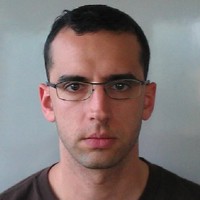 Royi Ronen合作论文数Microsoft;Technion - Israel Institute of Technology5
 Kira Radinsky合作论文数Diagnostic Robotics;Mana.bio;Israel Institute of Technology4
 shahar keren合作论文数3
 Uri Alon合作论文数Google DeepMind3Jonathan Weill合作论文数Microsoft, Redmond, WA 98052 USA2Daniel Freedman合作论文数1Ori Kats合作论文数1Tomer Ziv Baran合作论文数1Natalia Kofman合作论文数1Itamar Love合作论文数1
 Ilya Litovchik合作论文数1Jonathan Ephrath合作论文数Department of Computer Sciences, the Ben-Gurion University of the Negev1
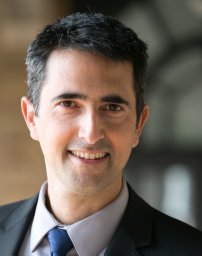 Minha Sa'ar合作论文数Department of Cardiology, Assaf Harofeh Medical Center1
 Shmuel Fuchs合作论文数Cardiology Department;Rabin Medical Center1
 Tomer Golany合作论文数Google1Nir Nice合作论文数1




