Aerial gravity measurements in polar regions require higher accuracy and stability from satellite navigation systems. The performance of conventional Global Positioning System (GPS) significantly deteriorates as one moves from lower latitudes to polar areas. First, a regional comparative analysis of BeiDou Navigation Satellite System (BDS) and GPS positioning performance in polar regions is conducted. Results indicate that in polar environments, BDS demonstrates certain advantages regarding satellite availability and geometric distribution. Based on this analysis, a method for extracting airborne gravity anomalies using BeiDou signals in polar regions is proposed and improved. The process begins by optimizing BeiDou observation data using an altitude angle weighting method combined with precise ephemeris data. An error correction model is constructed to enhance system adaptability in the polar environment. Following this, high-precision position and acceleration estimation is achieved using the precise point positioning (PPP) technique, integrated with inertial navigation information, to extract aerial gravity anomalies in polar regions accurately. Results from Antarctic aerial gravity measurement experiments indicate that the BDS-based model improves accuracy by 30% compared to GPS under the same conditions.
As the demand for long-term autonomous operation increases, localization robustness degradation caused by alternating sensor failures in complex environments has become a critical challenge. Conventional multi-sensor fusion methods often rely on fixed sensor models and static fusion structures, making realtime adaptation across diverse scenes costly and inflexible. To address this issue, this paper proposes a mixture-based crossscene localization framework, termed MIXCL. The framework constructs a six-dimensional scene feature vector and employs a scene-aware gating module to evaluate the relative suitability of different localization experts online. A reward-penalty-driven dynamic weighting strategy is introduced to adaptively adjust expert contributions according to sensor information quality and runtime performance. Under the gating constraint, the top- $k$ experts are selected and integrated through a loosely coupled fusion framework. Exponential weight smoothing and first-order low-pass filtering are further applied to ensure smooth expert transitions and stable cross-scene adaptation. Experimental results show that MIXCL achieves a full-trajectory APE RMSE of approximately $\mathbf{0. 8 8, m}$ under alternating multi-sensor degradation, reducing localization error by $\mathbf{6 5 \% - 9 0 \%}$ compared with individual experts. Moreover, under long-term structural LiDAR degradation, where LiDAR-based methods exhibit APE RMSE exceeding 11,m, MIXCL maintains an error of about $1.52, ~\mathrm{m}$, demonstrating strong robustness in severe degradation scenarios.
In dynamic gravimetry, it is important to enhance measurement accuracy while preserving the resolution of the results. Based on an analysis of the error mechanisms inherent in strapdown dynamic gravimetry, the error sources contributing to dynamic measurement errors were identified, and an artificial neural network was proposed to assess the influence of each error source on the measurement results. The effectiveness of this approach was validated using strapdown airborne gravimetry data acquired under undulated flight conditions. The results demonstrate that, with 160 s filtering, the repeatability of gravity measurements improved from 1.41 mGal to 0.55 mGal, representing a significant enhancement in repeatability under fluctuating flight conditions while maintaining the original spatial resolution.
Dual-foot pedestrian navigation systems leveraging zero-velocity update (ZUPT) can effectively reduce heading drift by incorporating interfoot ranging constraints. However, their performance is highly sensitive to ranging noise and zero-velocity detector accuracy-misdetections introduce outlier observations that degrade state estimation. Conventional robust kernel-based outlier suppression mitigates this issue but introduces strong nonconvexities, making the optimization prone to convergence at local minima. To address these challenges, we propose a dual-foot pedestrian inertial navigation algorithm based on factor graph optimization (FGO) with graduated nonconvexity (GNC). The system fuses foot-mounted IMU measurements, zero-velocity constraints, and interfoot ranging information within a sliding-window factor graph. A GNC-based backend adaptively reweights factor contributions, suppressing the effect of outliers while progressively reducing the nonconvexity introduced by robust kernels. Extensive experiments demonstrate that the proposed method enhances robustness and positioning accuracy across diverse and complex pedestrian motion conditions, outperforming conventional EKF-based and standard FGO approaches.
The integrate-and-dump filter is a core component of satellite navigation receivers, enabling the tracking of navigation satellite signals and significantly influencing receiver performance. Currently, satellite navigation receivers, particularly onboard unmanned aerial vehicles (UAVs), are vulnerable to spoofing. Whether counterfeit signals can successfully hijack a receiver depends critically on how these signals alter the integrate-and-dump filter output. Existing research on satellite navigation spoofing often uses an output signal model for the integrate-and-dump filter derived from continuous-time integration. However, this model deviates from practical implementation because most modern navigation receivers are built on digital circuits that approximate continuous-time integration through discrete-time accumulation. Consequently, the discrete-time nature of actual hardware introduces errors that are not captured by the conventional continuous-time model. In this study, a mathematical model for the output signal of an integrate-and-dump filter was implemented via discrete-time accumulation. The accuracy of the proposed model was verified through simulations, and a comparative analysis with the traditional continuous-time integration model was conducted to highlight the impact of discretization errors.
Supplementary Figure 3. Assessment of the proportional-hazards assumption using Schoenfeld residuals
Abstract Cancer is a highly heterogeneous disease, characterized by significant variability across multiple dimensions. This diversity has been extensively studied from various perspectives. In this study, we aim to examine cancer heterogeneity through the lens of immune cell composition within the tumor microenvironment. Transcriptome profiles of 11,274 subjects from 33 cancer types were deconvoluted to infer the composition of 22 immune cell types. A deep learning‐based model was adapted to model a binary outcome for cancer type, tumor versus normal. The Shannon index was used to represent immune cell diversity. Cox proportional hazards regression was used to evaluate the prognostic values of immune cells. Tumor and normal tissues showed significantly different immune cell compositions in 183 of 352 comparisons, with macrophage M0 levels consistently elevated in most tumors except lung adenocarcinoma. ResNet models using immune cell data achieved strong performance in distinguishing tumor versus normal samples (average F1 score = 0.64 when combined with clinical features). Four immune features were significantly associated with disease‐specific survival across three cancer types: macrophage M0 and macrophage M2 in bladder urothelial carcinoma, macrophage M0 in kidney renal clear cell carcinoma, and the Treg/CD8+ T cell ratio in skin cutaneous melanoma. Although immune cell diversity varied across cancers, it was not broadly predictive of prognosis, highlighting the cancer type‐specific nature of immune remodeling. Our results demonstrated cancer heterogeneity through the analysis of immune cell composition and diversity using deep learning models and prognostic analysis. The significant findings revealed varying patterns across different cancer types, indicating that no unifying standard can be established across all cancers.
Learning-based visual navigation has enhanced semantic goal-reaching capabilities. However, due to their black-box nature, purely end-to-end models often lack explicit geometric constraints, leading to unpredictable and unreliable obstacle avoidance in open environments. Conversely, traditional geometric planners ensure safety but struggle with high-dimensional visual targets. To address these limitations, we propose SemGeoNav, a novel hierarchical visual navigation framework.It tightly integrates the high-level semantic reasoning of end-to-end models with the reliable local planning ability of geometry-based methods, achieving robust image-based navigation while significantly improving obstacle avoidance. Furthermore, we introduce a temporal trajectory smoothing mechanism to ensure continuous and stable robot motion. We evaluated SemGeoNav on a Unitree Go2 quadruped robot in real-world environments. The results demonstrate that SemGeoNav outperforms existing representative methods, including ViNT and NoMaD, achieving higher success rates and shorter navigation times.
In land vehicle-borne dynamic strapdown gravimetry, horizontal accelerometer biases project onto the navigation frame through the time-varying heading angle, producing systematic errors in gravity disturbance estimation. Due to the inherent heading instability of ground vehicles, these bias-induced errors exhibit low-frequency, continuous, and heading-correlated characteristics along the survey line. The conventional forward-backward fusion method exploits the mirror symmetry of repeated lines to cancel such errors, but at the cost of halving the effective survey coverage and precluding single-pass operation.To overcome this limitation, this study proposes a MLP-based (multilayer perceptron) compensation approach that directly learns the mapping from vehicle motion states to the systematic gravity estimation error. The input features include the forward-only gravity disturbance (east and north), heading representation (sine and cosine of yaw), speed, and yaw rate. The supervision target is defined as the residual between the forward-only solution and the forward-backward fused reference, which inherently encodes the heading-dependent bias effect. A compact two-hidden-layer MLP (32 neurons each, ReLU activation) is trained with mean squared error loss and early stopping.Experiments on a vehicle-borne gravimetry dataset (4782 samples, 70%/30% sequential split) show that the proposed method reduces the east-component RMSE from 1.188 mGal to 0.188 mGal (84.1% improvement) and the north-component RMSE from 0.478 mGal to 0.134 mGal (72.1% improvement). The compensated results closely approximate the fused reference, confirming that the MLP effectively learns the slowly varying and heading-correlated error characteristics.
With the rapid proliferation of electronic warfare technologies, malicious attacks targeting GNSS receivers are increasing significantly. In particular, spoofing attacks pose severe threats to unmanned systems that critically rely on GNSS for positioning, navigation, and timing. This paper proposes a novel method for spoofing detection, mitigation, and reliable positioning. Utilizing a multi-element antenna array, the proposed approach estimates the direction of arrival-specifically, the azimuth and elevation of incoming signals. These measurements are rigorously compared with the expected signal directions derived from the GNSS broadcast ephemeris to authenticate legitimate signals and exclude deceptive ones. Subsequently, reliable positioning and timing are performed using exclusively the authenticated signals. Experimental results demonstrate that this method effectively isolates spoofing sources and ensures the uninterrupted operation of the receiver. Compared to traditional detection schemes, this method leverages the inherent spatial intractability of simulating the dynamic topology of the GNSS constellation, thereby achieving highly effective and reliable spoofing exclusion. This research provides a promising technical paradigm for the development of next-generation anti-spoofing GNSS receivers.
Kriging, renowned for its optimal linear unbiased estimation properties, has been extensively applied to address geophysical data interpolation problems. The variogram serves as a critical tool for characterizing the spatial decay of data covariance, fundamentally governing the precision of Kriging interpolation. However, existing variogram models exhibit inherent limitations when describing gravity data, specifically in the inability to adequately capture the authentic spatial correlation of gravity anomalies across varying distances. This deficiency consequently induces systematic biases or excessive smoothing in the inter-polated results. Therefore, it is imperative to construct variogram models by incorporating the characteristics of the gravity field. This paper systematically analyzes the decay characteristics of gravity anomaly covariance across varying spatial distances and proposes a novel variogram model specifically tailored for the interpolation and reconstruction of gravity background fields. The proposed model simultaneously satisfies the short-range smoothness constraint of second-order differentiability at the origin while effectively characterizing the long-range power-law decay behavior. Based on gravity anomaly grids from satellite altimetry, five areas with varying complexity and statistical characteristics were selected in the Pacific Ocean to conduct interpolation and reconstruction experiments. The interpolation accuracy of the proposed model was compared against conventional variogram models when reconstructing 1′×1′ grids from 2′×2′ and 5′×5′ grids respectively. The results demonstrate that the proposed model effectively reduces the root mean square error (RMSE) of interpolation reconstruction by 67.0
Abstract Spatial transcriptomics technologies have revolutionized genomics by enabling the measurement of gene expression while preserving the spatial context of cells within tissues. However, their utility is limited by restricted gene coverage and high operational costs. To overcome these challenges, we previously developed generative AI approaches for imputing gene expression [1] and DNA methylation [2]. Building on this foundation, we now present TransGCN, a hybrid neural network model that integrates transformer architectures with graph convolutional networks to enhance spatial transcriptomic datasets through high-fidelity gene expression imputation. For example, TransGCN can expand a 500-gene Xenium panel to more than 1,500 to 2,000 genes. We systematically evaluated TransGCN across three leading spatial transcriptomic platforms: 10x Genomics Visium HD, Xenium, and Bruker CosMx, and six tissue types, including lung, brain, breast, skin, colon, and ovarian. Beyond previously leveraged features (e.g., 3D chromatin interactions from Hi-C, biological pathways, transcription factor networks, and protein-protein interactions), we incorporated spatial and housekeeping features derived from scRNA-seq (19,363 cells) and bulk RNA-seq (418,074 samples). Compared with existing imputation tools, TransGCN consistently achieved higher accuracy while enabling the recovery of a broader gene set, thereby substantially extending the analytical power of spatial transcriptomics. References 1. Yan, F.Y., et al., Reinventing gene expression connectivity through regulatory and spatial structural empowerment via principal node aggregation graph neural network. Nucleic Acids Research, 2024. 52(13). 2. Yan, F., et al., Genome-wide methylome modeling via generative AI incorporating long- and short-range interactions. Sci Adv, 2025. 11(15): p. eadt4152. Citation Format: Steven Yan, Limin Jiang, Yan Guo. Improve spatial transcriptomic data with integrated hybrid transformer and graph convolutional networks [abstract]. In: Proceedings of the American Association for Cancer Research Annual Meeting 2026; Part 1 (Regular Abstracts); 2026 Apr 17-22; San Diego, CA. Philadelphia (PA): AACR; Cancer Res 2026;86(7 Suppl):Abstract nr 1476.
Abstract—Underwater gravity measurement systems typically consist of the strapdown inertial navigation system (SINS), the doppler velocity log (DVL), the depth gauge (DG), and other underwater sensors. Although SINS can provide continuous autonomous navigation parameters, the results obtained from pure inertial navigation diverge over time due to gyro drift and accelerometer biases during prolonged operation. Therefore, relying solely on SINS cannot meet the accuracy requirements for gravity measurements. The DVL can accurately measure the carrier’s velocity and compensate for SINS errors to obtain higher navigation precision. However, in areas with complex seabed topography or when the carrier operates far above the seafloor, the DVL-measured water-relative velocity does not reflect the true motion relative to the seabed. Such velocity errors severely degrade underwater positioning accuracy and consequently compromise gravity measurement quality. To address this issue, we propose a SINS/DVL/DG underwater gravity measurement model considering unknown ocean current velocity based on Cubature Kalman Filter (CKF). By exploiting the short-term stability of ocean currents, a nonlinear state equation is established incorporating attitude, velocity, and current velocity. Measurement equations are formulated based on velocity errors from the DVL’s bottom-tracking and water-tracking modes, respectively. The system state and covariance are updated via the third-degree spherical-radial cubature rule, enabling real-time estimation of the carrier’s attitude and velocity, as well as current velocity. After compensating for velocity errors, high-reliability gravity data are derived from the corrected navigation information. The proposed method was validated using sea trial data collected in a 500-meter-deep area. Results show that the estimated ocean current velocity error remains below 0.01 m/s, and the internal consistency of repeated gravity survey lines reaches 1.00 mGal. Compared to traditional integrated navigation approaches, the proposed method significantly improves positioning accuracy by effectively compensating for DVL water-track velocity errors, thereby delivering high-precision gravity measurements even under unknown ocean current conditions. Index Terms—underwater gravity, integrated navigation, effect of ocean current, inertial Navigation, internal accuracies Fig.1 Flow chart of the SINS/DVL/DG underwater gravimetry method considering the unknown ocean current velocity Fig. 2 Comparison chart of gravimetry results
RiboNucleic Acid (RNA) editing is a dynamic and essential biological process that has multifaceted functions in gene regulation, protein diversity, and immune response. Tissue-specific RNA editing is governed by the presence and activity of RNA editing enzymes, such as adenosine deaminase acting on RNA enzymes, and is influenced by the cellular context and regulatory factors in each tissue. As a result, RNA editing can exhibit tissue-specificity. To fully understand the functional implications of RNA editing, it is important to consider its tissue-specific nature and its potential impact on the biology of specific tissues and organs. Utilizing convolutional neural networks, we designed models that can predict RNA editability. The models were validated independently using Clustered Regularly Interspaced Short Palindromic Repeats (CRISPR)/CRISPR associated protein 9 (Cas9)-based Adenosine Deaminase Acting on RNA (ADAR) knockout in both Jurkat and Human Embryonic Kidney 293T (HEK293T) cells. Although RNA editing can be categorized into Alu and non-Alu RNA editing, with the majority of RNA editing falling within the Alu category, our motif and phylogenetic analyses reveal that the tissue-specific characteristics of RNA editing are primarily attributed to non-Alu-related RNA editing. Based on these results, we developed a web server that incorporates RNA editability prediction models for 30 distinct tissue types in Humans and four other species (mouse, bee, fly, and squid). This tool assists studies that aim to gain a more comprehensive understanding of RNA editing-related gene regulation, cellular diversity, and the molecular basis of tissue-specific diseases.
HLA typing from sequencing data is crucial for studying immune gene families, but high allele similarity challenges existing tools. We present ImmuSeeker, comprehensive software for extracting HLA genotypes, expression, and diversity at gene, one-field, and two-field allele levels, with improved Bayesian zygosity inference and graphical phylogenetic visualization. ImmuSeeker was benchmarked against nine established tools using gold-standard HLA datasets, repeated RNA sequencing (RNA-seq) and Isoform Sequencing (Iso-Seq) data, and a longitudinal patient cohort, demonstrating superior accuracy, consistency, and analytical utility. ImmuSeeker provides a scalable, robust framework for comprehensive HLA typing and immune system analyses.
In this research, we conducted an in-depth analysis of differentially expressed genes associated with mitochondrial depolarisation in non-small cell lung cancer (NSCLC) using single-cell sequencing. By combining our findings with cuproptosis-related genes, we identified 10 significant risk genes: DCN, PTHLH, CRYAB, HMGCS1, DSG3, ZFP36L2, SCAND1, NUDT4, NDUFA4L2 and RPL36A, using univariate Cox regression analysis and machine learning methods. These genes form the core of our prognosis risk prediction model, which demonstrated high specificity and accuracy in predicting patient outcomes, as evidenced by ROC curve analysis. Kaplan-Meier curves further confirmed that patients in the low-risk group had significantly better survival rates compared to those in the high-risk group. Our models also provided valuable insights into the tumour microenvironment, immunotherapy sensitivity and chemotherapy response. To facilitate the quantification of the probability of patient survival, we incorporated clinical data into a nomogram. We comprehensively analysed the mutation status and expression patterns of the 10 risk genes using bulk transcriptomic, single-cell and spatial transcriptomic datasets. Drug target predictions highlighted DSG3, PTHLH, ZFP36L2, DCN and NDUFA4L2 as promising therapeutic targets. Notably, RPL36A emerged as a potential tumour marker for NSCLC, with its expression validated in lung cancer cell lines through qPCR. This study has established a predictive models based on mitochondrial depolarisation genes associated with cuproptosis, aiding clinicians in forecasting overall survival and guiding personalised treatment strategies. The identification of novel tumour markers has paved the way for targeted therapies, and therapeutic targets are critical for advancing the treatment of NSCLC.
The Hhex gene encodes a transcription factor that is important for both embryonic and post-natal development, especially of hematopoietic tissues. Hhex is one of the most common sites of retroviral integration in mouse models. We found the most common integrations in AKXD (recombinant inbred strains) T-ALLs occur 57-61kb 3' of Hhex and activate Hhex gene expression. The genomic region of murine leukemia virus (MLV) integrations has features of a developmental stage-specific cis regulatory element (CRE), as evidenced by ATAC-seq in murine progenitor cells and high H3K27 acetylation at the syntenic CRE in human hematopoietic cell lines. With ChIP-exonuclease, we describe occupancy of LIM domain binding protein 1 (LDB1), the constitutive partner of the LIM Only-2 (LMO2), GATA1, and TAL1 transcription factors at GATA sites and at a composite GATA-E box within the CRE. With virtual 4C analysis, we observed looping between this +65kb CRE and the proximal intron one enhancer of HHEX in primary human ETP-ALLs and in normal progenitor cells. Our results show that retroviral integrations at intergenic sites can mark and take advantage of CREs. Specifically, in the case of HHEX activation, this newly described +65kb CRE is co-opted in the pathogenesis of ETP-ALL by the LMO2/LDB1 complex.
 Yu Shyr合作论文数Department of Biostatistics, Vanderbilt University Medical Center;Vanderbilt Center for Quantitative Sciences, Vanderbilt University Medical Center;School of Medicine, Vanderbilt University;Taipei Medical University56
 David C. Samuels合作论文数Center for Human Genetics Research, School of Medicine, Vanderbilt University;Department of Molecular Physiology and Biophysics, School of Medicine, Vanderbilt University45
 Yingyong Zhao (赵英永)合作论文数The College of Life Sciences, Northwestern University44
 Quanhu Sheng合作论文数School of Informatics;Indiana University;School of Informatics, Indiana University44
 Shilin Zhao合作论文数37Hui Yu合作论文数31Fei Ye合作论文数28
 Danqian Chen (陈丹倩)合作论文数The College of Life Sciences, Northwest University25
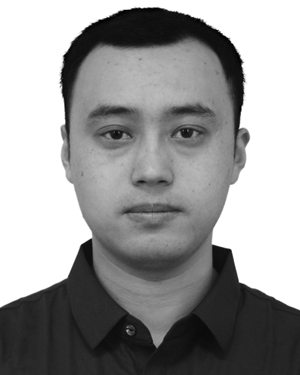 Ruihang Yu合作论文数Natl Univ Def Technol, Coll Mechatron & Automat, Changsha 410073, Hunan, Peoples R China21
 Scott A Ness合作论文数Differentiation Programme European Molecular Biology Laboratory Meyerhofstrasse 1 6900 Heidelberg, Federal Republic of Germany20Vickers Kasey C合作论文数Med Ctr, Vanderbilt Univ18
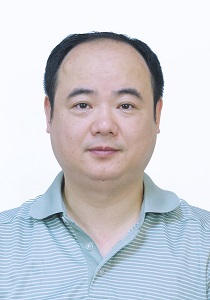 Jijun Tang (唐继军)合作论文数Shenzhen Institute of Advanced Technology, Chinese Academy of Sciences;Faculty of Computer Science and Control Engineering, Shenzhen University of Technology18Juliang Cao (曹聚亮)合作论文数National University of Defense Technology17Chung-I Li合作论文数17
 Zhiming Xiong合作论文数College of Intelligence Science and Technology, National University of Defense Technology, Changsha, China16
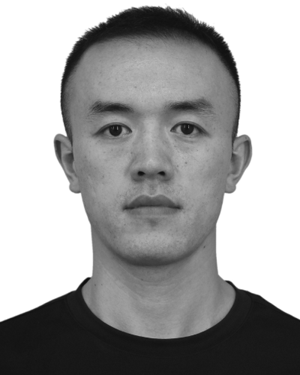 Shaokun Cai合作论文数16
 Kanghua Tang合作论文数16
 Limin Jiang合作论文数Shenzhen Institute of Advanced Technology, Chinese Academy of Sciences, Shenzhen, China.15
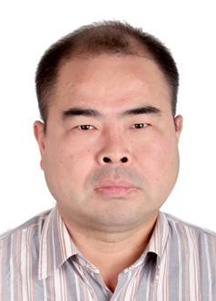 Meiping Wu (吴美平)合作论文数National University of Defense Technology14
 Olufunmilola Oyebamiji合作论文数Univ New Mexico, Dept Internal Med, Albuquerque, NM 87131 USA13
 Lin Chen (陈林)合作论文数The College of Life Sciences, Northwest University13
 Nosratola D. Vaziri合作论文数Division of Nephrology and Hypertension, Department of Medicine, School of Medicine, University of California, Irvine;Department of Physiology & Biophysics, School of Medicine, University of California, Irvine13Travis Clark合作论文数11
 Gang Cao (曹岗)合作论文数Zhejiang Chinese Medical University11
 Brian D. Lehmann合作论文数Department of Clinical Sciences, University of Parma11
 Shangguang Wang (王尚广)合作论文数School of Computer Science, Beijing University of Posts and Telecommunications10Pan Zhang合作论文数David Geffen School of Medicine, University of California,9Ormseth Michelle J合作论文数Department of Medicine and Pharmacology, Vanderbilt University9
 Hua Miao (苗华)合作论文数Department of Physical Education, Northwest University9C. Michael Stein合作论文数9Wenqi Wu (吴文启)合作论文数National University of Defense Technology9Yan-Ni Wang合作论文数8Wei Su合作论文数Department of Nephrology, Baoji Central Hospital, No. 8 Jiangtan Road, Baoji, Shaanxi 721008, China8Solus Joseph F合作论文数8Kang Huining合作论文数8
 Allen F Ryan合作论文数Division of Otolaryngology, Department of Surgery, University of California, San Diego8Bainan Yang合作论文数7XiaoYong Yu (于小勇)合作论文数7
 Fei Guo (郭菲)合作论文数School of Computer Science and Engineering, Central South University7
 Leng Han (韩冷)合作论文数Brown Center for Immunotherapy, Indiana University School of Medicine;Department of Biostatistics and Health Data Science, Indiana University School of Medicine7
 Ming Wang (王明)合作论文数College of Food Science and Technology, Northwest University7
 Shuguang Leng (冷曙光)合作论文数青岛大学公共卫生学院7
 Jennifer A. Pietenpol合作论文数Department of Biochemistry, School of Medicine, Vanderbilt University;Vanderbilt University Medical Center7
 Jing Wang合作论文数Department of Molecular and Human Genetics, Baylor College of Medicine7
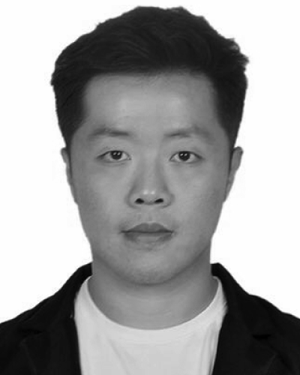 Kaixin Luo合作论文数6
 Xiaqing Wu合作论文数6Qiong Wu合作论文数6
 Zhongming Zhao合作论文数Department of Bioinformatics and Systems Medicine, D.Bradley McWilliams School of Biomedical Informatics, The University of Texas Health Science Center at Houston;Center for Precision Health, The University of Texas Health Science Center at Houston6
 Kai Wang (王凯)合作论文数Department of Pathology and Laboratory Medicine, School of Medicine, University of Pennsylvania;Institute for Biomedical Informatics, School of Medicine, University of Pennsylvania;Children's Hospital of Philadelphia6




