Current formulation development strongly relies on trial-and-error experiments in the laboratory by pharmaceutical scientists, which is time-consuming, high cost and waste materials. This research aims to integrate various computational tools, including machine learning, molecular dynamic simulation and physiologically based absorption modeling (PBAM), to enhance andrographolide (AG) /cyclodextrins (CDs) formulation design. The lightGBM prediction model we built before was utilized to predict AG/CDs inclusion's binding free energy. AG/γ-CD inclusion complexes showed the strongest binding affinity, which was experimentally validated by the phase solubility study. The molecular dynamic simulation was used to investigate the inclusion mechanism between AG and γ-CD, which was experimentally characterized by DSC, FTIR and NMR techniques. PBAM was applied to simulate the in vivo behavior of the formulations, which were validated by cell and animal experiments. Cell experiments revealed that the presence of D-α-Tocopherol polyethylene glycol succinate (TPGS) significantly increased the intracellular uptake of AG in MDCK-MDR1 cells and the absorptive transport of AG in MDCK-MDR1 monolayers. The relative bioavailability of the AG-CD-TPGS ternary system in rats was increased to 2.6-fold and 1.59-fold compared with crude AG and commercial dropping pills, respectively. In conclusion, this is the first time to integrate various computational tools to develop a new AG-CD-TPGS ternary formulation with significant improvement of aqueous solubility, dissolution rate and bioavailability. The integrated computational tool is a novel and robust methodology to facilitate pharmaceutical formulation design.
Traditional experimental methods have their own limitations to obtain a deep understanding about the molecular mechanism of drug-cyclodextrin (CD) complexes. Thus, present research investigated the molecular interactions between poorly water-soluble drug Ketoprofen (KTP) and six commonly used CDs by combined experimental and modeling methods. Experimental characterizations of prepared KTP-CD complexes observed the crystalline changes and hydrogen bonding formations of KTP. The molecular dynamic simulations at revealed that three beta-CD derivatives had higher binding affinity with KTP. Thus, this research present that the combination of experimental and modelling methods could clearly reveal the molecular mechanism of drug-CD complexes.
Current pharmaceutical formulation development still strongly relies on the traditional trial-and-error methods of pharmaceutical scientists. This approach is laborious, time-consuming and costly. Recently, deep learning has been widely applied in many challenging domains because of its important capability of automatic feature extraction. The aim of the present research is to apply deep learning methods to predict pharmaceutical formulations. In this paper, two types of dosage forms were chosen as model systems. Evaluation criteria suitable for pharmaceutics were applied to assess the performance of the models. Moreover, an automatic dataset selection algorithm was developed for selecting the representative data as validation and test datasets. Six machine learning methods were compared with deep learning. Results showed that the accuracies of both two deep neural networks were above 80% and higher than other machine learning models; the latter showed good prediction of pharmaceutical formulations. In summary, deep learning employing an automatic data splitting algorithm and the evaluation criteria suitable for pharmaceutical formulation data was developed for the prediction of pharmaceutical formulations for the first time. The cross-disciplinary integration of pharmaceutics and artificial intelligence may shift the paradigm of pharmaceutical research from experience-dependent studies to data-driven methodologies.
Cyclodextrin complexation is a wise strategy to enhance aqueous solubility of water-insoluble drugs. However, the aggregation mechanism of drug-cyclodextrin complexes is still unclear. This research aimed to investigate the molecular aggregation mechanism of glipizide/cyclodextrin complexation by the combination of experimental and modeling methods. Binding free energies between glipizide and cyclodextrins from modeling calculations were higher than those by the phase solubility diagram method. Both experimental and modeling results showed that methylated-β-cyclodextrin exhibited the best solubilizing capability to glipizide. Size-measurement results confirmed the aggregation between glipizide and all four cyclodextrins in high concentrations. Glipizide/γ-cyclodextrin and glipizide/β-cyclodextrin complexes showed stronger aggregation trend than HP-β-cyclodextrin and methylated-β-cyclodextrin. The substituted groups in the rim of HP-β-cyclodextrin and methylated-β-cyclodextrin lead to weak aggregation. This research provided us a clear molecular mechanism of glipizide/cyclodextrin complexation and aggregation. This research will also benefit the formulation development of cyclodextrin solubilization.
 Defang Ouyang (欧阳德方)合作论文数University of Macau4Qianqian Zhao合作论文数3
 Haoshi Gao合作论文数Institute of Applied Physics and Materials Engineering, University of Macau2Tianhe Huang合作论文数2
 Hua Yu (余華)合作论文数Institute of Chinese Medical Sciences,University of Macau2Hai-Feng Li (李海峰)合作论文数1
 Yilong Yang (杨溢龙)合作论文数School of Software, Beihang University1Wei Wang合作论文数1Xiyang Sun合作论文数1Zhuyifan Ye合作论文数1
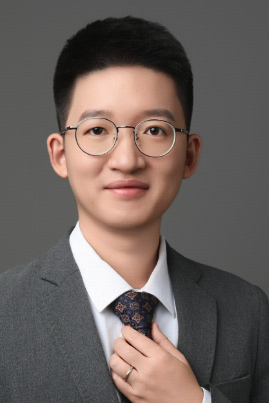 Wei Xiong (熊炜)合作论文数School of Pharmacy, Shenzhen University Medical School1
 Jia-Hong Lu (路嘉宏)合作论文数Institute of Chinese Medical Sciences,University of Macau1
 Yuanhui Ji (吉远辉)合作论文数School of Chemistry and Chemical Engineering, Southeast University1
 Xiaoshan Li (李曉山)合作论文数Faculty of Science and Technology,University of Macau1




