Discovering atom-level phenomena requires molecular dynamics (MD) simulations with ab initio accuracy. Machine learning interatomic potentials (MLIPs) enable stable, high-accuracy MD simulations, and their models exhibit scaling-law trends similar to large language models. However, the lack of scalable and efficient distributed training systems for conservative MLIPs makes them difficult to scale. This is because conservative MLIPs inherently follow a double-backward execution pattern, which involves computing gradients during the forward pass. This pattern creates a mismatch with existing distributed training systems, especially for pipeline parallelism. Therefore, we present JanusPipe, an efficient 3D-parallel (PP/DP/GP) training system tailored for conservative MLIPs. It integrates SymFold to enable memory-efficient pipeline parallelism for conservative MLIPs, and WaveK to reduce pipeline bubbles by balancing the four-phase compute time. Experimental results on 32 GPUs show that JanusPipe improves throughput by 1.51× and 1.45× on average over 1F1B and Hanayo, respectively.
Universal Machine Learning Interatomic Potentials (uMLIPs), pre-trained on massively diverse datasets encompassing inorganic materials and organic molecules across the entire periodic table, serve as foundational models for quantum-accurate physical simulations. However, uMLIP training requires second-order derivatives, which lack corresponding parallel training frameworks; moreover, scaling to the billion-parameter regime causes explosive growth in computation and communication overhead, making its training a tremendous challenge. We introduce MatRIS-MoE, a billion-parameter Mixture-of-Experts model built upon invariant architecture, and Janus, a pioneering high-dimensional distributed training framework for uMLIPs with hardware-aware optimizations. Deployed across two Exascale supercomputers, our code attains a peak performance of 1.2/1.0 EFLOPS (24%/35.5% of theoretical peak) in single precision at over 90% parallel efficiency, compressing the training of billion-parameter uMLIPs from weeks to hours. This work establishes a new high-water mark for AI-for-Science (AI4S) foundation models at Exascale and provides essential infrastructure for rapid scientific discovery.
Microchannel flow boiling has emerged as a highly promising electronic cooling technology. However, its practical application is suffering from the lack of effective control over bubble dynamics, especially bubble departure processes. Here, we have proposed a dual-bionic micro/nano-structured surface to mediate bubble departure for enhancement of flow boiling performance in microchannels, drawing inspiration from the micro-ratchets on the peristome surface of Nepenthes alata and the wedge-like beak of a phalarope. The microchannel heat sink with bionic micro/nano-structures demonstrates significant improvement in thermo-hydrodynamic performance, and achieves the critical heat flux of 366.5 W·cm-2 and heat transfer coefficient of 11.8 W·cm-2·K-1 at 600 kg·m-2·s-1, indicating respective increase of 82.5% and 103.2% compared to its smooth counterpart. This gain stems from a dual mechanism that the bionic architecture first enables spontaneous migration of nucleated bubbles from the micro-ratchet root to the tip under an interfacial energy gradient, and subsequently promotes bubble departure from the ratchet tip through the net force of buoyancy and drag. The present strategy exhibits superior cooling capacity over conventional air/water-based methods in dissipating heat from a commercial CPU under full power. The present dual-bionic design holds great potential for addressing the demanding cooling requirements of high-power electronics.
Accurate surface profile evaluation of CFRP circular cell honeycomb structures is essential for ensuring the performance of composite sandwich components. However, their thin-walled geometry, periodic topology, and measurement noise pose challenges for conventional techniques. This study presents an integrated approach combining line-laser measurement, self-calibration, and geometry-guided measurement data processing. The self-calibration module compensates for sensor deflection using the intrinsic structure of the workpiece, eliminating the need for external references. A geometry-aware segmentation strategy is applied to isolate meaningful surface units, followed by bilateral filtering to suppress fine-scale noise while preserving edge features. Filtering performance is quantitatively assessed using local curvature heatmaps, root mean square error (RMSE), and signal-to-noise ratio (SNR). Experimental results demonstrate that the proposed method achieves profile deviations within 10 μm compared to CMM measurements across both planar and curved surfaces. The results confirm the accuracy and practicality of proposed method for evaluating complex structures under real machining conditions.
Mathematical modeling of dam-breach flow can provide a better understanding of dam failure events, which in turn helps people to reduce potential losses. In the present study, the smooth particle hydrodynamics (SPH) modeling approach was employed to simulate the three-dimensional (3D) partial-breach dam-break flow using two different viscosity models: the artificial viscosity and sub-particle-scale models. The validated and best-performing SPH model was further employed to conduct numerical experiments for various scenarios, which generated a comprehensive dataset. The current work also presents a novel time-series field-reconstruction deep learning (DL) approach: Time Series Convolutional Neural Input Network (TSCNIN) for modeling the transient process of partial-breach dam-break flow and for providing the complete flow field. This approach was constructed based on the long short-term memory and convolutional neural network algorithms with additional input layers. A DL-based model was trained and validated using the numerical data, and tested using two additional unseen scenarios. The results demonstrated that the DL-based model can accurately and efficiently predict the transient water inundation process, and model the influence of dam-break gaps. This study provided a new avenue of simulating partial-breach dam-break flow using the time-series DL approaches and demonstrated the capability of the TSCNIN algorithm in reconstructing the complete fields of transient variables.
This paper proposes a displacement model error-based performance warning method to detect structural anomalies in bridges. A displacement data pre-processing method based on multi-rate fusion method is proposed to modify displacement data with the same position acceleration data. A correlation model of the lateral wind speed and displacement was established to eliminate wind load effects. Then principal component analysis was used to eliminate traffic load effects. A new combined Mahalanobis-Euclidean warning index and Shewhart-CUSUM control chart are proposed. Moreover, a threshold setting method for the control chart based on the kernel density estimation technique is proposed. Three different thresholds are proposed to consider the effects of temperature, humidity, snow, rime, and icing. After the bridge warning is realized, the location index is derived from contribution analysis to indicate the location of bridge performance degradation. The results show that the proposed new warning index improves the warning rate compared with that of the two traditional warning indexes. When continuous small and medium shifts occur, the traditional control chart has a false-negative alarm, while the new combined Shewhart-CUSUM control chart can accurately realize the warning. The results of monitoring data analysis of a symmetric long-span cable-stayed bridge show that correlation modeling and principal component analysis can effectively eliminate wind and traffic effects, and the proposed new performance warning method can improve the warning rate and simultaneously monitor large shifts and small shifts, to accurately detect and locate the potential performance degradation points on a bridge.
BACKGROUND:Event extraction is essential for natural language processing. In the biomedical field, the nested event phenomenon (event A as a participating role of event B) makes extracting this event more difficult than extracting a single event. Therefore, the performance of nested biomedical events is always underwhelming. In addition, previous works relied on a pipeline to build an event extraction model, which ignored the dependence between trigger recognition and event argument detection tasks and produced significant cascading errors.OBJECTIVE:This study aims to design a unified framework to jointly train biomedical event triggers and arguments and improve the performance of extracting nested biomedical events.METHODS:We proposed an end-to-end joint extraction model that considers the probability distribution of triggers to alleviate cascading errors. Moreover, we integrated the syntactic structure into an attention-based gate graph convolutional network to capture potential interrelations between triggers and related entities, which improved the performance of extracting nested biomedical events.RESULTS:The experimental results demonstrated that our proposed method achieved the best F1 score on the multilevel event extraction biomedical event extraction corpus and achieved a favorable performance on the biomedical natural language processing shared task 2011 Genia event corpus.CONCLUSIONS:Our conditional probability joint extraction model is good at extracting nested biomedical events because of the joint extraction mechanism and the syntax graph structure. Moreover, as our model did not rely on external knowledge and specific feature engineering, it had a particular generalization performance.
At present, there are increasing applications for rosette diffusers for buoyant jets with a lower density than the ambient water, mainly in the discharge of wastewater from municipal administrations and sea water desalination. It is important to study the mixing effects of wastewater discharge for the benefit of environmental protection, but because the multiport discharge of the wastewater concentration field is greatly affected by the mixing and interacting functions of wastewater, the traditional research methods on single-port discharge are invalid. This study takes the rosette multiport jet as a research subject to develop a new technology of computational fluid dynamics (CFD) modeling and carry out convolutional neural network (CNN) simulation of the concentration field of a multiport buoyant jet. This study takes advantage of CFD technology to simulate the mixing process of a rosette multiport buoyant jet, uses CNNs to construct the machine learning model, and applies RSME, R2 to conduct evaluations of the models. This work also makes comparisons with the machine learning approach based on multi-gene genetic programming, to assess the performance of the proposed approach. The experimental results show that the models constructed based on the proposed approach meet the accuracy requirement and possess better performance compared with the traditional machine learning method, and they can provide reasonable predictions.
Sentence representation approaches based on deep learning have become a major part of natural language processing, and pretrained sentences have wide applications in biomedical texts. However, the geometric basis of sentence representations has not yet been carefully studied in biomedical texts. In this paper, we focus on exploiting the geometric structure of sentences to improve the biomedical text presentation effect. To mine the geometric structure information from sentence representations, we introduce manifold learning, which brings the similarity of sentences in Euclidean space closer to the sentence semantics, into biomedical sentence representations. First, we use the pretrained sentence representation method to obtain a representation of a biomedical text sentence and then use manifold learning to construct the adjacency graph structure of the sentence representation to characterize the local geometric structure information of the sentence representations, thus revealing the essential laws among the sentences. Through the manifold method, we can describe the potential relations among sentences, thus improving the effect based on downstream biomedical text tasks. Our sentence representation method was evaluated on biomedical text tasks. The experimental results show that our model achieved better results than several normal sentence representation methods.
通过2018年对江苏盐城近岸海域(射阳港至大丰港之间)布设的4个测流站位夏冬两季连续25 h海流、悬沙浓度的观测资料,对该地区的水动力特征进行了初步分析,结果表明:新洋港到四卯酉河口沿岸的潮流主轴的方向基本与等深线走向一致,呈现明显的往复流特征,射阳港附近站位(JS-YWPY01站)涨潮流以SW向为主,落潮流以NNE向为主;JS-YWPY02、JS-YWPY03和JS-YWPY04 3站涨潮流均以SE向为主,落潮流均以NW向为主,JS-YWPY03站和JS-YWPY04站涨潮流流速大于落潮流流速;25 h内出现2次涨落潮,落潮历时大于涨潮历时,而涨潮流速大于落潮流速,最大流速一般发生在中潮位时刻,最小流速均发生在高潮或低潮时刻,测区一带潮汐属于正规半日潮,潮流在观测周期内呈现显著的变化特征.
选取唐山地区2008~2018年震相数据,利用单台多震和达法和多台多震和迭法分别计算波速比,结合研究区内的地震活动对波速比的变化特征进行研究.结果 显示,多台多震和达法得到的波速比结果较为稳定,而单台多震和达法得到的结果变化幅度大,显示更多细节;唐山地区ML≥4.5地震发生前单台波速比存在不同程度的异常,异常台站的方位与地震具有一定的对应性.
以沿海广深港客运专线狮子洋隧道为工程依托,分析软土地层、软硬不均地层、全断面硬岩地层、断层破碎带4种典型地层条件下,大直径盾构隧道掘进中遇到的问题.结果 表明:软土地层适合采用泥水平衡盾构掘进,掘进速度较快;在软硬不均地层中掘进时须对边刀间距进行优化并适当调整刮刀与滚刀的高差;全断面硬岩地层中掘进速度较慢,刀具磨损严重;在断层破碎带施工时须加强刀盘驱动系统和推进系统的最大承受荷载,根据地层变化不断优化掘进参数,维持掌子面的泥水压力,保证复杂地质条件及恶劣工况下盾构的掘进.研究结果对类似工程特别是沿海地区盾构隧道施工有借鉴意义.
Calculating the ecological value of Jiangsu coastal region provides a significant guidance for making decisions regarding the scientific utilization of regional land and the optimized allocation of resources. According to the characteristics of land exploita-tion and the ecological services of Jiangsu coastal region, an ecological value-assessing indicator system was constructed by analyz-ing four primary types of land use, including farmland, urban industrial and mining land, woodland and coastal beach. Also, the as-sessment models used for calculating the ecological value of Jiangsu coastal region were constructed by incorporating the integrated equivalent factor method, the value evaluation method, the market valuation method, the expert evaluation method, the production cost method and the contingent valuation method. Based on a series of data, including the land exploitation data, the sown area, the output value, the unit price, the annual precipitation, and the discharge of waste water, waste gas and dust emission, the ecological value of land exploration in Jiangsu coastal region during 2011 was calculated. The results showed that:the unit ecological values of farmland in each city were similar, averagely being around 6000 yuan/hm2. The ecological value yielded by the urban and indus-trial land in Nantong is reaching up to-7720.68 yuan/hm2;meanwhile, the ecological value yielded by the urban and industrial land in Lianyungang was relatively smaller. The modified ecological value of woodland was considerably high, which is much greater than the ecological values of farmland and coastal beach. According to the area and mean ecological value of the four primary types of land use in the Jiangsu coastal region, it could be calculated that the total ecological value of Jiangsu coastal areas in 2011 was 10.386 billion yuan. From the multi-disciplinary perspectives, in 2011, the ecological values of farmland, urban industrial and min-ing land, woodland and coastal beach in Jiangsu coastal area were 6178.95 yuan/hm2,-5163.26 yuan/hm2, 16 438.42 yuan/hm2, and 8125.53 yuan/hm2 respectively, which were calculated based on the average value of three cities. From the perspective of different cities, in 2011, the ecological values of farmland, urban industrial and mining land, woodland, and coastal beach of Lianyungang city were 2.406,-0.376, 0.243 and 0.183 billion yuan respectively. The ecological values of farmland, urban industrial and mining land, woodland, and coastal beach of Yancheng city were 5.414,-1.107, 0.206 and 1.118 billion yuan respectively. The ecological values of farmland, urban industrial and mining land, woodland, and coastal beach of Nantong city were 2.635,-1.37, 0.007 and 1.027 billion yuan respectively. And the adding-up total ecological values of farmland, urban industrial and mining land, woodland, and coastal beach in Jiangsu province were 10.455,-2.853, 0.456 and 2.328 billion yuan respectively. Among them, it could befound that the total ecological value of woodland was relatively smaller, considering that it has a relative smaller area.
渤海海峡沉积物输运及水体温盐分布特征与水体层化混合程度密切相关,大潮时期水体混合程度比小潮时期强,使得水体温盐分布自南向北、自底向上都存在着明显的大小潮差异.老铁山水道附近中低层入侵的高盐低温的黄海水团受混合作用影响,在大潮时期明显比小潮时期垂向作用范围大,且跃层明显;自北隍城岛向南,受渤海沿岸流淡水影响,水体盐度逐渐降低,温度逐渐升高,表层存在明显温盐跃层,且小潮跃层厚度较大.受混合作用影响,中底层水体浊度在大潮时期基本高于小潮时期,底层泥沙主要来自海底底质泥沙再悬浮,自南向北底质泥沙粒度渐粗,因此,底层浊度自南向北逐渐降低.
在追越情况下,船间干扰力作用时间更长,危险程度相对更高,现有的船间水动力干扰模型较为复杂而不能在实际中应用.因此,为建立适用于航海实践的船间水动力计算模型,快速估算船间水动力干扰影响,对现有船间干扰力模型进行简化.首先固定两船横距,分别采用傅里叶、高斯以及正弦函数方法对已有试验数据进行回归拟合,通过系数优化及加入横距变化影响,得出一个仅依赖于船舶纵距与横距的船间水动力计算模型.对该模型进行验证,证明所得模型精度较高.
Abstract:To study the characteristics of rip current by intersecting wave on mild slope barred beach with rip channel,the experiment of rip currents by intersecting random wave on the mild-slope barred beach with rip channel was done.Rip currents resulted from the two intersecting wave trains produced by the reflection of obliquely incident waves on a vertical wall which stands perpendicular to the coastal line.The two intersecting waves were with the same amplitude and frequency,but the opposite angle. The results of the distribution of wave heights,setup and velocity measuring by ADVs near the rip channel were shown to analyze the characteristics of rip currents on barred beaches with rip channel of mild slope.Shoreward of the bars,the alongshore pressure gradients between the bars and channels owing to the stronger breaking on the bars drive feeder currents that converge at the channels and turn offshore as rip currents.
Based on the mesoscopic damage theory and the finite element method, a numerical code RFPA was applied to investigate the rock fragmentation by three TBM cutters loaded one after another in different time interval. The whole process of crack initiation and propagation was successfully simulated by the cutters loaded with different step intervals. The time interval of the disc cutters has significant influence on the fracture patterns and the rock breaking efficiency. The simulated results show that there are three types of breakage mode of the rock subjected to compression by the cutters.
 Jianwei Liu (刘建卫)合作论文数Department of Hydraulic Engineering, School of Infrastructure Engineering, Dalian University of Technology2
 Yijia Zhang (张益嘉)合作论文数Information Science and Technology College, Dalian Maritime University2
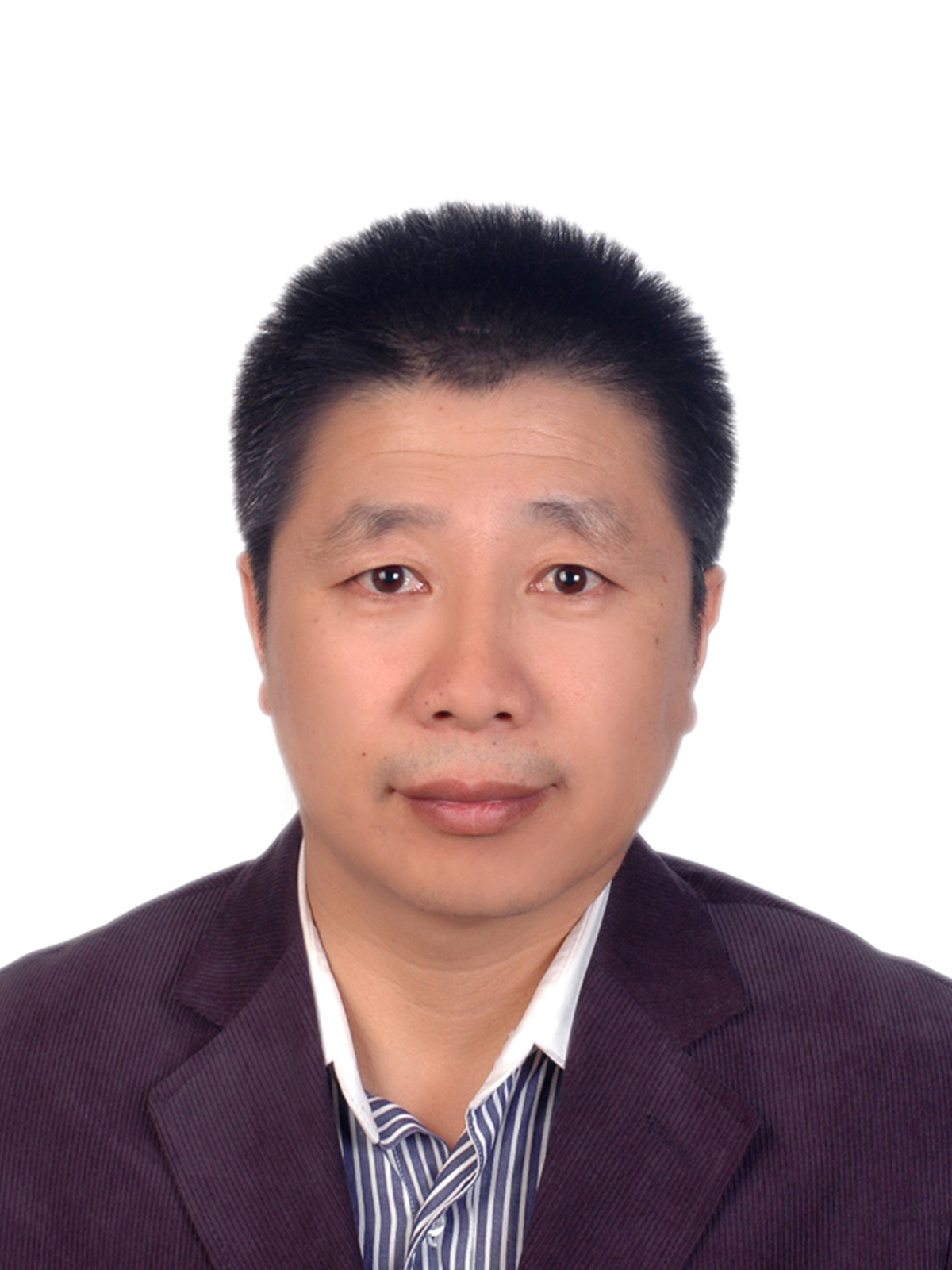 Hongfei Lin (林鸿飞)合作论文数School of Computer Science and Technology, Dalian University of Technology2
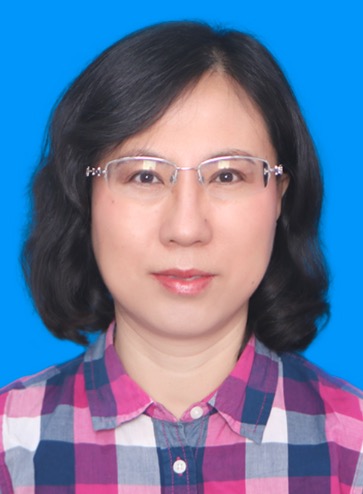 Jian Wang (王健)合作论文数School of Computer Science and Technology, Dalian University of Technology2
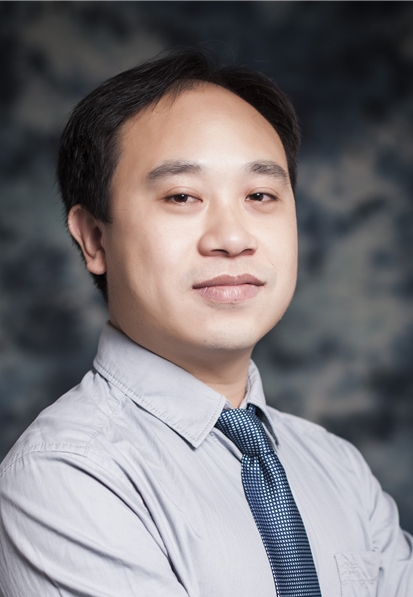 Guangming Tan (谭光明)合作论文数Institute of Computing Technology ,Chinese Academy of Sciences;University of Chinese Academy of Sciences2
 Xiaohui Yan合作论文数Huawei Technologies2
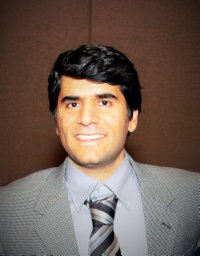 Abdolmajid Mohammadian合作论文数Department of Civil Engineering, University of Ottawa2
 Weile Jia (贾伟乐)合作论文数Institute of Computing Technology, Chinese Academy of Sciences;University of Chinese Academy of Sciences2
 Hongyu Wang合作论文数School of Advanced Interdisciplinary Sciences, University of the Chinese Academy of Sciences;Institute of Computing Technology, Chinese Academy of Sciences1Siyu Hu合作论文数State Key Lab of Processors, Institute of Computing Technology, Chinese Academy of Sciences;University of Chinese Academy of Sciences1Huiyi Lu合作论文数1Ri-hui Li合作论文数1Dapeng SU (苏大鹏)合作论文数1
 Yan Qin (秦岩)合作论文数School of Automation, Chongqing University1Ruigui Ao (敖瑞贵)合作论文数1
 Guang Liu合作论文数School of Aeronautics and Astronautics, Sun Yat-sen University1Chen Wang合作论文数Institute of Automation, Chinese Academy of Sciences;School of Artificial Intelligence, University of Chinese Academy of Sciences1Xiao-qiang CHEN (陈小强)合作论文数1
 Santosh Kumar Banbhrani合作论文数Sch Comp Sci & Technol, Dalian Univ Technol1
 Xiaopeng Shang (尚晓朋)合作论文数School of Mechanical Engineering & Automation, Beihang University1Bing Xu合作论文数1Shi WANG (王时)合作论文数1Qiang Liu (刘强)合作论文数Key Lab Grains & Oils Qual Control & Proc, Nanjing Univ Finance & Econ1
 Yonghe Chu合作论文数Department of Computer Science and Technology, Dalian University of Technology, Dalian, China1Yaru Wang (王亚茹)合作论文数1Yu-Hai Wang合作论文数1JunChao Tian (田俊超)合作论文数1Meng Gong (宫猛)合作论文数1GuiYe Bao (鲍桂叶)合作论文数1Zhao Song (宋昭)合作论文数1HongMing Yuan (袁红明)合作论文数1Lei Guo (郭蕾)合作论文数1Xiang Wang (王想)合作论文数1YouZhao Liu (刘友兆)合作论文数1XiaoDan Liu (刘晓丹)合作论文数1Hongxu Guan (关宏旭)合作论文数School of Navigation, Wuhan University of Technology1
 Yanmin Xu (徐言民)合作论文数School of Navigation, Wuhan University of Technology1Zhenhe Wen (温珍河)合作论文数青岛海洋地质研究所1
 Siyuan Ye (叶思源)合作论文数China Geological Survey1
 Zhigang Dong (董志刚)合作论文数School of Mechanical Engineering, Dalian University of Technology1
 Huawei Chen (陈华伟)合作论文数School of Mechanical Engineering & Automation, Beihang University1
 Di Zhao (赵迪)合作论文数School of Cyber Science and Technology, Beihang University1
 Donghui Yang (杨东辉)合作论文数School of Civil Engineering, Dalian University of Technology1
 Yongnian Gao (高永年)合作论文数School of Earth Sciences and Engineering, Hohai University1
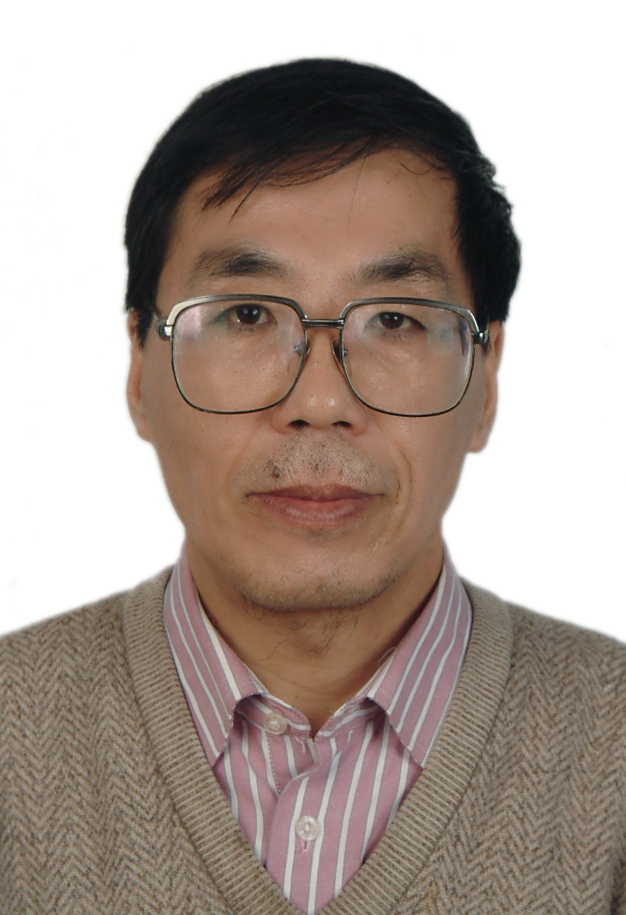 Zhili Zou (邹志利)合作论文数Department of Harbor & Ocean Engineering, Dalian University of Technology1
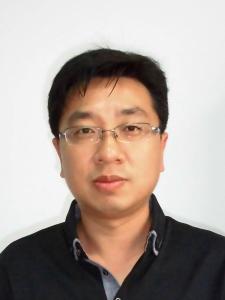 Zhengzhao Liang (梁正召)合作论文数School of civil engineering, Dalian University of Technology1
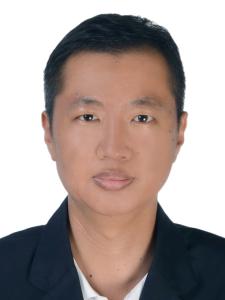 Zhihao Yang (杨志豪)合作论文数School of Computer Science and Technology, Dalian University of Technology1
 Yutong Lu (卢宇彤)合作论文数School of Computer Science and Engineering, Sun Yat-sen University1
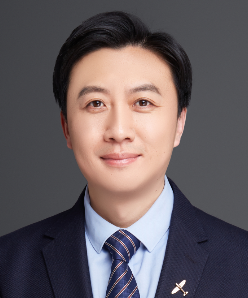 Tinghua Yi (伊廷华)合作论文数School of Civil and Transportation Engineering, Beijing University of Civil Engineering and Architecture1




