In recent years, the methods of super-resolution image reconstruction that based on deep learning have become a hot topic in research of computer vision. The methods of super-resolution image reconstruction that based on the Generative Adversarial Network (GAN) are not controlled in network generation, the models are easy to collapse, the generalization ability is undesirable, and the time complexity degree is too high. To fill these gaps, we propose a super-resolution image reconstruction method based on the GAN of encoding and decoding, which improves the quality of image reconstruction. First of all, our approach uses a design network with regularized structure to avoid model collapse. Then we build a generation network structure that based on encoding and decoding to suppress the uncontrollable defects of GAN network generated images. Finally, in the last layer of the generator, $\mathrm{N}^{\star}\mathrm{N}$ convolutional feature layer is included to replace the Softmax layer, which speeds up the training of the model. The experimental results show that the super-resolution remote sensing image reconstructed by the proposed method has higher reconstruction quality and better generalization ability in the DOTA training data sets. At the same time, the image reconstruction process can take much less time.
Methods for general object detection, such as R-CNN [4] and Fast R-CNN [3], have been successfully applied to text detection, as in [7]. However, there exists difficulty when directly using RPN [10], which is a leading object detection method, for text detection. This is due to the difference between text and general objects. On one hand, text regions have variable lengths, and thus networks must be designed to have large receptive field sizes. On the other hand, positive text regions cannot be measured in the same way as that for general objects at training. In this paper, we introduce a novel vertically-regressed proposal network (VRPN), which allows text regions to be matched by multiple neighboring small anchors. Meanwhile, training regions are selected according to how much they overlap with ground-truth boxes vertically and the location of positive regions is regressed only in the vertical direction. Experiments on dataset provided by ICDAR 2015 Challenge 1 demonstrate the effectiveness of our methods.
This paper addresses the problem of learning long binary codes from high-dimensional data. We observe that two key challenges arise while learning and using long binary codes: (1) lack of an effective regularizer for the learned high-dimensional mapping and (2) high computational cost for computing long codes. In this paper; we overcome both these problems by introducing a sparsity encouraging regularizer that reduces the effective number of parameters involved in the learned projection operator. This regularizer not only reduces overfitting but, due to the sparse nature of the projection matrix, also leads to a dramatic reduction in the computational cost. To evaluate the effectiveness of our method, we analyze its performance on the problems of nearest neighbour search, image retrieval and image classification. Experiments on a number of challenging datasets show that our method leads to better accuracy than dense projections (ITQ [11] and LSH[16]) with the same code lengths, and meanwhile is over an order of magnitude faster. Furthermore, our method is also more accurate and faster than other recently proposed methods for speeding up high-dimensional binary encoding.
We study the problem of automatically removing outliers from noisy data, with application for removing outlier images from an image collection. We address this problem by utilizing the reconstruction errors of an autoencoder. We observe that when data are reconstructed from low-dimensional representations, the inliers and the outliers can be well separated according to their reconstruction errors. Based on this basic observation, we gradually inject discriminative information in the learning process of an autoencoder to make the inliers and the outliers more separable. Experiments on a variety of image datasets validate our approach.
We present a fully automatic approach to construct a large-scale, high-precision dataset from noisy web images. Within the entire pipeline, we focus on generating high quality seed images for subsequent dataset growing. High quality seeds are essential as we revealed, but they have received relatively less attention in previous works with respect to how to automatically generate them. In this work, we propose a density score based on rank-order distance to identify positive seed images. The basic idea is images relevant to a concept typically are tightly clustered, while the outliers are widely scattered. Through adaptive thresholding, we guarantee the selected seeds as numerous and accurate as possible. Starting with the high quality seeds, we grow a high quality dataset by dividing seeds and conducting iterative negative and positive mining. Our system can automatically collect thousands of images for one concept/class, with a precision rate of 95% or more. Comparisons with recent state-of-the-arts also demonstrate our method's superior performance.
Inverted indexing is a popular non-exhaustive solution to large scale search. An inverted file is built by a quantizer such as k-means or a tree structure. It has been found that multiple inverted files, obtained by multiple independent random quantizers, are able to achieve practically good recall and speed. Instead of computing the multiple quantizers independently, we present a method that creates them jointly. Our method jointly optimizes all code words in all quantizers. Then it assigns these code words to the quantizers. In experiments this method shows significant improvement over various existing methods that use multiple independent quantizers. On the one-billion set of SIFT vectors, our method is faster and more accurate than a recent state-of-the-art inverted indexing method.
Inferring depth from a single image is a difficult task in computer vision, which needs to utilize adequate monocular cues contained in the image. Inspired by Saxena et al's work, this paper presents a close-form iterative algorithm to process multi-scale image segmentation and depth inferring alternately, which can significantly improve segmentation and depth estimate results. First, an EM-based algorithm is applied to obtain an initial multi-scale image segmentation result. Then, the multi-scale Markov random field (MRF) model, trained by supervised learning, is used to infer both depths and the relations between depths at different image regions. Next, a graph-based region merging algorithm is applied to merge the segmentations at the larger scales by incorporating the inferred depths. At the last, the refined multi-scale image segmentations are used as input of MRF model and the depth are re-inferred. The above processes are iteratively continued until the expected results are achieved. Since there are no changes on the segmentations at the finest scale in the iterative process, it still can capture the detailed 3D structure. Meanwhile, the refined segmentations at the other scales will help obtain more global structure information in the image. The contrastive experimental results verify the validity of our method that it; can infer quantitatively better depth estimations for 62.7% of 134 images down-loaded from the Saxena's database. Our method can also improve the image segmentation results in the sense of scene interpretation. Moreover, the paper extends the method to estimate the depth of the scene with fore-objects.
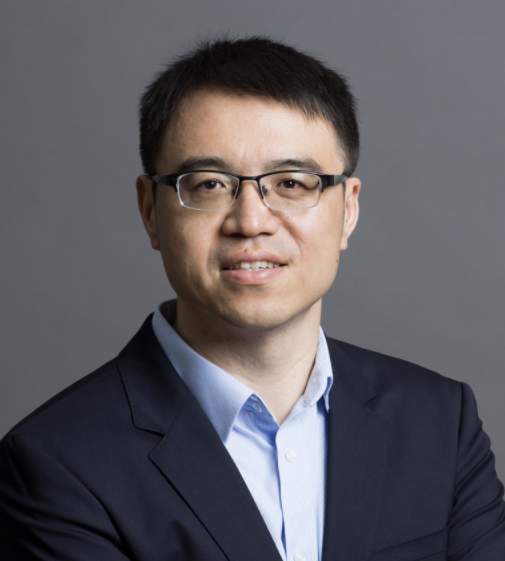 Jian Sun (孙剑)合作论文数Megvii Technology Inc.4
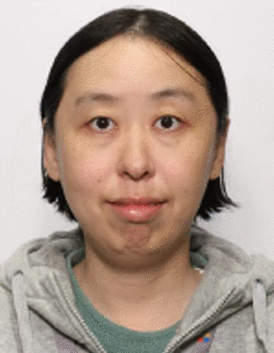 Fang Wen合作论文数Microsoft Research Asia3
 Xudong Cao (曹旭东)合作论文数Momenta.ai2
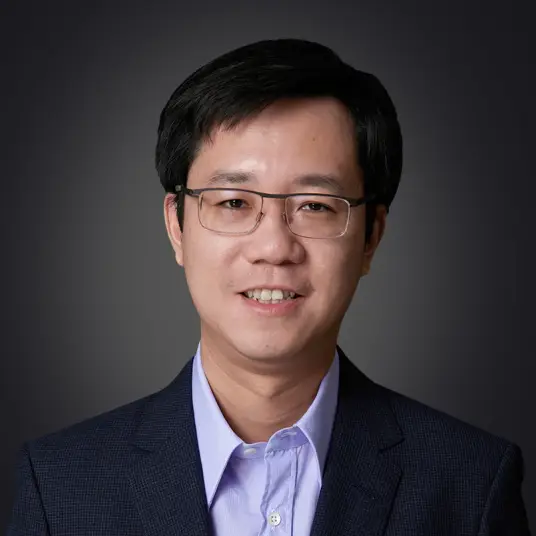 Kaiming He (何恺明)合作论文数Department of Electrical Engineering & Computer Science, Schwarzman College of Computing, Massachusetts Institute of Technology2
 Zhen Liu合作论文数1Qiang Guo合作论文数1
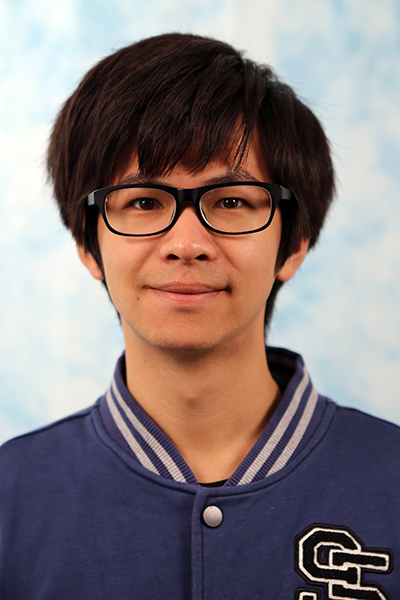 Donglai Xiang合作论文数Spatial Intelligence Lab, NVIDIA1
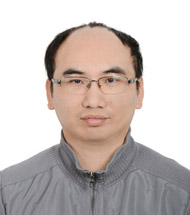 Yang Cao (曹洋)合作论文数Department of Automation, School of Information Science and Technology, University of Science and Technology of China1
 Pushmeet Kohli合作论文数Google DeepMind1
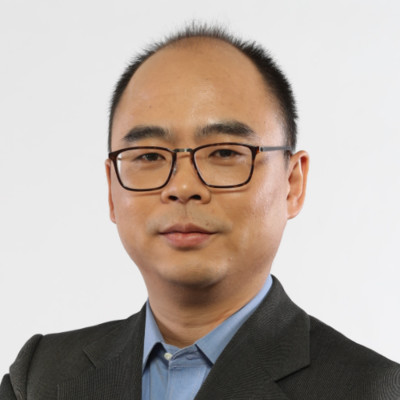 Gang Hua (华刚)合作论文数Amazon1
 Zengfu Wang (汪增福)合作论文数Institute of Intelligent Machines, Chinese Academy of Sciences;University of Science and Technology of China1




