Graph Contrastive Learning (GCL) has become an effective approach for improving representation learning in recommender systems by leveraging multi-view consistency. However, most existing GCL-based recommendation methods do not adequately consider the impact of noise, which restricts their effectiveness and stability in practical scenarios. To address this issue, we propose DGCLRec, a denoising graph contrastive recommendation framework that explicitly models noise from both the data and view levels. At the data level, we develop a graph-based denoising component that detects and filters out noisy interactions. At the view level, a symmetric contrastive learning strategy is adopted to strengthen the model’s tolerance to noise perturbations. Through this dual denoising design, DGCLRec effectively suppresses noise and improves representation quality. Results obtained from extensive evaluations on three benchmark datasets indicate that DGCLRec reliably surpasses a range of baseline models, confirming its effectiveness and robustness.
The development of the social media has created an environment for the rapid spread of fake news. The existing automated detection methods may have the following shortcomings: (1) Content-based methods neglect the rich background information related to news; (2) Unable to effectively exploit multimodal information at both fine-grained and coarse-grained levels; (3) Unable to effectively handle ambiguity problem (information from different modalities may contradict each other). To overcome these challenges, we present a Knowledge enhanced Multimodal Multi-grained Network (KMMN) for fake news detection. We obtain background knowledge contained in news based on entities to enhance cross-modal interaction and provide external information. The cross-modal feature fusion process is separated at different granularities (with fine-grained and coarse-grained branches). We design an improved Mixture-of-Experts (iMoE) network for feature fusion and reweight the cross-modal features to alleviate ambiguity problem. Experimental results demonstrate that the proposed framework outperforms state-of-the-art methods on three public datasets.
In recent years, the widespread dissemination of fake news across various domains has drawn significant academic attention to multi-domain fake news detection. Among different approaches, single-modal text modification-based detection remains the predominant method in this field. However, existing methods still face two fundamental challenges: (1) the varying semantic meanings of the same word across different domains, known as the domain knowledge shift problem, and (2) the model bias caused by imbalanced data distribution across domains, referred to as the domain distribution imbalance problem. To address these challenges, we proposes the Domain Adaptation Network with Dual-Encoder for Fake News Detection framework(DADE). The framework incorporates a domain adaptation expert network to effectively extract and process domain-specific information, thereby mitigating the domain knowledge shift issue. Additionally, it employs expert-level contrastive learning to explicitly optimize the weighting of features from different domains, resolving the domain distribution imbalance problem. Furthermore, DADE utilizes a dual-encoder architecture to jointly extract textual features, enhancing the richness of input representations. Experimental results on multiple real-world datasets demonstrate that DADE significantly outperforms state-of-the-art methods in detection performance.
Graph Neural Networks (GNNs) have become a core tool for graph representation learning, and GNNs perform well in tasks such as graph classification, node classification, link prediction, etc. This is due to the efficient capture of graph topology and feature information through a message-passing mechanism. However, traditional GNNs have limitations in effectively identifying structural differences, such as different rings, strongly regular graphs, and graphs with the same local patterns but different global topologies. Considering the importance of articulation points and bridges in the graph structure, especially applied to complex graph structures such as modular and decomposed structures in graphs, identification and robustness of key nodes in networks, subtle connectivity differences in strongly regular graphs. By focusing on these complex graph structures, GNNs can understand the topological properties of graphs more accurately. Hence, this paper proposes a novel graph neural network model, AB-AgentNet, which enhances the structured encoding of graphs by specially encoding the feature information of articulation points and bridges in the graph. This information enhancement helps the GNN to better capture the global structural features that may be ignored by traditional GNN methods when dealing with complex graph structures, which in turn improves the expressive power and application range of the model. Extensive comparative experiments have been conducted on real-world benchmark datasets for graph classification tasks, and the results demonstrate a significant improvement in the accuracy of AB-AgentNet.
With the increasing prevalence of short videos as a medium for news dissemination, their openness and ease of editing have rendered them a high-risk vehicle for the spread of fake news. However, existing detection methods struggle to effectively capture deep forgery features, particularly when faced with complex cross-modal interactions and diverse forgery patterns. To address this challenge, we propose GLFE-SVFD, a fake news detection framework that integrates global and local feature enhancement. Leveraging an attention mechanism, GLFESVFD dynamically measures modality complementarity and disparity, adaptively adjusting modality weights to amplify critical information while suppressing noise interference. Specifically, global feature enhancement captures cross-modal correlations, while local feature enhancement further focuses on fine-grained modality discrepancies. Experimental results demonstrate that GLFE-SVFD surpasses existing methods in short video fake news detection, significantly improving detection performance.
Introducing contrastive learning into graph recommendation can alleviate data sparsity. Graph recommendation systems based on contrastive learning typically employ a single structure augmentation to generate contrastive views. Recent research suggests feature augmentation-adding uniform noise perturbations in the feature space-as a replacement for structure augmentation in contrastive learning. This augmentation can mitigate popularity bias and achieve better recommendation performance than structure augmentation. Graph structure augmentation enables the model to be robust to adversarial samples. Feature augmentation can obtain more uniform feature representations and obtain better performance. Thus, we propose a Mixed Augmentation Contrastive Learning for Recommendation (MACLR). In this paper, we apply graph contrastive learning to recommender systems, where we combine structure augmentation and feature augmentation instead of single augmentation to generate augmented views. Experimental results demonstrate that MACLR effectively integrates the advantages of structure augmentation and feature augmentation, achieving better performance than using a single augmentation method.
The recent methods based on meta-learning have been applied to few-shot text classification tasks, and have achieved remarkable performance, such as prototypical networks and so on. The primary mission of few-shot text classification is to learn a high-quality embedding representation for each class. However, due to the randomness in sample sampling, the representations of class prototypes often tend to be unstable. This paper proposes the SCLAWM model, which employs a combination of external knowledge and sample representations to enhance the embedding quality of class prototypes. Based on the effectiveness of contrastive learning, this paper introduces a method of supervised contrastive learning to further enhance the similarity between samples and their class prototypes. Furthermore, this paper employs an adversarial network to enhance the model's generalization performance. The experiments show that the SCLAWM model has achieved remarkable performance on four benchmark datasets.
Graph convolutional networks have gained traction in recommender systems recently, addressing issues likematrix sparsity. LightGCN simplifies models to avoid overfitting and improve generalization. However, it only considers single behavior, neglecting the impact of multiple behaviors on user preferences. Hence, we propose a multi-behavior recommender based on lightweight graph convolution. We construct a heterogeneous graph capturing various user-item interactions and design a heterogeneous graph attention network. User embeddings from the graph neural network are mapped to different behaviors, enhancing user information mining. Multi-task training enhances model performance, as evidenced by superior results compared to LightGCN and NGCF across multiple datasets.
With the development of intelligent transportation systems, mobile sensors have become one of the important sources for traffic flow monitoring. This paper studies the methods for real-time monitoring of freeway and national highway traffic flow changes using mobile sensor data during the reconstruction project of Shenshan Line in Liaoning. In order to solve the problem of traffic flow monitoring caused by the demolition of ETC toll system on the freeway during the reconstruction, multiple virtual measurement points are set up in this paper. The number of passing vehicles at the virtual measurement points on the freeway is counted using the vehicle trajectory dynamic data and statistical models trained by historical traffic flow data. Considering the fixed ratio between heavy-duty trucks and ordinary trucks, container trucks and ordinary coaches, expansion ratio coefficients of heavy-duty trucks versus trucks and container trucks versus coaches are set to expand the passing vehicles at virtual measurement points and obtain real-time freeway traffic flow. Similarly, using existing traffic flow measurement station data on national highways, real-time national highway traffic flow is obtained by a similar expansion method. During the bridge demolition construction of Shenshan Line in February 2022, the proposed method was utilized to monitor the traffic flow on freeways and national highways. The results show that during the construction period, the freeway traffic flow decreased significantly compared to normal conditions, while the national highway traffic flow increased. This study verifies the effectiveness of the proposed mobile sensor based traffic flow monitoring method during line reconstruction, and provides basis for construction traffic organization and management decisions. Compared with traditional methods relying on roadside facilities for data acquisition, mobile sensors can obtain full traffic flow information within the regional scope and better reflect traffic flow changes. This research provides reference for traffic flow monitoring and management during large-scale line reconstruction. Future work will further improve the accuracy of flow calculation and expand the model applicability to more scenarios and road network coverage.
Current self-supervised representation learning methods are mainly based on contrastive learning and proxy tasks. These methods acquire semantically rich features by contrasting samples with invariant transformations (positive pairs) against other samples (negative pairs), and simply discard transformations that degrade performance when used as invariances. However, using only invariant transformations often leads to an over-reliance on invariant transformations, which affects the generalisation ability and robustness of the model, while the large number of negative sample pairs in contrast learning imposes a huge computational overhead. In order to address these issues, we reduce the dependence on invariant transformations by transforming the discarded invariant transformations into equivariant transformations. In contrast learning, we reduce the computational overhead by using only positive pairs to obtain semantically rich features. Specifically, we enhance feature semantic quality by encouraging certain transformations to exhibit non-trivial equivariance on samples of invariant transformations in the form of a proxy task, while preserving original transformation invariance. The model learns the invariant transformations further by learning equivariance at the same time, and our approach can improve the accuracy of the model without changing the structure of the original model. Experimental results show that significant improvements are obtained on several benchmark datasets.
Graph Contrastive Learning (GCL) has attracted significant research attention due to its self-supervised ability to learn robust node representations. Unfortunately, most methods primarily focus on homophilic graphs, rendering them less effective for heterophilic graphs. In addition, the complexity of node interactions in heterophilic graphs poses considerable challenges to augmentation schemes, coding architectures, and contrastive designs for traditional GCL. In this work, we propose HeterGCL, a novel graph contrastive learning framework with structural and semantic learning to explore the true potential of GCL on heterophilic graphs. Specifically, We abandon the random augmentation scheme that leads to the destruction of the graph structure, instead introduce an adaptive neighbor aggregation strategy (ANA) to extract topology-supervised signals from neighboring nodes at different distances and explore the structural information with an adaptive local-to-global contrastive loss. In the semantic learning module, we jointly consider the original nodes’ features and the similarity between nodes in the latent feature space to explore hidden associations between nodes. Experimental results on homophilic and heterophilic graphs demonstrate that HeterGCL outperforms existing self-supervised and semi-supervised baselines across various downstream tasks.
In recent years, contrastive learning has emerged as a successful method for unsupervised graph representation learning. It generates two or more different views by data augmentation and maximizes the mutual information between the views. Prior approaches usually adopt naive data augmentation strategies or ignore the rich global information of the graph structure, leading to suboptimal performance. This paper proposes a contrast-based unsupervised graph representation learning framework, MPGCL. Since data augmentation is the key to contrastive learning, this paper proposes constructing higher-order networks by injecting similarity-based global information into the original graph. Then, adaptive and random augmentation strategies are combined to generate two views with complementary semantic information, which preserve important semantic information while not being too similar. In addition, the previous methods only consider the same nodes as positive samples. In this paper, the positive samples are identified by capturing global information. In extensive experiments on eight real benchmark datasets, MPGCL outperforms both the SOTA unsupervised competitors and the fully supervised methods on the downstream task of node classification. The code is available at: https://github.com/asfdd3/-miao/tree/src/MPGCL .
To fuse vocabulary features into the pre-training model is the mainstream data feature processing method for sequence labelling tasks. In general, the feature fusion methods that have been proposed at present are direct fusion outside the pre-training model or fusion of lexical features using attention mechanism. However, the study found that this way of vocabulary enhancement does not conform to the word formation rules of modern Chinese. In the Chinese language, it is easy to fuse irrelevant or even incorrect lexical features into the sequence using the above feature processing methods, which is bad for the experimental results of the Chinese sequence labelling task. To solve these problems, we propose to use Cosine Similarity Adapter to process lexical features in Chinese sequence labelling tasks. CSBERT is a hybrid model using this structure based on BERT, which conforms to the word formation rules of modern Chinese to a certain extent. It can fuse the features of the word into the character or eliminate the features of the word in the character according to the cosine similarity between the character vector and a word vector. The experimental results show that CSBERT has better ability to label Chinese sequences than the benchmark model. CSBERT has achieved the best experimental results such as F1-Score on 7 open datasets and the best ability of multi-label classification, which proves that the model has good practical value.
Recently, graph neural networks (GNNs) have achieved significant success in many graph-based tasks. However, most GNNs are inherently restricted by over-smoothing, which limits performance improvement. In this paper, we propose an Enhanced Attribute-aware and Structure-constrained Graph Convolutional Network (EAS-GCN). Specifically, EAS-GCN first uses degree prediction to incorporate graph local structure information into autoencoder-specific representation. A delivery mechanism is then designed to pass the autoencoder-specific representation to the corresponding GCN layer. Autoencoder mainly assists GCN in learning enhanced attribute information, and node degree prediction assists GCN in learning local structure information. Furthermore, we theoretically analyze autoencoder could help alleviate the over-smoothing in GCN. Experimental results show that EAS-GCN enjoys high accuracy on the node classification task and can better alleviate over-smoothing.
\beginabstract Graph neural networks (GNNs) have shown strong performance in graph-based analysis tasks. Despite their remarkable success, the inherent homophilic message-passing mechanism (MP) makes GNNs challenging to generalize to heterophilic graphs. In addition, the MP explicitly exploits the connection relationships between local neighbor nodes making GNNs unable to maintain stable performance in the face of adversarial perturbation attacks. In this paper, we propose a new method to explore graph structure by removing explicit message-passing mechanisms and present a network embedding framework AMCNE with Adaptive Multi-hop Contrast loss (AMCLoss) to address these challenges. AMCNE only relies on a simple autoencoder to obtain node representations for classification and uses elaborate contrastive loss to drive nodes capturing complex structural information on heterophilic graphs. The comprehensive experiments show that AMCNE outperforms state-of-the-art baseline models on homophilic and heterophilic graphs and is more robust in the node classification task. \endabstract
Graph Neural Networks (GNNs) are powerful tools in representation learning for graphs. Most GNNs use the message passing mechanism to obtain a distinguished feature representation. However, due to this message passing mechanism, most existing GNNs are inherently restricted by over-smoothing and poor robustness. Therefore, we propose a simple yet effective Network Embedding framework Without Neighborhood Aggregation (NE-WNA). Specifically, NE-WNA removes the neighborhood aggregation operation from the message passing mechanism. It only takes node features as input and then obtains node representations by a simple autoencoder. We also design an enhanced neighboring contrastive (ENContrast) loss to incorporate the graph structure into the node representations. In the representation space, the ENContrast encourages low-order neighbors to be closer to the target node than high-order neighbors. Experimental results show that NE-WNA enjoys high accuracy on the node classification task and high robustness against adversarial attacks.
Recently, the recommended method based on the Knowledge Graph (KG) has become a hot research topic in modern recommendation systems. Most researchers use assistive information such as entity attributes in KG to improve recommendation performance and alleviate Collaborative Filtering (CF) sparsity and cold start problems. The most recent technical trend is to develop end-to-end models based on the Graph Convolutional Network (GCN). In this paper, we propose a Knowledge Graph Bidirectional Interaction Graph Convolution Network for recommendation (KBGCN). This method is used to refine the embedded representation of node by recursively delivering messages from the neighbors (attributes or items) of the node (entity) and applies the knowledge aware attention mechanism to distinguish the contributions of different neighbors based of the same node. It uses neighbors of each entity in KG as the view of this entity, which can be extended by expanding the view of Multi-hop neighbors to mine high-order connectivity information existing in KG automatically. We apply the proposed method to three real-world datasets. KBGCN is better than seven KG-based baselines in recommendation accuracy and the two state-of-the-art GCN-based recommendations frameworks.
In recent years, graph neural network (GNN) has become the most important method for graph representation learning. However, most GNNs focus on using the message passing mechanism to guide the information aggregation between neighbors, which results in the over-smoothing and weak robustness. To address the above issues, we propose a novel graph representation learning framework via Adaptive Multi-layer Neighborhood Diffusion Contrast, called AM-NDC in this paper. Without using the message passing mechanism, AM-NDC can still capture the complex structural information between nodes through a neighborhood diffusion contrast loss. Experimental results show that AM-NDC outperforms the existing state-of-the-art models in both node classification and robustness against adversarial attacks. Our dataset and code are available at https://github.com/YJ199804/AM-NDC.
Heterogeneous graph networks show superior performance as a network that can combine information from multiple nodes. The heterogeneous graph network is introduced in the recommendation algorithm, and the HARec algorithm is proposed. HARec is the first heterogeneous network that integrates the idea of the bilayer-attention network with the self-attention mechanism. The algorithm embeds item neighborhoods with abundant semantic information as auxiliary information through the bilayer-attention network, while modeling the user-item interactive representation by fusing the feature representations of users and items through self-attention. The proposed algorithm, HARec, can obtain better accuracy and capture more abundant information, which greatly improves the recommendation performance. The results of experiment not only demonstrate the performance of our proposed model, but also show its potentially good interpretability.
 Yingli Zhong合作论文数9Yong Liu (刘勇)合作论文数黑龙江大学计算机学院9Jijie Zhang合作论文数6ShaoWei Yin (尹少尉)合作论文数3Yuhang Li (李昱杭)合作论文数2
 Meng Han合作论文数2Tianqi Zhou合作论文数2
 Longjiang Guo (郭龙江)合作论文数Shaanxi Normal University2
 Ping Xuan (玄萍)合作论文数School of Cyberspace Security, Hainan University2
 Chenhao Wang (王辰昊)合作论文数Central South University1
 Haochen Wang合作论文数Center for Research on Intelligent Perception and Computing, State Key Laboratory of Multimodal Artificial Intelligence Systems, Institute of Automation, Chinese Academy of Sciences1Yanyu Gao合作论文数1Xinying Lv合作论文数1Caiyu Yang合作论文数1
 Bingxu Chen合作论文数1
 Xin Zhang合作论文数1Yan Wang合作论文数1
 Tiangang Zhang (张天纲)合作论文数School of Cyberspace Security, Hainan University1Xiao-xue LIN (林晓雪)合作论文数1Xiao-chun Yang (杨小春)合作论文数1
 Zhaogong Zhang (张兆功)合作论文数School of Computer and Big Data, Heilongjiang University1YingLi Zhong (钟颖莉)合作论文数1DongXu Li (李东旭)合作论文数1Haiyue Hu合作论文数1
 Meirui Ren (任美睿)合作论文数School of Computer Science, Shaanxi Normal University1Mingzhu Tang (唐明珠)合作论文数1
 Jinbao Li (李金宝)合作论文数School of Electronic Engineering, Heilongjiang University1
 Wen Wang (王文)合作论文数School of Materials Science and Engineering, Harbin Institute of Technology1
 Yang Liu合作论文数Energy Research Institute, School of Computer Science and Engineering, Nanyang Technological University1
 Jiqiang Wang合作论文数1
 Haijun Niu (牛海军)合作论文数School of Chemistry, Chemical Engineering and Materials, Heilongjiang University1Zhongqing Wang (王中庆)合作论文数Chongqing University of Posts and Telecommunications, Chongqing University of Posts and Telecommunications1
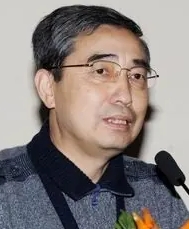 Zhongzhao Zhang (张中兆)合作论文数School of Electronics and Information Engineering, Harbin Institute of Technology1




