This paper establishes a modified thermal-fluid-structural coupling analysis model for embedded intelligent bearings by integrating bearing mechanical contact theory, a transient thermal grid model, and an elastohydrodynamic lubrication algorithm. To address the effect of embedded groove on embedded intelligent bearings and the limitation of conventional thermal models in capturing uneven heat generation, this paper proposes an embedded groove correction algorithm and a modified thermal grid model that accounts for uneven heat distribution. The proposed model fully incorporates key thermal-fluid-structural coupling effects-such as thermal expansion and viscosity-temperature effects-enabling comprehensive coupling analysis for embedded intelligent bearings and calculation of critical service state parameters, including contact load, contact stress, temperature, lubricant pressure, lubricant film thickness, and measured point strain/temperature. Taking a tapered roller bearing as the research subject, this study first calculates its service state parameters under a typical operating condition. After verifying the accuracy of the embedded groove correction algorithm through finite element analysis, a comparative analysis is conducted on the parameter differences before and after introducing the embedded groove correction module and the thermal-fluid-structural coupling module. A comparative analysis of multiple operating conditions is then conducted to verify the versatility and robustness of the proposed model under various operating conditions, and the operating patterns of the bearing under different working scenarios are analyzed. Finally, experiments confirm both the model's accuracy on strain and temperature of measurement point and the significant improvement in calculation precision driven by the proposed thermal-fluid-structural coupling module, temperature distribution module, and embedded groove correction module.
Passive non-line-of-sight (NLOS) imaging has garnered significant interest as a promising technique for cost-effective "corner-turning sensing". Existing methods, however, face fundamental limitations: data-driven models generally suffer from limited generalization and interpretability, while physics-based approaches typically produce low-fidelity reconstructions. To address these challenges, this paper proposes a hybrid physics-data-driven imaging (HPDI) framework. HPDI employs a dual-path architecture that integrates a physics-informed coarse-to-fine pathway (CTFP) with a data-driven implicit reconstruction pathway (IRP). The former executes a staged progression from physics-informed coarse reconstruction to final refinement, while the latter encodes scene-specific statistical priors in an end-to-end manner. An adaptive fusion network synergistically integrates the physical insights of CTFP and the statistical abstractions of IRP, yielding enhanced reconstruction performance. To enable comprehensive evaluation, we construct multiple datasets covering diverse acquisition conditions (with/without occluder) and representative scenarios (sparse/complex). Experimental results demonstrate that HPDI consistently outperforms state-of-the-art methods in reconstruction fidelity, while exhibiting enhanced generalization under distribution shifts and higher data efficiency. This work represents a significant step toward harnessing the complementary strengths of physics-informed modeling and data-driven learning, thereby advancing the development of high-performance NLOS imaging.
Daylight short-wave infrared (SWIR) imaging of silicon photovoltaic (PV) modules is significantly challenged by intense, fluctuating solar background radiation. While optical filtering is critical for suppressing this interference, current selection methods remain largely empirical and lack a quantitative, adaptable solution. This study introduces a spectral-analysis-based model for adaptive filter optimization under daylight photoluminescence (PL) imaging conditions across diverse irradiance levels, electrical operating states, and imaging modalities. The model balances three coupled requirements in daylight PL imaging: signal-to-background enhancement, effective transmission of PL signals, and broadband suppression of solar background. A quantitative filter performance assessment index, Fs, is formulated by integrating the measured solar irradiance spectrum, PL emission characteristics, detector spectral response, and, critically, the often-overlooked state-dependent spectral reflectance of the PV module. Based on the proposed model and experimentally measured spectral data, the optimal filter passbands and their trends across different irradiance levels are systematically predicted for both single- and two-phase imaging modalities, followed by quantitative analysis of representative commercial filters. Furthermore, both qualitative outdoor SWIR imaging results and quantitative image quality metrics consistently demonstrate a robust correlation between predicted trends and imaging performance, with higher Fs yielding superior image contrast and enhanced defect discernibility. Overall, this study provides a quantitative, condition-specific spectral analysis model for high-quality daylight SWIR imaging, facilitating automated inspections of operating PV systems under irregular solar backgrounds.
The growing demand for predictive maintenance in industrial rotating machinery has accelerated the development of embedded intelligent bearings, a breakthrough technology that enables real-time, high-precision health monitoring. Unlike traditional empirical configurations, this study explicitly incorporates sensor detection sensitivity and linearity into the multi-physics evaluation system. Furthermore, Factor Analysis (FA) is used to reduce the dimensionality of multi-dimensional evaluation indicators, thereby establishing a comprehensive decision-making framework. A key finding is that configuring measurement points outside the bearing load zone yields negligible monitoring benefits. This paper presents an optimization methodology to determine the spatial configuration of dual measurement points in embedded intelligent bearings. The methodology integrates static mechanical analysis, thermal characterization, and sensor-detection modeling via coupled Finite Element Analysis (FEA). Validation studies using a 6306 deep-groove ball bearing demonstrate that the optimized dual-sensor configuration (40 degrees from bearing bottom) significantly improves monitoring accuracy, exhibiting a 22.40% reduction in rotational speed monitoring error compared to unoptimized dual-sensor configurations (30 degrees) and an 88.91% improvement over single-sensor solutions. Similarly, load monitoring error is reduced by 20.50% compared to unoptimized configurations and 74.12% compared to single-sensor systems. These findings validate the feasibility and effectiveness of the proposed optimization methodology in industrial settings.
Active steady-state non-line-of-sight (NLOS) imaging entails the acquisition and processing of continuous multi-bounce NLOS signals to facilitate the recovery of hidden scenes. Recently, learning-based methods have demonstrated competitive performance in NLOS imaging. However, most of them inadequately capture the underlying features inherent in acquired signals and fail to effectively exploit prior information from hidden scenes, thus constraining their ability to alleviate the ill-posedness. To address the above limitations, we propose a novel NLOS signal processing framework—hybrid perceptron with cross-domain transferability (HP-CDT). The HP enhances the utilization of primitive features through a hierarchical pooling and feature fusion (HPFI) mechanism while comprehensively capturing underlying correlations within the signals via local and global perception. Besides, it facilitates cross-level interactions and fusion of various features, thereby enriching the feature representation. The cross-domain transfer (CDT) strategy leverages line-of-sight (LOS) latent representations as priors to steer the NLOS feature extraction, facilitating the optimization of NLOS latent representations. Rendering experiments and practical assessment indicate that, compared with existing methods, our approach achieves superior imaging quality while maintaining a light-weight architecture for efficient deployment.
Due to manufacturing and assembly errors, the assembly accuracy of the spacecraft cabin is inevitably affected. To minimize these errors and improve operational performance, we apply a comprehensive assembly accuracy analysis method that accounts for non-ideal surfaces. First, a 3D model of the cabin’s non-ideal surfaces is developed using skin model shapes and small displacement torsor theory to represent form and positional errors, respectively. However, previous studies have often overlooked the impact of form errors. Next, an improved deviation propagation model is introduced to analyze the assembly of multi-segment cabins while considering surface imperfections. Finally, a simulation study is conducted using a cabin simulation component as the research object. The results confirm the method’s effectiveness in predicting the assembly accuracy of cabins with non-ideal surfaces.
The galvanometer-driven dual-camera systems can maintain a wide field of view while simultaneously capturing high-resolution details of targets in milliseconds, which is highly valuable for various high-speed tracking applications. Most existing systems utilize a precalibrated mapping function between image coordinates and pan-tilt mirror angles for dynamic target tracking. However, this ignores the dual-camera optical center misalignment, leading to severe system malfunctions when the target distance changes. To address this limitation, we propose a novel galvanometer-driven system that makes use of target information in both wide-view and zoom-in images for pan-tilt mirror angle modification, achieving high-accuracy target tracking at varying distances. Our proposed system introduces a practical dual-camera information interaction framework to accomplish iterative manipulation control of the galvanometer mirrors and adaptive adjustment of the coordinate-angle mapping function, improving the stability and precision of dynamic target tracking at varying distances. With a multithreaded task synchronization design, our developed framework enables the proposed system to remain target-to-track central-located within the zoom-in images without incurring extra time costs. Both qualitative and quantitative experimental results validate the superiority of our proposed system, extending the applicability of the galvanometer-driven dual-camera setup for target-tracking tasks over a wide range of distances.
Human behaviour recognition is one of the most fundamental tasks in Industrial Internet of Behaviour (IIoB) and is crucial for the safe and reliable IIoB. Existing methods lacks adaptability and transferability. In addition, there is a data isolation problem among different users. Therefore, there is an urgent requirement to construct a secure and adaptive human behaviour recognition model in IIoB without violating the privacy of users. Mamba, a structured state space model that integrates a selection mechanism and a scan module, is used for time series modelling tasks. To tackle the aforementioned problems, an Federated Learning-based lightweight human behaviour recognition model with selective state space models is proposed. First, we design a human behaviour recognition model integrating Mamba and residual structure to achieve lightweight and secure human behaviour modelling. In addition, considering data privacy and training efficiency, a decentralised dynamic FL framework is designed to achieve lightweight and secure model collaborative training, including: initial selection of source users, model aggregation strategy based on dynamic weighting, and fine-tuning module based on small-sample data, to improve the training efficiency of the model and the accuracy of human behaviour recognition. Extensive experiments are conducted to prove the superior performance of the proposed method.
Effective and periodic inspection of photovoltaic (PV) modules is essential to guarantee their safe operation at maximum capacity. Although luminescence-based imaging techniques can identify most PV module defects, existing methods require additional electrical contact or can only work under certain sunlight conditions. In this paper, we propose a contactless sunlight-excited electroluminescence (Suns-EL) imaging method to acquire high-quality luminescence images under variable sunlight conditions. We present a partial shading system to separate the cell into an illuminated excitation area and a shaded imaging area for non-disruptive imaging on operating modules. Moreover, we propose two sunlight-insensitive strategies to acquire images with high image uniformity and clear defect structures/textures including: 1) a two-stage framework to remove background noise and obtain high-quality Suns-EL images and 2) a filter selection approach to preserve signal better while suppressing noise based on the analysis of spectral components and energy distributions. Experimental results demonstrate the effectiveness of our proposed method in acquiring high-quality luminescence images of multiple invisible defects in operating PV modules under various sunlight conditions, both qualitatively and quantitatively.
Photometric stereo enables the reconstruction of high-quality 3D shapes from images taken under multiple lighting directions with a fixed camera. However, the issues of crosstalk in color cameras and insufficient utilization of three-channel information negatively affect the accuracy of normal estimation. Yet, existing photometric stereo methods have not considered these issues. In this paper, we conduct an in-depth study on the formation of crosstalk in color cameras and derive precise formulas. Building upon these analyses, we propose a pixel-wise multi-channel information processing module based on high-order information interaction, effectively removing crosstalk effects and fully extracting input information within each image. Furthermore, by integrating the multi-channel information processing module with an improvement of the previous photometric stereo network, we propose MCIP-PS-Net to improve the accuracy of normal estimation. Experimental results show that the proposed multi-channel information processing module can effectively remove the impact of crosstalk and utilize multi-channel information for accurate normal estimation. Further experiments on real-world benchmark datasets demonstrate the superior performance of the proposed MCIP-PS-Net compared with previous state-of-the-art methods.
In this paper, we present an enhanced active steady-state non-line-of-sight (NLOS) recognition solution that leverages a guided generative adversarial learning framework, NLOS-GGAL, allowing for adaptive guided learning without the requirement for specifying metrics. Different from the existing end-to-end learning frameworks, the proposed method acquires potential significant features from line-of-sight (LOS) measurements to better facilitate the training of the NLOS recognition engine (NLOS-RE) and thus alleviate the ill-posedness of NLOS recognition. To assess the effectiveness of NLOS-GGAL, we conduct simulation and physical experiments through an active steady-state NLOS recognition setup, generating simulated datasets for NLOS human pose recognition, and capturing experimental datasets for NLOS hand-written digit recognition, which enable comprehensive evaluation across diverse settings and conditions. Both simulated and experimental results demonstrate that NLOS-GGAL exhibits robustness to variations in positions and shapes of hidden objects, and effectively enhances NLOS recognition accuracy compared to alternative methods.
Drone-based target detection is an indispensable technology in numerous applications, such as surveillance, search, and rescue. The widely used single-modal RGB detector is easily affected by numerous factors, such as inadequate illumination and adverse weather. Introducing the thermal modal on top of the RGB modal can significantly enhance detection performance and robustness in complex environments. Nevertheless, drone-based RGBT target detection faces several challenges, such as the difficulty of detecting tiny targets, misaligned modality space, and redundant modality information. To address these issues, we propose a novel Adaptive Modality Selection Drone-based RGBT Detector (AMSDet), which eliminates redundant information in different modalities and enables accurate detection of tiny targets. Specifically, we first design a policy module to filter modalities before the fusion module and select the relevant modality information for input into the subsequent network. Second, we introduce a fusion module based on the attention mechanism to integrate the complementary information of the two modalities and improve the detection performance of tiny targets. Furthermore, we employ an appropriate training strategy and loss functions to jointly train the policy module and other layers in AMSDet. The superiority of our proposed method is validated through extensive experiments on the RGBTDronePerson and VTUAV-det datasets, achieving excellent detection performance for drone-based tiny targets.
Assembly precision greatly influences the performance of complex high-end equipment. The traditional industrial assembly process and deviation transfer are implicit and uncertain, causing problems like poor component fit and hard-to-trace assembly stress concentration. Assemblers can only check whether the dimensional tolerance of the component design is exceeded step by step in combination with prior knowledge. Inversion in industrial assembly optimizes assembly and design by comparing real and theoretical results and doing inversion analysis to reduce assembly deviation. The digital twin (DT) technology visualizes and predicts the assembly process by mapping real and virtual model parameters and states simultaneously, expanding parameter range for inversion analysis and improving inversion result accuracy. Problems in improving industrial assembly precision and the significance and research status of DT-driven parametric inversion of assembly tools, processes and object precision are summarized. It analyzes vital technologies for assembly precision inversion such as multi-attribute assembly process parameter sensing, virtual modeling of high-fidelity assembly systems, twin synchronization of assembly process data models, multi-physical field simulation, and performance twin model construction of the assembly process. Combined with human-cyber-physical system, augmented reality, and generative intelligence, the outlook of DT-driven assembly precision inversion is proposed, providing support for DT's use in industrial assembly and precision improvement.
Tolerance-cost optimization plays an important role in trade-off between deviation reduction and manufacturing cost. However, very few studies focus on the assembly accuracy of the cabin using a more efficient tolerance allocation considering both quality and cost issues. Therefore, this paper proposes a tolerance-cost optimization method for multi-cabin assembly of spacecrafts based on the cloud model based genetic algorithm (CGA). To improve the accuracy of tolerance analysis, a comprehensive assembly accuracy analysis method is used, composed of tolerance representation and propagation. For tolerance representation, skin model shape and small displacement torsor theory are used to respectively represent the form and position errors. For tolerance propagation, the integrated Jacobian-skin model shapes model is used to compute the accumulative results of deviation. Simulation results demonstrate the capability of the proposed method to predict the assembly accuracy of cabins with non-ideal surfaces. To improve the efficiency of the optimization, CGA is utilized as an optimization technique. Compared with traditional optimization methods, simulation analysis shows superior performance of parameter optimization in the problem of tolerance-cost optimization of multi-cabin spacecraft.
Multispectral imaging plays a critical role in a range of intelligent transportation applications, including advanced driver assistance systems (ADAS), traffic monitoring, and night vision. However, accurate visible and thermal (RGB-T) image registration poses a significant challenge due to the considerable modality differences. In this paper, we present a novel joint Self-Correlation and Cross-Correspondence Estimation Framework (SC3EF), leveraging both local representative features and global contextual cues to effectively generate RGB-T correspondences. For this purpose, we design a convolution-transformer-based pipeline to extract local representative features and encode global correlations of intra-modality for inter-modality correspondence estimation between unaligned visible and thermal images. After merging the local and global correspondence estimation results, we further employ a hierarchical optical flow estimation decoder to progressively refine the estimated dense correspondence maps. Extensive experiments demonstrate the effectiveness of our proposed method, outperforming the current state-of-the-art (SOTA) methods on representative RGB-T datasets. Furthermore, it also shows competitive generalization capabilities across challenging scenarios, including large parallax, severe occlusions, adverse weather, and other cross-modal datasets (e.g., RGB-N and RGB-D).
This paper proposes and develops a novel method, namely the Partially Iterative Algorithm (PIA), for highspeed assessment of flatness deviation for point cloud data, which is typically measured data obtained by advanced instruments for precision manufacturing, such as optical scanners and industrial computed tomography. Firstly, an enhanced flatness deviation model is established based on the minimum zone principle, which is strictly adhered to the latest ISO definition. Secondly, the proposed method is detailed, including the Dynamic Point Set (DPS), the update scheme, and the terminal condition. Thirdly, comparisons are conducted with typical methods for flatness deviation assessment, along with a practicability test via the simulated dataset and measuring dataset. The results show that the proposed method can accurately and rapidly assess flatness deviation on point cloud data with massive measuring points.
In the field of industrial assembly, human-machine interactive assembly methods are frequently used. Lack of virtual and physical mapping, a convoluted guiding system, and low effect precision in the interactive process, a digital twin-driven human-machine interactive assembly method system is proposed as a solution to the mentioned issues. The YOLOv7-tiny lightweight model is used to perform accurate detection of parts. By incorporating attention modules into the backbone network, the feature extraction capability of the model in complicated assembly environments is enhanced. The assembly method proposed is validated using the assembly process of the reducer as an instance. The OpenCV method is employed to produce geometric reference features for parts. The experimental results show that the proposed assembly method can provide visual guidance for the assembly process, improve the traditional list-type assembly component retrieval method, solve the drawbacks of the pre-set assembly guidance in the guidance system that may not be able to adapt to the changes of the assembly results in the actual operation, and can accurately instruct novices how to assemble, which is characterised by easy implementation, low cost and high accuracy, and is of great significance for improving the success rate and assembly efficiency of human-machine interactive assembly.
This paper proposes a method for adapting the layout of flexible workpieces of various shapes, in order to reduce the difficulty of location design for personalized shapes. Different from the previous location design that relied on the experiences of engineers, this method establishes an optimization model that determines the number of datum points and the optimal solution based on the centroid characteristics of the workpieces. The optimization index of this model is to control the minimum deformation of the overall flexible workpieces and the minimum variance of the deformation at the maximum deformation point. Taking the characteristics of the workpieces as a priori constraints for location determination, this model obtains the optimal solution combined with finite element analysis. Finally, the effectiveness of the method is verified through a numerical example.
To build a galvanometer-driven dual-camera sensing system, it is important to accurately correlate the wide-view image coordinates with the pan-tilt mirror angles for adjusting the incident light path of the zoom-in camera. Existing optical modeling methods assume sufficient target distance and simplify dual-camera optical centers as coincident. However, this simplification is not valid in many practical cases and might cause severe system malfunctions, such as complete loss tracking of important targets. To address this problem, we propose a novel approach, to the best of our knowledge, to facilitate high-precision optical modeling and calibration of galvanometer-driven dual-camera systems. The proposed method takes into consideration the dual-camera optical center misalignment issue and builds a model for accurate estimation and rectification of target localization errors under various optical configurations. Qualitative and quantitative experimental results demonstrate the superiority of our method, improving the performance of galvanometer-driven dual-camera systems for high-precision optical sensing applications.
Automated defect detection is an important part of manufacturing, where deep learning-based detection methods are widely used. However, these methods are often limited by the defective features in 2D images, and it is difficult to obtain significant defect features under single illumination, especially for metal parts. For the purpose of solving these problems, we propose a new defect detection framework which combines photometric stereo and object detection technology. The well-performing photometric stereo method is used to predict the surface normal, which is beneficial for defect detection since surface defects are more sensitive to gradient variations. We also construct a defect dataset with 2D original images and normal maps to establish a link between photometric stereo and object detection, which is sufficient for training and testing of deep learning models. Finally, the normal is fed into the detection model to achieve the classification and localization of defects based on the object detection algorithm. The experimental results reveal that the proposed method is able to accomplish high detection accuracy and outperforms the 2D image-based methods.
 Yanlong Cao (曹衍龙)合作论文数School of Mechanical Engineering, Zhejiang University171
 Yanpeng Cao (曹彦鹏)合作论文数School of Mechanical Engineering, Zhejiang University65
 Zhaotong Wu (吴昭同)合作论文数43Jian Mao (茅健)合作论文数20
 Zewei He合作论文数Key Laboratory of Advanced Manufacturing Technology of Zhejiang Province, School of Mechanical Engineering, Zhejiang University, Hangzhou 310027, China16
 Michael Ying Yang合作论文数Department of Computer Science, Faculty of Science, University of Bath;Bath Institute for the Augmented Human, University of Bath;Centre for the Analysis of Motion, Entertainment Research & Applications, Faculty of Science, University of Bath15HuaWen Zheng (郑华文)合作论文数13HE Yuan-feng合作论文数12Liu Ting合作论文数11XuSong Xu (徐旭松)合作论文数11
 Shixi Yang (杨世锡)合作论文数School of Mechanical Engineering, Zhejiang University11
 Xin Li (李昕)合作论文数Section of Visual Computing and Computational Media, College of Performance, Visualization, and Fine Arts, Texas A&M University;Department of Computer Science and Engineering, College of Engineering, Texas A&M University10
 Yusheng Liu (刘玉生)合作论文数State Key Lab of CAD&CG, College of Computer Science and Technology, Zhejiang University10jiayan guan合作论文数9
 Fu Guizhong (付贵忠)合作论文数9
 li bo合作论文数9Zijian Wu合作论文数9
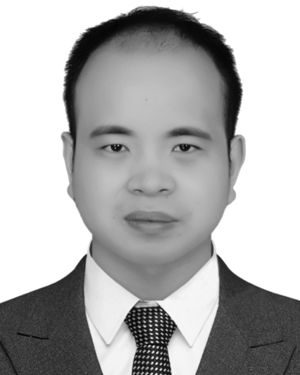 Lifei Ren合作论文数8Cai Min (蔡敏)合作论文数8
 Junnan Zhi合作论文数7Qi-jian ZHAO (赵齐兼)合作论文数7
 Yafei Dong合作论文数School of Mechanical Engineering, Zhejiang University7Hongliang Lou (楼洪梁)合作论文数College of Modern Science and Technology, China Jiliang University7
 Nabil Anwer合作论文数Ecole Normale Superieure de Cachan, Ecole Normale Superieure de Cachan7Binjie Ding合作论文数6
 Wenbin Zhu合作论文数6ChongFeng Cao (曹冲锋)合作论文数6
 Tukun Li合作论文数6
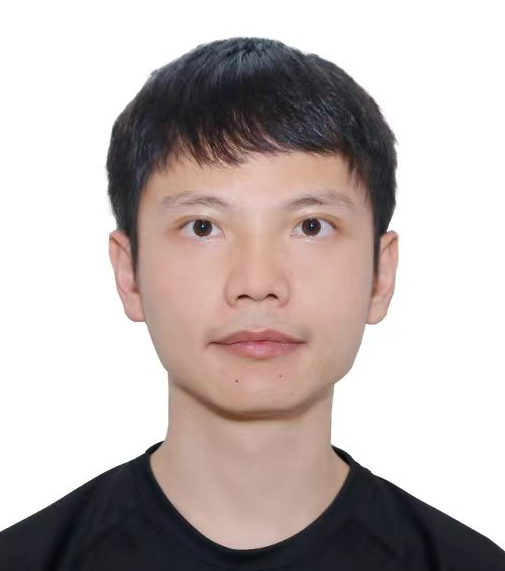 Dayan Guan (官大衍)合作论文数School of Electronics and Information Engineering, Harbin Institute of Technology6
 Christel-Loic Tisse合作论文数ARC Centre of Excellence for Autonomous Systems;University of Sydney;ARC Centre of Excellence for Autonomous Systems, University of Sydney6
 Liqun Wu (吴立群)合作论文数School of Mechanical Engineering, Hangzhou Dianzi University6Fan Liu合作论文数5
 Luo Xing合作论文数5
 Yifeng Wang合作论文数5Huiwen Yan合作论文数5ZhangYu Ye (叶章宇)合作论文数5
 Shuming Gao (高曙明)合作论文数State Key Lab of CAD&CG, College of Computer Science and Technology, Zhejiang University5Li-Qun Wu合作论文数5
 Bowen Zhao (赵博文)合作论文数School of Medicine, Zhejiang University5
 Yafu Lin合作论文数5Siliang Tang (汤斯亮)合作论文数College of Computer Science and Technology, Zhejiang University4zaiyu lin (林载誉)合作论文数4
 Rui Liang合作论文数4
 Xi Tong合作论文数4xuefeng ye合作论文数4Shi CHENG (程实)合作论文数4Weixin Hu合作论文数4
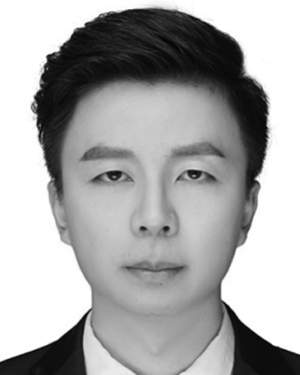 Lingyu Wang合作论文数School of Science, Jimei University, Xiamen 361021, China4zhenbo gao合作论文数4




