The continuous expansion of digital learning environments has catalyzed the demand for intelligent systems capable of providing personalized educational content. While current exercise recommendation frameworks have made significant strides, they frequently encounter obstacles regarding the long-tailed distribution of student engagement and the failure to adapt to idiosyncratic learning trajectories. We present LiveGraph, a novel active-structure neural re-ranking framework designed to overcome these limitations. Our approach utilizes a graph-based representation enhancement strategy to bridge the information gap between active and inactive students while integrating a dynamic re-ranking mechanism to foster content diversity. By prioritizing the structural relationships within learning histories, the proposed model effectively balances recommendation precision with pedagogical variety. Comprehensive experimental evaluations conducted on multiple real-world datasets demonstrate that LiveGraph surpasses contemporary baselines in both predictive accuracy and the breadth of exercise diversity.
We present STEP3-VL-10B, a lightweight open-source foundation model designed to redefine the trade-off between compact efficiency and frontier-level multimodal intelligence. STEP3-VL-10B is realized through two strategic shifts: first, a unified, fully unfrozen pre-training strategy on 1.2T multimodal tokens that integrates a language-aligned Perception Encoder with a Qwen3-8B decoder to establish intrinsic vision-language synergy; and second, a scaled post-training pipeline featuring over 1k iterations of reinforcement learning. Crucially, we implement Parallel Coordinated Reasoning (PaCoRe) to scale test-time compute, allocating resources to scalable perceptual reasoning that explores and synthesizes diverse visual hypotheses. Consequently, despite its compact 10B footprint, STEP3-VL-10B rivals or surpasses models 10×-20× larger (e.g., GLM-4.6V-106B, Qwen3-VL-235B) and top-tier proprietary flagships like Gemini 2.5 Pro and Seed-1.5-VL. Delivering best-in-class performance, it records 92.2
Unified audio-language modeling has emerged as a prominent trend in modern speech systems, promising to bring the reasoning capabilities of large language models to auditory tasks. However, existing unified foundations often struggle to match the depth of specialized systems across automatic speech recognition (ASR), text-to-speech synthesis (TTS), and realtime spoken interaction. Bridging this gap remains an open challenge. This report presents StepAudio 2.5, a unified audio-language foundation model that matches or exceeds specialized systems across all three capabilities. Rather than treating these tasks as architecturally distinct, we operate on the premise that once text and audio share a multimodal representational space, task specialization becomes a matter of operational regimes: data construction, optimization targets, and decoding constraints. Guided by this insight, we advance the post-training paradigm from standard supervised learning to task-tailored Reinforcement Learning from Human Feedback (RLHF), using it as the primary mechanism to define complex optimization targets. We leverage this RLHF-centric alignment, alongside specialized decoding, to shape a shared backbone into three distinct operational modes. Concretely, the ASR branch advances transcription efficiency via verifiable multi-token decoding; the TTS branch achieves controllable, expressive synthesis through preference-based RLHF and context-rich supervision; and the Realtime branch realizes low-latency, persona-consistent dialogue via generative reward modeling within an RLHF framework. On standard benchmarks, StepAudio 2.5 achieves state-of-the-art results across ASR, TTS, and Realtime, demonstrating that a singular audio-language foundation can successfully internalize the distinct deployment objectives of speech understanding, generation, and live interaction.
GenUI is an emergent class of AI tools that use large models to generate UI mock-ups based on users' high-level descriptions, promising to democratize UX design exploration for a broader audience. Most GenUI designs to date tend to inherit the conventions of conversational large models, such as ChatGPT and Gemini, where a user describes their design needs primarily via an unstructured prompt, and the tool then takes a depth-first approach, delving into the design right away and producing a high-fidelity prototype. In this research, we rethink how well this unstructured, depth-first, and high-fidelity GenUI design can support early-stage, 0-to-1 design exploration. To probe this question, we propose a contrastive design with structured input, breadth-first exploration, and low-fidelity generation. We then conducted a comparison study with 24 UX designers and product managers who conducted mini design exploration exercises using an existing GenUI tool and our contrastive GenUI tool. Findings reveal participants' perceived benefits and trade-offs of the two GenUI designs: structured input surfaces key facets but requires more work, raising entry barriers to start exploration; breadth-first workflow reveals more possibilities, but previewing UX ideas spanning many screens remains hard; and though low fidelity has value, professionals favor high fidelity because it fits practice and GenAI heightens fidelity expectations. We conclude with design implications for GenUI and similar AI-powered creativity support tools.
We introduce Step 3.5 Flash, a sparse Mixture-of-Experts (MoE) model that bridges frontier-level agentic intelligence and computational efficiency. We focus on what matters most when building agents: sharp reasoning and fast, reliable execution. Step 3.5 Flash pairs a 196B-parameter foundation with 11B active parameters for efficient inference. It is optimized with interleaved 3:1 sliding-window/full attention and Multi-Token Prediction (MTP-3) to reduce the latency and cost of multi-round agentic interactions. To reach frontier-level intelligence, we design a scalable reinforcement learning framework that combines verifiable signals with preference feedback, while remaining stable under large-scale off-policy training, enabling consistent self-improvement across mathematics, code, and tool use. Step 3.5 Flash demonstrates strong performance across agent, coding, and math tasks, achieving 85.4
Temperature anomalies drive substantial excess mortality, yet existing early warning systems remain limited to regional scales, reliant on linear assumptions, and fail to adequately account for multi-dimensional thermal stress and socioeconomic heterogeneity. This study develops the Planetary Health Axis System–Meteorology (PHAS–M), a framework designed to transform sub-daily weather forecasts into location-specific predictions of the risk of temperature-related excess mortality.PHAS-M employs a Bayesian, prior-informed severity–exposure–vulnerability decomposition coupled with a copula model to capture non-linear mechanisms and spatial variation in adaptive capacity. In validation, it dramatically outperforms existing approaches and surpasses both conventional regression and pure machine learning baselines.This methodology further reveals that the heterogeneity of temperature-induced health risks is attributable to socioeconomic vulnerability, and supports the integration of a broader set of heterogeneous characteristics into predictive climate–health models. The PHAS-M framework provides an interpretable and universal operational tool for decision-makers to better intervene in weather-related health risks.
Low-rank decomposition is a compelling approach for compressing large language models, but its effectiveness hinges on selecting which singular-vector bases to retain for a target task. Existing methods such as Basel adapt singular-value coefficients on downstream data and prune bases with small re-learned magnitudes, a heuristic that can be misaligned with task performance because it ignores the local geometry of the loss landscape. We present Basis Selection with Importance (BSI), a principled low-rank compression framework that ranks and prunes bases by directly estimating the expected loss increase incurred when each basis is removed. BSI derives a derivative-based importance score from a second-order Taylor expansion of the task loss with respect to singular values, combining first-order sensitivity and second-order curvature to quantify pruning impact. To make this criterion practical for LLMs, we develop an efficient Hessian-diagonal estimator by adapting the Hutchinson randomized-probing method to loss curvature with symmetric parameter perturbations. We provide a comprehensive theoretical analysis, including loss-increase bounds under basis pruning, explicit propagation of Hessian-diagonal estimation error into these bounds, variance characterization tied to the Hessian spectrum, high-probability sample-complexity guarantees for achieving a target estimation accuracy, and guidance on perturbation intensity. Extensive experiments on mathematical reasoning benchmarks demonstrate that BSI consistently outperforms state-of-the-art low-rank decomposition baselines, with especially strong improvements under deep compression.
Current large language models reason in isolation. Although it is common to sample multiple reasoning paths in parallel, these trajectories do not interact, and often fail in the same redundant ways. We introduce LACE, a framework that transforms reasoning from a collection of independent trials into a coordinated, parallel process. By repurposing the model architecture to enable cross-thread attention, LACE allows concurrent reasoning paths to share intermediate insights and correct one another during inference. A central challenge is the absence of natural training data that exhibits such collaborative behavior. We address this gap with a synthetic data pipeline that explicitly teaches models to communicate and error-correct across threads. Experiments show that this unified exploration substantially outperforms standard parallel search, improving reasoning accuracy by over 7 points. Our results suggest that large language models can be more effective when parallel reasoning paths are allowed to interact.
Large language models (LLMs) have demonstrated remarkable success across a wide range of tasks; however, they still encounter challenges in reasoning tasks that require understanding and inferring relationships between distinct pieces of information within text sequences. This challenge is particularly pronounced in tasks involving multi-step processes, such as logical reasoning and multi-hop question answering, where understanding implicit relationships between entities and leveraging multi-hop connections in the given context are crucial. Graphs, as fundamental data structures, explicitly represent pairwise relationships between entities, thereby offering the potential to enhance LLMs' reasoning capabilities. External graphs have proven effective in supporting LLMs across multiple tasks. However, in many reasoning tasks, no pre-existing graph structure is provided. Can we structure implicit knowledge derived from context into graphs to assist LLMs in reasoning? In this paper, we propose Reasoning with Graphs (RwG) by first constructing explicit graphs from the context and then leveraging these graphs to enhance LLM reasoning performance on reasoning tasks. Extensive experiments demonstrate the effectiveness of the proposed method in improving both logical reasoning and multi-hop question answering tasks.
Modeling clinical dynamics requires capturing how patient states evolve across visits while also accounting for the heterogeneous clinical signals present within each encounter. Existing approaches often emphasize temporal progression or intra-visit structure in isolation, leading to incomplete representations of patient trajectories and limited generalizability in realworld settings. We propose a bi-perspective clinical dynamics framework that jointly models longitudinal evolution and finegrained visit-level structure as two complementary axes of patient state formation. This design produces a unified trajectory representation that preserves long-range dependencies while remaining sensitive to intra-visit diagnostic, procedural, and treatmentrelated cues. To further stabilize prediction under data sparsity and heterogeneous patient profiles, the framework incorporates an optional similarity-guided refinement module that leverages relational patterns across historical cases without increasing inference overhead. Evaluations on two large critical-care datasets demonstrate that the proposed approach consistently yields stronger predictive behavior, enhanced robustness under sparse and irregular trajectories, and substantially improved computational efficiency compared with widely adopted architectures. These results highlight the effectiveness of structuring clinical event prediction around complementary temporal and contextual perspectives, offering a scalable pathway toward next-generation clinical decision-support systems.
Usability testing is a fundamental research method that user experience (UX) researchers use to evaluate and iterate their new designs. But what about evaluating and iterating the usability testing study design itself? Recent advances in Large Language Model-simulated Agent (LLM Agent) research inspired us to design UXAgent to support UX researchers in evaluating and iterating their study design before they conduct the real human-subject study. Our system features a Persona Generator module, an LLM Agent module, and a Universal Browser Connector module to automatically generate thousands of simulated users and to interactively test the target website. The system also provides a Result Viewer Interface so that the UX researchers can easily review and analyze the generated qualitative (e.g., agents' post-study surveys) and quantitative data (e.g., agents' interaction logs), or even interview agents directly. Through a heuristic evaluation with 16 UX researchers, participants praised the innovation of our system but also expressed concerns about the future of LLM Agent usage in UX studies.
Dense multi-label action detection in untrimmed long videos is a formidable task, with end-to-end training particularly challenging due to computational constraints, typically involving separate stages of off-the-shelf feature extraction and subsequent global modeling for action prediction. Existing methods fail to optimize all modules jointly for better performance. We introduce FreETAD, a Frequency-based End-to-end Temporal Action Detection approach, which shifts the focus from local actionness scores to frequency component estimation. Using the short-term Fourier Transform, FreETAD reconstructs the global action curve seamlessly. With a DETR-like decoder and frequency-encoded vectors for queries, it enhances multi-scale time-frequency interactions. FreETAD leverages end-to-end training effectively, boosting the mAP by 1.5% on Charades and 2.7% on MultiTHUMOS.
Large language models (LLMs) face low hardware efficiency during decoding, especially for long-context reasoning tasks. This paper introduces Step-3, a 321B-parameter VLM with hardware-aware model-system co-design optimized for minimizing decoding costs. Step-3 innovates in two key dimensions: (1) A novel Multi-Matrix Factorization Attention (MFA) mechanism that significantly reduces both KV cache size and computation while maintaining high attention expressiveness, and (2) Attention-FFN Disaggregation (AFD), a distributed inference system that decouples attention and Feed-Forward Network (FFN) layers into specialized subsystems. This co-design achieves unprecedented cost efficiency: Step-3 significantly reduces theoretical decoding costs compared with models like DeepSeek-V3 and Qwen3 MoE 235B, with the gains widening at longer context. Step-3 achieves low cost while activating 38B parameters per token (more than DeepSeek-V3 and Qwen3 MoE 235B), demonstrating that hardware-aligned attention arithmetic intensity, MoE sparsity, and AFD are critical to cost-effectiveness. We perform a head-to-head comparison with DeepSeek-V3 in its favorable scenarios. Our implementation on Hopper GPUs achieves a decoding throughput of up to 4,039 tokens per second per GPU under 50ms TPOT SLA (4K context, FP8, no MTP). It is higher than DeepSeek-V3's 2,324 in the same setup and sets a new Pareto frontier for LLM decoding.
Traditional approaches to atmospheric refraction studies suffer from unavoidable limitations in complex environments, such as the underlying surface. An optical method is proposed in this paper to measure the chromatic dispersion angles. It utilizes the channel differencing approach of a color CCD detector to measure the chromatic dispersion angle between different wavelengths. Through simulation analysis, calibration experiments, and analysis of the experimental results, we verified the effectiveness of the measurement system. The system possesses sub-microradian measuring accuracy and is suitable for kilometer-scale laser transmission studies. Compared with traditional methods, optical measurement techniques have advantages such as high accuracy and fast response, which are significant for laser transmission in the atmosphere and research on optoelectronic tracking systems in engineering applications.
Recent advancements in general-purpose AI have highlighted the urgent need to align AI systems with the goals, ethical principles, and values of individuals and society. Existing alignment research has been primarily approached as an AI-centered, static, and uni-directional process. However, this unidirectional perspective falls short of taking into account the dynamic and evolving interaction between humans and AI, necessitating a shift toward a bidirectional, interconnected mode of human-AI alignment. This SIG aims to outline the emerging areas of bidirectinoal human-AI alignment research, propose a blueprint of future goals and challenges for fundamental alignment research, and establish a shared platform to bring together experts from HCI, AI, social sciences, and more to advance interdisciplinary research and collaboration on human-AI alignment.
Low-rank adaptation (LoRA) has been developed as an efficient approach for adapting large language models (LLMs) by fine-tuning two low-rank matrices, thereby reducing the number of trainable parameters. However, prior research indicates that many of the weights in these matrices are redundant, leading to inefficiencies in parameter utilization. To address this limitation, we introduce Dense Low-Rank Adaptation (DenseLoRA), a novel approach that enhances parameter efficiency while achieving superior performance compared to LoRA. DenseLoRA builds upon the concept of representation fine-tuning, incorporating a single Encoder-Decoder to refine and compress hidden representations across all adaptation layers before applying adaptation. Instead of relying on two redundant low-rank matrices as in LoRA, DenseLoRA adapts LLMs through a dense low-rank matrix, improving parameter utilization and adaptation efficiency. We evaluate DenseLoRA on various benchmarks, showing that it achieves 83.8% accuracy with only 0.01% of trainable parameters, compared to LoRA’s 80.8% accuracy with 0.70% of trainable parameters on LLaMA3-8B. Additionally, we conduct extensive experiments to systematically assess the impact of DenseLoRA’s components on overall model performance.
AI can now generate high-fidelity UI mock-up screens from a high-level textual description, promising to support UX practitioners' work. However, it remains unclear how UX practitioners would adopt such Generative UI (GenUI) models in a way that is integral and beneficial to their work. To answer this question, we conducted a formative study with 37 UX-related professionals that consisted of four roles: UX designers, UX researchers, software engineers, and product managers. Using a state-of-the-art GenUI tool, each participant went through a week-long, individual mini-project exercise with role-specific tasks, keeping a daily journal of their usage and experiences with GenUI, followed by a semi-structured interview. We report findings on participants' workflow using the GenUI tool, how GenUI can support all and each specific roles, and existing gaps between GenUI and users' needs and expectations, which lead to design implications to inform future work on GenUI development.
We present Step-Video-T2V, a state-of-the-art text-to-video pre-trained model with 30B parameters and the ability to generate videos up to 204 frames in length. A deep compression Variational Autoencoder, Video-VAE, is designed for video generation tasks, achieving 16x16 spatial and 8x temporal compression ratios, while maintaining exceptional video reconstruction quality. User prompts are encoded using two bilingual text encoders to handle both English and Chinese. A DiT with 3D full attention is trained using Flow Matching and is employed to denoise input noise into latent frames. A video-based DPO approach, Video-DPO, is applied to reduce artifacts and improve the visual quality of the generated videos. We also detail our training strategies and share key observations and insights. Step-Video-T2V's performance is evaluated on a novel video generation benchmark, Step-Video-T2V-Eval, demonstrating its state-of-the-art text-to-video quality when compared with both open-source and commercial engines. Additionally, we discuss the limitations of current diffusion-based model paradigm and outline future directions for video foundation models. We make both Step-Video-T2V and Step-Video-T2V-Eval available at https://github.com/stepfun-ai/Step-Video-T2V. The online version can be accessed from https://yuewen.cn/videos as well. Our goal is to accelerate the innovation of video foundation models and empower video content creators.
In recent years, research on Text-to-SQL with Large Language Models (LLMs) has mainly focused on enhancing the understanding of database schemas to improve model performance but has overlooked the crucial role that the actual data values stored in the database play in the Text-to-SQL task. Furthermore, insufficient attention has been given to the keywords required for SQL generation and their corresponding condition information. To address this issue, we designed the SSC-SQL framework. By constructing a dynamic fusion mechanism that integrates data values with schema information, this framework effectively bridges the semantic gap between natural language queries and database structures, mitigating mismatches between SQL condition predicates and database schemas. In addition, the framework analyzes SQL syntax structures and query intent to classify user questions. Based on different categories, it applies customized SQL skeleton generation strategies to ensure the stability of SQL keywords and improve the accuracy of cross-table column-value matching. We conducted a systematic evaluation on the Bird benchmark dataset, achieving an execution accuracy of 64.93
 Gang Li合作论文数Google Research22
 Zhang Xianli合作论文数Jiaotong University16
 James Landay合作论文数Department of Computer Science, School of Engineering, Stanford University14
 Jindong Tan (谈金东)合作论文数Department of Mechanical, Aerospace, and Biomedical Engineering, Tickle College of Engineering, University of Tennessee, Knoxville13Zhiwei Guan (管志伟)合作论文数Google13Wenxi Zhang (张文喜)合作论文数12
 Yinlong Zhang合作论文数State Key Laboratory of Robotics, Shenyang Institute of Automation, Chinese Academy of Sciences12
 Wei Liang (梁炜)合作论文数Key Laboratory of Networked Control System, Chinese Academy of Sciences;Shenyang Institute of Automation, Chinese Academy of Sciences;University of Chinese Academy of Sciences11
 Buyue Qian (钱步月)合作论文数School of Cyber Science and Engineering, Xi'an Jiaotong University11
 Chen Li (李辰)合作论文数National Engineering Lab for Big Data Analytics, School of Computer Science and Technology, Faculty of Electronic and Information Engineering, Xi'an Jiaotong University;Department of Computer Science and Technology, School of Telecommunication, Xi’an Jiaotong University11Hao Lü合作论文数11
 Libin Xiang (相里斌)合作论文数National Development and Reform Commission10
 Guozhong Dai (戴国忠)合作论文数Beijing Key Lab of Human-Computer Interaction, Institute of Software, Chinese Academy of Sciences10Xinxin Kong合作论文数9Zeyu Gao合作论文数9
 Samy Bengio合作论文数Apple Inc9
 Cho-Jui Hsieh合作论文数Department of Computer Science, Samueli School of Engineering, University of California, Los Angeles;Arena8Xin Zhou合作论文数Google8
 Xiangshi Ren (任向实)合作论文数Center for Human-Engaged Computing, School of Information, Kochi University of Technology8
 Zhou Wu (伍洲)合作论文数Aerospace Information Research Institute, Chinese Academy of Sciences;University of Chinese Academy of Sciences7
 Yefeng Zheng (郑冶枫)合作论文数Medical Artificial Intelligence Laboratory, School of Engineering, Westlake University7
 Björn Hartmann合作论文数Department of Electrical Engineering & Computer Science, University of California, Berkeley7Haibo An合作论文数7
 Tao Li合作论文数Google Research6Jaime Ruiz合作论文数6
 Forrest Huang合作论文数Apple6
 Shumin Zhai (翟树民)合作论文数Google6
 Tieliang Gong (龚铁梁)合作论文数School of Computer Science and Technology, Faculty of Electronic and Information Engineering, Xi'an Jiaotong University6
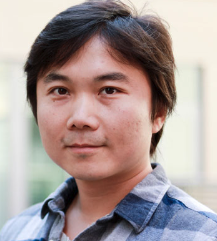 Xiang 'Anthony' Chen (陈翔)合作论文数Department of Electrical and Computer Engineering, Samueli School of Engineering, University of California, Los Angeles;Department of Computer Science, Samueli School of Engineering, University of California, Los Angeles6Jialun Wu合作论文数Xi’an Jiaotong University,School of Computer Science and Technology,Xi’an,Shaanxi,China,7100495ChunBao Wang (王春宝)合作论文数5
 Bin Fan (范斌)合作论文数中国科学院光电技术研究所5
 Yibo Zhu合作论文数StepFun5
 Chin-Yi Cheng合作论文数Google5
 Xiangyu Zhang (张祥雨)合作论文数StepFun5
 Daxin Jiang (姜大昕)合作论文数StepFun5
 Zaihong Hou (侯再红)合作论文数Anhui Institute of Optics and Fine Mechanics, Chinese Academy of Sciences5
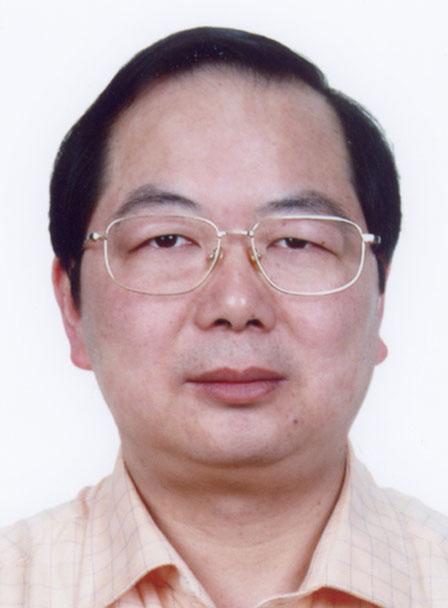 Hongan Wang (王宏安)合作论文数Institute of Software, Chinese Academy of Sciences;University of Chinese Academy of Sciences5
 Feng Tian (田丰)合作论文数University of Chinese Academy of Sciences;Institute of Software, Chinese Academy of Sciences5
 Jeffrey Nichols合作论文数Google5
 Chun Zuo (左春)合作论文数Institute of Software, Chinese Academy of Sciences;University of Chinese Academy of Sciences;Sinosoft Company Limited5
 Ranjitha Kumar合作论文数Siebel School of Computing and Data Science, The Grainger College of Engineering, University of Illinois at Urbana-Champaign;UserTesting5
 Pei-Yu (Peggy) Chi合作论文数5Kaijun Tan合作论文数4Quan Sun合作论文数4Liang Zhao合作论文数4
 Hanpeng Hu合作论文数Univ Hong Kong, Hong Kong, Peoples R China4
 Zheng Ge合作论文数Megvii Inc.4JiaHu Yuan (袁家虎)合作论文数4