Anaerobic digestion (AD) represents an important solution for reducing the annual increase in global food waste, by facilitating the recycling of food resources. In the present study, we introduce a biogas stirring reactor (RB) to address the over-acidification in AD systems, enhancing methanogenic efficiency. Compared with the mechanical stirring reactor (RM), the RB exhibited higher methane yields (219 ± 17 mL CH4/g volatile solids (VS)added/d) and stable pH values (7.0 ± 0.2) during the steady-state phase. Computational fluid dynamics analysis highlighted the superior vertical mixing and flow velocity in RB, which reduced the sludge particle size (359 μm in RM vs. 100 μm in RB) and extracellular polymeric substance content (283 mg/g VS in RM vs. 126 mg/g VS in RB), thereby enhancing microorganism interactions and AD efficiency. Notably, biogas stirring enriched hydrogenotrophic methanogens, particularly, Methanobacterium, rebalancing the AD process. Microbial community analysis confirmed the positive impact of biogas stirring on hydrogen utilization by microorganisms. Our findings highlight the effectiveness of biogas stirring in enhancing the methane yield and present a viable approach for managing over-acidification in AD systems.
Anaerobic digestion (AD) frequently encounters challenges such as acidification under high organic loadings, leading to system instability or failure. This study demonstrates that biogas stirring (RB) effectively mitigates acidification during the AD of FW (FW), outperforming traditional mechanical stirring (RM). The RB system sustained stable methane production, reaching 249.1 mL CH4/g VSadded/d, whereas the RM system encountered significant acidification, with a pH dropping to 5.0 +/- 0.2, impeding methanogenesis. For sludge characteristics, biogas stirring in the RB system significantly decreased particle size to 78 mu m, which were anticipated to facilitate mass transfer and substrate conversion. Focus on the microbial communities evolution, employing biogas stirring facilitated a rational microbial collaboration with the enhanced capability for volatile fatty acids (VFAs) conversion and methane production. In addition, Methanobacterium, a typical methanogen for hydrogenotrophic methanogenesis (HM), was predominant in RB, occupying in an important position (Centrality = 0.9232) in the microbial network. Furthermore, the increased H2 partial pressure enriched the concentration of F420 by 63.1 %, facilitating its uptake and supporting the growth syntrophic acetate-oxidizing (SAO) bacteria. The consequent activation of the SAO-HM pathway is key to rapidly restoring methane production postacidification. The findings of this study revealed the underlying role of biogas stirring for SAO-HM pathway and provided a potential strategy to facilitate acidification alleviation in AD.
厌氧共消化是市政有机固废减量化资源化的主流工艺之一,然而湖北省武汉市仍缺乏具有本地代表性的厨余垃圾与剩余污泥厌氧共消化效能及潜在影响的相关研究.通过生化产甲烷潜力批式实验、动力学分析和共消化性能评估考察了武汉本地典型厨余垃圾和剩余污泥的比例对厌氧共消化效能和潜在应用的影响.研究结果表明:厨余垃圾与剩余污泥共消化的产甲烷速率比厨余垃圾单独消化提高了40% ~96%;厨余垃圾与剩余污泥的最佳比例为2:1(基于VS),此时实际产甲烷潜力为408 mLCH4·g-1VSadded,比理论叠加值提高了11.2%;厌氧消化的渗透率达到60%时,武汉本地的厨余垃圾和剩余污泥通过厌氧消化回收的能量高达6100万m3 CH4·a-1或2亿kWh·a-1,可以供应约7.6%的居民生活天然气需求量或1.7%的电力需求量,可为武汉本地乃至全国的厨余垃圾和剩余污泥共消化提供参考和指导意义.
The configuration and the effective operation of constructed rapid infiltration (CRI) systems are of significance for advanced wastewater treatment. In this study, a novel CRI system was developed with a compact structure consisting of two stages, i.e., oxic and anoxic stages. The CRI system was continuously operated for about 140 days under different aeration modes, i.e., tidal flow, continuous aeration, and intermittent aeration. Nitrogen removal was not desirable with tidal flow due to the insufficient oxygen supply in the oxic stage for nitrification, while continuous aeration could achieve good performance for chemical oxygen demand (COD), ammonium, total nitrogen (TN), and total phosphorus (TP) removal. By comparison, the CRI system operated with intermittent aeration was more favorable due to the effective removal ability for pollutants and relatively lower energy demand. The microbial community analysis revealed that Proteobacteria was the dominant phylum in both oxic and anoxic stages of the developed CRI system. Functional microbial groups (Plasticicumulans, Pseudomonas, and Nitrospira in the oxic stage; Thauera, Candidatus_Competibacter, and Dechloromonas in the anoxic stage) were identified for the mediation of carbon, nitrogen, and phosphorus in the system. This study evaluated the feasibility and the optimal aeration mode of the developed CRI system for advanced wastewater treatment, which could satisfy the requirement for the high standard of effluent quality.
Anaerobic digestion (AD) process is widely considered the most sustainable technology for food waste (FW) disposal due to its advantage of biomethane recovery and beneficial environmental consequences. However, the effects of key components in FW (i.e. starchy food, vegetables, fruits, and meats) on AD process and their methanogenic pathways remain unclear. In this study, the biochemical methane potential (BMP) of cooked rice, cabbage, banana peel, pork and local FW was 288, 283, 254, 630, and 476 NmL CH4/g VSadded, with t80 (time required for 80% methane produced) of 3, 9, 3, 11 and 11 days, respectively. Kinetic analysis suggested diverse hydrolysis rates (0.104-0.679 d(-1)) and specific methane yields (39-119 NmL CH4/g VSadded/d). The relative abundances of key methanogens in the reactors were diverse, leading to the variation in acetoclastic and hydrogenotrophic methanogenic pathways. This study provides fundamental information for the operation of AD systems with different FW compositions.
 Feixiang Zan (昝飞翔)合作论文数School of Environmental Science & Engineering, Huazhong University of Science and Technology5
 Xiaohui Wu (吴晓晖)合作论文数School of Environmental Science & Engineering, Huazhong University of Science and Technology5
 Yi Han合作论文数East China University of Science and Technology(East China University of Science and Technology),Shanghai,China2
 Xiejuan Lu (陆谢娟)合作论文数School of Environmental Science and Engineering, Huazhong University of Science and Technology2Pingbo Liu合作论文数1Xi Luo合作论文数1FAN Xiaozhi (范晓志)合作论文数1Yang-Fan Deng合作论文数1Dingding Tang合作论文数1Linquan Sun (孙临泉)合作论文数1Minggang Gao (高明刚)合作论文数1
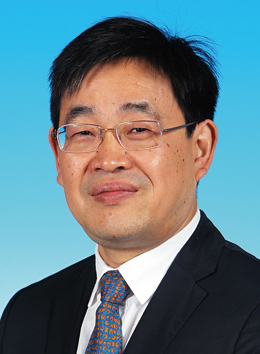 Guanghao Chen (陈光浩)合作论文数Division of Environment and Sustainability, Department of Civil & Environmental Engineering, School of Engineering, The Hong Kong University of Science and Technology;Institute for the Environment, The Hong Kong University of Science and Technology1
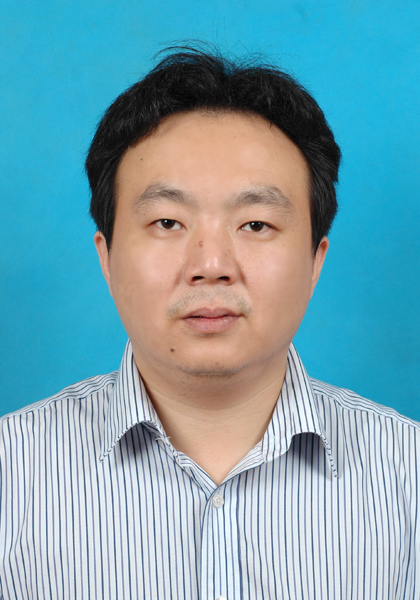 Yu Miao (苗雨)合作论文数School of Civil Engineering and Mechanics, Huazhong University of Science and Technology1
 Jing Chen (陈静)合作论文数School of Environmental Science & Engineering, Huazhong University of Science and Technology1
 Gang Guo (郭刚)合作论文数School of Environmental Science and Engineering, Huazhong University of Science and Technology1
 Weiqi Xue合作论文数DTU Foton, Tech Univ Denmark1




