Let Omega is an element of L-1(Sn-1) be a homogeneous function of degree zero and have mean value zero. Consider the rough singular integral T(Omega)f(x) = p.v. integral(n Omega(x-y))(R)/ |x-y|(n) f(y)dy We prove that T Omega is of weak type (1,1) if the rough kernel function Omega belongs to the block space B-0,B-0 (q) (Sn-1) for some q > 1. This result substantially extends a classical theorem of Seeger (1996) [19]. (c) 2026 Published by Elsevier Inc.
Let $1"-1$. Let $(X,d,μ)$ be an $s$-Ahlfors-regular quasi-metric measure space. Suppose that $B^{0,v}_q(X)$ is the block space which consists of all functions that admit a decomposition into $q$-blocks supported on balls. In this paper, we study the relationship between the block space $B^{0,v}_q(X)$ and the Orlicz-type space $L(\log^+\!\!L)^{1+v}(X)$. More precisely, we show that the block space $B_q^{0,v}(X)$ is a proper subspace of the Orlicz space $L(\log^+\!\!L)^{1+v}(X)$ for any fixed $1""-1$. Namely, $$B_q^{0,v}(X)\subsetneq L(\log^+\!\!L)^{1+v}(X),$$ which gives a confirmed answer to a longstanding open problem concerning the relationship between block spaces and Orlicz-type spaces on the unit sphere $\mathbb S^{n-1}$. We further show that $L(\log^+\!\!L)^{1+v}(X)$ is the smallest Orlicz-type space containing $B^{0,v}_{q}(X)$. We also introduce a generalized block space $\mathscr B_q^{0,v}(X)$ that depends only on the measure structure and show that this space is equivalent to the Orlicz space $L(\log^+\!\!L)^{1+v}(X)$ when $μ(X)<\infty$. Finally, we consider two special cases that further clarify the roles of the parameter $q$ and the logarithmic weight."
Let $\mathcal{G}$ be a stratified Lie group and $\Delta = -\sum_{j=1}^{n_1} X_j^2$ be the sub-Laplacian of $\mathcal{G}$, where $\{X_j\}_{1 \leq j \leq n_1}$ is a basis of the left-invariant vector fields of degree one. Given that $0 < \alpha < 1$, this paper studied the operators $X_j \Delta^{-\frac{1+\alpha}{2}}$ for $j=1,\dots,n_1$ and established their uniform endpoint estimates from $L^\infty(\mathcal{G})$ to $\mathrm{BMO}_\alpha(\mathcal{G})$, from $L^{\frac{Q}{\alpha}}(\mathcal{G})$ to $\mathrm{BMO}(\mathcal{G})$ and from $L_{\alpha}^{\frac{Q}{\alpha}}(\mathcal{G})$ to $\mathrm{BMO}_\alpha(\mathcal{G})$. This paper also considered the uniform endpoint estimates for commutators $[b, X_j \Delta^{-\frac{1+\alpha}{2}}]$, $j=1,\dots,n_1$ from $L^{\frac{Q}{\beta}}(\mathcal{G})$ to $\mathrm{BMO}_\alpha(\mathcal{G})$ if $b \in \mathrm{BMO}_\beta(\mathcal{G})$ and $0 < \alpha < \beta < 1$ as well as their characterisation of the uniform endpoint estimates $H^{\frac{Q}{Q+\alpha}}(\mathcal{G}) \to L^{\frac{Q}{Q-\alpha}}(\mathcal{G})$ and $L^{\frac{Q}{\alpha}}(\mathcal{G}) \to \mathrm{BMO}_\alpha(\mathcal{G})$. As a consequence of our results, the corresponding endpoint estimates of Riesz transforms $X_j \Delta^{-\frac{1}{2}}$, $j=1,\dots,n_1$ on $\mathcal{G}$ can be recovered as $\alpha \to 0$.
In this paper, we consider weighted jump and variational inequalities of truncated singular integral operator with rough kernel T(Omega,beta,epsilon)f(x) =integral(|y|>epsilon) Omega(y)/|y|(n-beta)f(x - y)dy, where the kernel Omega is an element of L-s(Sn-1)(s > 1) satisfies the cancellation condition and the homogeneous condition of degree 0 and 0 <= beta < n. This kind of singular integral appears in the approximation of the surface quasi-geostrophic (SQG) equation from the generalized SQG equation. We establish the (L-p(omega(p)),L-q(omega(q))) estimate of the jump and variational inequalities of the families {T-Omega,T-beta,T-epsilon}(epsilon>0) for 1/q = 1/p -beta/n. Moreover, one can get the weighted L-p boundedness of the Calder & oacute;n-Zygmund operator by letting beta -> 0(+).
Let G be a stratified Lie group, and let {Xj}(1 <= j <= n1) be a basis of the left-invariant vector fields of degree one on G and Delta=-& sum;(n1)(j=1X2j )be the sub-Laplacian of G . Given that 0 <=alpha" 0 ."
Let Ω∈ L^1(𝕊^n-1) and consider the maximal function M_Ω f(x)=sup _r>01/r^n∫ _|y|
In this paper, we study the boundedness of the fractional Riesz transforms in the Dunkl setting. Moreover, we establish the necessary and sufficient conditions for the boundedness of their commutator with respect to the central BMO space associated with Euclidean metric and the BMO space associated with Dunkl metric, respectively. Based on this, we further characterize the compactness of the commutator in terms of the corresponding types of VMO spaces.
Motivated by the recent work of Gimperlein and Goffeng on Calderon's commutator on compact Heisenberg type manifolds and the related weak Schatten class estimates, we establish the characterisation of L-p boundedness for Calderon's commutator on stratified Lie groups. We further study related weak Schatten class estimates for second order commutators on two step stratified Lie groups, which include the Heisenberg groups. This latter result is obtained using double operator integral techniques which are novel in this area.
In this paper, we establish sparse dominations for the Dunkl-Calderón-Zygmund operators and their commutators in the Dunkl setting. As applications, we first define the Dunkl-Muckenhoupt A_p weight and obtain the weighted bounds for the Dunkl-Calderón-Zygmund operators, as well as the two-weight bounds for their commutators. Moreover, we also obtain the boundedness of the Dunkl-Calderón-Zygmund operators on the extrapolation space of a family of Banach function spaces.
Let b∈ L_loc^1(ℝ^n) . In the present paper, we are concerned on the maximal Calderón commutator which is defined by 𝒞_Ω ^* f (x)=sup _ε>0 |∫ _|x-y|>ϵ( Ω (x-y)/|x-y|^n+1) (b(x)-b(y) )f(y)dy |, which plays an important role in the almost every convergence of the Calderón commutator proposed by Calderón. In this paper, we obtain the necessary and sufficient conditions on the function b to guarantee that 𝒞_Ω ^* is a bounded operator on L^p(w) for 1
We provide the joint bump conditions for multilinear square functions in the setting of multiple dependent weights by extending the ideas of Lerner’s (2022) separated bump conditions for Calderón-Zygmund operators, and Li’s (2021) Orlicz bump conditions for general sublinear operators. In this paper, Theorems 1.1, 1.3 are new even in the linear case. Theorem 1.2 improves the result of Cao et al. (2021) for multilinear square functions.
In this paper, we study weighted estimates for rough maximal singular integrals T-ohm & lowast; which is defined by T-ohm & lowast; f (x) = sup(epsilon>0) |integral(|y|>epsilon)ohm(y ')/|y|(n)f(x-y)dy|. More precisely, we first obtain the quantitative weighted bounds for supl is an element of Z|phi(l) * T-ohm| where T-ohm is the singular integral operator with rough kernel. Secondly, we obtain quantitative A(p)-weighted (r ' < p < infinity) bounds for T-ohm & lowast; with ohm is an element of L (R)(Sn-1) (r > 1), parallel to T-Omega & lowast;f parallel to(Lp(omega)) less than or similar to parallel to ohm parallel to(Lr(omega))[w](p/r ')(max{1, r '/p-r ' })[w](p/r ')(max{1, r '/p-r ' })parallel to f parallel to(Lp(omega)).
In this paper, we consider the jump and variational inequalities of truncated singular integral operator with rough kernel T_Ω,β,εf(x)=∫_| y|>εΩ(y)| y| ^n-βf(x-y)dy, where the kernel Ω∈ (L(log^+L)^2)^n n-β(𝕊^n-1) satisfies the vanishing condition and the homogeneous condition of degree 0. This kind of singular integral appears in the approximation of the surface quasi-geostrophic (SQG) equation from the generalized SQG equation. We establish the (Lp, Lq) estimate of the jump and variational inequalities of the families TΩ,β,εε>0 for 1 q=1 p-β n and 0 < β < 1. Moreover, one can get the Lp boundedness of the Calderón–Zygmund operator with the same kernel by letting β → 0+.
In this paper, we study the necessary and sufficient conditions for the quantitative weighted bounds of the Calderón type commutator for the Littlewood–Paley operator. Let g_Ω ,1;b be the Calderón type commutator for the Littlewood–Paley operator where Ω is homogeneous of degree zero and satisfies the cancellation condition on the unit sphere, and b∈ Lip(ℝ^n) . More precisely, for the sufficiency, we use a new operator G_Ω ,m;b^j . Through the Calderón–Zygmund decomposition and the grand maximal operator ℳ_G_Ω ,m;b^j of weak type (1,1), we establish a sparse domination of G_Ω ,m;b^j . And then applying the interpolation theorem with change of measures and the relationship between the operators g_Ω ,1;b and G_Ω ,m;b^j , we get the weighted bounds of the Calderón type commutators for the Littlewood–Paley operator g_Ω ,1;b . In addition, for the necessity, through the local mean oscillation, we obtain Lip-type characterizations of Lip(ℝ^n) via the weighted bounds of the Calderón type commutators for the Littlewood–Paley operator.
In this paper, we consider a kind of singular integralsTλf(x)= p.v. ∫RnΩ(y)|y|n−λf(x−y)dy for any f∈Lq(Rn),1"0, where u=−∇⊥Λ−2+2αθ, α∈[0,12] and β∈(0,1]. Firstly, we give a uniform sparse domination for this kind of singular integral operators. Secondly, we obtain the uniform quantitative weighted bounds for the operator Tλ with rough kernel. As an application, we obtain the uniform quantitative weighted bounds for the commutator [b,Tλ] with rough kernel and study solutions to the generalized 2D dissipative quasi-geostrophic (QG) equation."
UDC 517.9 Let Ω be homogeneous of degree zero, have mean value zero, and integrable on the unit sphere. For m ∈ ℕ , let and let the higher-order commutator of the Marcinkiewicz integral μ Ω , b m be defined by μ Ω , b m ( f ) ( x ) = ( ∫ 0 ∞ | ∫ | x - y | ≤ t Ω ( x - y ) | x - y | n - 1 [ b ( x ) - b ( y ) ] m f ( y ) ⅆ y | 2 ⅆ t t 3 ) 1 2 . We establish a sparse domination of μ Ω , b m for Ω ∈ L i p ( 𝕊 n - 1 ) . Moreover, we also give Bloom-type characterizations of the two-weighted boundedness of the higher-order commutators μ Ω , b m , μ Ω , α , b * , m , and μ Ω , S , b m , where the higher-order commutators μ Ω , α , b * , m and μ Ω , S , b m are defined, respectively, by μ Ω , α , b * , m ( f ) ( x ) = ( ∫ ∫ ℝ + n + 1 ( t t + | x - y | ) n α | ∫ | y - z | ≤ t Ω ( y - z ) | y - z | n - 1 [ b ( x ) - b ( z ) ] m f ( z ) ⅆ z | 2 ⅆ y ⅆ t t n + 3 ) 1 2 , α > 1 , and μ Ω , S , b m ( f ) ( x ) = ( ∫ ∫ | x - y | < t | ∫ | y - z | ≤ t Ω ( y - z ) | y - z | n - 1 [ b ( x ) - b ( z ) ] m f ( z ) ⅆ z | 2 ⅆ y ⅆ t t n + 3 ) 1 2 .
Abstract In this paper, we consider a kind of singular integrals which appear in the generalized 2D dissipative quasi-geostrophic (QG) equation ∂ t θ + u ⋅ ∇ θ + κ Λ 2 β θ = 0 , ( x , t ) ∈ ℝ 2 × ℝ + , κ > 0 , \partial_{t}\theta+u\cdot\nabla\theta+\kappa\Lambda^{2\beta}\theta=0,\quad(x,t% )\in\mathbb{R}^{2}\times\mathbb{R}^{+},\;\kappa>0, where u = - ∇ ⊥ Λ - 2 + 2 α θ {u=-\nabla^{\bot}\Lambda^{-2+2\alpha}\theta} , α ∈ [ 0 , 1 2 ] {\alpha\in[0,\frac{1}{2}]} and β ∈ ( 0 , 1 ] {\beta\in(0,1]} . First, we give a relationship between this kind of singular integrals and Calderón–Zygmund singular integral operators and obtain a uniform Besov estimates. As an application, we give the well-posedness of the generalized 2D dissipative quasi-geostrophic (QG) in the critical Besov space.
In this paper, we study the quantitative weighted bounds for the q -variational singular integral operators with rough kernels, a stronger nonlinearity than the maximal truncations. The main result is for the truncated singular integrals itself ‖ V_q{T_Ω ,ε}_ε >0‖ _L^p(w)→ L^p(w)≲‖Ω‖ _ L^∞(w)_A_p^1+1/q{w}_A_p, it is the best known quantitative result for this class of operators. In the course of establishing the above estimate, we obtain several quantitative weighted bounds which are of independent interest.
In this paper, we study the jump function and variation of hypersingular integral operators with rough kernelsTΩ,α,εf(x)=∫|y|>εΩ(y)|y|n+αf(x−y)dy, where α≥0, Ω is an integrable function on the unit sphere Sn−1 satisfying certain cancellation conditions. More precisely, we first show that for 1 0 extends to a bounded operator from the Sobolev space Lαp to the Lebesgue space Lp with Ω belonging to the Hardy space Hq(Sn−1) where q=n−1n−1+α, which gives a positive answer to an open problem proposed by Ding-Hong-Liu [15].
 Yong Ding (丁勇)合作论文数Faculty of Arts and Sciences, Beijing Normal University39
 Wenyu Tao合作论文数9Kai Zhu合作论文数8Xinxia Wang合作论文数7
 Lin Liu (刘林)合作论文数School of Mathematics and Physics, University of Science and Technology Beijing6Zhenbing Gong合作论文数5FeiXing Wang (汪飞星)合作论文数5
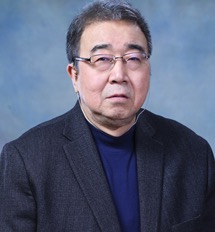 Liancun Zheng (郑连存)合作论文数School of Mathematics and Physics, University of Science and Technology Beijing5Ji Li合作论文数5Teng Wang合作论文数4
 Fawang Liu合作论文数School of Mathematical Sciences, Faculty of Science, Queensland University of Technology4
 Guixiang Hong (洪桂祥)合作论文数Institute for Advanced Study in Mathematics, Harbin Institute of Technology4
 Zihua Guo (郭紫华)合作论文数School of Mathematics, Monash University4
 Huoxiong Wu (伍火熊)合作论文数School of Mathematical Sciences, Xiamen University3Bolin Ma (马柏林)合作论文数3ZHANG Jing (张静)合作论文数2wei yu合作论文数2XiongTao Wu (吴雄韬)合作论文数2Meng Qu合作论文数2
 Dongyong Yang (杨东勇)合作论文数School of Mathematical Sciences, Xiamen University2
 Liu Yang (杨柳)合作论文数School of Mathematics and Computational Science, Xiangtan University2
 Honghai Liu (刘洪海)合作论文数School of Biomedical Engineering, State Key Laboratory of Robotics and Systems, Harbin Institute of Technology, Shenzhen;School of Computing, University of Portsmouth; Shanghai Jiao Tong University2
 Xuan Duong合作论文数School of Mathematical and Physical Sciences, Macquarie University;Department of Mathematics, Macquarie University2
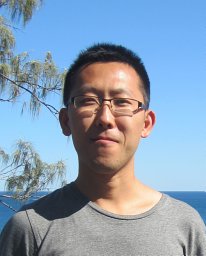 Libo Feng合作论文数School of Mathematical Sciences, Queensland University of Technology1Qingquan Deng (邓清泉)合作论文数School of Mathematics and Statistics of Central China Normal University1
 Xinfeng Wu (吴新峰)合作论文数School of Science, China University of Mining and Technology-Beijing1Feng Liu (刘峰)合作论文数School of Nursing and Rehabilitation, Shandong University;Shandong Province Qianfoshan Hospital1Guoen Hu (胡国恩)合作论文数1
 Liwei Wang合作论文数1
 Edward McDonald合作论文数School of Mathematics and Statistics, Faculty of Science, University of New South Wales1Dashan Fan合作论文数1
 Qian Xu (徐钱)合作论文数School of Energy and Environmental Engineering, University of Science and Technology Beijing1
 Jiecheng Chen (陈杰诚)合作论文数School of Mathematical Sciences, Zhejiang Normal University1Jili Li合作论文数1
 Dmitriy Zanin合作论文数School of Mathematics and Statistics, Faculty of Science, The University of New South Wales1Steve Hofmann合作论文数1Yayuan Xiao (肖雅元)合作论文数1
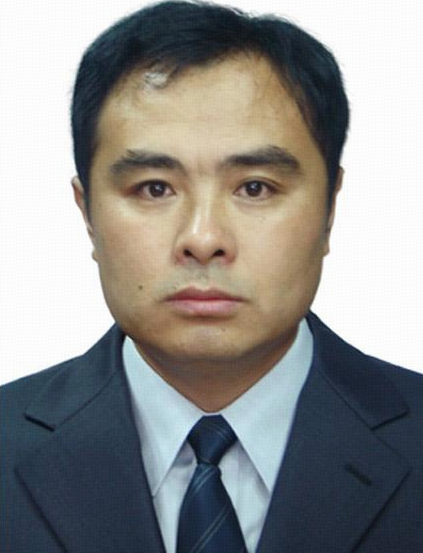 Dunyan Yan (燕敦验)合作论文数School of Mathmatics, University of Chinese Academy of Sciences1




