The quality of triangular meshes, especially the minimum and maximum angles, is crucial for the stability and accuracy of finite element analysis (FEA). Existing mesh smoothing methods face limitations: classical techniques struggle with extremely small angles, whereas data-driven approaches are inefficient and require large datasets. This paper introduces a novel planar mesh smoothing method based on asymmetric angle penalty optimization to address these issues. Our core contribution is an asymmetric angular distortion energy function that applies stronger penalties to small angles and gentler handling to large ones for targeted optimization. Enhanced by an exponential transformation, the function’s sensitivity to poor small angles is significantly amplified. For efficient minimization, we combine Block Coordinate Descent with an interior point method for localized vertex updates and introduce a dynamic parameter, η , to adaptively adjust the energy landscape. This prevents premature convergence and systematically eliminates residual small angles. The algorithm is further designed for efficient GPU parallelization, enabling fast processing of large-scale meshes. Extensive experiments on two datasets against 10 state-of-the-art methods validate our approach. It achieves the highest average minimum angles ( 16.820^∘ on squares; 29.237^∘ on shapes), the best minimum element quality (0.408; 0.651), and superior skewness (0.280; 0.487). Notably, our method excels at improving the worst-element quality–a key determinant of FEA result reliability.
With the breakthrough of diffusion model in the field of image generation, the virtual try-on based on diffusion models has significant advantages in try-on performance. However, diffusion-based inference suffers from slow generation speed. Additionally, improving image quality generally relies on more and more network parameters, which raises computational cost. These issues hinder the real-time interactivity and practical deployment of virtual try-on systems. In this work, we propose Cost-Free Acceleration and Quality Enhancement for Diffusion-based Virtual Try-On called Free-VTON. Specifically, we introduce an Adaptive Caching acceleration strategy that adaptively caches and reuses features according to the similarity between features in adjacent diffusion steps. Aggressive caching is used when the similarity is high, and conservative caching is used when the similarity is low. Different caching trajectories are applied to different samples, and the caching rhythm is adaptively adjusted based on the content. This strategy accelerates the inference process without affecting the quality of try on. In addition, we introduce a Symmetric Feature Enhancement technique, which symmetrically amplifies the backbone features on both sides of the U-Net during inference to enhance feature extraction and reconstruction generation capabilities. Similarly, this technique improves generation quality with almost no additional computational overhead. Experiments demonstrate the superiority of our method for speed and quality trade-offs. Code will be avaliable at https://github.com/PERSIST10/freevton.
We present Neural Diffusion Curves (NDC), a differentiable framework that vectorizes raster images into compact, editable diffusion curve representations in a single forward pass. Unlike traditional multi-stage pipelines that rely on handcrafted feature extraction and non-differentiable numerical solvers, NDC unifies curve geometry prediction, bilateral color control point extraction, and PDE-based rendering within a learnable architecture. Specifically, a Transformer-based curve decoder with optimal transport matching produces a data-adaptive set of sparse Bézier curves; a lightweight 1D convolutional network extracts color constraints along curve normals; and a Fourier Neural Operator (FNO) serves as a differentiable surrogate for the Poisson solver, enabling gradient propagation across the entire pipeline. On 512 × 512 flat illustrations, NDC achieves about 18× pipeline-level speedup over the fastest classical diffusion curve baseline and a nearly 900× speedup over the slowest, while reducing the curve count by over 75% and producing significantly longer, semantically coherent curves. NDC attains competitive perceptual fidelity (LPIPS) at the cost of a moderate increase in pixel-level error (RMSE), a trade-off that favors applications where speed, compactness, and direct editability are of primary importance.
Digital sewing patterns typically consist of disjoint 2D panels without explicit stitch annotations, making downstream 3D modeling reliant on labor-intensive expert specification. In this paper, we present a graph-based learning framework that reconstructs two-level stitching information, coarse panel connectivity and fine-grained seam correspondence, from 2D panel geometry alone. At the coarse level, panel connectivity is inferred by predicting panel semantics associated with anatomical body regions, enforcing consistency with body structure and garment design conventions. Based on the reconstructed panel graph, fine-grained seam correspondences between panel pairs are inferred by learning latent edge representations that jointly encode local seam geometry and global garment context through graph message passing. The resulting edge embeddings are subsequently decoded into detailed seam correspondences. Our method supports complex sewing-pattern topologies, including many-to-one correspondences, intra-panel seams, and curved seams. Experiments demonstrate high stitching accuracy and strong generalization across garment styles.
Many 3D mesh processing tasks revolve around generating and manipulating curves on surface meshes. While it is intuitive to explicitly model these curves using mesh edges or parametric curves in the ambient space, these methods often suffer from numerical instability or inaccuracy due to the projection operation. Another natural strategy is to adapt spline based tools, these methods are quite fast but are hard to be extended to more versatile constraints and need heavy manual interactions. In this article, we present an efficient and versatile approach to curve design based on an implicit representation known as the level set. While previous works have explored the use of the level set to generate curves with minimal length, they typically have limitations in accommodating additional conditions for rich and robust control. To address these challenges, we formulate curve editing with constraints like smoothness, interpolation, tangent control, etc., via a level set based variational problem by constraining the values or derivatives of the level set function. However, the widely used gradient flow strategy converges very slowly for this complicated variational problem compared to the classical geodesic one. Thus, we propose to solve it via Newton's method enhanced by local Hessian correction and a trust-region strategy. As a result, our method not only enables versatile control, but also excels in terms of performance due to nearly quadratic convergence and almost linear complexity in each iteration via narrow band acceleration. In practice, these advantages effectively benefit various applications, such as interactive curve manipulation, boundary smoothing for surface segmentation and path planning with obstacles as demonstrated.
In the context of the deep integration of digital art and geometric computing, this paper proposes a digital art pattern generation method with arbitrary quadrilateral tiling. The aim is to break through the limitations of traditional fixed tiling templates in terms of adaptability to irregular tiling shapes, controllability of local deformations, and naturalness of boundary transitions. By decoupling the topological stability of quadrilaterals from deformation parameters and combining the Coons surface interpolation method, a smooth invariant mapping for the fundamental region of arbitrary quadrilaterals is constructed, solving the seamless splicing problem of irregular fundamental region. This method supports real-time editing of quadrilateral shape and colors the fundamental region based on the dynamical system model to generate periodic seamless patterns with global symmetry and controllable local details. Experiments show that the proposed method can be adapted to any quadrilateral structure, from regular rectangles to non-convex polygons. By adjusting the interpolation parameters and dynamical system functions, the symmetry, texture complexity, and visual rhythm of the patterns can be flexibly regulated. The algorithm achieves efficient computation under GPU parallel optimization (with an average generation time of 0.25 s per pattern), providing a new solution for the pattern generation and personalized design of digital art patterns.
To meet the fashion industry's increasing demand for intelligent tools capable of manipulating and retexturing fashion items while maintaining structural integrity, an area where existing methods often lack photorealistic quality and intuitive control, we introduce iRetexturing, a novel framework that integrates diffusion models and geometric priors to tackle these challenges. The iRetexturing method utilizes a three-stage pipeline: high-resolution preprocessing with masked super-resolution and semantic segmentation, quadripartite texture synthesis using grid-based tiling and boundary-aware regeneration, and ControlNet-guided diffusion with dual spatial constraints (Canny edges and depth maps), incorporating innovations such as parametric texture modulation, partial repainting with seam refinement, and real-time adaptability across diverse materials. Evaluations conducted on 4400 fashion images reveal that iRetexturing outperforms state-of-the-art methods including diffuseIT, achieving a learned perceptual image patch similarity of 0.1385 and structural similarity of 0.8323 compared with diffuseIT's 0.1618 and 0.8074, respectively, despite diffuseIT's lower Fr & eacute;chet inception distance (54.96 versus 75.25), highlighting iRetexturing's superiority in fine-grained texture replacement and high-fidelity textile design. By combining diffusion-based generation with geometric priors, iRetexturing enables precise manipulation of surface characteristics, bridging the gap between conceptual prototypes and production-ready assets, and offering transformative potential for the fashion industry by streamlining the design-to-production process and fostering creative innovation.
With the explosive growth of 3D objects yet expensive annotation costs, unsupervised 3D object retrieval has become a popular but challenging research area. Existing labeled resources have been utilized to aid this task via transfer learning, which aligns the distribution of unlabeled data with the source one. However, the labeled resource are not always accessible due to the privacy disputes, limited computational capacity and other thorny restrictions. Therefore, we propose source-free model adaptation task for unsupervised 3D object management, which utilizes a pre-trained model to boost the performance with no access to source data and labels. Specifically, we compute representative prototypes to assume the source feature distribution, and design a bidirectional cumulative confidence-based adaptation strategy to adaptively align unlabeled samples towards prototypes. Subsequently, a dual-model distillation mechanism is proposed to generate source hypothesis for remedying the absence of ground-truth labels. The experiments on a cross-domain retrieval benchmark NTU-PSB (PSB-NTU) and a cross-modality retrieval benchmark MI3DOR also demonstrate the superiority of the proposed method even without access to raw data.
Ground stone knives and sickles were important implements in the lower Yangtze River region during the Late Neolithic and Bronze Age, playing a pivotal role in understanding the technological behaviour and economic activities of prehistoric humans. In this study, twelve knives and seven sickles of the Liangzhu culture (ca. 3300BC-2300BC) and four knives of the Maqiao culture (ca. 1900BC-1200BC) were analysed, through an integrated approach that combined use-wear analysis, Py-GC/MS analysis, and replicative experimentation. The results show that three knives and one sickle of the Liangzhu culture and two knives of the Maqiao culture had been used for harvesting gramineous plants, probably rice. The knives of the Liangzhu culture were used with handles, exhibiting two different hafting techniques, one of which potentially involved the use of animal glue as binding agents. The half-moon-shaped knives of the Maqiao culture were used handheld with two working motions: upward picking and downward pinching. Besides harvesting tools, one hafted knife of Liangzhu culture used for scraping wood or bamboo was also identified. Notably, for the first time, evidence of polishing stone knives with gramineous plants has been found in both the Liangzhu and Maqiao cultures, which potentially signifies a special symbolic or ritual significance beyond their physical functions.
Traditional implicit curve modeling methods on surface meshes, such as variational approaches, are often plagued by numerical instability and heavy reliance on mesh quality, severely limiting their reliability in practical applications. To address these challenges, we propose Neural Implicit Curve Modeling on Meshes (NICMM), a novel framework that integrates Neural Implicit Method with geometric constraints for robust curve design. NICMM leverages physics-driven loss functions to encode positional, smoothness, and other customized constraints, alleviates numerical instabilities and inaccuracies arising from low-quality meshes, such as convergence failures. The framework incorporates specialized modules (e.g., Efficient Channel Attention and Light GLU) to enhance feature extraction and computational efficiency and introduces a two-stage training strategy combining pre-training with rapid convergence optimization. Extensive experiments on the SHREC16 dataset demonstrate that NICMM has proven its mettle by outperforming traditional variational approaches in robustness. In the face of highly degraded meshes replete with elongated and near-degenerate elements, NICMM not only excels in generating high-fidelity curves but also maintains computational efficiency comparable to existing variational method, thereby showcasing its remarkable balance between accuracy and performance. Furthermore, NICMM also supports feature-aware curve design, enabling alignment with user-specified regions and obstacle avoidance through a unified guidance mechanism. This work establishes a new paradigm for manifold curve modeling, with significant potential in CAD/CAM systems, virtual surgery, and other domains that require precise and adaptive geometric design.
Computer-generated aesthetic patterns are widely used as design materials in various fields. The most common methods use fractals or dynamical systems as basic tools to create various patterns. To enhance aesthetics and controllability, some researchers have introduced symmetric layouts along with these tools. One popular strategy employs dynamical systems compatible with symmetries that construct functions with the desired symmetries. However, these are typically confined to simple planar symmetries. The other generates symmetrical patterns under the constraints of tilings. Although it is slightly more flexible, it is restricted to small ranges of tilings and lacks textural variations. Thus, we proposed a new approach for generating aesthetic patterns by symmetrizing quasi-regular patterns using general k-uniform tilings. We adopted a unified strategy to construct invariant mappings for k-uniform tilings that can eliminate texture seams across the tiling edges. Furthermore, we constructed three types of symmetries associated with the patterns: dihedral, rotational, and reflection symmetries. The proposed method can be easily implemented using GPU shaders and is highly efficient and suitable for complicated tiling with regular polygons. Experiments demonstrated the advantages of our method over state-of-the-art methods in terms of flexibility in controlling the generation of patterns with various parameters as well as the diversity of textures and styles.
Fine-grained images have a high confusion among subclasses. The key to this is finding discriminative regions that can be used for classification. The existing methods mainly use attention mechanisms or high-level linguistic information for classification, which only focus on the feature regions with the highest response and neglect other parts, resulting in inadequate capability for feature representation. Classification based on only a single feature part is not reliable. The fusion mechanism can achieve locating several different parts. However, simple feature fusion strategies do not exploit cross-layer information and lack the use of low-level information. To effectively address this limitation, we propose the multi-directional guidance network. Our network starts with a feature and attention guidance module that forces the network to learn detailed feature representations. Second, we propose a multi-layer guidance module that integrates diverse semantic information. In addition, we introduce a multi-way transfer structure to fuse low-level and high-level semantics in a novel way to improve generalization ability of the network. We have conducted extensive experiments on the FGVC benchmark dataset (CUB-200-2011, Stanford Cars and FGVC Aircraft) to demonstrate the superior performance of the method. Our code will be available at https://github.com/syyang2022/MGN .
Bird identification is the first step in collecting data on bird diversity and abundance, which also helps research on bird distribution and population measurements. Most research has built end-to-end training models for bird detection task via CNNs or attentive models, but many perform unsatisfactorily in fine-grained bird recognition. Bird recognition tasks are highly influenced by factors, including the similar appearance of different subcategories, diverse bird postures, and other interference factors such as tree branches and leaves from the background. To tackle this challenge, we propose the Progressive Cross-Union Network (PC-Net) to capture more subtle parts with low-level attention maps. Based on cross-layer information exchange and pairwise learning, the proposed method uses two modules to improve feature representation and localization. First, it utilizes low- and high-level information for cross-layer feature fusion, which enables the network to extract more comprehensive and discriminative features. Second, the network incorporates deep semantic localization to identify and enhance the most relevant regions in the images. In addition, the network is designed with a semantic guidance loss to improve its generalization for variable bird poses. The PC-Net was evaluated on an extensively used birds dataset (CUB-200-2011), which contains 200 birds subcategories. The results demonstrate that the PC-Net achieved an impressive recognition accuracy of 89.2%, thereby outperforming maintained methods in bird subcategory identification. We also achieved competitive results on two other datasets with data on cars and airplanes. The results indicated that the PC-Net improves the accuracy of diverse bird recognition, as well as other fine-grained recognition scenarios.
Robust curve design on surface meshes with flexible controls is useful in a wide range of applications but remains challenging. Most existing methods fall into one of the two strategies: one is to discretize a curve into a polyline, which is then optimized, and the other is to directly design smooth splines on meshes. While the former approach usually needs a sufficiently dense sampling of curve points, which is computational costly, the latter approach relaxes the sampling requirement but suffers from the lack of user control. To tackle these problems, we proposed a variational method for designing feature-aware B-spline curves on surface meshes. Given the recent advances in shell space construction methods, we could relax the B-spline curve inside a simplified shell mesh and evaluate its distance to the surface using equipped bijective mapping. To effectively minimize the distance between the curve and the surface, with additional controls in the form of both internal and external constraints, we applied the interior point method and adaptively inserted knots of the spline to increase its freedom and adjust the weighting during the iterations. When the curve is close enough to the surface, it can be efficiently sampled at any resolution and robustly projected to the surface. Experiments show that our method is more robust, has higher flexibility, and generates smoother results than existing methods.
为克服传统分形与铺砌织物组织设计方法因空间结构单调而使得设计空间受限的问题,本文提出一种T形铺砌织物组织设计方法.该方法运用4个T形铺砌块构,通过构造有向链图高效设计织物组织.首先利用T形铺砌特有的有向链图表示方法,在棋盘格上设计与编辑链图,然后将其转化为T形铺砌结构,最后将基本组织根据铺砌结构进行拆分重组获得变化多样的铺砌织物组织.运用Python语言实现了该织物组织的设计方法并进行可视化.实验结果表明,该织物组织设计方法便捷、直观,能够获得更为丰富且多变的铺砌结构及相应的铺砌织物组织,从而为织物组织的数字化设计探索了一条新的设计途径.
Background: Fecal microbiota transplantation (FMT) based on the positive ion mode of metabonomics has a good therapeutic benefit for slow transit constipation (STC) patients. However, a piece of comprehensive metabolomics information is yet to be established. The aim of the study was to explore the efficacy and mechanism of FMT in the treatment of STC under metabonomics. Methods: Eight STC patients meeting the set inclusion and exclusion criteria were enrolled and treated with FMT (three times). The Patient Assessment of Constipation-Symptoms (PAC-SYM), weekly total defecation times, and defecation frequency scores of these STC patients were compared before and after treatment. Feces and serum of STC patients before and after treatment were analyzed using 16SrDNA and metabolomics. Results: After FMT treatment, the PAC-SYM score of constipated patients decreased [(5.00 ± 2.94) vs (5.20 ± 2.87)], while the number of complete defecations per week increased [(2.00 ± 1.79) vs (1.69 ± 1.80)]. The score of defecation frequency decreased [(0.83 ± 1.03) vs (0.86 ± 0.95)]. The metabolites in the feces and serum of patients receiving FMT changed significantly ( P < 0.05). The results from 16SrDNA analysis showed that the α and β diversity of the fecal microbiome changed significantly ( P < 0.05) after transplantation, and the contents of genera Lactobacillus , Bacillus , Succiniclasticum , Cellvibrio , and Escherichia increased in FMT treated patients. Conclusion: FMT may treat STC by increasing the beneficial intestinal flora and metabolites in the anion mode of metabolomics.
Inserting sub-resolution assist feature (SRAF) has great effect on improving the process window. Rule-based SRAF (RBSRAF) provides full chip application but its performance and development time mainly depends on experience. Inverse lithography technology (ILT) provides SRAF that significantly enhance the process window, but it takes too long for full chip application. In order to achieve SRAF performance close to ILT process, meanwhile keep the high processing speed of RBSRAF, we propose an approach to extract SRAF rules from ILT results, trying to insert ILT-like RBSRAF. The type of geometry parameters extracted from the ILT results refer to the variability of SRAF rules, namely the editable configurations in Calibre nmSRAF tool. The extracted rule has achieved significant process window enhancement in 55nm contact layer in a much shorter processing time, as compared to that of experience-based RBSRAF.
Image-based 3D model retrieval aims to search for 3D models according to 2D image queries, which provides a convenient way for the management of large 3D model datasets. Most of the related works put the emphasis on bridging the modality gap between 2D images and 3D models, which faces a lot of challenges due to the huge domain discrepancy. In this paper, we explicitly model and eliminate the domain-specific features of 2D images and 3D models. To alleviate the negative effect of complex background of natural images, we adopt semantic focus loss to constrain networks to learn the most semantically relevant feature representations for both 2D images and 3D models. We conduct extensive experiments on two cross-domain 3D model retrieval datasets, MI3DOR and MI3DOR-2, to show the effectiveness of the proposed method.
可展曲面能无形变地映射至平面,在工业设计领域有着广泛应用.针对基于严格可展条件的重建方法可能存在逼近误差较大的问题,提出一种基于稀疏优化的网格曲面可展性逼近方法.该方法将"高斯曲率处处为零"的可展条件松弛为"高斯曲率几乎处处为零",运用L1范数定义曲面高斯曲率度量,并结合基于拉普拉斯坐标的逼近能量来控制曲面的形状误差.为求解该非线性非凸问题,采用泰勒公式将高斯曲率函数线性化,并使用交替方向乘子法对原问题若干子问题进行迭代计算.结果表明:该方法能够有效地控制高斯曲率分布,使高斯曲率场奇异点集中分布于个别顶点,并能较好地逼近原曲面;相比现有方法,各种模型上的逼近结果在可展性和逼近精度方面均有提升.
利用计算机技术生成花形图案能为设计师提供新的素材与创作灵感,有效地解决传统设计存在的低效、版权等问题.现有的花形图案生成方法或平铺整个图像空间而难以提取单花形素材,或虽能生成单花形但其变化形式难以人为控制,从而为花形的二次设计带来一定困难.为此,本文提出一种基于球谐函数的单花形图案生成方法并在理论上构造了对称花形图案的生成条件.首先根据一种显式表达的球谐函数生成离散曲面,然后基于等高线分割法对曲面进行分割并着色,最后运用垂直投影法生成二维图形作为花形图案.同时,结合铺砌规则将该方法生成的花形进行二次设计并应用于纺织品图案设计及产品设计中.计算机仿真实验表明,该方法能生成各种富于变化的单花形图案且变化形式容易控制,并验证了所生成图案在纺织品产品设计应用中的可行性.
 Jin Huang (黄劲)合作论文数State Key Lab of CAD&CG, College of Computer Science and Technology, Zhejiang University8
 Lili He (何利力)合作论文数8Huaxiong Zhang (张华熊)合作论文数School of Information Science and Technology, Zhejiang Sci-Tech University8
 Ruofeng Tong (童若锋)合作论文数State Key Laboratory of Computer-Aided Design and Computer Graphics, College of Computer Science and Technology, Zhejiang University6
 Dan Song (宋丹)合作论文数School of Electrical and Information Engineering, Tianjin University5
 Yu Zhang (张聿)合作论文数School of Fashion Design and Engineering, Zhejiang Sci-Tech University5
 Zhong Li (李重)合作论文数School of Science, Zhejiang Sci-Tech University4Ying Song (宋滢)合作论文数3
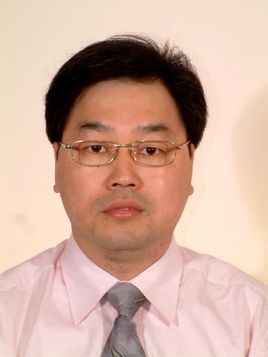 Hujun Bao (鲍虎军)合作论文数College of Computer Science and Technology, Zhejiang University;Faculty of Information Technology, Zhejiang University3
) Yun Zhang (张昀)合作论文数School of International Studies, Zhejiang University3Jianfeng Shi合作论文数3
Yun Zhang (张昀)合作论文数School of International Studies, Zhejiang University3Jianfeng Shi合作论文数3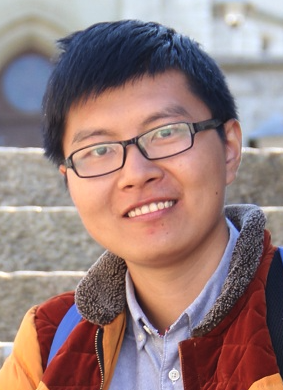 Fang-Lue Zhang (张方略)合作论文数School of Engineering and Computer Science, Victoria University of Wellington3Sihang Zou合作论文数2Yongyu Wu合作论文数2
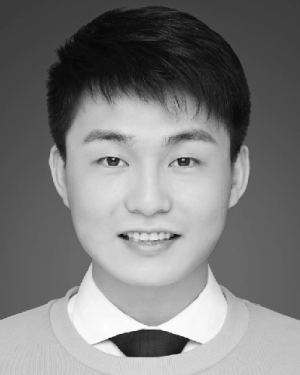 Yunze Shi合作论文数2Rongyan Xu合作论文数2Dawei Gao合作论文数2Liping Xue (薛理平)合作论文数2Tongtong Wang合作论文数2Shengying Yang合作论文数2Jiong Chen合作论文数Zhejiang University2
 Kun Ren (任堃)合作论文数Institute of Advanced Integrated Circuit Manufacturing Technology, College of Integrated Circuits, Zhejiang University2Tenghao CAI (蔡腾皓)合作论文数2Yu-Long XIONG (熊宇龙)合作论文数2Jialiang Lu合作论文数2Jingsheng LEI (雷景生)合作论文数2
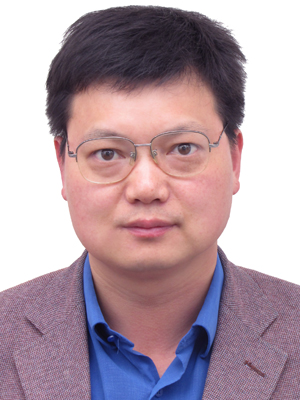 Xiaogang Jin (金小刚)合作论文数College of Computer Science and Technology, Zhejiang University;State Key Lab of CAD and CG, Zhejiang University2Baozhu Xie (谢宝珠)合作论文数2Tingting Yang (杨婷婷)合作论文数2
 Hong Chen (陈虹)合作论文数Department of Cultural Heritage and Museology, School of Art and Archaeology, Zhejiang University2Jieyi Zhao合作论文数2Yuting Ling合作论文数1Yiyao Wu合作论文数1Shuang Wu合作论文数1Xiaohu Zhang合作论文数1Yang Xu合作论文数1Zebang Lin合作论文数1Xuan Li合作论文数1
 Shengwei Qin合作论文数1
 Yuwei Li (李玉伟)合作论文数1Hai-Zhao Liu合作论文数1Joseph Kofi Abankwah (JOSEPH ABANKWAH)合作论文数University of Ghana1Chenghai Yu合作论文数1Le Hong合作论文数1SI Hongwei (司红伟)合作论文数1Lulu Xie合作论文数1Ran Chen合作论文数1Jida Wang合作论文数1




