Background Chronic non-communicable diseases have become the major cause of death in China. This study describes and compares chronic disease mortality between urban and rural residents in Hubei Province, central China. Methods Death records of all individuals aged 15 years and over who died from 2008 through 2010 in Hubei were obtained from the Disease Surveillance Points system maintained by the Hubei Province Centers for Disease Control and Prevention. Average annual mortality, standardized death rates, years of potential life lost (YLL), average years of potential life lost (AYLL) and rates of life lost were calculated for urban and rural residents. Standardized rate ratios (SRR) were calculated to compare the death rates between urban and rural areas. Results A total of 86.2% of deaths were attributed to chronic non-communicable diseases in Hubei. Cerebrovascular diseases, ischemic heart disease and neoplasms were the main leading causes in both urban and rural areas, and the mortality rates were higher among rural residents. Lung cancer was the principal cause of mortality from cancer among urban and rural residents, and stomach cancer and liver cancer were more common in rural than urban areas. Breast cancer mortality among women in rural areas was lower than in urban areas (SRR=0.73, 95% CI=0.63–0.85). The standardized mortality for chronic lower respiratory disease among men in rural areas was higher than in urban areas (SRR=4.05, 95% CI=3.82–4.29). Among men, total AYLL from liver cancer and other diseases of liver were remarkably higher than other causes in urban and rural areas. Among women the highest AYLL were due to breast cancer in both urban and rural areas. Conclusions Chronic diseases were the major cause of death in Hubei Province. While circulatory system diseases were the leading causes in both urban and rural areas, our study highlights that attention should also be paid to breast cancer among women and chronic lower respiratory disease among rural residents. It is important that governments focus on this public health issue and develop preventive strategies to reduce morbidity and premature mortality from chronic non-communicable diseases.
OBJECTIVE To learn the contact characteristics of school students by analyzing contact information of school aged children and teenagers. METHODS Based on convenience sampling, 268 students from one primary school, one middle school and one high school in Hubei province were investigated by self-made questionnaires and the effective contact rate were analyzed by using the number of contact people of respondents. RESULTS 5 355 records about the contacted people were obtained from the respondents. Among the total contacts, 62.4% occurred in the setting of school, 59.6% lasted for more than one hour and 56% were frequent contacts which occurred everyday. The mainly contact mode was ‘talk' within different settings and different length of durations. With the increasing of contact frequencies, the proportion as contact mode of ‘talk' decreased while ‘physical contact' rose. Furthermore, the effective contact rate under school closure was only accounting for 40% of the normal school day. CONCLUSION Closing school is an effective method to cut the contact of school students and proceed to mitigate the transmission of infectious diseases in human population.
由于突发公共卫生事件具有突发性、破坏性和不确定性等特点,如何应对此类事件,提高卫生应急决策能力等问题就摆在了决策者面前.随着中国经济的高速发展和政府改革的日益深入,我国政府的危机管理水平正迅速提高,已成功地处置了不少的突发公共卫生事件,如1998年长江中下游的特大洪水、2003年春天的SARS危机[1]、2009年“甲型H1N1流感”疫情、2008年四川汶川大地震等,积累了相当多处理突发公共卫生事件的经验,也为进一步完善政府危机管理机制奠定了基础[2].
"决策"一词最早出现在我国古籍《韩非子》中,解为"做出决定".从现代管理学意义上来讲,"决策"是从英文"Decision-Making"翻译而来的,是指人们在行动之前对目标和行动手段的探索、判断与抉择的全过程[1,2].把"决策"理解为一个过程,是因为人们对行动方案的确定并不是突然做出的,要经过提出问题、搜集信息、确定目标、拟定方案、分析评价、最终选定等一系列活动环节."机制"是泛指一个工作系统的组织或组织部分之间相互作用的过程和方式."决策机制"指的就是有关决策流程和方式的制度化的组合方式.
A homogenous multi-unit auction model is studied in two conditions: One is that the bidders face budget constraints and another is that the bidders do not face budget constraints. Two equilibrium bidding strategies of each bidder are presented in these two conditions. By comparing them, the authors show that the equilibrium unit price bid in the presence of budget constraints will be less than that in the absence of budget constraints. The difference between the two equilibrium bids leads to the reduced revenue of the seller. And this difference will decrease as the number of the bidders increases.
<span id="ChDivSummary" name="ChDivSummary" class="abstract-text"><正>传染病暴发是指在一个局部地区或集体单位中,短时间内突然有很多相同的病人出现[1]。由于其具有突发性、难以预测和进展快等特点,暴发发生后不仅可能严重影响公众身心健康,还可能造成不良社会影响。一直以来,传染病暴发疫情是突发公</span>
Objectives To find out the level of AIDS knowledge of community groups population in Wuhan,to put up various forms of interventions and evaluate the effect,to provide the basis of appropriate community-based AIDS prevention and control measures.Methods 522 people pre-intervention and 406 people post-intervention were selected by cluster sampling method from community population aged 18 and above to conduct a questionnaire survey in Wuhan,descriptive statistics and Chi-square test were utilized for data analysis.Results The awareness rates of AIDS knowledge in the baseline investigation: Hongshan 74.6%,Qiaokou 85.4%,Hanyang 75.7%.The awareness rates of AIDS knowledge after intervention: Hongshan 92.3%,Qiaokou95.2%,Hanyang 99.2%.After the intervention,the three project areas' awareness rates of AIDS knowledge increased significantly(P=0.000).Conclusions Community-based AIDS intervention was effective,conducting various and targeted forms of publicity and education activities,could significantly improve the awareness rate of AIDS knowledge.
Hypertension (HTN) is a leading cause of cardiovascular and cerebrovascular diseases. Lifestyle modification may be the preferential approach to prevent and control HTN. The purpose of this study was to evaluate the effects of a community intervention program, which focused on improving the HTN knowledge, diets and lifestyles in a rural Chinese area. The study was carried out in a rural area of the Hubei Province from May 2003 to April 2006. A total of 1632 participants were recruited. Of the participants, 826 from the town of Xiaoxita and 806 from the town of Fenxiang were assigned to the intervention group (group I) and to the control group (group C), respectively. Group I participants underwent an intervention that included HTN education and dietary and lifestyle guidance. Group C participants were not subjected to an intervention. The outcome measures included HTN knowledge, dietary and lifestyle behaviors, and prevalence, awareness, treatment and control rates of HTN. Along with the changes in HTN education (P<0.05), the participants in group I exhibited a significantly greater improvement in dietary habits and lifestyle behaviors, including reducing salty food intake (13.6%), fat intake (22.9%) and alcohol consumption (9.6%), after 3 years in comparison with those in group C (21.7, 31.9 and 18%, respectively). The prevalence of HTN was significantly lower in group I (22.5%) than in group C (36%) after the intervention strategies. The study showed that the implementation of a community intervention program involving HTN education and lifestyle modifications for rural residents is a powerful approach to reduce HTN prevalence and improve long-term health outcomes.
污染物排放总量的控制是目前各国遏制环境污染,实现可持续发展的重要手段,而初始排污权的合理分配是总量控制的核心.从分配效率和公平性出发,研究初始排污权分配的一种协商仲裁机制,分析有关各方的行为和结果,并对结果的经济效率和公平性进行了讨论,以避免企业排污信息的不完全性和不对称性为政府带来的巨大事务成本.
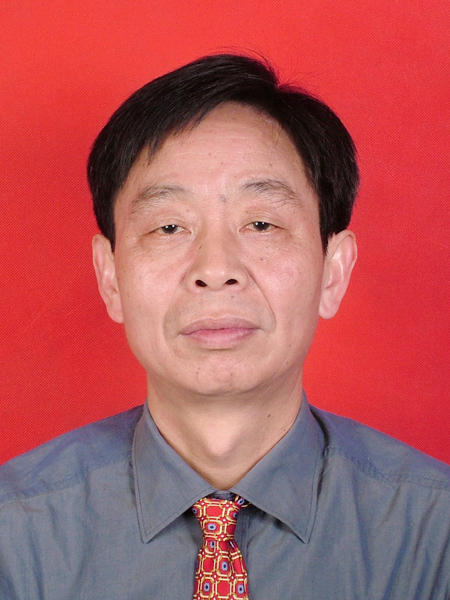 Shaofa Nie (聂绍发)合作论文数School of Public Health, Tongji Medical College, Huazhong University of Science and Technology7
 Shuqiong Huang (黄淑琼)合作论文数湖北省疾病预防控制中心疾病监测部4
 Xiu-Min Gan合作论文数3LiWei Cheng (程丽薇)合作论文数2XiangLin Wu (吴相林)合作论文数2ChaoYuan Yue (岳超源)合作论文数2Lu Long (龙璐)合作论文数2Li Tan (谭莉)合作论文数2Zhao Yong合作论文数1Liwei Cheng合作论文数1Lan Zhang合作论文数1XianZhe Fei (费贤哲)合作论文数1Yi Tian (田祎)合作论文数1
 Weirong Yan (严薇荣)合作论文数School of Public Health, Tongji Medical College, Huazhong University of Science and Technology1Hongying Chen合作论文数1
 Sheng Wei (魏晟)合作论文数School of Public Health and Emergency Management, School of Medicine, Southern University of Science and Technology1Qingjun Zhang合作论文数1
 Yong Zhao (赵勇)合作论文数School of Artificial Intelligence and Automation, Huazhong University of Science and Technology1
 Jing Wu (吴静)合作论文数School of Public Health, Tongji Medical College, Huazhong University of Science and Technology1
 Li Liu (刘莉)合作论文数School of Public Health, Tongji Medical College, Huazhong University of Science and Technology1Jie Zhang (张杰)合作论文数School of Computer Science and Technology, Huazhong University of Science & Technology1Duoshuang Xie (谢多双)合作论文数十堰市太和医院1




