In recent years, IoT technologies have made our daily lives more convenient and comfortable. In particular, these technologies are being actively utilized in our living environments through the development of various smart home appliances. As the pace of Digital Transformation (DX) quickens and digital platforms become integrated into diverse residential settings, the notion of the home we inhabit is taking on greater significance beyond merely a place for rest. Therefore, this paper explains the development of user-friendly interfaces for smart home systems used in our living rooms. An appropriate service can be provided accordingly if the user’s intent is specifically understood. Therefore, this paper explores the relationship between the user’s gaze and the control targets of the smart home using Mixed Reality (MR) devices. In this study, we introduce a novel smart home control system from a range of options. Our proposed system enables user analysis and remote control through the utilization of an MR device capable of tracking a user’s gaze. In addition, we investigate the perception of user interfaces and analyze the survey results conducted after using the interface system, discussing the validity of the proposed system.
Research on neural networks has made significant progress since the invention of the perceptron in 1957. In recent years, advancements in hardware technology have enabled the development of multilayer neural networks, commonly referred to as deep learning. These large-scale learning models have found applications across various fields, including generative dialogue artificial intelligence, image processing, and object recognition, profoundly transforming these domains. The use of these revolutionary technologies is expected to lead to the development of many robotic systems that can assist and benefit people in various ways. This study aims to advance this field further by exploring the possibility for artificial intelligence to understand human conditions and behavior, and suggest or carry out the actions that a specific one might wish to perform. To this end, we have developed a gaze measurement system in the form of glasses. The primary objective of this research is to track a specific user’s gaze, identify the object of their focus, and estimate their desired actions based on their level of attention and interest in the object.
Recently, Japan has been facing various social issues, and to solve these problems, it is necessary to create a society where diverse people can live comfortably. To build such a society, appropriate support tailored to individuals is required, necessitating the analysis of various types of information to understand the people's needs at any given moment. In particular, analyzing non-verbal elements such as posture, facial expressions, and gestures is crucial, as these naturally indicate a person's condition. Therefore, this study focuses on human gestures, one of the non-verbal elements, and proposes a gesture recognition method using Dynamic Time Warping (DTW) and K-Means. We demonstrated that symbolic gesture recognition is possible by recording arm trajectories from skeletal measurements with an RGB-D camera.
Recently, the ongoing labor shortage, driven by a declining birthrate and aging population, necessitates more efficient labor solutions. In this context, drones have garnered significant attention due to their high mobility and efficiency, leading to their expanding use in various business applications. However, the capabilities of a single drone are often limited by constraints such as size, power consumption, and thrust, thereby restricting the range of services it can offer. To address these limitations and broaden the scope of drone services, we propose a modular drone system that enables multiple drones to operate collaboratively. This system leverages the strengths of individual drones by allowing them to connect and work together, thereby enhancing overall performance and versatility. The modular approach not only improves scalability but also offers flexibility in configuring drones for specific tasks, ultimately leading to more efficient and effective drone operations. Through this innovative solution, we aim to unlock new possibilities in various industries, including logistics, agriculture, and surveillance through drone system.
Experimental education imparted at universities is essential for students to confirm their theoretical knowledge. Experiments, in general, can deal with real-world data that theory or simulation cannot handle. However, there are experimental subjects where it is difficult to obtain results according to the theory. Among them, heat conduction is a subject wherein it is difficult to obtain theoretical results because it is difficult to establish an experimental environment. Therefore, it is highly important to design experimental content using students’ perspectives, such as theory and practical experiments. Therefore, this study investigates the impact of education on the design and application of experimental apparatus for a heat-transfer experiment, which is a part of an experiment conducted by the Department of Mechanical Engineering, Tokyo University of Technology. Furthermore, we discuss the effectiveness of the proposed experimental system based on students’ behavior, comprehension, satisfaction, and subsequent results.
Recently, the increasing social isolation of the elderly has caused major social problems, such as loneliness and the progression of dementia. A human-centric system could be a solution to these problems and promote coexistence with humans. Therefore, we aimed to develop a robot system using smart devices, which are essential for the Internet of things (IoT) technology, to provide services, such as information support and monitoring. As the development and application of smart devices become more sophisticated, a hyperconnected society will finally be realized through the development of smart-device-centered robots and their connection to peripheral devices. A hyperconnected society is one in which people, things, and data are connected. Personal mobility is developing and converging with robotic technology to the point where a large mobile robot can board a person. These robot technologies can be connected to wireless networks to provide organically connected services. In the era of Society 5.0, the connection among smart devices, robot systems, and mobility technology is still developing and will be a new paradigm in the development of human-centric systems in the future. Therefore, this study introduces the creation of a human-centric system using a robot system and a mobility system based on the IoT. Finally, we present several examples of the effectiveness of the proposed system and discuss its applicability.
This article presents a method of suppressing packet losses and exogenous disturbances for a networked control system (NCS) subject to network-introduced delays. The NCS has two feedback loops: 1) a local one and 2) a main one. The local feedback loop contains a state observer, an equivalent-input-disturbance (EID) estimator, and state feedback. It is used to ensure prompt disturbance suppression. The controller in the main feedback loop contains an internal model to track a reference input. The system is divided into two subsystems for the design of controllers. The state-observer gain is designed for one subsystem using the concept of perfect regulation to ensure disturbance estimation performance. The state-feedback gains of the other subsystem are designed based on a stability condition in the form of a linear matrix inequality (LMI). A tracking specification is embedded in the LMI-based stability condition to ensure satisfactory tracking performance. A case study on a two-finger robot hand control system and a comparison with a Smith-EID and H∞ controller approach validate the effectiveness and superiority of the presented method.
Social Internet of Things (SIoT) is an emerging application area that supports the spread of multimedia information. Detecting critical nodes based on the results of influence prediction is the main solution to maximizing the information propagation in SIoT. However, while the tasks of predicting an influence probability and a cascade size are both critical in influence prediction, there has not yet a study that thoroughly investigates these two influence parameters. This article presents an end-to-end method that learns dual-task network embeddings to jointly predict influence probabilities and cascade sizes, which is called a multidimensional influence-to-vector method (Multi-Influor). First, multidimensional influence contexts are generated based on random walks, incorporating multiple estimating factors for pairwise node interaction, network structure, and global preference similarity. A new method of learning dual-task network embeddings is then devised to simultaneously capture influence probabilities and cascade sizes. The two tasks are both formulated into a unified framework via enforcing an information-sharing embedding matrix. Finally, stochastic gradient descent (SGD) is used to optimize two loss functions for influence prediction in an alternating manner, and the tasks are jointly accomplished that produces an accurate prediction. Extensive simulation results on real-world data sets show that Multi-Influor outperforms six state-of-the-art methods in accuracy and efficiency, and that a joint training method for the two tasks improves the overall prediction performance. Moreover, Multi-Influor is a practical method for SIoT sustainable computing.
Mobility is a basic human need and right and should be supported safely and comfortably. In response to this, various types of mobility systems have been developed and used recently. It is a situation that needs to be considered in terms of social safety as well as the increased use of mobility systems. Accidents related to mobility such as a car occur frequently. In particular, concerning the driving of the elderly, there are problems such as car crashes leading to traffic accidents. Especially when users have an emergency and cannot operate mobility, it may lead to a big accident. Therefore, in this study, we propose an IoT system to support safe driving according to heart rate for mobility and future tasks.
This paper presents an adaptive compensation control strategy for packet losses, time delays, and exogenous disturbances in a networked control system. The structure consists of five parts: a plant, a Luenberger observer, an equivalent-input-disturbance (EID) estimator, an adaptive model predictive controller (AMPC), and a network. The AMPC in the local main control room produces an adaptive tracking gain, which can ensure the effective tracking of the reference signal in the presence of uncertainty and time delays in the plant. The EID estimator at the local site compensates for packet losses and exogenous disturbances through an independently designed state observer and a low-pass filter. A practical application case results show the effectiveness of the presented method compared with the conventional EID approach.
In a networked control system (NCS), time delays, uncertainties, packet losses, and exogenous disturbances seriously affect the control performance. To solve these problems, a modified disturbance suppression configuration of NCS was built. In the configuration, a proportional–integral observer (PIO) reproduces the state of a plant and reduces the observation error; an equivalent input disturbance (EID) estimator estimates and compensates for the disturbance in the control input channel. The stability conditions of the NCS are given by using a linear matrix inequality, and the gains of the PIO and state feedback controller are obtained. Numerical simulation results and an application of a magnetic levitation ball system verifies the effectiveness of the presented method. Comparison with the conventional PIO and EID methods shows that the presented method reduced the tracking error to about one-fifth and two-thirds of their original values, respectively. This demonstrates the validity and superiority of the presented method.
Recently, personal mobility has been researched and developed to make short-distance travel within the community more comfortable and convenient. However, from the viewpoint of personal mobility, there are problems such as difficulty in picking up items while shopping when operating the joystick for shopping and the inability to use hands freely. Accordingly, because the speed of personal mobility can be controlled by foot stepping like an accelerator pedal, we developed an electric wheelchair system that can control the speed by pedal operation. Furthermore, we developed a control system that considers the ride quality using an electric wheelchair with pedal control. In this study, the proposed method is detailed in three parts. Firstly, to develop the pedal mechanism, a potentiometer was used to detect the angle of the pedal mechanism, and a spring mechanism was designed for return to its original position after the pedal was pushed. Next, we propose a feedback control system that considers the ride quality of the operator. In addition, we integrated the system with a smart device-based robot system to realize the mobility as a service (MaaS). Finally, we present several examples of the system and discuss the applicability of the proposed system.
Rock-mechanics parameters such as Young’s modulus and Poisson’s ratio are critical to geomechanical analysis and resource exploration. Because these parameters come from laboratory measurement, they present some characteristics such as insufficient samples and contamination of outliers. In this paper, a novel semi-supervised support vector machine soft sensor is devised considering the characteristics of the parameters. First, it takes into account data similarity and selects labeled data set that are most similar to the continuous unlabeled data set at each iteration to improve estimation performance. Meanwhile, an outlier deletion algorithm is developed for a better similarity comparison. After that, a semi-supervised approach is presented for the estimation of rock-mechanics parameters, it can leverage continuous unlabeled data to train the model dynamically. Finally, the verification of our method is carried out on data set from UCI (University of California, Irvine) and several drilling sites. The results demonstrate that our method outperforms eight well-known methods in estimation accuracy.
Recently, many teaching techniques have been adopting not only textual information but also videos, simulations, and real-time discussions for online learning. Unlike the theory and simulation learned in classroom lectures, experiments provide realistic data that includes the effects of the environment. Therefore, experimental classrooms are one of the important elements in learning. Accordingly, it is necessary to develop the foundation of a system for conducting experiments remotely so that experiment can be performed even in situations where the experimental equipment is not exsist. In this paper, we develop the foundation of the experimental system for remotely obtain result data for the heat conduction experiment, which is one of the mechanical engineering application experiment theme. In addition, we describe the features of experimental system about experimental process and interface. Finally, we discuss the effectiveness of the proposed experimental system.
Online social networks provide convenience for users to propagate ideas, products, opinions, and many other items that compete with different items for influence spread. How to accurately model the spread of competitive influence is still a challenging problem. Almost all reported methods ignore the effect of trust relationships in the spread of competitive influence. Maximizing competitive influence aims to detect the top-k positive or negative influential users in social networks with competing cascades. However, finding an optimal solution to this problem is NP-hard. This study focuses on exploring the above three issues by devising a trust-based solution. First, we established a new model of trust-based competitive influence diffusion that simulates the spread of positive and negative influence. Second, we estimated trust values via generalized network flows and used these values to calculate influence probabilities. Finally, we developed an efficient algorithm of trust-based competitive influence maximization through a heuristic pruning method. Extensive comparisons have been conducted on synthetic and real-world datasets. The effectiveness and efficiency of our approach are verified by analyzing the spread of competitive influence and the time complexity of detecting seed sets. Moreover, our approach is more practical than other baselines on real-world social networks.
In the context of developing technologies for realizing a user-centric smart society, robot technology is gaining importance for responding to safety issues such as for those living alone and elderly persons. Therefore, in recent years, various robots have been developed to perform social exchanges with people in daily life. We also aim to develop a support system that can be easily used in everyday life through the application of smart device technology that is familiar to people. Therefore, in this paper, we discuss the process of developing robot partners according to various user needs, from the viewpoint of hardware and software development, as human coexistence robot partners. In addition, we show an example of the scalability and application of robot technology using smart devices. First, we describe our smart device-based robot partner system. Next, we describe the development of a robot partner comprising various modules. Finally, we present several examples of robot systems for social implementation and address the applicability of our proposed system.
The number of elderly people is increasing rapidly. Accordingly, the health and welfare of the elderly have become a big problem. And many assistive robots have been developed for the elderly to ensure their mental and physical soundness. This chapter explains some robots that we built for this purpose. First, we explain a human-body-motion interface. It allows us to use the motion of the upper body of a user to drive an electric wheelchair. Then, we show an electric cart that helps the elderly to maintain or even improve their physical strength. It features that an optimal pedal load is automatically generated based on a user’s physical condition. The normalized longitudinal force is precisely estimated using a simple algorithm based on the equivalent-input-disturbance approach to guarantee driving safety. Finally, we describe the design of a left-right-independent rehabilitation machine for lower limbs. The pedal loads and strokes on the left and right can be adjusted independently. This not only makes it easy to suit different requirements for lower-limb rehabilitation but also mitigates mental distress and excites the volition for rehabilitation.
How to effectively predict social influence is an essential issue in social network analysis. Almost all reported methods for social influence prediction are mainly concerned with estimating influence probabilities for each linking edge. However, all of this past work cannot accurately predict influence probabilities for all edges due to the problem of data sparsity. Unlike conventional approaches, this work focuses on exploring a cross problem for multiple network embeddings and social influence prediction. This study developed a new end-to-end approach, Multi-Influor, that learns multiple influence vectors for each user in social networks, instead of estimating influence probabilities for each edge. The multiple network embeddings consider multi-dimensional influence factors that incorporate pairwise node interactions, network structures, and global similarity comparisons. Moreover, this study solves the problem of influence evaluation caused by sparse observations. Extensive comparisons based on large-scale datasets indicate that the Multi-Influor approach outperforms several state-of-the-art baselines, and the experimental results demonstrate that the Multi-Influor approach is more practical on real-world social networks.
This paper presents a robot partner development platform based on smart devices. Humans communicate with others based on the basic motivations of human cooperation and have communicative motives based on social attributes. Understanding and applying these communicative motives become important in the development of socially-embedded robot partners. Therefore, it is becoming more important to develop robots that can be applied according to needs while taking these human communication elements into consideration. The role of a robot partner is more important in not only on the industrial sector but also in households. However, it seems that it will take time to disseminate robots. In the field of service robots, the development of robots according to various needs is important and the system integration of hardware and software becomes crucial. Therefore, in this paper, we propose a robot partner development platform for human-robot interaction. Firstly, we propose a modularized architecture of robot partners using a smart device to realize a flexible update based on the re-usability of hardware and software modules. In addition, we show examples of implementing a robot system using the proposed architecture. Next, we focus on the development of various robots using the modular robot partner system. Finally, we discuss the effectiveness of the proposed robot partner system through social implementation and experiments.
Influence maximization aims at detecting the top-k influential users in online social networks. Almost all previous models of influence spread cannot simultaneously incorporate users' attitudes, interactions between users, and dynamic influences. However, in this study, we established a new model of influence spread via fluid dynamics, which reveals the time-evolving process for influence spread. We modeled the spread of influence as the process of fluid update based on three dimensions: the difference of fluid height, the temperature of fluids, and the difference of temperature. Moreover, we formulated the problem of maximizing positive influence and devised a Fluidspread greedy algorithm to solve it. We conducted extensive comparisons between our approach and several baselines, and experimental results illustrate the effectiveness and efficiency of the Fluidspread model and algorithm.
 Jinhua She (佘錦華)合作论文数Department of Mechanical Engineering, School of Engineering, Tokyo University of Technology;Waseda University90
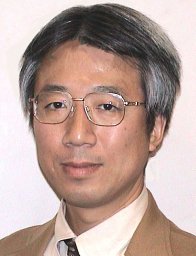 Hiroshi Hashimoto合作论文数63
 Sho Yokota合作论文数45
 Akinori Sasaki合作论文数23
 Koji Makino合作论文数Grad. Sch. of Med. & Eng., Univ. of Yamanashi;c;Grad. Sch. of Med. & Eng., Univ. of Yamanashi20
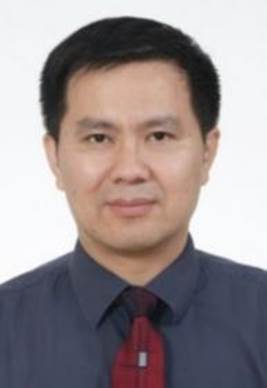 Min Wu (吴敏)合作论文数Institute of Advanced Control and Intelligent Automation, School of Automation, China University of Geosciences, Wuhan18Hiroyuki Kobayashi合作论文数14
 Jinseok Woo合作论文数Tokyo Metropolitan University14
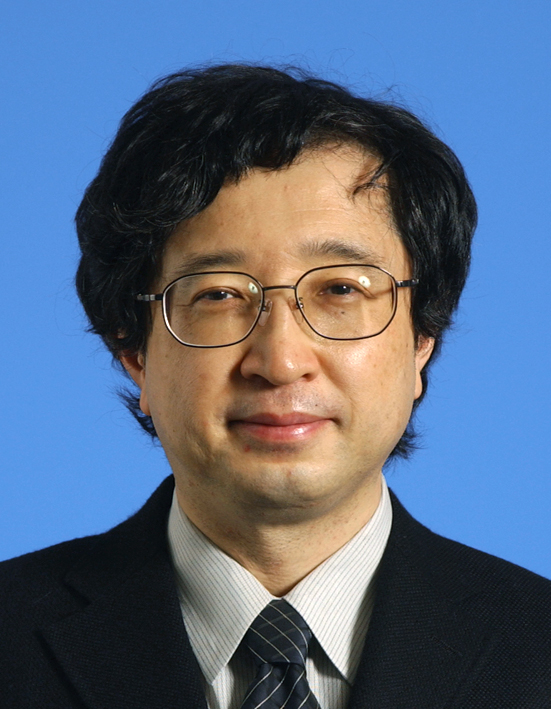 Hideki Hashimoto (橋本秀紀)合作论文数Department of Electrical Electronic and Communication Engineering, Chuo University13Kaoru Mitsuhashi合作论文数10
 Hisato Kobayashi合作论文数Department of Electrical and Electronics Engineering, Hosei University10
 Chiharu Ishii合作论文数8
 Pierre Blazevic合作论文数Institut des Sciences et Techniques des Yvelines, University of Versailles7Junya Imani合作论文数7
 Wasantha Samarathunga合作论文数7
 Daisuke Chugo合作论文数Graduate of Information Systems, University of Electro-Communications6
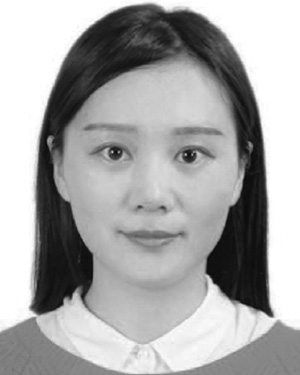 Meiliu Li合作论文数5Hitoshi Nakamura合作论文数5
 Naoyuki Kubota (久保田直行)合作论文数Department of Mechanical Systems Engineering, Graduate School of Systems Design, Tokyo Metropolitan University;東京都立大学 大学院 システムテサイン研究科機械システム工学域5
 Zhentao Liu (刘震涛)合作论文数Institute of Power Machinery and Vehicle Engineering, Zhejiang University;Institute of Advanced Technology, Zhejiang University5
 Kuniaki Kawabata合作论文数Naraha Center for Remote Control Technology Development, Japan Atomic Energy Agency;Collaborative Laboratries for Advanced Decommissioning Sciences, Japan Atomic Energy Agency;Center for Engineering, The University of Tokyo;Kagawa University;Keio University5
 Feng Wang (王峰)合作论文数College of Computer Science and Technology, Jilin University5
 Xin Xin (忻欣)合作论文数School of Automation, Southeast University4Hidenobu SAITO合作论文数3Shinichi Aso合作论文数3Kobayashi, H.合作论文数3Abe, Y.合作论文数3Qi Shi合作论文数3N. Amano合作论文数3T. Matsunaga合作论文数3
 Mihoko Niitsuma合作论文数Institute of Industrial Science;University of Tokyo;Institute of Industrial Science, University of Tokyo3Toshinori Tsuboi合作论文数3Ken Ichiryu合作论文数3
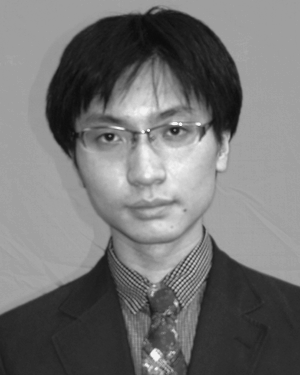 Masatoshi Seki合作论文数3Masashi SAKAI合作论文数2Hironori Kobayashi合作论文数2Taijiro YOKOYAMA合作论文数2
 Chuan-Ke Zhang (张传科)合作论文数School of Automation, China University of Geosciences2
 Hideki Murakoshi合作论文数2Umetsu, T.合作论文数2Hosaka, M.合作论文数2Tomio Yamaura合作论文数2Daisuke Takeda合作论文数2
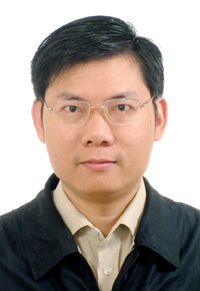 Guojun Wang (王国军)合作论文数School of Computer Science and Cyber Engineering, Guangzhou University2
 Yuji Sakuma合作论文数2Li Xu合作论文数Department of Computer Science, University of Massachusetts Lowell2Shota Ishii合作论文数2
 Yoshimi Yamashita合作论文数2




