Search and rescue tasks for drowned persons on the bottom of rivers or coastal seabeds are quite demanding for conventional ROVs (Remotely Operated Vehicles). Since the water current is sometimes fast, the ROV tends to drift and the cable of the ROV tends to become tangled with debris at the bottom. It has thus been reported that in most cases scuba divers conduct search and rescue tasks with no ROV support. This paper proposes a new type of ROV, Anchor Diver III, that can solve the problems of conventional ROVs. Similar to holding the leash of a running dog, Anchor Diver III uses thrusters to drive away from the mother ship, so that the wire connected between the robot and the mother ship is kept tightened during the entire operation. This paper details the development of Anchor Diver III and underwater experiments. It also gives an overview of Anchor Diver III and describes search and rescue activities during 2011 Tohoku Earthquake and Tsunami April 19–21, 2011.
Ocean survey is more difficult than land-based investigation, since the underwater vehicles are susceptible to being swept away by sea currents. Present study proposes a new concept of underwater vehicle, in which the robot is moored by a tether and utilizes the sea current for movement. Two tether mooring type of underwater vehicles, named "Anchor Diver I" and "Anchor Diver II", will be introduced in this paper. Anchor Diver I is an AUV (Autonomous Underwater Vehicles) developed for long-term ocean survey and Anchor Diver II is a ROV (Remotely Operated Vehicles) which moves with a principle similar to flying a kite in the sky.
Anchor Diver III is the first robot from Japan which was applied after the 2011 Tohoku Earthquake and Tsunami. Anchor Diver III has been developed since 2009 to assist the underwater search and rescue activities of the Tokyo Fire Department. Tokyo Fire Department owns its own ROVs (Remotely Operated Vehicles) for underwater rescue activities. However, search and rescue tasks for drowned persons on the bottom of rivers or coastal seabeds by robot is quite demanding. Since the water current is sometimes fast, the ROV tends to drift and the cable of the ROV tends to become tangled with debris at the bottom. Thus it has been reported that in most cases scuba divers are performing search and rescue tasks with no ROV support. Anchor Diver III can solve the problems of conventional ROVs by its unique mechanical design. This paper gives an overview of Anchor Diver III and describes the search and rescue activities during 2011 Tohoku Earthquake and Tsunami from 19 th to 21 st of April, 2011.
In water rescue, divers in fire department go into the water and search the drowning man, but it is dangerous for divers and time-consuming. Some fire departments introduce the robot to support the rescue, but it is not so used, because 1) big and heavy 2) hard to know the position 3) the wire connected to Mother Ship is easy to tangle. In this research, we develop a new robot "Anchor Diver III" which is connected to Mother Ship with the wire that is kept tight all the time to reduce the risk of wire tangled. And we propose that Anchor Diver III moves with keeping the depth constant as an efficient method of scanning with sonar, and the method of measuring the position of robot in water rescue with applying acoustic positioning.
Ninety-two box cores collected during 2004-2006 from an area of similar to 3000 km(2) off the Gaoping (formerly spelled Kaoping) River, SW Taiwan, were analyzed for fallout radionuclides (Pb-210, Cs-137 and 7 Be) to elucidate sedimentation rates and processes, and for the calculation of a sediment budget. The study area is located at an active collision margin with a narrow shelf and a submarine canyon extending essentially into the river's mouth. The results indicate fairly constant hemipelagic sedimentation in much of the open margin and for most of the time except in the inner shelf and along the axis of the canyon where sediment transport is more dynamic and is controlled by tidal current and wave activities constantly, and by fluvial floods or gravity-driven flows episodically. Sedimentation rates in the study area derived from Pb-210 and constrained by Cs-137 vary from 0.04 to 1.5 cm/yr, with the highest rates (> 1 cm/yr) flanking the Gaoping canyon over the upper slope (200-600 m) and the lowest rates (< 0.1 cm/yr) in the distal basin beyond the continental slope. The depocenter delineated from Pb-210-based sedimentation rates overlaps with the area covered by a flood layer resulting from super-typhoon Haitang in July 2005. Such correspondence supports the notion that the processes operating on event timescale have bearing on the formation of the sediment strata over centennial or longer timescales.From the distribution of sedimentation rates, sediment deposited in the study area annually is estimated to be 6.6 Mton/yr, accounting for less than 20% of Gaoping River's sediment load. The calculated budget, coupled with the presence of the short-lived 7 Be and non-steady-state distribution of low levels of Pb-210 in sediments along the canyon floor, suggests rapid transport of sediment from Gaoping River's mountainous watershed (the source) via the Gaoping (Kaoping) Submarine Canyon and adjacent channels (as the conduit and temporary sink) to the abyssal plain and the Manila Trench in the South China Sea (the ultimate sink). (C) 2008 Elsevier B.V. All rights reserved.
The river-sea system consisting of the Gaoping (new spelling according to the latest government's directive, formerly spelled Kaoping) River (KPR), shelf, and Submarine Canyon (KPRSC) located off southern Taiwan is an ideal natural laboratory to study the source, pathway, transport and fate of terrestrial substances. In 2004 during the flood season of the KPR, a system-wide comprehensive field experiment was conducted to investigate particle dynamics from a source-to-sink perspective in the KPRSC with the emphasis on the effect of particle size on the transport, settling, and sedimentation along the pathway. This paper reports the findings from (1) two sediment trap moorings each configured with a Technicap PPS 3/3 sediment trap, and an acoustic current meter (Aquadopp); (2) concurrent hydrographic profiling and water sampling was conducted over 8 h next to the sediment trap moorings; and (3) box-coring in the head region of the submarine canyon near the mooring sites. Particle samples from sediment traps were analyzed for mass fluxes, grain-size composition, total organic carbon (TOC) and nitrogen (TN), organic matter (OM), carbonate, biogenic opal, polycyclic aromatic hydrocarbon (PAH), lithogenic silica and aluminum, and foraminiferal abundance. Samples from box cores were analyzed for grain-size distribution, TOC, particulate organic matter (POM), carbonate, biogenic opal, water contend and Pb-210(ex). Water samples were filtered through 500, 250, 63, 10 mu m sieves and 0.4 mu m filter for the suspended sediment concentration of different size-classes. Results show that the river and shelf do not supply all the suspended particles near the canyon floor. The estimated mass flux near the canyon floor exceeds 800 g/m(2)/day, whose values are 2-7 times higher than those at the upper rim of the canyon. Most of the suspended particles in the canyon are fine-grained (finer than medium silt) lithogenic sediments whose percentages are 90.2% at the upper rim and 93.6% in the deeper part of the canyon.As suspended particles settle through the canyon, their size-composition shows a downward fining trend. The average percentage of clay-to-fine-silt particles (0.4-10 mu m) in the water samples increases from 22.7% above the upper rim of the canyon to 56.0% near the bottom of the canyon. Conversely, the average percentage of the sand-sized (> 63 mu m) suspended particles decreases downward from 32.0% above the canyon to 12.0% in the deeper part of the canyon. Correspondingly, the substrate of the canyon is composed largely of hemipelagic lithogenic mud. Parallel to this downward fining trend is the downward decrease of concentrations of suspended nonlithogenic substances such as TOC and PAH, despite of their affinity to fine-grained particles.On the surface of the canyon. down-core variables (grain size Pb-210(ex) activity, TOC, water content) near the head region of the canyon show post-depositional disturbances such as hyperpycnite and turbiditic deposits. These deposits point to the occurrences of erosion and deposition related to high-density flows such as turbidity currents, which might be an important process in submarine canyon sedimentation. (C) 2008 Elsevier B.V. All rights reserved.
Recently, flapping robots are noticed by many researchers, and many challenges are being made toward the realization of flight motions like insects, birds and so on. The purpose of this work is to develop flapping robots using a new type of piezoelectric material, that is, piezoelectric fiber composites. By using the composites, actuating fibers and sensing fibers can be embedded into a wing as part of the structure and it makes flapping robots with compact and light structure. A prototype of flapping robot capable of flapping and feathering motions has been developed. The design and driving method of the robot as well as experimental results about thrust and lift force are shown in this paper.
A month-long comprehensive field experiment during the beginning of the flood season of a small mountainous river in southern Taiwan was carried out in 2004. The major goal of the study was to investigate the effect of hydrodynamic sorting related to the salt-water intrusion on the spatial variability of suspended and riverbed sediments and their coupling of different sizes. The experiment included the deployment of an instrumented tetrapod near the river mouth with an upward-looking ADCP and two CTDs mounted at 50 and 100 cm above the bed (cmab), respectively. On three different days along the river, turbidity, salinity and temperature of the water column were profiled; and water samples were taken from the surface and near the bed at different stations. Additionally, one sediment sample was also taken from the riverbed. Suspended sediment concentrations (SSC) were analyzed for five different sizes, i.e. >500, 250-500, 63-250, 10-63 and 1.2-10 mu m by filtration. For each riverbed sample the size-composition was analyzed for the subsample that contained lithogenic and nonlithogenic components; and the subsample having major nonlithogenic components (organic matter, carbonates, and biogenic opal) was removed. The grain-size frequency distributions of the riverbed samples were analyzed using a laser particle analyzer. The results were grouped into the following size classes: >473, 249-473, 62-249, 10-62, and <10 mu m for comparison with those of the suspended sediments near the riverbed. Some suspended sediment samples were analyzed for POC and PON. Some riverbed samples were analyzed for TOC. Statistical methods of linear regression and Empirical Orthogonal (Eigen) Function (EOF) were used in the data analysis.Two-layered estuarine circulation pattern was observed at the tetrapod site. The tidally-driven salt-water intrusion is the major factor influencing the hydrodynamics of the Gaoping River, which in turn, affect the longitudinal and vertical distribution of the suspended sediments and the longitudinal distribution of the riverbed sediments. During the flood, the intrusion front of the salt-wedge creates a dynamic barrier. Upriver from this barrier, the riverbed substrate is coarser, composed of sediments mostly coarser than 249 mu m. Within the salt-wedge the riverbed substrate is finer, consisting of mostly mud (<62 mu m). The barrier creates a trap on the riverbed immediately seaward from the intrusion front, retaining higher percentages of clay-sized sediments and TOC.The barrier also creates partition in the terrestrial and marine sources of organic matter in the suspended and riverbed sediments. Within the salt-wedge the major contributor of riverbed TOC is the clay-sized marine sediment transport upriver by the intruding seawater. The terrestrial POC is a minor contributor to the riverbed TOC.The riverbed and suspended sediments are coupled. Most size-classes in corresponding suspended and riverbed sediments have a reciprocal relationship (negative feedback) through resuspension and deposition on the water-bed interface. The only size-class of 62-473 mu m on the riverbed and 63-250 mu m in the suspension are co-varying (positive feedback). This size class contains largely a transient floc population that is formed and disintegrated in-situ both on the riverbed and in the suspension in the course of a tidal cycle. (C) 2009 Elsevier B.V. All rights reserved.
For the purpose of detecting CO2 leaks during ocean CO2 sequestration, there is a need for independent underwater robots that can make observations while maintaining their position over the seabed against the current for long periods of time. In order to achieve this objective, a novel tether mooring type underwater robot was proposed. The robot is moored and its position is controlled by changing the length of the tether. In addition, it can sustain itself with a sea current power generation system. After that, the prototype underwater robot "Anchor Diver" was developed. Anchor Diver is moored by one tether, moves using horizontal and vertical rudders and moves upstream by reel mechanism. In addition, the use of a movable anchor and generator as a propeller enables Anchor Diver to enlarge its range of activity. This paper describes the detailed development of Anchor Diver and underwater experiments.
For the purpose of observing leaks of CO_2 in CO_2 ocean sequestration, submarine robots that can make observations independently and stay over the seabed against the current for long periods of time are needed. In order to achieve this objective, a novel submarine robot was proposed. The robot is moored, its position is controlled by tether, and it generates electricity with sea current power generation system. After that, the prototype submarine robot "Anchor Diver" was developed. Anchor Diver is moored by one tether, moves with horizontal and vertical rudder and goes upstream with reel mechanism. In addition, the use of a movable anchor and generator as a propeller enables Anchor Diver to enlarge its range of activity. This paper describes the detailed development of Anchor Diver and experiments in the water.
Macro fiber composites (MFC) is a new type of piezoelectric material with softness and big displacement, developed by NASA recently. It can be used for actuating, sensing and power generating. The purpose of our work is to develop a new and intelligent flight machine by utilizing the features of the MFC. In this paper, the concept of such flight machine and the driving method of a MFC-combined structure are proposed. The feasibility of flight by using the MFC-combined structure is discussed by simulations. Based on the simulation results, an active wing capable of flapping and feathering motions has been developed. The elementary performance of the wing is investigated by an aerodynamics experiment
Supporting electronic catalogs (e-catalogs) to provide product search services on the Internet is emerging as an important function of electronic brokers. However, the explosive growth of information is creating difficulties for customers searching for information about the goods they desire. In this paper, an integrated framework is proposed to develop personalized e-catalogs. The proposed framework integrates XML-based metadata models, user models and agents. The proposed metadata model has a multi-level architecture that can facilitate resource discovery and format translation, and can flexibly model the definitions of diverse attributes. The proposed user model uses three-level user profiles to model a user's shopping interests into resources, categories and goods. This work integrates the agent technology with the proposed metadata models and user models in order to develop a personalized e-catalog system. With the support of personalized services, the novel e-catalog system allows an integrated product search to be performed effectively.
In e-commerce applications, supporting electronic catalogues (e-catalogues) to provide product-search services on the Internet is emerging as an important function of electronic brokers (e-brokers). However, as the Internet expands, an increasing number of virtual stores are selling products on-line. The explosive growth of information is creating difficulties for customers searching for the product information they desire. In this work, an integrated framework is proposed to develop personalized e-catalogues. The proposed framework integrates XML-based metadata models, user models and agents. The XML-based metadata model can facilitate resource-discovery and format translation, and can flexibly model the definitions of diverse product attributes in heterogeneous data resources. The proposed user model can model a user s shopping interests to resources, categories and products. This work integrates the agent technology with the proposed metadata model and user model to develop a personalized e-catalogue system. The novel system effectively provides an integrated search for heterogeneous product information, as well as supporting personalized product search and browsing for each user based upon their profiles.
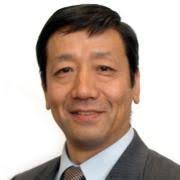 Shigeo Hirose (広瀬茂男)合作论文数Tokyo Institute of Technology;HiBot Corporation7
 yuki sasaki合作论文数4
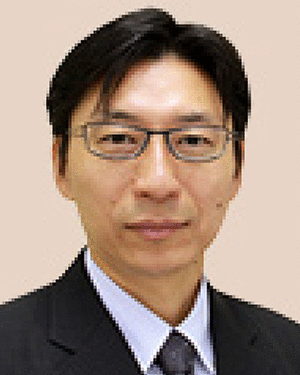 Edwardo F. Fukushima合作论文数4kazuhiro itoh合作论文数3Yukihiro HARAKAWA合作论文数3
 James T Liu合作论文数East China Normal University, East China Normal University2
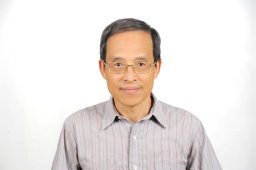 Chih-An Huh合作论文数Institute of Earth Sciences, Academia Sinica2
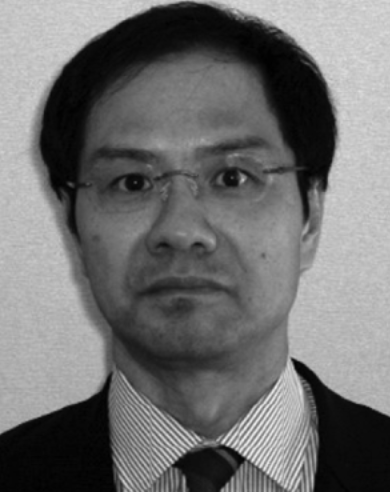 Aiguo Ming (明愛国)合作论文数Department of Mechanical Engineering and Intelligent Systems, The University of Electro-Communications;Department of Mechanical and Intelligent Systems Engineering, The University of Electro-Communications2
 Jia-Jang Hung合作论文数2
 Hui-Ling Lin合作论文数2Yuh-Jaan Lin合作论文数2
 Duen-Ren Liu合作论文数Institution of Information Management, College of Management, National Yang Ming Chiao Tung University;Database and Information System Laboratory, National Yang Ming Chiao Tung University2Koji Ueda合作论文数2Yuichi Fukushima合作论文数1
 Makoto Shimojo合作论文数Dept. of Information Physics and Computing, Graduate School of Information Science and Technology, The University of Tokyo1
 Chung-Min Chen合作论文数Lutron Electronics1
 Saulwood Lin (林曉武)合作论文数Institute of Oceanography, National Taiwan University1
 Paulo Debenest合作论文数1Tetsuo Hagiwara合作论文数1Yoshinori Nagata合作论文数1
 Chon-Lin Lee合作论文数Department of Marine Environment and Engineering, National Sun Yat-sen University;Division of Academic Research, Center for Emerging Contaminants Research, National Sun Yat-sen University;Research Center for Environmental Medicine, Kaohsiung Medical University;Department of Applied Chemistry, Providence University1
 Ray T. Hsu合作论文数1




