Large-scale multi-objective optimization problems (LSMOPs) remain challenging for existingenhanced-search evolutionary algorithms in high-dimensional decision spaces. In this line ofresearch, two recurring limitations remain insufficiently addressed: directional concentration in early-stage direction-guided sampling, where highly correlated search directions narrow decision-space overage; and fixed-structure bias in later-stage search, where fixed population structures cannot adapt exploration–exploitation allocation across evolutionary stages, resulting in inefficient search coordination. To address these issues, this paper proposes LMOEA-BD, a two-stage evolutionary framework for large-scale multi-objective optimization. In the first stage, a distribution-aware boundary–directional hybrid sampling strategy is developed to mitigate directional concentration by complementing conventional directional sampling with distribution-aware boundary-guided search. A fuzzy search mechanism is further incorporated to enrich candidate diversity and strengthen early exploration. In the second stage, an adaptive dual-population search strategy is introduced to alleviate fixed-structure bias. The population is dynamically partitioned into exploration and exploitation subpopulations according to the current population state, and an asymmetric interaction mechanism is designed to coordinate information exchange between them. In this mechanism, the exploitation subpopulation provides convergence guidance to exploration, while the exploration subpopulation supplies diverse high-quality candidates to exploitation. By coupling early-stage coverage expansion with late-stage coordinated search, LMOEA-BD improves the balance between preserving diversity and enhancing convergence. Experimental studies on the LSMOP benchmark suite show that the proposed framework is competitive with several state-of-the-art algorithms in terms of both convergence and diversity.
In the last three decades, a large number of metaheuristics inspired by biological evolution, swarm behaviors, and natural phenomenons have been proposed for solving black-box optimization problems. While metaheuristics successively showed superior performance over their predecessors on benchmark problems, it has been criticized that some of them tend to search towards the origin and can only perform well on problems with optimal variables of zero. While experimental studies on such over-customization issues have been given in the literature, there is a lack of theoretical analysis methods. In this paper, we suggest a comprehensive method to theoretically study the potential over-customization issues of metaheuristics, by means of deriving the conditions of search space transformation invariance properties of variation operators. The proposed method is used to theoretically analyze the translation, scale, and rotation invariance properties of several representative metaheuristics, and the conclusions are further verified by a variety of experiments. Our conclusions reveal that some metaheuristics are sensitive to the transformations of search spaces, which means that their performance superiority on specific problems may not demonstrate their effectiveness in more generic scenarios. At last, we give some advices on the avoidance of the over-customization in developing metaheuristics. We hope the conclusions of this paper are beneficial for the development of new metaheuristics.
Large-scale sparse multi-objective optimization problems (LSMOPs) are a class of optimization problems widely encountered in engineering practice and scientific research, where the optimal solutions typically contain only a small number of nonzero decision variables. Existing large-scale sparse multi-objective evolutionary algorithms (LSMOEAs) mainly rely on heuristic sparsity operators and local recombination mechanisms to search for high-quality solutions, which are insufficient to characterize the complex nonlinear dependencies and potential coupling patterns among decision variables. To address this issue, this paper proposes a generative model–based evolutionary algorithm for large-scale sparse multi-objective optimization, which no longer relies solely on traditional crossover and mutation operators but instead performs distribution-level modeling of the current non-dominated solutions and directly samples and decodes candidate solutions in a low-dimensional latent space. Through this learning-driven direct sampling mechanism, the search process is elevated from local perturbations to distribution-level generation, enabling the algorithm to adaptively capture the distributional characteristics of Pareto optimal solutions. To evaluate the effectiveness of the proposed algorithm in solving LSMOPs with varying levels of complexity, comprehensive experiments are conducted on multiple benchmark suites and real-world problems. The results demonstrate that, in most cases, the proposed algorithm outperforms existing state-of-the-art LSMOEAs in terms of both convergence and diversity of the obtained solutions.
In recent years, graph optimization techniques have gained significant attention in multi-objective evolutionary algorithms (MOEAs). However, most existing methods fail to fully leverage the diverse structural and attribute information inherent in graphs. To address this issue, a causal inference-based dual-layer heterogeneous graph-assisted multi-objective evolutionary algorithm (CiDGMO) is proposed. Specifically, the population is represented as a dual-layer heterogeneous graph: the upper layer is a causality-driven directed acyclic graph that captures inter-dimensional dependencies, where dimensions are nodes and causality is represented by edges. The lower layer is an undirected graph based on Euclidean distance, with individuals as nodes and similarity as edges. Meanwhile, a dual-layer node connection strategy based on mutual information fluctuation under random perturbations is introduced to construct robust connections. Furthermore, a causal restricted-based genetic algorithm is presented to avoid undesirable crossover and mutation between individuals and improve search efficiency. In addition, a causal inference-based dot-product attention mechanism is proposed to enhance the model’s capability in node representation learning and further boost the expressive power. Comprehensive experiments conducted on four benchmark suites and six real-world problems demonstrate that CiDGMO significantly outperforms seven state-of-the-art MOEAs, particularly in tackling problems with complex mathematical structures. These findings highlight the promising potential of incorporating causal inference and graph-based modeling into MOEA frameworks for enhanced optimization performance.
Multi-modal multi-objective optimization problems (MMOPs) are particularly challenging due to the difficulty of identifying multiple equivalent Pareto optimal solutions that are similar in the objective space but differ significantly in the decision space. While some evolutionary algorithms perform well on MMOPs, they struggle with large-scale MMOPs, especially those with sparse optimal solutions, due to the curse of dimensionality. These algorithms not only face challenges in converging to Pareto optimal solutions but also in assessing population diversity in a high-dimensional decision space. To remedy these issues, this paper proposes a cooperative multi-population evolutionary algorithm for large-scale MMOPs with sparse optimal solutions. The proposed algorithm balances solutions’ optimality in the objective space and diversity in the decision space by evolving two categories of subpopulations. The first category of subpopulations groups decision variables to efficiently converge to specific Pareto optimal solutions. The second category explores the global search space to discover potential equivalent Pareto optimal solutions, preserving solutions’ diversity in the decision space. These two categories collaborate by exchanging information, enabling dynamic management of subpopulations to allocate computational resources evenly across equivalent Pareto optimal solutions. Experimental results on benchmark problems and real-world applications demonstrate that the proposed algorithm has significant advantages over state-of-the-art evolutionary algorithms.
Camera traps provide ecologists with invaluable, large-scale visual data on wildlife in remote areas while minimizing human disturbance. However, the massive volume and inherent redundancy of images they generate impose a heavy burden on manual analysis. This has led to an increasing reliance on artificial intelligence tools for automated processing. Unfortunately, training such models remains costly and inefficient. Moreover, as datasets grow larger, the marginal gains in model performance diminish rapidly, rendering full-dataset training impractical. While dataset pruning offers a promising solution to reduce computational overhead, existing methods often perform poorly on camera trap data due to extreme class imbalance and inherent spatial domain shifts. To address these limitations, we propose GDP-CT (Grouped Data Pruning for Camera Trap), a hierarchical pruning strategy that reconciles ecological and AI-driven perspectives on image value. GDP-CT operates in three stages: (1) establishing species-level pruning quotas to ensure adequate representation of all classes; (2) within each species, allocating location-specific quotas to balance spatial diversity; and (3) within each species-location group, selecting the most representative images using standard pruning techniques. Extensive experiments demonstrate that GDP-CT significantly improves classification performance compared to standard pruning approaches. Critically, the selected subsets are model-agnostic, exhibiting strong performance across diverse architectures. Furthermore, GDP-CT seamlessly integrates with various pruning strategies, consistently improving robustness and generalization across datasets and settings. By substantially alleviating data burdens while preserving ecological insights through its principled hierarchy, GDP-CT facilitates more efficient wildlife monitoring via collaborative human-AI workflows.
Constrained multi-objective optimization problems (CMOPs) are of great significance in the context of practical applications, ranging from scientific to engineering domains. Most existing constrained multi-objective evolutionary algorithms (CMOEAs) usually employ fixed operators all the time, which exhibit poor versatility in handling various CMOPs. Therefore, some recent studies have focused on adaptively selecting the best operators for the current population states during the search process. The evolutionary algorithms proposed in these studies learn the value of each operator and recommend the operator with the highest value for the current population, resulting in only a single operator being recommended at each generation, which can potentially lead to local optima and inefficient utilization of function evaluations. To address the dilemma in operator adaptation, this paper proposes a reinforcement learning-based automated operator portfolio approach to learn an allocation scheme of operators at each generation. This approach considers the optimization-related and constraint-related features of the current population as states, the overall improvement in population convergence and diversity as rewards, and different operator portfolios as actions. By utilizing deep neural networks to establish a mapping model between the population states and the expected cumulative rewards, the proposed approach determines the optimal operator portfolio during the evolutionary process. By embedding the proposed approach into existing CMOEAs, a deep reinforcement learning-assisted automated operator portfolio based evolutionary algorithm for solving CMOPs, abbreviated as CMOEA-AOP, is developed. Empirical studies on 33 benchmark problems demonstrate that the proposed algorithm significantly enhances the performance of CMOEAs and exhibits more stable performance across different CMOPs.
Over the past decades, extensive research has been conducted on adversarial attacks and defense mechanisms in deep learning, particularly in real-world applications such as autonomous vehicles, medical diagnosis, etc. Recent studies have revealed that evolutionary algorithms that solve data-driven optimization problems are also vulnerable to adversarial attacks. However, research endeavors to address adversarial attacks in this context have not yet been initiated. Conducting such attacks is more challenging than those on deep neural networks, primarily due to the absence of defined gradients or loss functions in evolutionary algorithms, which complicates the application of existing attack methods. To address this issue, this paper introduces a novel adversarial attack model targeting evolutionary algorithms solving data-driven optimization problems. To model real-world malicious behaviors, this paper proposes an attack algorithm that develops perturbation cutoff and subpopulation filtering strategies, while also supporting a new sparse operator to ensure the attack’s destructiveness and imperceptibility. The effectiveness of our proposed model and algorithm is demonstrated through experimental evaluation on datasets for both single- and multi-objective optimization problems. Through these experiments, three key questions are addressed: Can a small perturbation of the dataset significantly degrade evolutionary algorithm performance? If so, are robust evolutionary algorithms more resistant to attacks than conventional ones? Furthermore, can the perturbation generated by one evolutionary algorithm also degrade the performance of other evolutionary algorithms? This study emphasizes the importance of evolutionary algorithm safety in real-world applications and provides valuable insights into the future development of trustworthy evolutionary algorithms.
Persistent multi-target perception in Software-Defined Radio (SDR) networks presents a challenging large-scale multi-objective optimization (LSMOO) task. Traditional evolutionary algorithms struggle to balance perception quality and task continuity because high-dimensional decision spaces are often extremely sparse. To address these challenges, we propose a Multi-Strategy Enhanced Evolutionary Algorithm (MSEA). Instead of passively searching infeasible regions, MSEA compresses the decision space through a target-pool-aware 2D integer encoding scheme. Furthermore, we introduce a Local-Bayesian collaborative engine to refine the search. In this engine, a 3D posterior probability tensor provides macro-level global guidance to accelerate convergence. Simultaneously, a continuity-oriented intelligent repair operator resolves micro-level perceptual fragmentation while strictly enforcing hardware budgets. We validated MSEA using sensor network topologies derived from publicly shared, real-world SDR nodes. Extensive experiments demonstrate that MSEA achieves superior convergence stability and task continuity compared to mainstream algorithms, including NSGA-II, SPEA2, and MOPSO.
Large-scale multi-modal multi-objective optimization problems (large-scale MMOPs) refer to scenarios where multiple significantly different Pareto optimal solutions exist in a high-dimensional decision space, exhibiting identical or similar performance in the objective space. Existing multi-modal multi-objective evolutionary algorithms (MMEAs) usually employ multiple subpopulations to approximate different Pareto optimal solutions when solving large-scale MMOPs. However, these MMEAs often fail to consider the optimization performance of each subpopulation when allocating computational resources, instead distributing resources equally among all subpopulations. This approach struggles to simultaneously approximate multiple equivalent Pareto optimal solutions in high-dimensional decision spaces, thereby limiting the efficiency and effectiveness of these algorithms. Building on the general idea of computational resource management, this paper develops a resource allocation approach based MMEA that dynamically allocates computational resources to each subpopulation based on its optimization performance. Additionally, the proposed algorithm can determine whether to merge subpopulations to reduce resource wastage or create new subpopulations to explore potential equivalent Pareto optimal solutions, based on the distribution characteristics of all subpopulations. Experimental results demonstrate that the proposed algorithm outperforms state-of-the-art MMEAs in terms of both solutions’ optimality in the objective space and diversity in the decision space.
“The curse of dimensionality” poses a major challenge to the scalability of multiobjective evolutionary algorithms (MOEAs) for large-scale multiobjective optimization problems (LSMOPs). Although existing MOEAs have achieved encouraging performance on problems with hundreds of decision variables, solving higher-dimensional LSMOPs remains computationally demanding. To mitigate these scalability challenges, we propose MOZO, an evolutionary zeroth-order (ZO) optimization method that combines zeroth-order directional estimation with a population-based MOEA backbone. Specifically, MOZO first estimates and aggregates objective-wise ZO gradients to provide search directions in high-dimensional decision spaces. It then refines these directions using acceleration and adaptation modules and embeds them within a population-based evolutionary search process to improve robustness against noisy estimates and objective conflicts. In addition, MOZO incorporates a reinforcement learning mechanism to adaptively configure suitable ZO and MOEA modules during the search process. Experimental results on benchmark LSMOPs with up to 100,000 decision variables demonstrate the effectiveness, efficiency, and scalability of MOZO compared with five state-of-the-art large-scale MOEAs. We further apply MOZO to the fine-tuning of OPT-2.7B and OPT-6.7B large language models on a single GPU, where the results show its practical potential under memory-constrained settings.
Large-scale sparse multi-objective optimization problems (LSMOPs) are characterized by Pareto-optimal solutions in which only a small subset of decision variables are truly critical and take nonzero values. Efficiently identifying these variables and generating sparse Pareto-optimal solutions in high-dimensional spaces remains a major challenge. To address this issue, this paper proposes a probabilistic variable selection method, which precisely assigns each decision variable a probability of being selected as a critical variable based on the evolutionary information of the population. In generating each offspring solution, unlike existing LSMOEAs that can only handle a limited subset of decision variables or select a single variable as a critical variable at a time, the proposed algorithm can simultaneously determine whether each decision variable is selected as a critical variable, directly setting a large number of non-critical variables to zero. This enhances exploration capabilities in high-dimensional decision spaces while maintaining stable performance across different scales of LSMOPs. Extensive experiments on benchmark and real-world LSMOPs demonstrate that the proposed algorithm achieves faster identification of sparse structures and more thorough optimization of critical variables, consistently outperforming most state-of-the-art LSMOEAs across different problem scales.
Dimension reduction has notably emerged in solving large-scale multi-objective optimization problems (LSMOPs). Nevertheless, the determination of the latent dimension after dimension reduction remains a critical challenge, where inappropriate dimensions risk the failure to find the Pareto optimal set. To address this issue, an information bottleneck theory-guided dimension estimation method is proposed, which theoretically derives the optimal latent dimension of LSMOPs. Specifically, the latent dimension is established in a quantitative relationship with the importance of decision variables based on information bottleneck theory. Then, the importance of decision variables with respect to convergence and diversity is quantified to determine the optimal latent dimension, and the high-dimensional decision space is subsequently projected into a low-dimensional latent space via dimension reduction techniques. Experimental results demonstrate the effectiveness of the proposed method on various problem suites, i.e., LSMOP, WFG, and ZCAT, when integrated with different dimension-reduction techniques. Furthermore, the version integrated with the weighted optimization framework also outperforms five representative competitors with superior performance on most of test problems.
Abstract The particle swarm optimization (PSO) algorithm has demonstrated excellent performance in several fields as a widely used optimization method. However, PSO frequently encounters difficulties with poor convergence speed and inadequate convergence accuracy while handling complex optimization problems. To solve these problems, this paper proposes a reinforcement learning-based adaptive particle swarm optimization (RLAPSO) algorithm. First, a multi-information source-driven strategy (MISDS) is introduced to enhance population diversity. By integrating comprehensive and mainstream learning concepts, the proposed MISDS optimizes the update mechanism for particles positions and velocities. This enables particles to learn not only the global and their individual optimal solutions but also the individual optimal solutions of other particles, as well as the average of these solutions. Second, to improve both the convergence speed and accuracy of PSO, the proximal policy optimization (PPO) method is used to adjust the PSO parameters adaptively. Finally, to further speed up the convergence and improve the solution accuracy, a dynamic reward function is proposed in the framework of PPO, which can adjust the intensity of the feedback in real-time according to the progress of the search. The experimental results show that RLAPSO considerably increases the convergence speed and convergence accuracy on test sets of both CEC 2013 and CEC 2022. Compared with classic PSO variants and other swarm intelligence (SI) algorithms, RLAPSO exhibits superior overall performance when addressing complex optimization problems.
This paper presents an enhanced second-order conic programming (ESOCP) relaxation-based branch and bound algorithm for the quadratic programming problem with a second-order cone constraint and linear inequalities. To enhance the conic relaxation performance, we first equivalently reformulate the objective function by incorporating a nonnegative parameter and the square of the linear term derived from the second-order cone constraint. Next, we reformulate the problem via variable substitution with a nonsingular matrix, yielding objective and constraint matrices that are simultaneously diagonalizable. We then develop an ESOCP relaxation and propose two choices for the nonnegative parameter. Finally, we compare the branch and bound algorithm based on the ESOCP relaxation with those based on the classical second-order conic programming (SOCP) relaxation and semidefinite programming (SDP) relaxation, as well as the global solver Gurobi. Computational results demonstrate that the branch and bound algorithm based on the ESOCP relaxation exhibits higher solution efficiency.
Recommendation systems have become essential tools for addressing information overload. Traditional recommendation systems often focus only on optimizing a single accuracy objective, which can no longer meet the complex requirements of practical applications. Non-accuracy indicators such as diversity, novelty, and serendipity are equally important in the recommendation process. When four or more objectives need to be optimized simultaneously, existing multi-objective optimization algorithms face challenges of dominance resistance and insufficient selection pressure. In recommendation scenarios, the discrete nature of the item selection space makes it more challenging to effectively balance various objectives in many-objective recommendation problems. To address these issues, this paper proposes a many-objective recommendation algorithm named MaOEA-EHML based on machine learning-assisted evolution. Experimental results demonstrate that MaOEA-EHML outperforms existing algorithms in performance effectiveness.
In many-objective optimization (MaOPs), complexity grows with the number of objectives. Most evaluation metrics aim for both convergence and diversity, yet often face high computational costs or reliance on ideal reference points in high-dimensional spaces, hindering diversity preservation. Traditional algorithms use fixed evolutionary phases, limiting temporal adaptability and causing optimization mismatches. For this reason, this study introduces a hyper-curvature balanced indicator and adaptive phase exploration co-driven evolutionary algorithm for many-objective optimization (MaOEA-HAP). Firstly, an innovative hyper-curvature balance indicator is developed, utilizing selected populations characterized by strong convergence and well-distributed diversity, to efficiently direct the evolutionary process. Meanwhile, to eliminate dominant resistance solutions, an adaptive angular dominance pruning strategy is designed to enhance the algorithm’s capability for solution screening. Furthermore, the elite profile mechanism preserves solutions with strong convergence properties, effectively guiding the evolutionary search toward convergence enhancement. Finally, an adaptive stage exploration strategy is formulated to strengthen population exploration ability. To verify its effectiveness, MaOEA-HAP is compared against eight advanced many-objective optimization algorithms using 31 benchmark instances and five real-world optimization problems. Empirical results confirm that the designed algorithm demonstrates strong capability in addressing multiple challenges across many-objective optimization tasks.
Sparse Large-scale Multi-objective Optimization Problems (sparse LMOPs) widely exist in various optimization applications, such as neural network training, portfolio optimization, and feature selection of classification. Although numerous methods exist, automatically selecting efficient solving strategies for sparse LMOPs remains highly challenging. Given this, we propose a reinforcement learning assisted autonomous sparse multi-objective evolutionary algorithm, which aims to effectively utilize sparse knowledge for designing diversified genetic operators, and automatically select appropriate genetic operators for various problems or different situations within the same optimization process. Specifically, three sparsity-aware genetic operators are designed by utilizing sparsity statistic, sparsity clustering, and sparsity logic operation. They possess distinct advantages in terms of convergence speed, solution quality, and diversity. Furthermore, the utilization of deep Q-network enables the automatic selection of suitable operators for offspring reproduction based on the current sparse state of the population. The proposed algorithm is compared with five state-of-the-art algorithms on eight benchmark and three real-world problems. Experimental results demonstrate the superiority of the proposed algorithm and the effectiveness of the proposed sparse genetic operators for solving sparse LMOPs.
With the rapid growth of social networks, user interactions have become increasingly complex, making traditional binary relationship-based methods inadequate for studying group social relationships. Moreover, existing research has overlooked the dynamic decay of information propagation among users. To address this, we define the Hypergraph Dynamic Influence Maximization (HDIM) problem and develop a Hypergraph Dynamic Susceptible-Infected (HDSI) model to capture the dynamic decay of information spread. For solving HDIM problem, we propose a Hypergraph Influence Decaying Estimation-based Evolutionary Algorithm (HIDE-EA). This approach formulates an objective function using probabilistic influence decaying estimation and iteratively optimizes the node set as the decision variable, effectively expanding influence propagation in hypergraphs while greatly reducing the computational cost of Monte Carlo simulations. We also design a Node Influence Decaying Estimation (NIDE)-based initialization method to accelerate convergence. Experiments on hypergraph datasets show that HIDE-EA significantly shortens computation time while achieving results comparable to the greedy algorithm, and outperforms other baseline methods.
 Xingyi Zhang (张兴义)合作论文数Institute of Bioinspired Intelligence and Mining Knowledge, School of Computer Science and Technology, Anhui University;Key Laboratory of Intelligence Computational & Signal Processing (Anhui University), Ministry of Education128
 Yaochu Jin (金耀初)合作论文数Department of Artificial Intelligence, School of Engineering, Westlake University54
 Shangshang Yang (杨尚尚)合作论文数School of Computer Science and Technology, Anhui University36
 Ran Cheng (程然)合作论文数Department of Computing, Faculty of Computer and Mathematical Sciences, Hong Kong Polytechnic University;Department of Data Science & Artificial Intelligence, Faculty of Computer and Mathematical Sciences, Hong Kong Polytechnic University24
 Cheng He (何成)合作论文数School of Electrical and Electronic Engineering, Huazhong University of Science and Technology21
 Kay Chen Tan合作论文数Department of Data Science and Artificial Intelligence, Faculty of Computer and Mathematical Sciences, The Hong Kong Polytechnic University20
 Haiping Ma (马海平)合作论文数Institute of Bioinspired Intelligence and Mining Knowledge, Anhui University15
 Yajie Zhang合作论文数12
 Limiao Zhang (张丽淼)合作论文数Institute of Bioinspired Intelligence and Mining Knowledge, Computer Science and Technology School, Anhui University11
 Shuai Shao合作论文数9
 Langchun Si合作论文数7
 Xiaoshu Xiang (项小书)合作论文数Institutes of Physical Science and Information Technology, Anhui University7
 Yansen Su (苏延森)合作论文数School of Computer Science and Technology, Anhui University7
 Ruifen Cao (曹瑞芬)合作论文数Information Materials and Intelligent Sensing Laboratory of Anhui Province, Anhui University;School of Computer Science and Technology, Anhui University6
 Hao Jiang (江浩)合作论文数School of Computer Science and Technology of Anhui University6
 Jianhua Xiao (肖建华)合作论文数College of Economie and Social Development, Nankai University5
 Shengxiang Yang合作论文数School of Computer Science and Informatics, De Montfort University;Centre for Computational Intelligence, De Montfort University5
 Xin Yao (姚新)合作论文数Department of Computer Science and Engineering, Southern University of Science and Technology;Centre of Excellence for Research in Computational Intelligence and Applications, University of Birmingham;School of Computer Science, University of Birmingham;School of Artificial Intelligence, Xidian University5
 Linqiang Pan (潘林强)合作论文数School of Artificial Intelligence and Automation, Huazhong University of Science and Technology5
 Handing Wang (王晗丁)合作论文数School of Artificial Intelligence, Xidian University5
 Shichen Peng合作论文数4
 Ke Xu (许柯)合作论文数School of Artificial Intelligence, Anhui University4
 Miqing Li合作论文数School of Computer Science, College of Engineering and Physical Sciences, University of Birmingham4
 Xiaoshan Yu (俞晓山)合作论文数School of Artificial Intelligence, Anhui University3Panpan Zhang合作论文数3Yu Liu合作论文数3
 Songbai Liu (刘松柏)合作论文数Artificial Intelligence Security Institute, College of Computer Science and Software Engineering, Shenzhen University3
 Qiuzhen Lin (林秋镇)合作论文数College of Computer Science and Software Engineering, Shenzhen University3
 Haifeng Zhang (张海峰)合作论文数School of Mathematical Sciences, Anhui University3
 Chao Wang (王朝)合作论文数School of Artificial Intelligence, Anhui University;Institute of Bioinspired Intelligence and Mining Knowledge, School of Computer Science and Technology, Anhui University3
 Fan Cheng (程凡)合作论文数School of Artificial Intelligence, Anhui University;Information Materials and Intelligent Sensing Laboratory of Anhui Province, Anhui University3
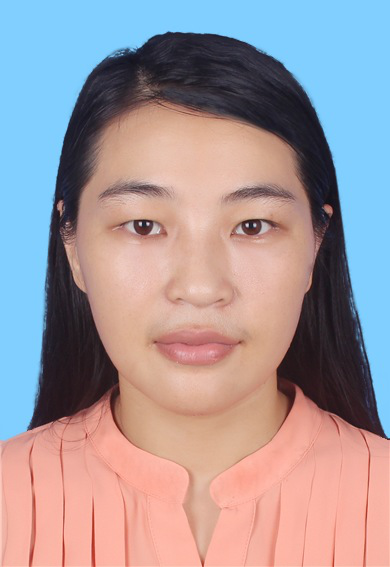 Xueming Yan (颜学明)合作论文数广东外语外贸大学信息科学与技术学院;网络空间安全学院3
 Genggeng Liu (刘耿耿)合作论文数College of Computer and Data Sciences, Fuzhou University;Fujian Key Laboratory of Wetwork Computing and Intelligent Informatio;Processing, Fuzhou University3
 Junguo Zhang (张军国)合作论文数The School of Technology, Beijing Forestry University3
 Xi Pei合作论文数3
 Yaopei Guang合作论文数2
 Huaixi Wang合作论文数2
 Yuandong Feng合作论文数2
 Haoyu Wei合作论文数2Liang Jia合作论文数2
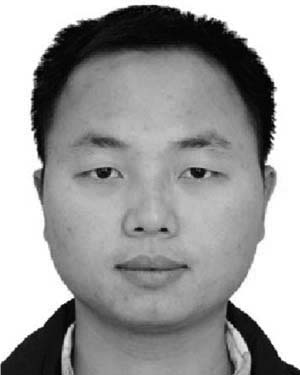 Huangke Chen合作论文数2
 Xinjing Wang (王新晶)合作论文数School of Marine Science and Technology, Northwestern Polytechnical University2Cheng Zhen合作论文数2Tao Wu合作论文数PLA Univ Sci & Technol, Coll Commun Engn, Nanjing, Jiangsu, Peoples R China2
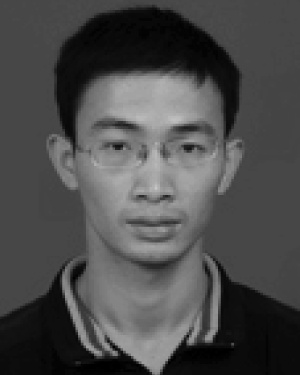 Nengxian Liu合作论文数Fuzhou Univ, Coll Math & Comp Sci, Fuzhou 350116, Fujian, Peoples R China2
 Jiangtao Shen合作论文数2
 Bo Du (杜博)合作论文数School of Computer Science, Wuhan University2
 Chunhou Zheng (郑春厚)合作论文数School of Artificial Intelligence, Anhui University2
 Xiaoming Zhang (张晓明)合作论文数Institutes of Physical Science and Information Technology, Anhui University2




