This paper presents the design and implementation of space database for developing automated building design review systems. We have developed a set of four software modules for reviewing different aspects of a specific building type — US Courthouses. IFC (Industry Foundation Classes) provides the common building model schema from which these analyses are carried out. Space objects, like other BIM-building objects, can carry their information-rich space objects and space use semantics internally to the model; we have used instead external space database to an easily supported information base. We describe the problem of space database, how space objects can be automatically organized and classified within BIM systems based on their space database, and our reflection on best practices learned from application development. All the research and development features noted in this paper are implemented in a software plug-in module that constitutes a subset of other pre-processing operations and design review systems.
The industry foundation class (IFC) standard building model schema is a necessary but not sufficient condition for achieving full interoperability between building information modeling (BIM) tools. Unless each information exchange within construction project workflows has its specific contents and level of detail defined, the breadth and flexibility of the IFC schema leaves room for errors. The national BIM standard approach for resolving the ambiguities of information exchange is based on "use cases," which precisely define the data required in each information exchange between disciplines in engineering workflows. In this paper, we define specific procedures for developing information delivery manuals (IDM), which capture the use cases and the precise information to be exchanged. We also identify some of the data semantics we found problematic that require workflow specification. We further propose details of the information capture that allow the IDM to serve as a specification for later implementation and testing. The procedures are illustrated using examples from an IDM specification developed for the domain of architectural precast concrete.
In this paper we define a computational method for measuring walking distances within buildings based on a length-weighted graph structure for a given building model. We name it the universal circulation network (UCN) and it has been implemented as plug-in software in Solibri Model Checker using building information modeling technologies. It provides a new explicitly defined method for representing circulation paths on top of building models supporting further circulation-related analysis as a network application. We define the computing algorithms and how we realize them. We focus not only on the implementation issues, but also on other intrinsic aspects that need to be considered while dealing with pedestrian circulation within buildings. The UCN is determined mainly by the spatial topology and geometry of a given building, and it returns consistent and accurate scalar quantities. It takes into consideration people-movement patterns, reflecting that people tend to walk along the shortest, easiest, and most visible paths. In several actual-design review projects, the UCN has proved that it is of practical benefit, not only to the distance measurement but also the visualization of pedestrian circulation, especially in reviewing building circulation.
Data exchanges between building information modeling (BIM) tools have been tested in a structured set of detailed benchmark tests using a small but complex building model. The tests have shown that despite progress in developing and implementing Industry Foundation Classes (IFC), much work is still needed to achieve fully effective interoperability. Imperfect exchanges arose from the lack of uniformity in the way the internal object schemas were mapped to IFC objects and properties. The benchmark tests showed clearly the need for a mutually agreed upon standard that defines how precast architectural facades should be modeled and mapped to the IFC schema and what information is required for each exchange in the workflow. Such definition is essential for coherent interoperability for this, and indeed any, domain.
The building information modeling (BIM) tools that have matured for structural steel and precast concrete construction are not suitable for production modeling of cast-in-place (CIP) reinforced concrete structures. The main reason is that CIP structures are monolithic in nature, as opposed to the discrete objects that are typical of steel and precast. A consortium of 12 major contractors and design firms collaborated over a one-year period to formulate the functional requirements for development of a BIM tool for cast-in-place reinforced concrete. The functional requirements were derived from a process model used to scope and understand the processes surrounding reinforced concrete design and production. The functional requirements were finally expressed as a set of object schemas, defining relations, methods, and attributes needed. These are essential for software companies to incorporate in their BIM tools to provide for the unique needs of modeling CIP structures.
This paper surveys rule checking systems that assess building designs according to various criteria. We examine five major industrial efforts in detail, all relying on IFC building models as input. The functional capabilities of a rule checking system are organized into four stages; these functional criteria provide a framework for comparisons of the five systems. The review assesses both the technology and structure of building design rule checking, as an assessment of this new emerging field. The development of rule checking systems for building is very young and only limited user experience is presented. The survey lays out a framework for considering research needed for this area to mature.
The Rosewood experiment examined building information modeling (BIM) and product data exchange in the design and fabrication of architectural precast façades. The façade panels of a 16 story office building were designed and fabricated using traditional CAD, while a parallel workflow was performed independently using BIM tools. No limitations were encountered in designing and detailing of precast façade pieces with current software. Production of the same set of drawings showed a productivity gain of 57% over the CAD process. However, the data exchanges between architectural and precast engineering systems were incomplete and inconsistent, confirming the need for BIM exchange standards. The existing Industry Foundation Classes schema (IFC version 2x3) lacks precast-specific entities and property sets. The majority of the difficulties can be traced to a loss in translation of semantic meaning for the objects exchanged.
This study has developed a product model based on ISO 10303 to overcome problems such as data loss during transferring and sharing project data. The developed product model electronically represents three-dimensional shapes, structural analysis and structural design information of steel bridges. The product model for semantic description of a steel bridge is employed as data structure of an integrated database management system (DBMS) by which steel bridge information can be managed and operated. The DBMS can be made to release restraints such as each different location and heterogeneous computer environments. End-users may be able to freely access steel bridge information of the DBMS on the network. This study also presents a framework for practical management of steel bridge information generated from existing tools by using open standards and web technology. An integrated computer environment can be built by applying this framework composed of product model, data repository, application modules, and programming interfaces to civil engineering fields.
A considerable progress in development of information management system for bridge maintenance and management has been made for support of efficient structural maintenance. However, most information management systems for bridges have weakness to keep the consistency of structural information for the lifecycle support of bridges under the heterogeneous computing environment. In addition, it is also difficult to represent the structural details based on three-dimensional geometry information for the better comprehension of end-users. This study provides a new strategy, which can guarantee the consistency of structural information, for the prompt and accurate information service to support quick assessment of structural safety and usability of bridges. The two core techniques are emphasized on this study. One is for application of geometry-based bridge database, and the other is for integration of document information. The former enables structural engineers and public officials to handle the structural details with three-dimensional geometric shapes for the engineering judgment and decision-making in maintenance of bridges. The latter employs XML technologies to develop the application modules that assist end-users to operate the documents such as structural calculation sheet, design report and inspection reports for any specific bridges on the web. The framework of the information management system is presented for the integration of heterogeneous computing environments among the different national departments or public corporations. The pilot system is developed and its applications to existing bridges on the Han-river in Seoul of Korea are demonstrated.
This study intends to overcome some problems revealed during transferring and sharing data by developing an information model which can represent shape, structural analysis and design information of steel bridges based on open standards. The information model representing structural design information was developed by referencing building product models and it can describe shape information based on integrated resources and application protocol of existing open standards. A system architecture which is composed of information model, data repository, application module and programming interface for a development of application module is also proposed on the basis of the information model and web technology. It is proven that a prototype system implemented by applying system architecture to application fields can build integrated computational environment.
Conference paper written by Sang-Ho Lee and Yeon-Suk Jeong presented at IABSE Symposium: Towards a Better Built Environment - Innovation, Sustainability, Information Technology, Melbourne, Australia, 11-13 September 2002.
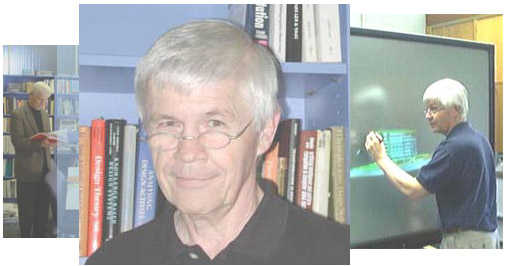 C Eastman合作论文数Colleges of Architecture and Computing;Georgia Institute of Technology7
 Rafael Sacks合作论文数Facuty of Civil And Environmental Enigneering, Technion Israel Institute of Technology4
 Jin-Kook Lee合作论文数Department of Polymer Science and Engineering, Pusan National University4
 Jaemin Lee合作论文数School of Architecture, Georgia Institute of Technology4
 I. Kaner合作论文数2
 S.M. Lee合作论文数2edoo kim合作论文数1S. -H. Lee合作论文数1byoungyong kim合作论文数1joonghyun choi合作论文数1Sang-Ho Lee合作论文数1
 Paola Sanguinetti合作论文数Georgia Institute of Technology1
 Sherif Abdelmohsen合作论文数School of Architecture, Georgia Institute of Technology1
 Chuck Eastman合作论文数Institute for People and Technology, Georgia Institute of Technology1
 Ronen Barak合作论文数Faculty of Civil and Env. Eng., Technion – Israel Institute of Technology1
 Bong-Geun Kim合作论文数School of Economics, Sungkyunkwan University1Il-Du Goh合作论文数1Matti Kannala合作论文数1Hugo Sheward合作论文数1




