We report on superconducting magnesium diboride MgB2 thin films grown on both YSZ and MgO substrates, with two different orientations, namely [110] and [211]. MgB2 off-axis growth mode (namely, with the c-axis tilted with respect to the film surface’s normal) is achievable on these substrates. Depending on the type and orientation of the substrate, tilting angle can be varied. As a consequence of tilted growth, anisotropic transport properties are observed. In very thin films, resistance measurements provide an estimate of the resistivity anisotropic ratio ρc/ρab, where ρc is the resistivity along the c axis and ρab is the in-plane resistivity. All these findings clearly demonstrate that tilted MgB2 films offer new exciting possibilities to both investigate intrinsic fundamental properties of MgB2 and to explore possible applications in planar superconducting devices.
We present the results of point-contact spectroscopy measurements on high-quality epitaxial MgB2 thin films with injected current along the c-axis. The temperature and field dependences of π-band properties with the field parallel to (H||) or perpendicular to (H⊥) the c-axis are investigated in detail. When a magnetic field is applied, either parallel or perpendicular to the c-axis, the density of the quasiparticle state (DOS) of the π-band proliferates quickly with increasing field, while the gap amplitude of the π-band decreases slowly, which is different from the recent theoretical calculations, showing a field dependent competition between the interband scattering and the pair-breaking effects.
The current-voltage (I-V) characteristics of various MgB(2) films have been studied at different magnetic fields parallel to the c axis. At fields mu(0)H between 0 and 5 T, vortex liquid-glass transitions were found in the I-V isotherms. Consistently, the I-V curves measured at different temperatures show a scaling behavior in the framework of quasi-two-dimension (quasi-2D) vortex-glass theory. However, at mu(0)H >= 5 T, a finite dissipation was observed down to the lowest temperature here, T=1.7 K, and the I-V isotherms did not scale in terms of any known scaling law, of any dimensionality. We suggest that this may be caused by a mixture of sigma band vortices and pi band quasiparticles. Interestingly, the I-V curves at zero magnetic field can still be scaled according to the quasi-2D vortex-glass formalism, indicating an equivalent effect of self-field due to persistent current and applied magnetic field.
We have noticed the following misprints in our paper: 1.In Eq. ͑2͒, i is defined asOur conclusions are not affected since all calculations presented in the paper were performed using the correct formulas.
 Xiaoxing Xi合作论文数Department of Physics, College of Science and Technology, Temple University11
 Qi Li合作论文数Department of Physics, Eberly College of Science, Pennsylvania State University7
 Chenggang Zhuang合作论文数Department of Physics;Peking University;Department of Physics, Peking University5
 Huan Yang (杨欢)合作论文数School of Physics, Nanjing University;Center for Superconducting Physics and Materials, Nanjing University4
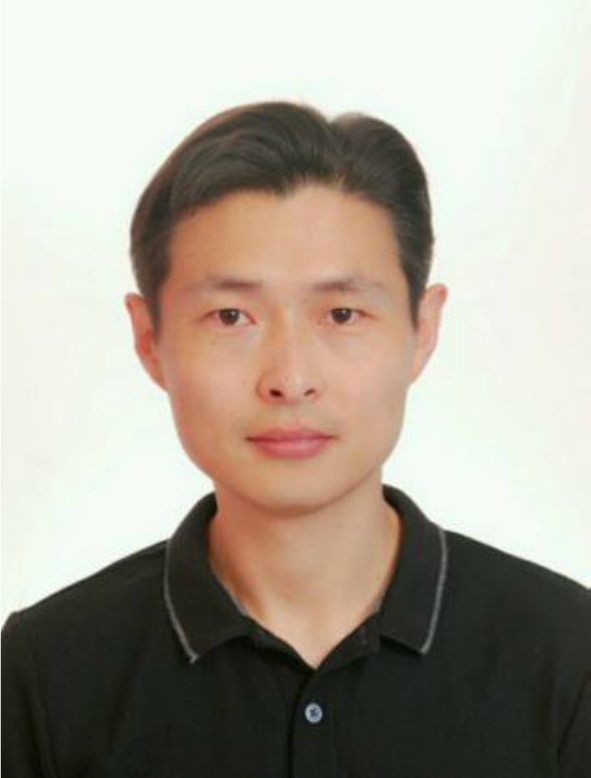 Lei Shan (单磊)合作论文数Information Materials and Intelligent Sensing Laboratory of Anhui Province, Anhui University4
 Hai-Hu Wen (闻海虎)合作论文数Center for Superconducting Physics and Materials, Nanjing University;School of Physics, Nanjing University4Ke Chen合作论文数4Ying Jia (贾颖)合作论文数4
 Alexej Pogrebnyakov合作论文数Penn State Univ, Dept Mat Sci & Engn, University Pk, PA 16802 USA3Yan Huang合作论文数3
 Joan M. Redwing合作论文数Department of Materials Science and Engineering3J. Giencke合作论文数2
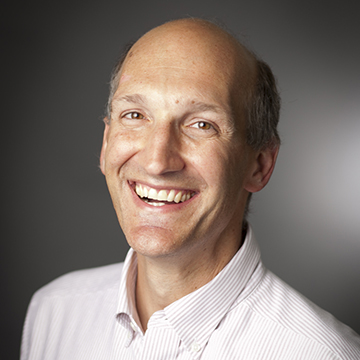 Darrell Schlom合作论文数Department of Materials Science and Engineering, Cornell University;Leibniz-Institut für Kristallzüchtung2Yongfeng Hu合作论文数University of Saskatchewan2
 Zikui Liu (刘梓葵)合作论文数Department of Materials Science and Engineering, College of Earth and Mineral Sciences, Penn State University;CALPHAD, Inc.2Ruggero Vaglio合作论文数2Valeria Ferrando合作论文数2
 Chang-beom Eom合作论文数Department of Materials Science & Engineering, College of Engineering, University of Wisconsin-Madison;Pittsburgh Quantum Institute2
 Yong-Lei Wang (王永磊)合作论文数Research Institute of Superconductor Electronics, Nanjing University;School of Electronic Science and Engineering, Nanjing University2
 Marina Putti合作论文数Dipartimento di Fisica, Università di Genova2V. Vaithyanathan合作论文数Dept . of CSE;SASTRA University2
 Pasquale Orgiani合作论文数Istituto Officina dei Materiali, Consiglio Nazionale delle Ricerche2R. Di Capua合作论文数1R. Gandikota合作论文数1J Rowell合作论文数1B. T. Liu合作论文数1J. M. Rowell合作论文数1B. J. Wilkens合作论文数1Ziying Zhang合作论文数1Q Li合作论文数1qiang li合作论文数1karl reed合作论文数1l maritato合作论文数1
 David C. Larbalestier合作论文数College of Engineering, Florida State University1
 Chunlin Jia (贾春林)合作论文数Faculty of Electronic and Information Engineering, Xi'an Jiaotong University;Jia-Lab for Interface and Atomic Structure, Xi'an Jiaotong University1
 Alexander V. Gurevich合作论文数Department of Physics, Old Dominion University1
 Jihoon Kim合作论文数Division of Advanced Materials Engineering, Kongju National University1
 Nathan Newman合作论文数School for Engineering of Matter, Transport, and Energy, Ira A. Fulton Schools of Engineering, Arizona State University1
 Graham Wright合作论文数Sunnybrook Research Institute;Department of Medical Biophysics, Faculty of Medicine, University of Toronto1
 Ralph B. James合作论文数Savannah River National Laboratory1
 R K Singh合作论文数Geological Survey of India1
 Maria Iavarone合作论文数Department of Physics, College of Science and Technology, Temple University1Regina Ciancio合作论文数TASC Laboratory1B. Moeckly合作论文数1
 Arsen Soukiassian合作论文数1
 Carlo Ferdeghini合作论文数National Institute for Physics of Matter1
 Matthew C. Jewell合作论文数Applied Superconductivity Center;University of Wisconsin - Madison1
 Daniele Marré合作论文数Dipartimento di Fisica, Università degli Studi di Genova1S.B. Mi合作论文数1




