Recent advances in foundational models have yielded reasoning systems capable of achieving a gold-medal standard at the International Mathematical Olympiad. The transition from competition-level problem-solving to professional research, however, requires navigating vast literature and constructing long-horizon proofs. In this work, we introduce Aletheia, a math research agent that iteratively generates, verifies, and revises solutions end-to-end in natural language. Specifically, Aletheia is powered by an advanced version of Gemini Deep Think for challenging reasoning problems, a novel inference-time scaling law that extends beyond Olympiad-level problems, and intensive tool use to navigate the complexities of mathematical research. We demonstrate the capability of Aletheia from Olympiad problems to PhD-level exercises and most notably, through several distinct milestones in AI-assisted mathematics research: (a) a research paper (Feng26) generated by AI without any human intervention in calculating certain structure constants in arithmetic geometry called eigenweights; (b) a research paper (LeeSeo26) demonstrating human-AI collaboration in proving bounds on systems of interacting particles called independent sets; and (c) an extensive semi-autonomous evaluation (Feng et al., 2026a) of 700 open problems on Bloom's Erdos Conjectures database, including autonomous solutions to four open questions. In order to help the public better understand the developments pertaining to AI and mathematics, we suggest quantifying standard levels of autonomy and novelty of AI-assisted results, as well as propose a novel concept of human-AI interaction cards for transparency. We conclude with reflections on human-AI collaboration in mathematics and share all prompts as well as model outputs at https://github.com/google-deepmind/superhuman/tree/main/aletheia.
Current benchmarks for large language model (LLM) reasoning predominantly focus on mathematical and coding abilities, leaving a gap in evaluating broader reasoning proficiencies. One particular exception is the BIG-Bench dataset, which has served as a crucial benchmark for evaluating the general reasoning capabilities of LLMs, thanks to its diverse set of challenging tasks that allowed for a comprehensive assessment of general reasoning across various skills within a unified framework. However, recent advances in LLMs have led to saturation on BIG-Bench, and its harder version BIG-Bench Hard (BBH). State-of-the-art models achieve near-perfect scores on many tasks in BBH, thus diminishing its utility. To address this limitation, we introduce BIG-Bench Extra Hard (BBEH), a new benchmark designed to push the boundaries of LLM reasoning evaluation. BBEH replaces each task in BBH with a novel task that probes a similar reasoning capability but exhibits significantly increased difficulty. We evaluate various general-purpose and reasoning-specialized models on BBEH and observe an accuracy of 23.9% for the best general-purpose model and 54.2% for the best reasoning-specialized model, indicating substantial room for improvement and highlighting the ongoing challenge of achieving robust general reasoning in LLMs. We release BBEH publicly at: https://github.com/google-deepmind/bbeh.
We study how in-context learning (ICL) in language models is affected by semantic priors versus input-label mappings. We investigate two setups-ICL with flipped labels and ICL with semantically-unrelated labels-across various model families (GPT-3, InstructGPT, Codex, PaLM, and Flan-PaLM). First, experiments on ICL with flipped labels show that overriding semantic priors is an emergent ability of model scale. While small language models ignore flipped labels presented in-context and thus rely primarily on semantic priors from pretraining, large models can override semantic priors when presented with in-context exemplars that contradict priors, despite the stronger semantic priors that larger models may hold. We next study semantically-unrelated label ICL (SUL-ICL), in which labels are semantically unrelated to their inputs (e.g., foo/bar instead of negative/positive), thereby forcing language models to learn the input-label mappings shown in in-context exemplars in order to perform the task. The ability to do SUL-ICL also emerges primarily with scale, and large-enough language models can even perform linear classification in a SUL-ICL setting. Finally, we evaluate instruction-tuned models and find that instruction tuning strengthens both the use of semantic priors and the capacity to learn input-label mappings, but more of the former.
We introduce Vibe-Eval: a new open benchmark and framework for evaluating multimodal chat models. Vibe-Eval consists of 269 visual understanding prompts, including 100 of hard difficulty, complete with gold-standard responses authored by experts. Vibe-Eval is open-ended and challenging with dual objectives: (i) vibe checking multimodal chat models for day-to-day tasks and (ii) rigorously testing and probing the capabilities of present frontier models. Notably, our hard set contains >50 answer incorrectly. We explore the nuances of designing, evaluating, and ranking models on ultra challenging prompts. We also discuss trade-offs between human and automatic evaluation, and show that automatic model evaluation using Reka Core roughly correlates to human judgment. We offer free API access for the purpose of lightweight evaluation and plan to conduct formal human evaluations for public models that perform well on the Vibe-Eval's automatic scores. We release the evaluation code and data, see https://github.com/reka-ai/reka-vibe-eval
We present the training recipe and results of scaling up PaLI-X, a multilingual vision and language model, both in terms of size of the components and the breadth of its training task mixture. Our model achieves new levels of performance on a wide-range of varied and complex tasks, including multiple image-based captioning and question-answering tasks, image-based document understanding and few-shot (in-context) learning, as well as object detection, video question answering, and video captioning. PaLI-X advances the state-of-the-art on most vision-and-language benchmarks considered (25+ of them). Finally, we observe emerging capabilities, such as complex counting and multilingual object detection, tasks that are not explicitly in the training mix.
Scaling up language models has been shown to predictably improve performance and sample efficiency on a wide range of downstream tasks. This paper instead discusses an unpredictable phenomenon that we refer to as emergent abilities of large language models. We consider an ability to be emergent if it is not present in smaller models but is present in larger models. Thus, emergent abilities cannot be predicted simply by extrapolating the performance of smaller models. The existence of such emergence implies that additional scaling could further expand the range of capabilities of language models.
Detecting out-of-distribution (OOD) examples is critical in many applications. We propose an unsupervised method to detect OOD samples using a $k$-NN density estimate with respect to a classification model's intermediate activations on in-distribution samples. We leverage a recent insight about label smoothing, which we call the {\it Label Smoothed Embedding Hypothesis}, and show that one of the implications is that the $k$-NN density estimator performs better as an OOD detection method both theoretically and empirically when the model is trained with label smoothing. Finally, we show that our proposal outperforms many OOD baselines and we also provide new finite-sample high-probability statistical results for $k$-NN density estimation's ability to detect OOD examples.
We introduce Reka Core, Flash, and Edge, a series of powerful multimodal language models trained from scratch by Reka. Reka models are able to process and reason with text, images, video, and audio inputs. This technical report discusses details of training some of these models and provides comprehensive evaluation results. We show that Reka Edge and Reka Flash are not only state-of-the-art but also outperform many much larger models, delivering outsized values for their respective compute class. Meanwhile, our most capable and largest model, Reka Core, approaches the best frontier models on both automatic evaluations and blind human evaluations. On image question answering benchmarks (e.g. MMMU, VQAv2), Core performs competitively to GPT4-V. Meanwhile, on multimodal chat, Core ranks as the second most preferred model under a blind third-party human evaluation setup, outperforming other models such as Claude 3 Opus. On text benchmarks, Core not only performs competitively to other frontier models on a set of well-established benchmarks (e.g. MMLU, GSM8K) but also outperforms GPT4-0613 on human evaluation. On video question answering (Perception-Test), Core outperforms Gemini Ultra. Models are shipped in production at http://chat.reka.ai . A showcase of non cherry picked qualitative examples can also be found at http://showcase.reka.ai .
We propose a new paradigm to help Large Language Models (LLMs) generate more accurate factual knowledge without retrieving from an external corpus, called RECITation-augmented gEneration (RECITE). Different from retrieval-augmented language models that retrieve relevant documents before generating the outputs, given an input, RECITE first recites one or several relevant passages from LLMs' own memory via sampling, and then produces the final answers. We show that RECITE is a powerful paradigm for knowledge-intensive NLP tasks. Specifically, we show that by utilizing recitation as the intermediate step, a recite-and-answer scheme can achieve new state-of-the-art performance in various closed-book question answering (CBQA) tasks. In experiments, we verify the effectiveness of \method~on four pre-trained models (PaLM, UL2, OPT, and Codex) and three CBQA tasks (Natural Questions, TriviaQA, and HotpotQA). Our code is available at "https://github.com/Edward-Sun/RECITE".
Humans have the ability to adapt the type of information they use, the procedure they employ, and the amount of time they spend when solving problems. However, most standard neural networks have a fixed function type and computation budget regardless of the sample's nature or difficulty. Adaptivity is a powerful paradigm as it not only imbues practitioners with flexibility pertaining to the downstream usage of these models but can also serve as a powerful inductive bias for solving certain challenging classes of problems. In this work, we introduce a new approach called AdaTape, which allows for dynamic computation in neural networks through adaptive tape tokens. AdaTape utilizes an elastic input sequence by equipping an architecture with a dynamic read-and-write tape. Specifically, we adaptively generate input sequences using tape tokens obtained from a tape bank which can be either trainable or derived from input data. We examine the challenges and requirements to obtain dynamic sequence content and length, and propose the Adaptive Tape Reading (ATR) algorithm to achieve both goals. Through extensive experiments on image recognition tasks, we show that AdaTape can achieve better performance while maintaining the computational cost. To facilitate further research, we have released code at https://github.com/google-research/scenic.
We study the design decisions of publicly available instruction tuning methods, and break down the development of Flan 2022 (Chung et al., 2022). Through careful ablation studies on the Flan Collection of tasks and methods, we tease apart the effect of design decisions which enable Flan-T5 to outperform prior work by 3-17%+ across evaluation settings. We find task balancing and enrichment techniques are overlooked but critical to effective instruction tuning, and in particular, training with mixed prompt settings (zero-shot, few-shot, and chain-of-thought) actually yields stronger (2%+) performance in all settings. In further experiments, we show Flan-T5 requires less finetuning to converge higher and faster than T5 on single downstream tasks, motivating instruction-tuned models as more computationally-efficient starting checkpoints for new tasks. Finally, to accelerate research on instruction tuning, we make the Flan 2022 collection of datasets, templates, and methods publicly available at https://github.com/google-research/FLAN/tree/main/flan/v2.
Many natural language processing tasks benefit from long inputs, but processing long documents with Transformers is expensive -- not only due to quadratic attention complexity but also from applying feedforward and projection layers to every token. However, not all tokens are equally important, especially for longer documents. We propose CoLT5, a long-input Transformer model that builds on this intuition by employing conditional computation, devoting more resources to important tokens in both feedforward and attention layers. We show that CoLT5 achieves stronger performance than LongT5 with much faster training and inference, achieving SOTA on the long-input SCROLLS benchmark. Moreover, CoLT5 can effectively and tractably make use of extremely long inputs, showing strong gains up to 64k input length.
We introduce PaLM 2, a new state-of-the-art language model that has better multilingual and reasoning capabilities and is more compute-efficient than its predecessor PaLM. PaLM 2 is a Transformer-based model trained using a mixture of objectives. Through extensive evaluations on English and multilingual language, and reasoning tasks, we demonstrate that PaLM 2 has significantly improved quality on downstream tasks across different model sizes, while simultaneously exhibiting faster and more efficient inference compared to PaLM. This improved efficiency enables broader deployment while also allowing the model to respond faster, for a more natural pace of interaction. PaLM 2 demonstrates robust reasoning capabilities exemplified by large improvements over PaLM on BIG-Bench and other reasoning tasks. PaLM 2 exhibits stable performance on a suite of responsible AI evaluations, and enables inference-time control over toxicity without additional overhead or impact on other capabilities. Overall, PaLM 2 achieves state-of-the-art performance across a diverse set of tasks and capabilities. When discussing the PaLM 2 family, it is important to distinguish between pre-trained models (of various sizes), fine-tuned variants of these models, and the user-facing products that use these models. In particular, user-facing products typically include additional pre- and post-processing steps. Additionally, the underlying models may evolve over time. Therefore, one should not expect the performance of user-facing products to exactly match the results reported in this report.
Differentiable Search Indices (DSIs) encode a corpus of documents in model parameters and use the same model to answer user queries directly. Despite the strong performance of DSI models, deploying them in situations where the corpus changes over time is computationally expensive because reindexing the corpus requires re-training the model. In this work, we introduce DSI++, a continual learning challenge for DSI to incrementally index new documents while being able to answer queries related to both previously and newly indexed documents. Across different model scales and document identifier representations, we show that continual indexing of new documents leads to considerable forgetting of previously indexed documents. We also hypothesize and verify that the model experiences forgetting events during training, leading to unstable learning. To mitigate these issues, we investigate two approaches. The first focuses on modifying the training dynamics. Flatter minima implicitly alleviate forgetting, so we optimize for flatter loss basins and show that the model stably memorizes more documents ($+12\%$). Next, we introduce a generative memory to sample pseudo-queries for documents and supplement them during continual indexing to prevent forgetting for the retrieval task. Extensive experiments on novel continual indexing benchmarks based on Natural Questions (NQ) and MS MARCO demonstrate that our proposed solution mitigates forgetting significantly. Concretely, it improves the average Hits@10 by $+21.1\%$ over competitive baselines for NQ and requires $6$ times fewer model updates compared to re-training the DSI model for incrementally indexing five corpora in a sequence.
There have been a lot of interest in the scaling properties of Transformer models. However, not much has been done on the front of investigating the effect of scaling properties of different inductive biases and model architectures. Do model architectures scale differently? If so, how does inductive bias affect scaling behaviour? How does this influence upstream (pretraining) and downstream (transfer)? This paper conducts a systematic study of scaling behaviour of ten diverse model architectures such as Transformers, Switch Transformers, Universal Transformers, Dynamic convolutions, Performers, and recently proposed MLP-Mixers. Via extensive experiments, we show that (1) architecture is an indeed an important consideration when performing scaling and (2) the best performing model can fluctuate at different scales. We believe that the findings outlined in this work has significant implications to how model architectures are currently evaluated in the community.
Scaling language models improves performance but comes with significant computational costs. This paper proposes UL2R, a method that substantially improves existing language models and their scaling curves with a relatively tiny amount of extra compute. The key idea is to continue training a state-of-the-art large language model on a few more steps with UL2's mixture-of-denoiser objective. We show that, with almost negligible extra computational costs and no new sources of data, we are able to substantially improve the scaling properties of large language models on downstream metrics. In this paper, we continue training a baseline language model, PaLM, with ULR2, introducing a new set of models at 8B, 62B, and 540B scale which we call U-PaLM. Impressively, at 540B scale, we show an approximately 2x computational savings rate where U-PaLM achieves the same performance as the final PaLM 540B model at around half its computational budget (i.e., saving ~4.4 million TPUv4 hours). We further show that this improved scaling curve leads to "emergent abilities" on challenging BIG-Bench tasks---for instance, U-PaLM does much better on some tasks or demonstrates better quality at much smaller scale (62B as opposed to 540B). Overall, we show that U-PaLM outperforms PaLM on many few-shot setups, including reasoning tasks with chain-of-thought (e.g., GSM8K), multilingual tasks (MGSM, TydiQA), MMLU and challenging BIG-Bench tasks.
Training large, deep neural networks to convergence can be prohibitively expensive. As a result, often only a small selection of popular, dense models are reused across different contexts and tasks. Increasingly, sparsely activated models, which seek to decouple model size from computation costs, are becoming an attractive alternative to dense models. Although more efficient in terms of quality and computation cost, sparse models remain data-hungry and costly to train from scratch in the large scale regime. In this work, we propose sparse upcycling -- a simple way to reuse sunk training costs by initializing a sparsely activated Mixture-of-Experts model from a dense checkpoint. We show that sparsely upcycled T5 Base, Large, and XL language models and Vision Transformer Base and Large models, respectively, significantly outperform their dense counterparts on SuperGLUE and ImageNet, using only ~50% of the initial dense pretraining sunk cost. The upcycled models also outperform sparse models trained from scratch on 100% of the initial dense pretraining computation budget.
Modern recommender systems perform large-scale retrieval by first embedding queries and item candidates in the same unified space, followed by approximate nearest neighbor search to select top candidates given a query embedding. In this paper, we propose a novel generative retrieval approach, where the retrieval model autoregressively decodes the identifiers of the target candidates. To that end, we create semantically meaningful tuple of codewords to serve as a Semantic ID for each item. Given Semantic IDs for items in a user session, a Transformer-based sequence-to-sequence model is trained to predict the Semantic ID of the next item that the user will interact with. To the best of our knowledge, this is the first Semantic ID-based generative model for recommendation tasks. We show that recommender systems trained with the proposed paradigm significantly outperform the current SOTA models on various datasets. In addition, we show that incorporating Semantic IDs into the sequence-to-sequence model enhances its ability to generalize, as evidenced by the improved retrieval performance observed for items with no prior interaction history.
Existing pre-trained models are generally geared towards a particular class of problems. To date, there seems to be still no consensus on what the right architecture and pre-training setup should be. This paper presents a unified framework for pre-training models that are universally effective across datasets and setups. We begin by disentangling architectural archetypes with pre-training objectives -- two concepts that are commonly conflated. Next, we present a generalized & unified perspective for self-supervision in NLP and show how different pre-training objectives can be cast as one another and how interpolating between different objectives can be effective. We then propose Mixture-of-Denoisers (MoD), a pre-training objective that combines diverse pre-training paradigms together. We furthermore introduce a notion of mode switching, wherein downstream fine-tuning is associated with specific pre-training schemes. We conduct extensive ablative experiments to compare multiple pre-training objectives and find that our method pushes the Pareto-frontier by outperforming T5 & GPT-like models across multiple diverse setups. By scaling our model up to 20B parameters, we achieve SOTA performance on 50 well-established supervised finetuning based NLP tasks. Our model also achieve strong results at in-context learning, outperforming 175B GPT-3 on zero-shot SuperGLUE and tripling the performance of T5-XXL on one-shot summarization. On 0-shot MMLU, UL2 20B outperforms T0 and T5 models. UL2 20B also works well with chain-of-thought prompting and reasoning, making it an appealing choice for research into reasoning at a small to medium scale of 20B parameters. Finally, we apply FLAN instruction tuning to the UL2 20B model, achieving MMLU and Big-Bench scores competitive to FLAN-PaLM 62B. We release Flax-based T5X checkpoints for the UL2 20B & Flan-UL2 20B.
BIG-Bench (Srivastava et al., 2022) is a diverse evaluation suite that focuses on tasks believed to be beyond the capabilities of current language models. Language models have already made good progress on this benchmark, with the best model in the BIG-Bench paper outperforming average reported human-rater results on 65% of the BIG-Bench tasks via few-shot prompting. But on what tasks do language models fall short of average human-rater performance, and are those tasks actually unsolvable by current language models? In this work, we focus on a suite of 23 challenging BIG-Bench tasks which we call BIG-Bench Hard (BBH). These are the task for which prior language model evaluations did not outperform the average human-rater. We find that applying chain-of-thought (CoT) prompting to BBH tasks enables PaLM to surpass the average human-rater performance on 10 of the 23 tasks, and Codex (code-davinci-002) to surpass the average human-rater performance on 17 of the 23 tasks. Since many tasks in BBH require multi-step reasoning, few-shot prompting without CoT, as done in the BIG-Bench evaluations (Srivastava et al., 2022), substantially underestimates the best performance and capabilities of language models, which is better captured via CoT prompting. As further analysis, we explore the interaction between CoT and model scale on BBH, finding that CoT enables emergent task performance on several BBH tasks with otherwise flat scaling curves.
 Luu Anh Tuan合作论文数College of Computing & Data Science, Nanyang Technological University;School of Computer Science and Engineering, Nanyang Technological University35
 Siu Cheung HUI合作论文数College of Computing & Data Science, Nanyang Technological University34
 Donald Metzler合作论文数Google DeepMind34
 Dara Bahri合作论文数Google Research26
 Shuai Zhang合作论文数Amazon Web Services22
 Mostafa Dehghani合作论文数Google DeepMind20
 Vinh Q. Tran合作论文数Google14
 Aston Zhang合作论文数Meta13
 Jai Gupta合作论文数Google Deepmind12
 Denny Zhou合作论文数Google DeepMind11
 Hyung Won Chung合作论文数OpenAI11
 Aixin Sun (孙爱欣)合作论文数College of Computing & Data Science, Nanyang Technological University11
 Minh Phan合作论文数Nanyang Technological University10
 Zhen Qin (秦臻)合作论文数Google DeepMind GenAI Unit10
 Alvin Chan合作论文数School of Computer Science and Engineering, Nanyang Technological University10
 Jason Wei合作论文数Meta Superintelligence Labs9
 Lina Yao (姚丽娜)合作论文数School of Computer Science and Engineering, The University of New South Wales;CSIRO’s Data61;Macquarie University9
 Che Zheng合作论文数8
 Jinfeng Rao合作论文数Google8
 Jie Fu (付杰)合作论文数Shanghai AI Laboratory7
 Quoc V. Le合作论文数Google7
 Zhe Zhao (赵哲)合作论文数Department of Computer Science, College of Engineering, University of California, Davis6
 Dacheng Juan合作论文数Google6
 Vamsi Aribandi合作论文数Google Research6
 Marc Najork合作论文数Google DeepMind6
 Honglei Zhuang合作论文数6
 Neil Houlsby合作论文数Anthropic6
 Xuezhi Wang合作论文数5
 Sharan Narang合作论文数Meta5
 Yikang Shen合作论文数MIT-IBM Watson Lab5
 Anurag Arnab合作论文数Google DeepMind5
 Yew-Soon Ong合作论文数College of Computing and Data Science, Nanyang Technological University;School of Computer Science and Engineering, Nanyang Technological University;Centre for Frontier Al Research, Agency for Science, Technology and Research5
 Xavier Garcia合作论文数DeepMind5
 Shuohang Wang合作论文数Microsoft Cognitive Services Research Group5
 Dani Yogatama合作论文数Reka;Department of Computer Science, University of Southern California5
 Sebastian Ruder合作论文数Superintelligence Labs, Meta5Steven Zheng合作论文数4
 William Fedus合作论文数OpenAI;Google Brain4
 Orhan Firat合作论文数Google DeepMind4
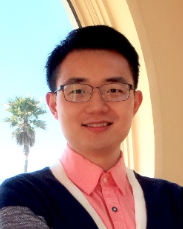 Le Yan合作论文数Google DeepMind;Google Research4
 Tal Schuster合作论文数Google4
 Aakanksha Chowdhery合作论文数Google4
 Ed H. Chi (紀懷新)合作论文数Google DeepMind4
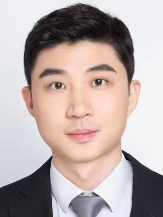 Chenliang Li (李晨亮)合作论文数School of Cyber Science and Engineering, Wuhan University4
 Adam Roberts合作论文数DeepMind4
 Andrew Tomkins合作论文数Google4
 Jialong Han (韩家龙)合作论文数Airbnb4
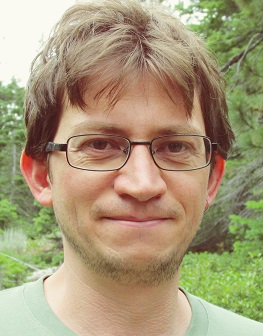 Michael Bendersky合作论文数Databricks4
 Lucas Vinh Tran合作论文数3




