_ The bearing is a key component of an internal combustion engine, which is used to support the crankshaft system. Its lubrication performance and wear life will directly affect the working efficiency and reliability of the internal combustion engine. Among these, the crankshaft and engine bed deformation have an important impact on the bearing performance. Different stiffness and deformation between the crankshaft and bearing seat lead to bearing edge load and lubrication problems. Insufficient stiffness easily causes vibration, and on the contrary, too large stiffness leads to lubrication problems. Therefore, the research on bearing structure, crankshaft, and seat deformation matching for improving shafting stability and lubrication performance of main bearings is of great significance to improve the performance of the internal combustion engine. In this paper, a theoretical coupling model of multibody dynamics and elastohydrodynamic lubrication for a low-speed two-stroke diesel engine is established. The dynamic model was verified by the torsional vibration test. The factors affecting the coordinated deformation ability of crankshaft-bearing seats, including the stiffness of the whole engine and the clearance of the bearing, are selected to investigate the influence of these factors on the bending vibration of the crankshaft, bearing lubrication, and wear. The analysis shows that the lubrication performance of the seventh main bearing is the worst among the eight main bearings under the rated condition of the engine. The multiobjective optimization model optimizes the stiffness of each main bearing seat. The results show that the performance of the shaft can be improved by deformation-coordinated design. The thickness of the minimum oil film of the main bearing increases by 6.78%, the peak value of the maximum oil film pressure decreases by 16.64%, and the bending amplitude of the main journal decreases by 21.67%. The optimized result provides a solution for performance improvement on bearing lubrication and vibration of low-speed two-stroke engines. Keywords marine engine; EHD; main bearing; coordinated design
Moving load dynamic problems with lubricant film are common in engineering. Previous studies of this kind of problem often ignored lubricating oil film, or regarded oil film as a simple linear system. To avoid errors caused by the nonlinearity of oil film, hydrodynamic equations are used to describe the oil film subsystem accurately in this paper. By coupling the kinematic systems (moving mass and elastic carrying mechanism), a comprehensive model of moving load dynamic problems with lubricant film is established, and a general numerical procedure of the problem is given. Then the dynamic response and the transmission law of load in the mechanism are studied by taking a reciprocating friction pair of a typical marine engine as an example. Results show that the load transmission is not sensitive to low-frequency harmonic signals, but has a strong filterability to the mid-high frequency harmonic signals. It is also found that the transfer rate of excitation signal through the oil film does not decrease smoothly as frequency increases, and there exist multiple peaks in the frequency domain. (c) 2020 Elsevier Ltd. All rights reserved.
随着发动机轻量化和强化程度不断提高,由于零部件刚度不足导致的部件接触面之间的微动磨损现象更为突出,对零部件和整机的可靠性产生较大影响.针对易于发生微动现象的连杆大端轴瓦瓦背接触面,建立微动磨损和疲劳三维仿真模型并进行验证.为避免在微动磨损仿真过程中的网格畸变导致的收敛问题,采用任意拉格朗日-欧拉(ALE)方法进行磨损分析.根据发动机连杆实际工作状态,设计连杆微动试验装置,并针对连杆大端轴瓦瓦背接触面进行32h连续微动试验,试验结果与仿真模型预测结果相吻合.最后,基于仿真计算,分析轴瓦初始过盈量与连杆螺栓预紧力对轴瓦瓦背上微动磨损、微动疲劳的影响,并给出相应的优化建议.
Composite pistons are often used in highly rated marine diesel engines. Fretting usually occurs on the mating surfaces of piston crown and skirt due to alternating loads. A finite element contact model is introduced to calculate the temperature and stress distribution in the composite piston of a marine diesel engine. The Archard model and Smith–Watson–Topper parameter (a prediction parameter of fretting fatigue, also called SWT parameter for short), which is used as fretting wear and fatigue criteria, are calculated according to the stress and strain variation and relative slip on the contact surface. The model has been validated by previous cylindrical–flat contact experiments. The effects of shape of contact face and pretension of bolts on fretting performance have been analyzed. To reduce the possibility of fretting failure of the composite piston, the expression of the generating line of the piston skirt contact surface has been designed by Theory of elasticity. The parameters of the generating line have been optimized with nonlinear sequential quadratic programming and finite element mesh updating method. The optimization results show that the fretting fatigue parameter SWT on the optimized contact surface can be reduced by more than 35.6%, which means the longer fatigue life of the pistons. Some suggestions for designing contact surfaces have also been proposed. In the end, the design was proved by durability tests of the engine.
Composite pistons are often used in heavy duty diesel engines due to its good reliability and durability. Owing to the alternating loads, fretting wear usually happens on the mating surfaces between piston crown and skirt. In this paper, a fretting wear finite element model is developed to analyze the mating surface wear of composite piston of heavy-duty diesel engine. The fretting wear model predicts the wear depth evolution for each working cycle based on Archard model and mesh updating technique, which is validated by previous pin and disk contact experiments. The wear evolution of the top contact surface of piston skirt is simulated according to engine operating condition, and fretting wear life is estimated by the decreasing process of crown-skirt connecting bolt preload. Effects of the shape of piston skirt top surface are also evaluated. In the end, the rationality of fretting wear model is validated by durability tests of diesel engine.
Cancer immunotherapy has made unprecedented breakthrough in the fields of chimeric antigen receptor-redirected T (CAR T) cell therapy and immune modulation. Combination of CAR modification and the disruption of endogenous inhibitory immune checkpoints on T cells represent a promising immunotherapeutic modality for cancer treatment. However, the potential for the treatment of hepatocellular carcinoma (HCC) has not been explored. In this study, the gene expressing the programmed death 1 receptor (PD-1) on the Glypican-3 (GPC3)-targeted second-generation CAR T cells employing CD28 as the co-stimulatory domain was disrupted using the CRISPR/Cas9 gene-editing system. It was found that, in vitro, the CAR T cells with the deficient PD-1 showed the stronger CAR-dependent anti-tumor activity against native programmed death 1 ligand 1-expressing HCC cell PLC/PRF/5 compared with the wild-type CAR T cells, and meanwhile, the CD4 and CD8 subsets, and activation status of CAR T cells were stable with the disruption of endogenous PD-1. Additionally, the disruption of PD-1 could protect the GPC3-CAR T cells from exhaustion when combating with native PD-L1-expressing HCC, as the levels of Akt phosphorylation and anti-apoptotic protein Bcl-xL expression in PD-1 deficient GPC3-CAR T cells were significantly higher than those in wild-type GPC3-CAR T cells after coculturing with PLC/PRF/5. Furthermore, the in vivo anti-tumor activity of the CAR T cells with the deficient PD-1 was investigated using the subcutaneous xenograft tumor model established by the injection of PLC/PRF/5 into NOD-scid-IL-2Rγ-/- (NSG) mice. The results indicated that the disruption of PD-1 enhanced the in vivo anti-tumor activity of CAR T cells against HCC, improved the persistence and infiltration of CAR T cells in the NSG mice bearing the tumor, and strengthened the inhibition of tumor-related genes expression in the xenograft tumors caused by the GPC3-CAR T cells. This study indicates the enhanced anti-tumor efficacy of PD-1-deficient CAR T cells against HCC and suggests the potential of precision gene editing on the immune checkpoints to enhance the CAR T cell therapies against HCC.
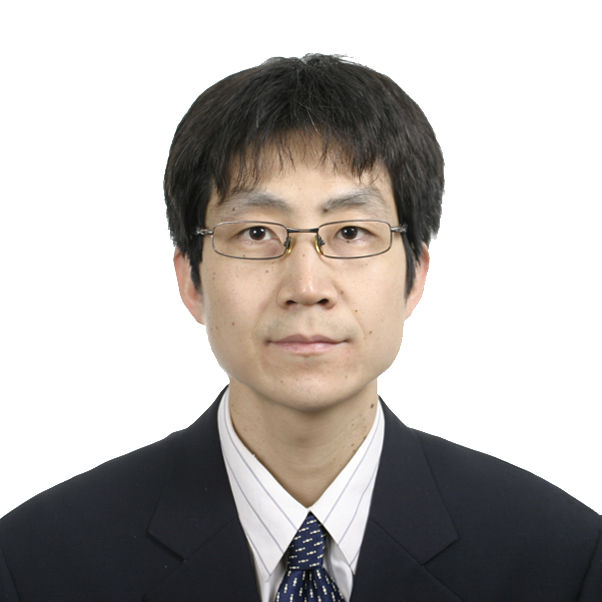 Yi Cui (崔毅)合作论文数School of Mechanical Engineering, Shanghai Jiao Tong University4
 Shuo Liu (刘朔)合作论文数The Fourth Affiliated Hospital, China Medical University3
 Mei Li合作论文数2LiMin Wu合作论文数2Yuehua Qian合作论文数1Guoxiu Du合作论文数1HUANG Rining (黄日宁)合作论文数1Zhao Kuikui (赵奎奎)合作论文数1Luo Hong合作论文数1
 Xiuqi Wu合作论文数1Zhimin Shi合作论文数1GUO Xingliang (郭星亮)合作论文数1Honghong Zhang合作论文数1Yunqiang Li合作论文数1Ruixin Sun合作论文数1
 Yan Fu合作论文数1
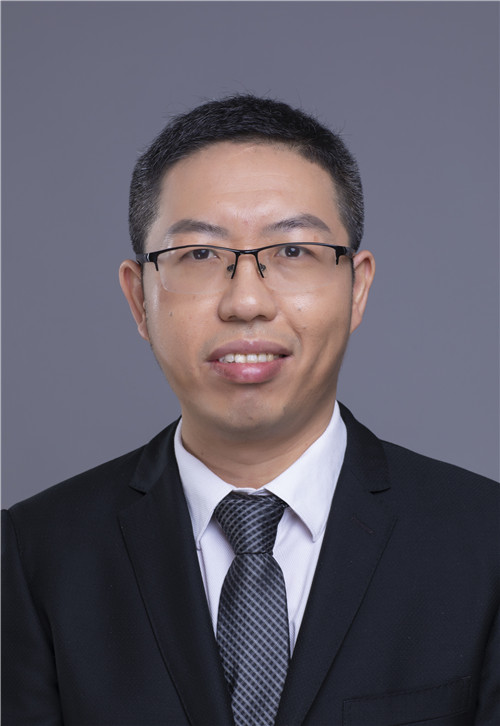 Zonghai Li (李宗海)合作论文数Shanghai Cancer Institute1Binglin Lv合作论文数1
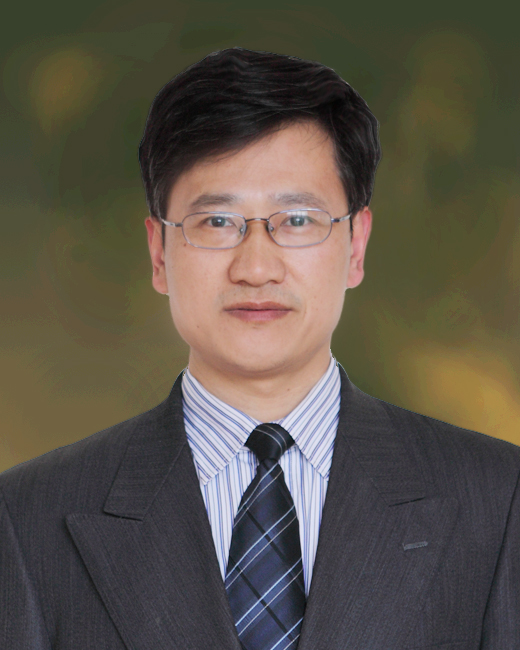 Xianghui Meng (孟祥慧)合作论文数School of Mechanical Engineering, Shanghai Jiao Tong University1
 Hua Jiang (蒋花)合作论文数CARsgen Therapeutics Holdings Limited1
 Min Zhou (周敏)合作论文数Ruijin Hospital, Shanghai Jiaotong University School of Medicine1Bizhi Shi合作论文数1




