Existing Large Language Model (LLM) based autoregressive (AR) text-to-speech (TTS) systems, while achieving state-of-the-art quality, still face critical challenges. The foundation of this LLM-based paradigm is the discretization of the continuous speech waveform into a sequence of discrete tokens by neural audio codec. However, single codebook modeling is well suited to text LLMs, but suffers from significant information loss; hierarchical acoustic tokens, typically generated via Residual Vector Quantization (RVQ), often lack explicit semantic structure, placing a heavy learning burden on the model. Furthermore, the autoregressive process is inherently susceptible to error accumulation, which can degrade generation stability. To address these limitations, we propose CaT-TTS, a novel framework for robust and semantically-grounded zero-shot synthesis. First, we introduce S3Codec, a split RVQ codec that injects explicit linguistic features into its primary codebook via semantic distillation from a state-of-the-art ASR model, providing a structured representation that simplifies the learning task. Second, we propose an “Understand-then-Generate” dual-Transformer architecture that decouples comprehension from rendering. An initial “Understanding” Transformer models the cross-modal relationship between text and the audio's semantic tokens to form a high-level utterance plan. A subsequent “Generation” Transformer then executes this plan, autoregressively synthesizing hierarchical acoustic tokens. Finally, to enhance generation stability, we introduce Masked Audio Parallel Inference (MAPI), a nearly parameter-free inference strategy that dynamically guides the decoding process to mitigate local errors.
Traditional text-to-speech (TTS) systems often face challenges in aligning text and speech, leading to the omission of critical linguistic and acoustic details. This misalignment creates an information gap, which existing methods attempt to address by incorporating additional inputs, but these often introduce data inconsistencies and increase complexity. To address these issues, we propose DetailTTS, a zero-shot TTS system based on a conditional variational autoencoder. It incorporates two key components: the Prior Detail Module and the Duration Detail Module, which capture residual detail information missed during alignment. These modules effectively enhance the model’s ability to retain fine-grained details, significantly improving speech quality while simplifying the model by obviating the need for additional inputs. Experiments on the WenetSpeech4TTS dataset show that DetailTTS outperforms traditional TTS systems in both naturalness and speaker similarity, even in zero-shot scenarios. Our source code and demo page are available at https://detailtts.github.io/.
Text-to-speech (TTS) synthesis has seen renewed progress under the discrete modeling paradigm. Existing autoregressive approaches often rely on single-codebook representations, which suffer from significant information loss. Even with post-hoc refinement techniques such as flow matching, these methods fail to recover fine-grained details (e.g., prosodic nuances, speaker-specific timbres), especially in challenging scenarios like singing voice or music synthesis. We propose QTTS, a novel TTS framework built upon our new audio codec, QDAC. The core innovation of QDAC lies in its end-to-end training of an ASR-based auto-regressive network with a GAN, which achieves superior semantic feature disentanglement for scalable, near-lossless compression. QTTS models these discrete codes using two innovative strategies: the Hierarchical Parallel architecture, which uses a dual-AR structure to model inter-codebook dependencies for higher-quality synthesis, and the Delay Multihead approach, which employs parallelized prediction with a fixed delay to accelerate inference speed. Our experiments demonstrate that the proposed framework achieves higher synthesis quality and better preserves expressive content compared to baseline. This suggests that scaling up compression via multi-codebook modeling is a promising direction for high-fidelity, general-purpose speech and audio generation.
Large language models (LLMs) face low hardware efficiency during decoding, especially for long-context reasoning tasks. This paper introduces Step-3, a 321B-parameter VLM with hardware-aware model-system co-design optimized for minimizing decoding costs. Step-3 innovates in two key dimensions: (1) A novel Multi-Matrix Factorization Attention (MFA) mechanism that significantly reduces both KV cache size and computation while maintaining high attention expressiveness, and (2) Attention-FFN Disaggregation (AFD), a distributed inference system that decouples attention and Feed-Forward Network (FFN) layers into specialized subsystems. This co-design achieves unprecedented cost efficiency: Step-3 significantly reduces theoretical decoding costs compared with models like DeepSeek-V3 and Qwen3 MoE 235B, with the gains widening at longer context. Step-3 achieves low cost while activating 38B parameters per token (more than DeepSeek-V3 and Qwen3 MoE 235B), demonstrating that hardware-aligned attention arithmetic intensity, MoE sparsity, and AFD are critical to cost-effectiveness. We perform a head-to-head comparison with DeepSeek-V3 in its favorable scenarios. Our implementation on Hopper GPUs achieves a decoding throughput of up to 4,039 tokens per second per GPU under 50ms TPOT SLA (4K context, FP8, no MTP). It is higher than DeepSeek-V3's 2,324 in the same setup and sets a new Pareto frontier for LLM decoding.
Speech emotion recognition (SER) systems aim to recognize human emotional state during human-computer interaction. Most existing SER systems are trained based on utterance-level labels. However, not all frames in an audio have affective states consistent with utterance-level label, which makes it difficult for the model to distinguish the true emotion of the audio and perform poorly. To address this problem, we propose a frame-level emotional state alignment method for SER. First, we fine-tune HuBERT model to obtain an SER system with task-adaptive pretraining (TAPT) method, and extract embeddings from its transformer layers to form frame-level pseudo-emotion labels with clustering. Then, the pseudo labels are used to pretrain HuBERT. Hence, each frame from the output of HuBERT has corresponding emotional information. Finally, we fine-tune the above pretrained HuBERT for SER by adding an attention layer on the top of it, which can focus only on those frames that are emotionally more consistent with utterance-level label. The experimental results performed on IEMOCAP indicate that our proposed method performs better than state-of-the-art (SOTA) methods. The codes are available at github repository(1).
Conversational speech synthesis (CSS) incorporates historical dialogue as supplementary information with the aim of generating speech that has dialogue-appropriate prosody. While previous methods have already delved into enhancing context comprehension, context representation still lacks effective representation capabilities and context-sensitive discriminability. In this paper, we introduce a contrastive learning-based CSS framework, CONCSS. Within this framework, we define an innovative pretext task specific to CSS that enables the model to perform self-supervised learning on unlabeled conversational datasets to boost the model's context understanding. Additionally, we introduce a sampling strategy for negative sample augmentation to enhance context vectors' discriminability. This is the first attempt to integrate contrastive learning into CSS. We conduct ablation studies on different contrastive learning strategies and comprehensive experiments in comparison with prior CSS systems. Results demonstrate that the synthesized speech from our proposed method exhibits more contextually appropriate and sensitive prosody.
Recently, diffusion models have attracted much attention and have also been used in many fields, including dance movement generation. However, the slow generation speed of previous sampling methods makes the diffusion-based dance generation models limited in many application scenarios. In this paper, we use a more advanced algorithm to speed up the generation of a diffusion model based system to generate long dance movements. The algorithm does not require retraining the model. Instead, it only needs to map the noise schedule of the existing model to a new time step sequence and then construct a second-order solver for the data prediction diffusion ODEs based on the estimated higher-order differentials using multi-step methods. In order to apply this algorithm to generate long sequences, we employ a technique similar to inpainting, continuously updating the correlations between short sequences during the iteration process, and eventually concatenating multiple short sequences to form a longer one. Experimental results show that our improved sampling method not only makes the generation speed faster, but also maintains the quality of the dance movements.
Audio driven talking head synthesis is a challenging task that attracts increasing attention in recent years. Although existing methods based on 2D landmarks or 3D face models can synthesize accurate lip synchronization and rhythmic head pose for arbitrary identity, they still have limitations, such as the cut feeling in the mouth mapping and the lack of skin highlights. The morphed region is blurry compared to the surrounding face. A Keypoint Based Enhancement (KPBE) method is proposed for audio driven free view talking head synthesis to improve the naturalness of the generated video. Firstly, existing methods were used as the backend to synthesize intermediate results. Then we used keypoint decomposition to extract video synthesis controlling parameters from the backend output and the source image. After that, the controlling parameters were composited to the source keypoints and the driving keypoints. A motion field based method was used to generate the final image from the keypoint representation. With keypoint representation, we overcame the cut feeling in the mouth mapping and the lack of skin highlights. Experiments show that our proposed enhancement method improved the quality of talking-head videos in terms of mean opinion score.
In recent years, neural network based methods for multispeaker text-to-speech synthesis (TTS) have made significant progress. However, the current speaker encoder models used in these methods still cannot capture enough speaker information. In this paper, we focus on accurate speaker encoder modeling and propose an end-to-end method that can generate better similarity for both seen and unseen speakers. The proposed architecture consists of three separately trained components: a speaker encoder based on the state-of-the-art ECAPA-TDNN model which is derived from speaker verification task, a FastSpeech2 based synthesizer, and a HiFi-GAN vocoder. The comparison among different speaker encoder models shows our proposed method can achieve better speaker similarity. To efficiently evaluate our synthesized speech, we are the first to adopt and evaluate different deep learning based automatic MOS evaluation methods to assess our results, and these methods show great potential in automatic speech quality assessment.
2020年,世界卫生组织宣布COVID-19疫情为大流行病.为了实现COVID-19快速地、可靠地检测,本研究通过语音信号分析技术来寻找感染COVID-19的语音信号特征,利用咳嗽声片段和语音片段对是否感染CO-VID-19做出自动判断.在INTERSPEECH 2021 ComParE竞赛提供的相关数据集和baseline的基础上,本文首先利用语音端点检测技术对数据集进行增广,其次在特征集中加入语音质量特征,使相关baseline结果得到了提升,证明了语音质量特征在对COVID-19自动语音检测任务上的有效性.同时,引入局部聚合描述子向量对低级别特征进行编码,当字典大小较小时,有效地提升了系统的分类性能.最后,对多种算法得到的分类结果进行融合,进一步提升分类效果,最终在两个子任务中的验证集上UAR分别取得了 73.9%和77.2%.
 Jinlong Xue合作论文数4Yayue Deng合作论文数4
 Yingming Gao (高迎明)合作论文数School of Artificial Intelligence, Beijing University of Posts and Telecommunications4Qifei Li (李启飞)合作论文数3Fengping Wang合作论文数2
 Ya Li (李雅)合作论文数School of Artificial Intelligence, Beijing University of Posts and Telecommunications2Jinlong Xu合作论文数1Yizhong Gen合作论文数1Cong Wang合作论文数1Yeqing Shen合作论文数1Haoran Lv合作论文数1Zili Wang合作论文数1Wenzhen Zheng合作论文数1Jisheng Yin合作论文数1Jingcheng Hu合作论文数1Kaijun Tan合作论文数1Quan Sun合作论文数1Jia Wang合作论文数1Bingsong Bai合作论文数1Kangheng Lin合作论文数1
 Yifei Yang (杨逸飞)合作论文数Department of Computer Science and Engineering, Shanghai Jiao Tong University;Key Laboratory of Shanghai Education Commission for Intelligent Interaction;and Cognitive Engineering, Shanghai Jiao Tong University1
 Yuchen Yang (杨雨辰)合作论文数School of Computer Science, Fudan University;Shanghai Artificial Intelligence Laboratory1Yukang Jia合作论文数1Liang Zhao合作论文数1
 Yinmin Zhang合作论文数University of Sydney1Chen Hu合作论文数1
 Han Zhou合作论文数Language and Technology Lab, University of Cambridge;Mistral AI1Hongyu Zhou合作论文数MEGVII Technology1
 Hongxiang Li合作论文数Peking University1
 Qi Han (韩琦)合作论文数MEGVII Technology1Liangyu Chen合作论文数1Jianqing Sun合作论文数1Xiangwen Kong合作论文数1Yizhuang Zhou合作论文数1
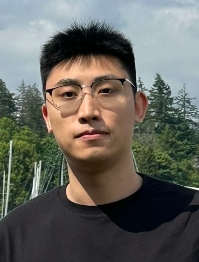 Jie Yang (杨杰)合作论文数The Chinese University of Hong Kong, Shenzhen1Jianjian Sun合作论文数Megvii Technology Inc.1
 Ailin Huang合作论文数1
 Binxing Jiao合作论文数Stepfun1
 Hanpeng Hu合作论文数Univ Hong Kong, Hong Kong, Peoples R China1
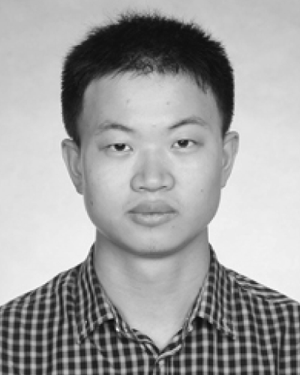 Ruihang Miao合作论文数Shanghai Jiao Tong University Department of Electronic Engineering Shanghai China1
 Houyi Li合作论文数Alibaba Group, Hangzhou, China1
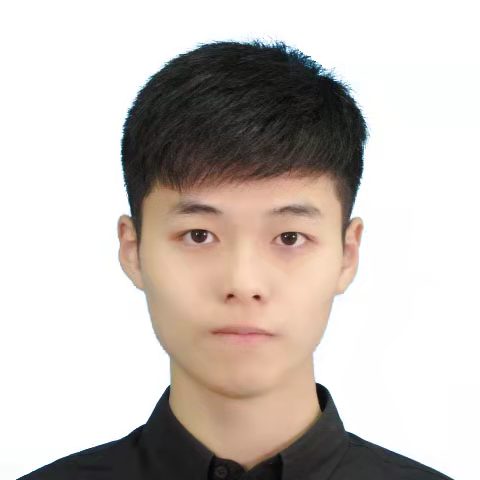 Zejia Weng合作论文数School of Computer Science, Fudan University;Vision and Learning Laboratory, Fudan University1
 Junhao Huang合作论文数Guangdong Key Lab Intelligent Informat Proc, Shenzhen Univ1
 Zheng Ge合作论文数Megvii Inc.1
 Haoran Wei合作论文数Alibaba DAMO Academy1
 Yibo Zhu合作论文数StepFun1
 Dengfeng Ke合作论文数1
 Lei Yang合作论文数Sensetime Ltd.;The Chinese University of Hong Kong1




